







Are americanos bitter, and does serving temperature change that?
Bitterness in an Americano comes mostly from the beans, the espresso shot, and the water ratio, not from whether the drink is served hot or iced. Front Street Coffee compared hot, room-temperature, and iced versions using the Warm Sun blend and found hot Americano carries the strongest aroma, while the iced version drinks lighter and more refreshing.
Alertness follows caffeine content and extraction, not temperature: with the same beans, longer extraction pulls out more caffeine, so cold brew steeped over ten hours or a pour-over drip both work when a quick lift is needed. Iced Americanos make up roughly eight of every ten ordered, which is why the iced americano taste bitter question comes up so often.
Many people assume that hot coffee is more effective at boosting alertness than iced coffee, but what really matters is the caffeine content of the coffee beans themselves and how much of it is extracted during brewing. With the same beans, the longer the extraction time, the more caffeine is dissolved out, so when you need a quick lift, cold brew or pour-over drip are both viable options. Americano is currently the most popular coffee drink, with iced Americano making up the vast majority, but hot Americano performs better in aroma, flavor intensity, and body. Front Street Coffee used the Warm Sun blend to compare hot, room-temperature, and iced Americanos, finding that hot Americano has the best aroma while iced Americano is more refreshing and smooth. This article looks at the alertness principle, flavor differences, and brewing suggestions to help you find the cup that suits you best.
Iced coffee versus hot coffee—which has more caffeine and gives a better energy boost? Many people instinctively feel that hot coffee is more effective. In reality, though, alertness has little to do with the temperature of the drink; the deciding factors are the caffeine content of the coffee beans used and how much caffeine is actually extracted during brewing.
With the same beans, the longer the extraction time, the more caffeine ends up in the cup. So when you're especially sleepy, you can choose cold brew coffee that has been steeped in cold water for over ten hours; if cold drinks don't suit you, Front Street Coffee recommends switching to pour-over drip coffee. If you're in a hurry, Americano is also a good choice.
Why are fewer and fewer people drinking hot Americano?
There's no doubt that Americano is currently the most popular coffee drink. Among these, iced Americano is ordered the most—about 8 out of every 10 Americanos are iced, the remaining 2 are hot Americanos, and occasionally 1 room-temperature Americano appears. Why do people prefer iced Americano? Is it because it tastes better?
As everyone knows, making an Americano isn't complicated—it's simply espresso plus an appropriate amount of water (solid or liquid). Whether it tastes good depends mainly on the quality of the coffee beans, the espresso, and the water ratio. As for which of the three states—hot, room-temperature, or iced—tastes better, that actually involves how the flavor of Americano changes at different temperatures.
To this end, Front Street Coffee made three cups of Americano—hot, room-temperature, and iced—using the Warm Sun blend coffee beans for comparison.
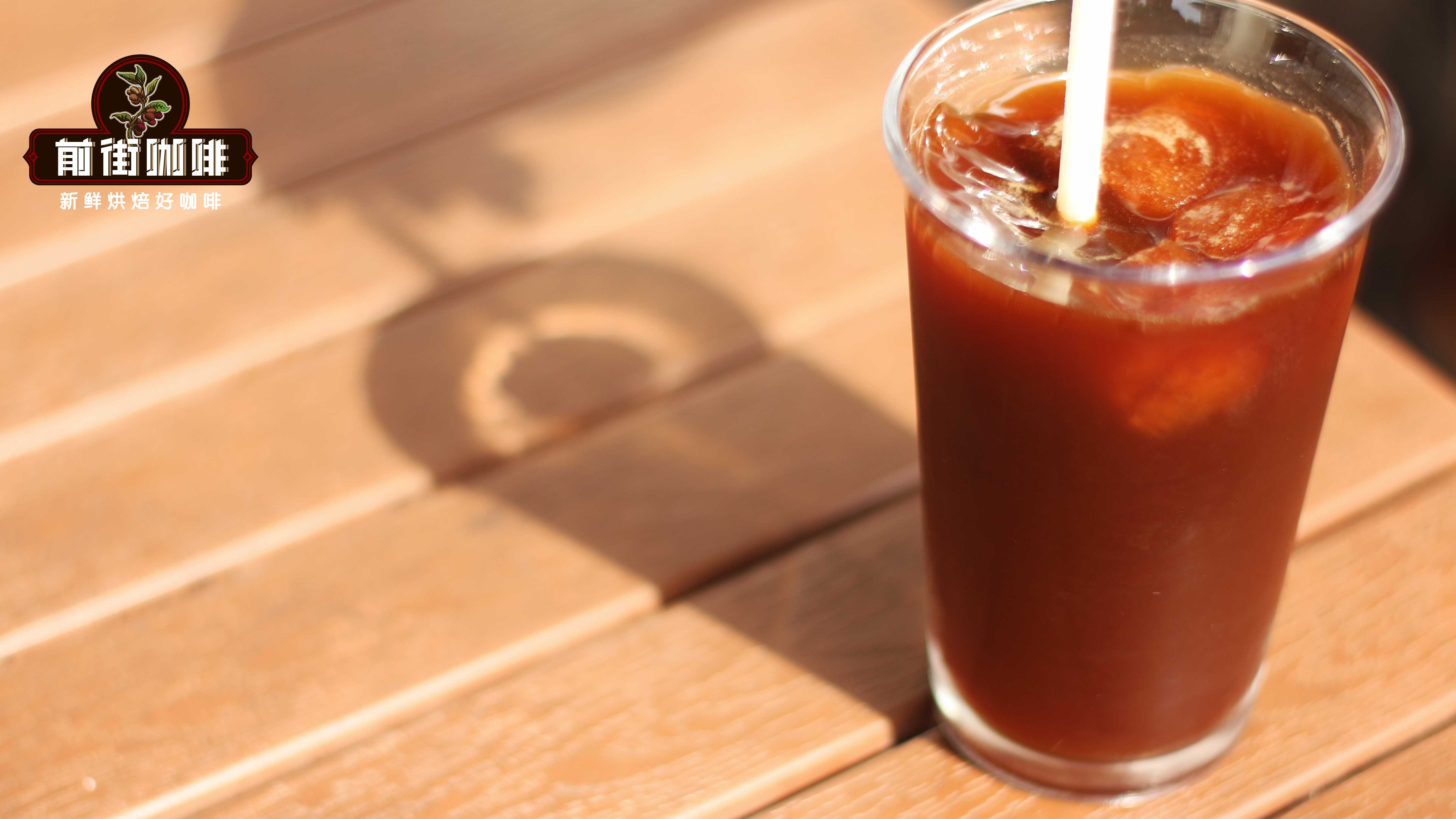
In terms of aroma, hot Americano performs best, with notes of vanilla cream and sherry. The aroma of room-temperature and iced Americanos is much weaker.
In terms of taste, hot Americano has full-bodied caramel, sherry, and chocolate flavors, with a lingering vanilla cream finish. Room-temperature Americano is relatively balanced, with each flavor lighter than in the hot version. Iced Americano's flavor is less rich than hot Americano's, leaning overall toward acidity with reduced bitterness, mainly presenting the mid-to-late notes of sherry and chocolate.
In terms of mouthfeel, hot Americano is the fullest and most velvety of the three; iced Americano is more refreshing and smooth; room-temperature Americano sits in the middle, neither too much one way nor the other.
If ranking by flavor criteria, hot Americano is unquestionably first. But the prerequisite is that both the coffee beans and the espresso must be of solid quality. For example, SOE Americano or Americano made with flavor-focused blends will definitely be more aromatic and flavorful as a hot drink than as an iced drink.
Although espresso coffee is now starting to emphasize flavor, it's undeniable that traditional espresso beans dominated by nutty and chocolate notes still hold the mainstream market. These beans are roasted on the darker side, and when made into hot Americano they have a rich caramel-nut aroma with noticeable bitterness. When made into iced Americano, although some flavor and aroma are lost, it gains lower bitterness and a cleaner, more refreshing mouthfeel—which is why some people choose iced Americano even in winter.
Of course, there's another key reason: iced Americano is undoubtedly the cheapest caffeinated iced drink—spending the least money to solve both caffeine needs and beat the heat. Compared with iced drip, cold brew, and iced pour-over, iced Americano has the advantages of fast production, no stockouts, and low price. Some friends who like to explore cafés even treat iced Americano as the first step in judging whether a shop is a "landmine." In their words: "If a shop can't even make a decent Americano, there's no point trying anything else!"
Can you add milk to Americano? Does adding milk make it a latte?
Front Street has noticed that some friends can't handle the bitterness of black coffee and add a little milk before drinking it, then assume this is a homemade version of "latte." But that's not the case. A latte is a mixture of espresso and milk, pursuing the rich sweetness of coffee; whereas adding milk to iced or hot Americano introduces an extra element—drinking water—so the two can't be considered the same thing.
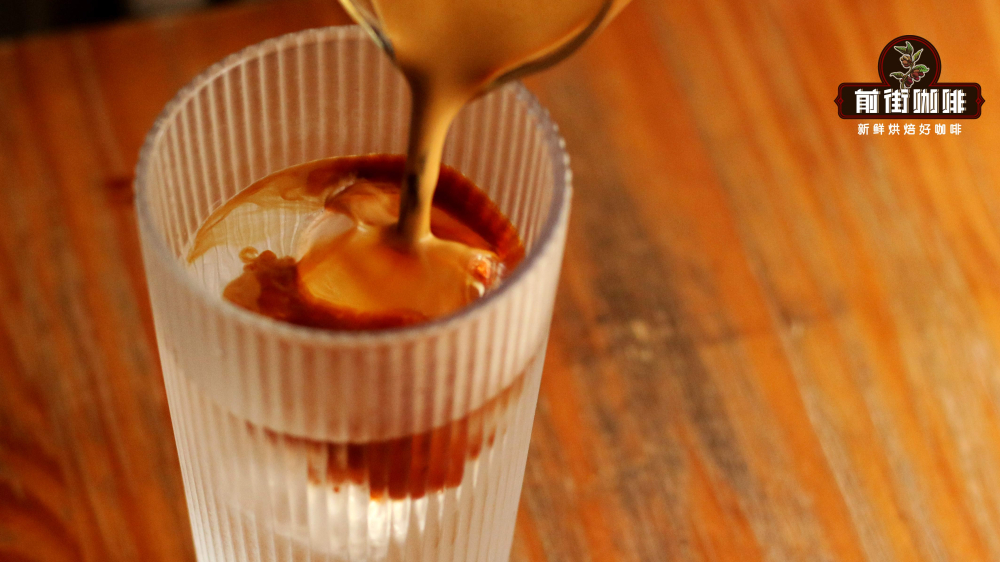
But ultimately, drinking coffee doesn't need too many rules—whatever you like is the best. Front Street believes that as long as the ingredients are good enough and the proportions are controlled properly, Americano with milk can taste great too. Take the Sunflower · Warm Sun blend coffee beans used in Front Street's café offerings as an example—made into hot Americano, it has full-bodied vanilla, cocoa, whiskey, and berry flavors. Front Street uses a 1:4:1 ratio of espresso, water, and milk, adding 40ml of fresh milk, which not only makes the coffee smoother but also helps the body absorb calcium. The key is that it brings out the original flavors like vanilla cookie biscuits, with a lingering finish.
Why does drinking coffee boost alertness?
People feel sleepy because the brain secretes a substance called adenosine, which is an inhibitory neurotransmitter. When adenosine binds with another specifically recognizing signaling substance in the brain—receptors—people feel drowsy. The more adenosine binds with receptors, the sleepier you get. The caffeine in coffee can stimulate the central nervous system, effectively preventing adenosine from binding with receptors and keeping the body energized for a period of time.
If you rely excessively on caffeine every day to stay awake, adenosine will start to "protest" and even adapt. Each time caffeine arrives, a large number of adenosine receptors emerge to bind with it, so even if caffeine rushes in immediately, it's of no use. Therefore, it's recommended to limit daily coffee intake to 1-2 cups (200ml/cup); excessive intake can easily lead to rapid heartbeat caused by low blood sugar and can also make you "immune" to caffeine.
The above content is compiled by CoffeeHunters, a coffee news website.


