








Does Water Temp for Brewing Coffee Change When You Add Ice?
Adding ice straight to a hot pour-over works, but it dilutes the cup. In a Front Street test with Frontera Estate Sidra, strength fell from 1.49% to 1.09% once ice was added, and the flavor flattened noticeably. For iced pour-over, grind finer, use a 1:10:6 coffee-to-water-to-ice ratio, and keep 15g of coffee at 92°C.
The water temp for brewing coffee stays at 92°C even in iced recipes; the fix is compensating with grind and ratio. Shift the grind from a 75–80% passing rate on a No. 20 sieve to 80–85%, keep a three-stage pour, and finish extraction in about 2 minutes. That preserves grape, passion fruit, and apricot notes with a full-bodied, juicy finish over ice.
On a scorching summer day, many enthusiasts who want to drink iced coffee without giving up the full flavor consider brewing hot coffee first and then adding ice to cool it down. Although this method is feasible, it tends to make the coffee taste weak. Using the actual test case of Front Street Frontera Estate · Sidra, this article explains how the concentration dropped from 1.49% to 1.09% before and after adding ice to a hot pour-over, as well as the obvious decline in taste and flavor. At the same time, the article also provides adjustment ideas for iced pour-over: change the grind size from a 75%~80% passing rate on a No. 20 sieve to 80%~85%, change the coffee-to-water-to-ice ratio to 1:10:6, and keep 15g of coffee, 92°C water temperature, a three-stage pour, and a 2-minute extraction. In this way, you can achieve a refreshing taste while retaining flavors such as grape, passion fruit, and apricot, presenting a full-bodied juicy feel.
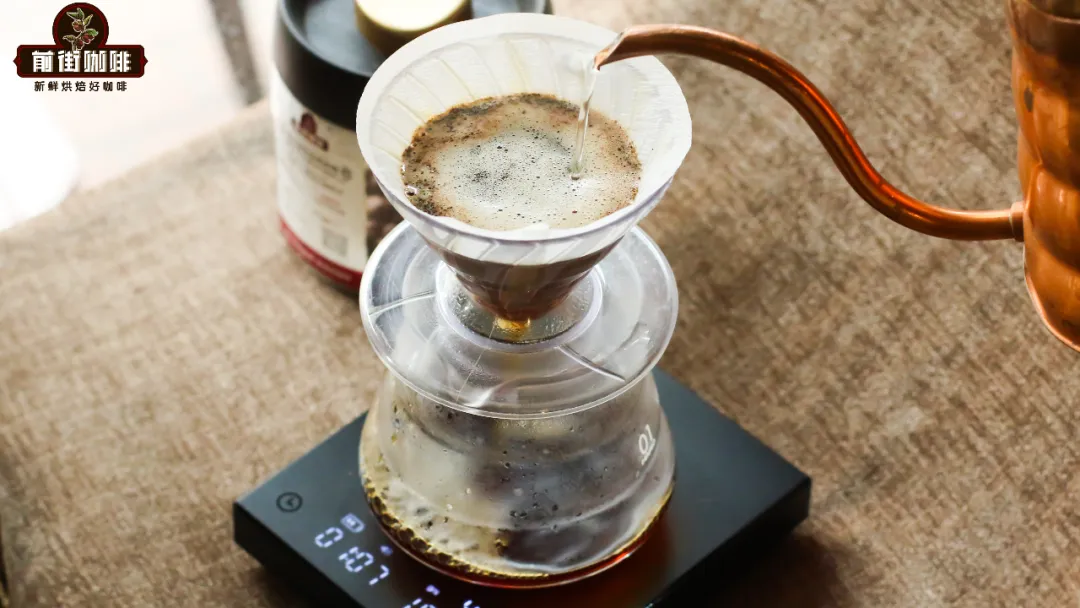
When the heat is unbearable, a cup of warm coffee often fails to spark any interest, but many friends are unwilling to sacrifice the complete layering of flavor, so an idea arises: can we first brew a pot of hot coffee using the usual method, and then add ice to cool it down quickly?
This is exactly the question Front Street is often asked by customers in summer, as everyone hopes to drink iced coffee while retaining the complete flavor experience. Front Street's answer has always been consistent: "It can be done, but I don't recommend it." It can be done because Front Street can satisfy the customer's request; it is not recommended because this method makes the coffee taste less good, and the flavor performance is noticeably compromised — this is also exactly why iced brewing must adjust its various parameters.

Why is it not recommended to add ice to hot pour-over to cool it down? Let's look at the following case from Front Street: brew a pot of hot coffee normally with conventional parameters, then add ice to bring it down to an easy-to-drink low temperature. The bean chosen here is the highly popular Front Street Frontera Estate · Sidra from the bean list; the coffee it brews has prominent flavor and extremely high recognizability. The extraction parameters are: 15g coffee dose, 1:15 coffee-to-water ratio, 92°C water temperature, grind size similar to fine granulated sugar, 75%~80% passing rate on a No. 20 sieve, three-stage brewing, and a 2-minute extraction time.
The Sidra brewed this way has a concentration of 1.49%, an extraction yield of 22.08%, a balanced entry, a solid mouthfeel, and presents flavors of grape, passion fruit, apricot, and floral notes, with an overall moderate concentration and a clear taste.
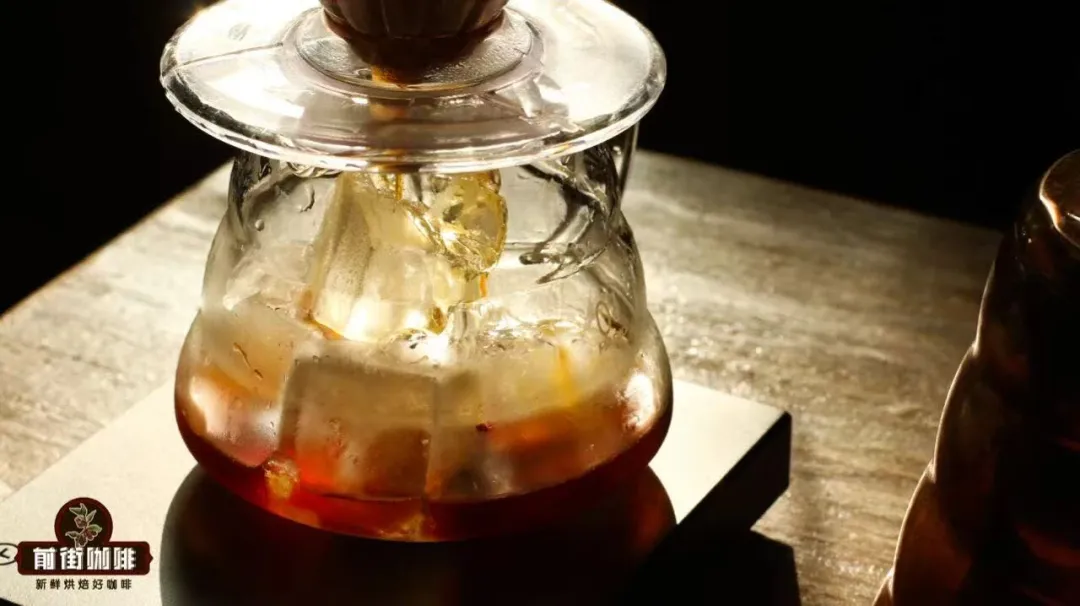
Next, Front Street added 100g of ice to the coffee, and once the temperature dropped to about the same as iced brewing, measured the concentration again and tasted it. The measured concentration became 1.09%, while the taste and mouthfeel both dropped sharply compared with before. The reason is that the original coffee had a relatively high temperature and a relatively large liquid volume, requiring a large amount of ice to melt in order to bring the temperature down to icy cold, which caused the coffee as a whole to become mediocre due to excessive dilution of concentration. The mouthfeel was thin and the taste was bland; only a few flavors that were originally higher in intensity, such as grape and passion fruit, could be detected, while the rest were difficult to identify because of excessive dilution.
Overall, although the coffee after adding ice is cold enough, neither its mouthfeel nor its taste can be called good. That is why Front Street does not recommend adding ice to hot coffee to cool it down, and this is also why parameters need to be adjusted when brewing iced coffee. But to be honest, if you really cannot drink it hot, Front Street would still recommend choosing iced brewing directly. Although the flavor experience of iced pour-over is indeed less complete than that of hot pour-over, through parameter adjustment the gap between the two will not become too large. Moreover, just as hot pour-over has some experiences that iced pour-over does not have, iced pour-over also has characteristics that hot brewing does not, such as a very full-bodied juicy feel.
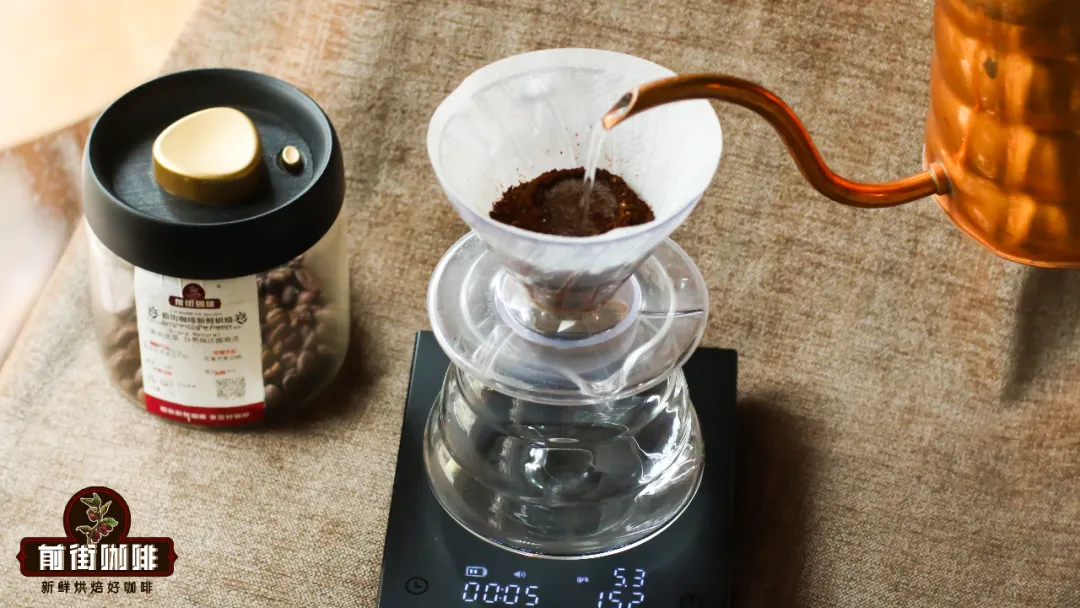
Still taking Front Street as an example, when using the Front Street Frontera Estate Sidra from the bean list to make iced pour-over, the brewing parameters are slightly adjusted on the original basis: the grind size is changed from a 75%~80% passing rate on a No. 20 sieve to an 80%~85% passing rate, and the coffee-to-water ratio is adjusted from 1:15 to a coffee-to-water-to-ice ratio of 1:10:6. The remaining parameters stay unchanged, still 15g coffee, 92°C water temperature, three-stage brewing, and a 2-minute extraction time.
Friends who often follow Front Street should already be very familiar with the Sidra brewed with this set of parameters, since Front Street often uses Sidra for iced brewing sharing because it really tastes good. The Sidra brewed with this set of parameters has a refreshing yet full-bodied mouthfeel, transparent and round acidity, and flavors of grape, passion fruit, and apricot on the entry. Because there is not enough hot water to extract into the later stages, the coffee overall has much fewer bitter substances, and the taste is mainly sweet and sour, drinking like a cup of delicious grape juice.
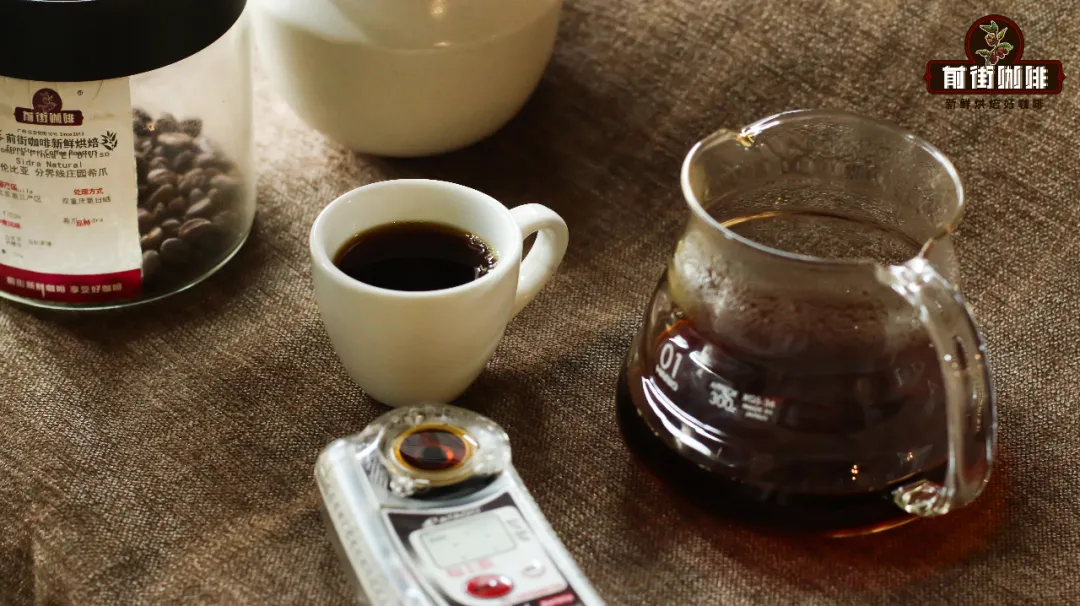
Front Street has already shared the brewing plan and process for iced brewing many times, so this article will not repeat them; interested friends can search and read them on their own. The iced pour-over brewed with this formula has just the right concentration. If you want a richer and more prominent flavor performance, you might increase the concentration further by increasing the coffee dose and raising the coffee-to-water ratio, for example by increasing the dose to 20g and then using a 1:8:6 coffee-to-water-to-ice ratio for brewing; in this way, the coffee's flavor will become more prominent as the concentration rises, and the mouthfeel will also become fuller and rounder.
- END -
The above content is compiled by CoffeeHunters, a coffee news website.


