








What makes cold brew coffee turn out bitter and muddy?
Cold brew usually resists over-extraction because it steeps in cold water without agitation, so a bitter, muddy, or astringent result points to handling mistakes rather than the method itself. The main culprits are blooming with hot water or steeping with warm water, using dark-roasted beans, steeping far too long, and mixing a coffee-to-water ratio so high that the concentrate turns harsh.
Front Street recommends keeping steep water cold, choosing a moderate roast, watching the clock, and weighing grounds and water rather than guessing. A 1:10 ratio suits a strong concentrate meant for diluting with milk or water, while 1:12 works for a ready-to-drink cup. Fine particles that clump can also cause uneven extraction, so a consistent grind helps the steep finish cleanly.
Cold brew coffee is made by steeping coffee grounds in cold water for an extended period. Because low-temperature extraction has a high tolerance for error, it usually doesn't over-extract easily. But in practice, many people still end up with cold brew that has pronounced bitterness, muddiness, and astringency. The problem often lies in four areas: using hot water for blooming or warm water for steeping, choosing dark-roasted beans, steeping for too long, and using too high a coffee-to-water ratio that results in excessive concentration. In this article, Front Street breaks down the extraction principles behind each of these improper practices and offers specific recommendations for regular water temperature, grind size, coffee-to-water ratio, and steeping time, while also explaining what scenarios the 1:10 and 1:12 ratios are each suited for. If your cold brew also tastes bitter, check against these points to find the root cause—once you do, you'll be able to consistently make a smooth cup of cold brew coffee.

What is commonly called cold brew coffee mainly refers to cold-water steeped coffee, made by letting coffee grounds sit in cold water for an extended period to complete extraction.
Front Street mentioned in a previous article that immersion extraction is actually not prone to over-extracting coffee. One reason is the existence of a concentration gradient: once the steeping liquid reaches a certain concentration, extraction efficiency drops, and the higher the concentration, the more pronounced the decline in efficiency. On top of that, there is almost no agitation during cold brew production—it remains static for the vast majority of the time—so the final product is usually very difficult to over-extract. What actually tends to go wrong is fine particles clumping together, causing under-extraction.
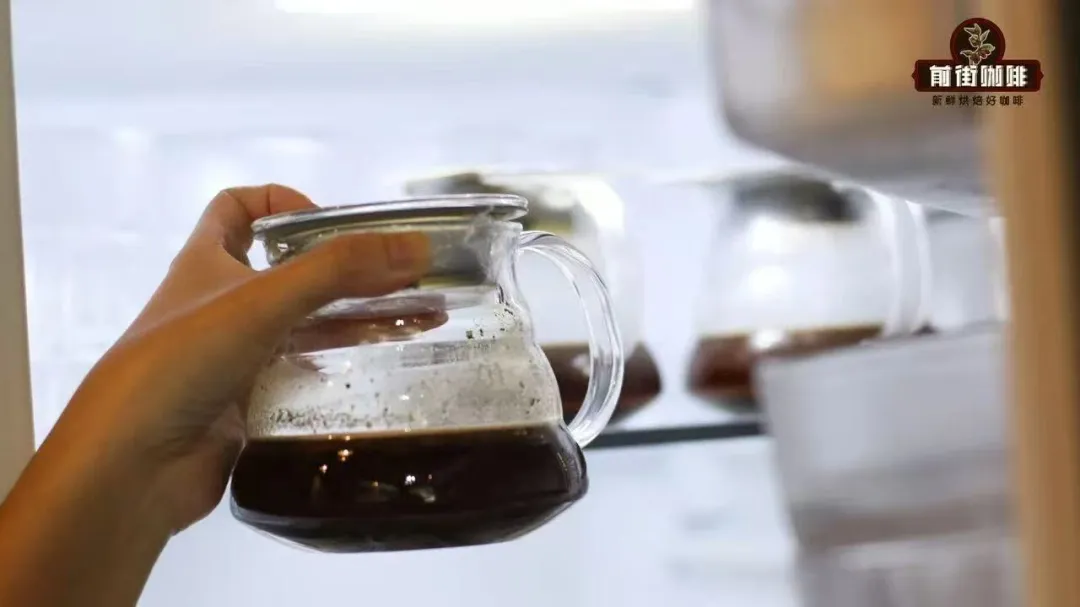
However, note that "not prone to over-extraction" does not mean "absolutely never over-extracts." Many people, precisely because of improper handling or excessively high extraction efficiency, end up with cold brew that should have been foolproof but instead shows obvious bitterness, muddiness, and astringency. Below, Front Street walks through which improper practices make cold brew bitter, muddy, and astringent.
1. Using hot water for blooming or warm water for steeping
In conventional cold brew production, the starting water temperature is typically room temperature, and the steeping time ranges from 8 to 24 hours. But in recent years, a "heretical" brewing method has become popular—Front Street has covered this before—which uses higher-temperature water to make cold brew, such as hot water for blooming or warm water for steeping. The purpose is clear: to compress the production time.
Hot water's extraction efficiency is many times higher than room-temperature water, so when using hot water for blooming or warm water for steeping, the extraction time is greatly shortened. Many people try it precisely because of this. And a lot of bitter cold brew is directly related to this "heretical" brewing method. Once extraction efficiency increases, the large-molecule substances that produce bitter and muddy characteristics also dissolve out more quickly. If the steeping time and grind size aren't well controlled, the coffee can very easily turn bitter.
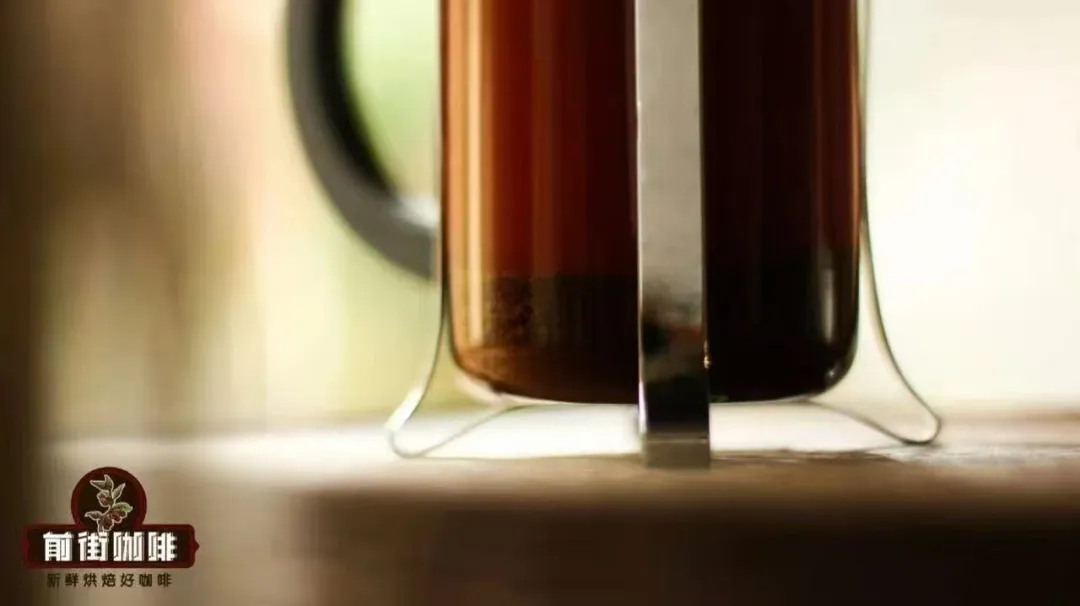
If you really want to use this method to quickly make a cup of cold brew, you must find the matching grind size and steeping time to effectively reduce the risk of over-extraction. If these variables are hard to control, Front Street's advice is to switch to room-temperature water steeping—it's more reliable.
2. Choosing dark-roasted coffee beans
If the coffee beans used are on the darker side of the roast spectrum, the odds of brewing a pot of bitter cold brew are also quite high. On one hand, dark-roasted beans inherently carry a burnt, bitter-like aroma; on the other hand, their structure is more porous and easier to extract. Once the grind is on the fine side or the steep goes too long, the negative flavor compounds in the beans are easily drawn out.
For the same reason as the previous point, it's best to avoid over-extraction in this case by coarsening the grind or shortening the steeping time. But even so, cold brew made from dark-roasted beans will inevitably carry a hint of bitterness. If you can't accept that taste, Front Street recommends choosing medium-light roasted beans instead. For example, Front Street Coffee's Front Street Ethiopia · Huakui, Costa Rica · Strawberry Candy, and Panama · Boquete Geisha can all produce cold brew with rich fruit flavors and floral notes.
3. Steeping for too long
As Front Street has said, the advantage of cold brew lies in low-temperature water steeping and high error tolerance—there's no need to stop extraction with a stopwatch like when making other coffees. As long as you filter it out within roughly the right time window, it's fine. But precisely because of this, many people extend the steeping time without any concern, resulting in over-extraction.
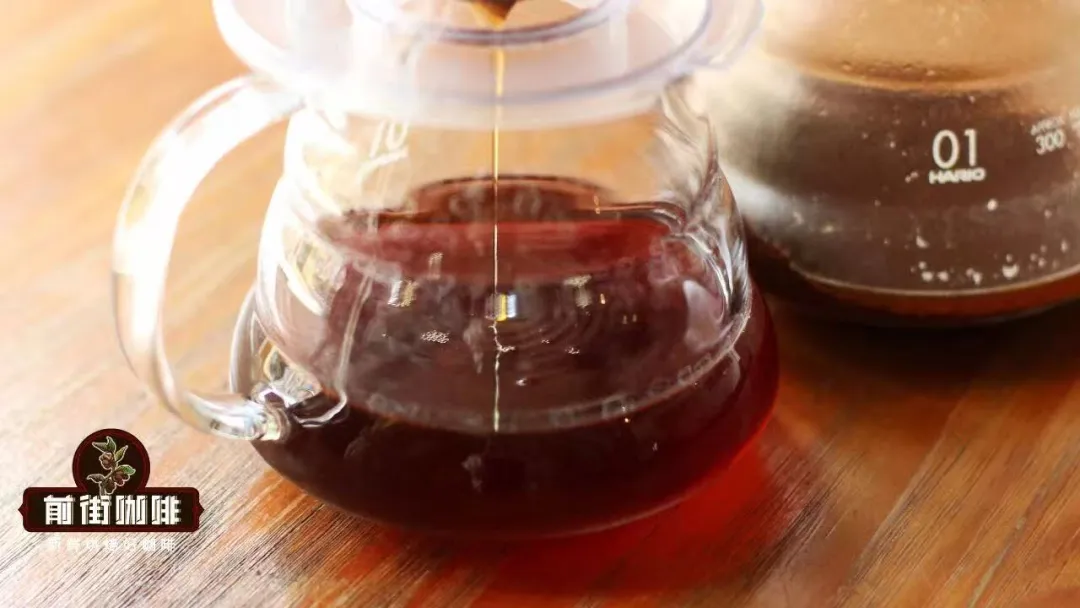
Front Street's commonly used parameters for cold brew are: coffee-to-water ratio 1:10, grind size controlled to a 75%–80% pass-through rate on a No. 20 sieve, room-temperature water, and a steeping time of about 8–12 hours. If you're worried you won't be able to filter it out within that time, Front Street suggests coarsening the grind a bit—that way, even if the steeping time runs a little long, it won't easily over-extract.
4. Coffee-to-water ratio too high, coffee too strong
Some friends have reported that they followed Front Street's parameters exactly and used light-roasted beans, yet it still tasted bitter and hard to drink—even after coarsening the grind, it still wasn't smooth.
In this case, it's most likely not over-extraction but simply that the coffee is too strong. The reason Front Street uses a 1:10 coffee-to-water ratio is that 90 grams of ice cubes are added at serving time to maintain a low temperature. The ice cubes melt while keeping the coffee cold, thereby diluting it—so a higher concentration is needed to offset the dilution effect of the ice.
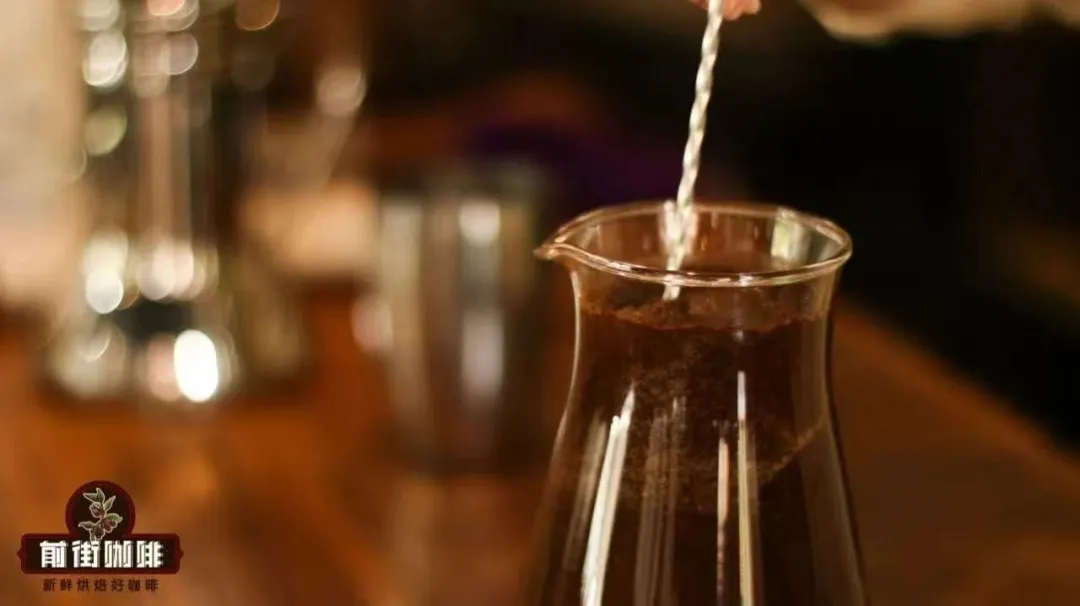
If you skip the dilution step and taste it directly, the coffee will most likely be as hard to swallow as this friend described, tasting bitter. But this is not over-extraction—it's caused by excessive concentration.
The solution is simple: if you've already brewed cold brew at 1:10 and confirmed by tasting that it's too strong, you can dilute it by adding ice or water. If you haven't started yet and don't plan to add ice afterward, Front Street suggests switching to a 1:12 ratio. Cold brew made at this ratio has just the right concentration and goes down very smoothly.
These are the four main "culprits" behind bitter cold brew. If your cold brew also has pronounced bitterness, check against these points to see which one you've hit, make targeted adjustments, and you'll be able to brew a cup of cold brew coffee that isn't bitter.
- END -
The above content is compiled by CoffeeHunters, a coffee news website.


