







Search Results for: dine-in resumption
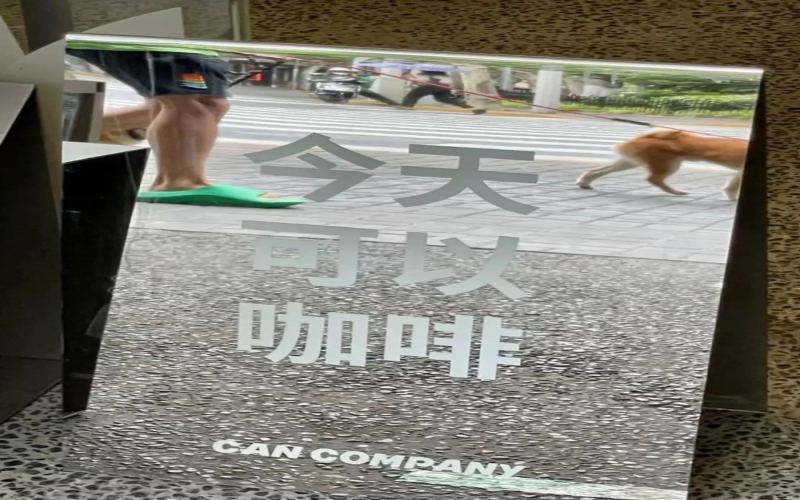
A firsthand account of Shanghai coffee shops resuming dine-in service: Owners share heartwarming stories of perseverance and reunion
After more than three months of waiting, Shanghai's restaurant industry has finally seen the return of dine-in service. Starting June 29, streets and towns within their jurisdictions that have no medium-risk areas and no community transmission in the past week have been reopening dine-in service in an orderly manner. As soon as the news broke, phones at major coffee shops would not stop ringing, and owners rushed to share moments from this extraordinary period: some customers arrived to wait before the staff did, some owners drank through an entire batch of limited-edition beans by themselves, some worked around the clock living at their shops, and others are still waiting for approval. This article documents the real experiences of Shanghai coffee shop owners, as well as the procedures and current situation behind the resumption of dine-in service, while also keeping its focus on and recommendations for specialty coffee beans. [more…]
Blue Bottle Coffee's second mainland China location is set in Jing'an Kerry Centre—could the pandemic instead be the brand's breakthrough moment?
Blue Bottle Coffee's second store in China has been confirmed to continue locating in Shanghai, with the site chosen at the first and second floors along the street of Jing'an Kerry Centre, and it is currently still under renovation. Previously affected by the Shanghai pandemic lockdown, the preparation progress was once hindered, and many people believed that Blue Bottle's entry timing was poor. However, during the pandemic's closed-loop production period, Blue Bottle, relying on the advantage of fresh coffee beans from its own roasting factory, instead gained a wave of goodwill in community group buying and home coffee consumption scenarios. This article reviews Blue Bottle Coffee's pricing logic, brand positioning, and the prospects of the specialty coffee market, exploring whether this expansion is ill-timed or well-timed. [more…]
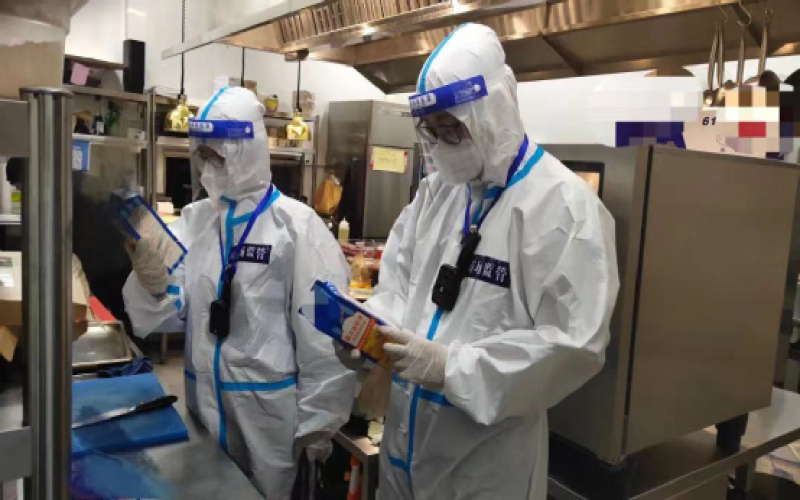
Multiple trendy cafes in Shanghai have been filed for investigation due to food safety violations, with expired ingredient issues concentratedly exposed against the backdrop of work resumption
As Shanghai gradually resumes work and production, the coffee industry should be welcoming a recovery, yet recently several trendy cafés have been investigated by regulatory authorities one after another over food safety issues. From People's Café using expired parsley flakes, cranberry juice, and other ingredients, to MANNER Coffee's poor hygiene conditions, to the expired egg white liquid used at Dang Zhu Fei Café to make cake roll bases, these incidents have exposed the neglect of food safety by some stores under the pressure of resuming operations. This article reviews these typical cases and explores how small cafés can hold the line on compliance when ingredient supplies are tight. For consumers who love coffee, understanding this information helps them choose places to consume more rationally, and Front Street Coffee also reminds practitioners that no matter how much order pressure there is, food safety is always a red line that cannot be crossed. [more…]
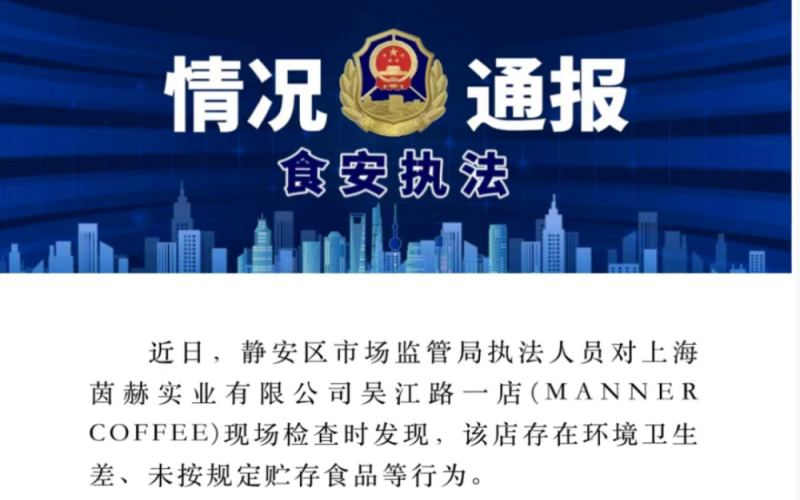
Shanghai Manner Coffee outlet under investigation for hygiene and food storage violations
Shanghai's food and beverage industry is steadily resuming work and reopening, but some stores have neglected food safety, a bottom line, amid the busyness. Recently, law enforcement officers from the Jing'an District Market Supervision Bureau found during an inspection that the Manner Coffee Wujiang Road store had problems such as dirty and messy environmental hygiene and food not being stored according to regulations. Waste was scattered on the floor at the scene, food for sale was placed directly on the ground, and Meiji milk that needed refrigeration was also left casually. Because it is suspected of violating relevant provisions of the Food Safety Law, the store has been officially placed under investigation. The regulatory authorities remind food and beverage units to strictly fulfill their primary responsibilities and ensure the safety of meals served. [more…]

Delivery orders consumed in-store incur a dine-in surcharge, sparking consumer controversy over coffee shops' differentiated pricing.
Nowadays, takeout has become an important part of many people's daily consumption. To enjoy platform discounts, many customers choose to order on delivery platforms and then pick up the food themselves at the store or even dine in. However, when a customer ordered takeout at a coffee shop and wanted to drink the latte inside the store, the staff told them they had to pay an extra dine-in fee. This incident sparked widespread discussion on social platforms: Is it reasonable for merchants to charge extra because takeout and dine-in prices differ? How should the consumer experience be safeguarded? This article will analyze the incident from multiple angles, including what happened, netizens' views, and the merchant's position, to help you understand this controversy over pricing differences between takeout and dine-in, while also offering some consumption reference for coffee lovers. [more…]
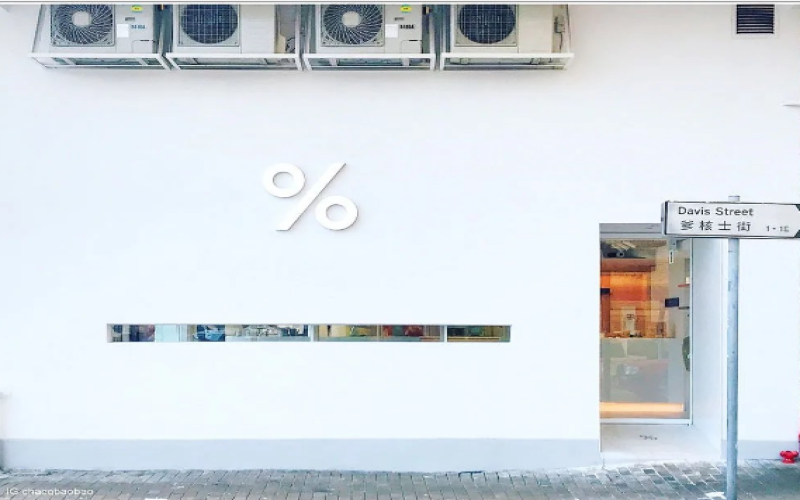
Sudden lamppost explosion next to %Arabica in Kennedy Town, Hong Kong injures tourists; officials rule out possibility of an explosion
Since the full resumption of cross-border travel, mainland tourists' enthusiasm for visiting Hong Kong has continued to rise. Beyond the traditional shopping and food itineraries, those highly photogenic "internet-famous photo spots" have also become an indispensable stop on the journey. %Arabica, located by the waterfront in Kennedy Town, Western District, has long dominated the must-visit lists on major social platforms thanks to its seaside all-white exterior and "mirror of the sky" scenery. However, recently, a lamppost on one side of this store suddenly had an accident—emitting smoke, a loud bang, and parts flying off—leaving a passing mainland tourist with a head injury. The incident quickly drew attention, and the Highways Department and the gas company successively responded. What exactly caused the incident? What was the scene like? Let's find out together. [more…]
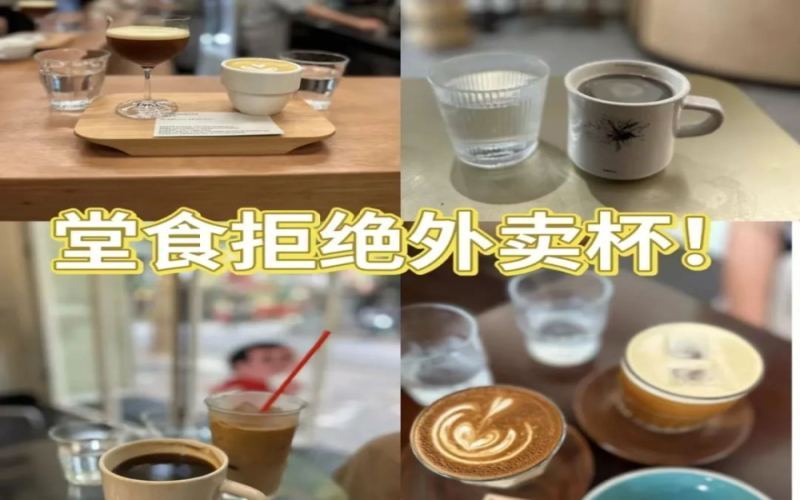
Why Do Coffee Shops Often Use Takeaway Cups for Dine-In? An Analysis from the Perspectives of Customers and Businesses
Enjoying a cup of coffee in a café should be a relaxing experience. However, when the drink is served in a disposable takeaway cup, does your experience suffer? Some prefer the ambiance of dine-in cups, while others favor takeaway cups due to hygiene concerns; businesses make choices based on operational efficiency and cost. This article explores the considerations behind dine-in versus takeaway cups from two dimensions: customer psychology and store operations, and points out that cup choice is closely tied to a store's positioning. Additionally, some people bring their own cups—which type are you? Front Street Coffee believes that attention to detail in service often determines the success or failure of the experience. [more…]

Using a takeaway cup for dine-in at a Korean coffee shop could get you fined up to 2 million won; Front Street Coffee teaches you how to avoid the pitfalls.
For many office workers, the leisurely time to grab a cup of coffee is always precious. Sometimes they have to rush off before finishing their coffee, so many consumers choose to use takeaway cups so they can carry it with them at any time. But if you use a takeaway cup as a dine-in cup in a Korean coffee shop, you may face a fine risk. Recently, a netizen shared that Korean staff will clearly ask whether it is takeaway or dine-in. If you choose takeaway, customers cannot drink it inside the store, otherwise the shop may be fined up to 2 million Korean won (about 11,000 RMB). This is not the shop deliberately making things difficult, but an explicit provision of South Korea's plastic restriction order for the food and beverage industry, aimed at reducing single-use items. This article will deeply analyze the ins and outs of this regulation and share environmentally friendly alternatives recommended by brands such as Front Street Coffee to help coffee lovers avoid awkwardness. [more…]

Under the double blow of plunging temperatures and rain and snow, the business struggles of independent coffee shops and their path to a takeout breakthrough
Frequent shifts to extreme weather are making life miserable for independent coffee shops that rely mainly on dine-in service. When temperatures plunge, takeout can barely keep things going, but once rain or snow hits, delivery breaks down, customers stay home, and shop owners even have to deliver orders themselves. This article examines the real operating conditions of coffee shops under different weather conditions, explores how to strike a balance between takeout and dine-in, and reveals the helplessness and hopes of industry workers who depend on the weather to make a living. [more…]
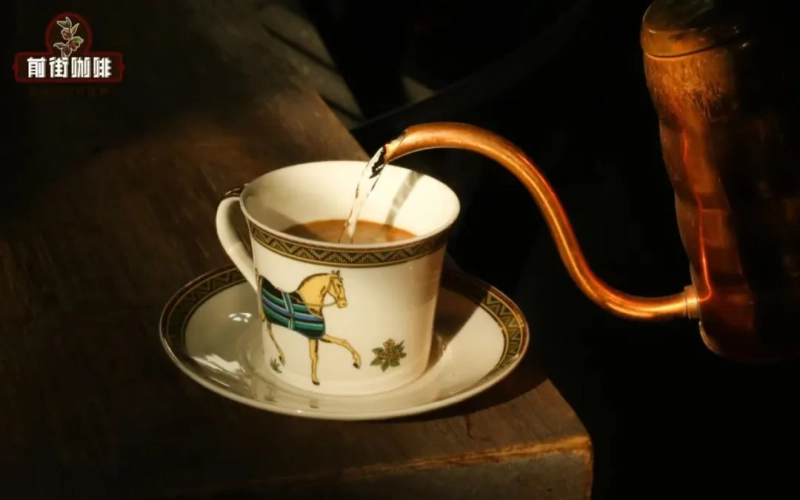
How
Hot Americano may seem like just espresso with hot water, but the water temperature directly affects the aroma, the balance of acidity and bitterness, and the drinking window. Front Street Coffee used the Warm Sun blend as the base and brewed Americanos at four water temperatures—55°C, 65°C, 75°C, and 90°C—then compared them through tastings at three points: immediately after brewing, at the 5-minute mark, and at the 20-minute mark. The experiment found that at the moment of serving, 65°C delivered the best overall performance, while over the course of 20 minutes, 75°C performed better overall. The article also recommends a serving temperature of 75±5°C for dine-in hot Americanos and offers practical tips such as preheating the coffee cup and distinguishing between dine-in and takeaway preparation. [more…]
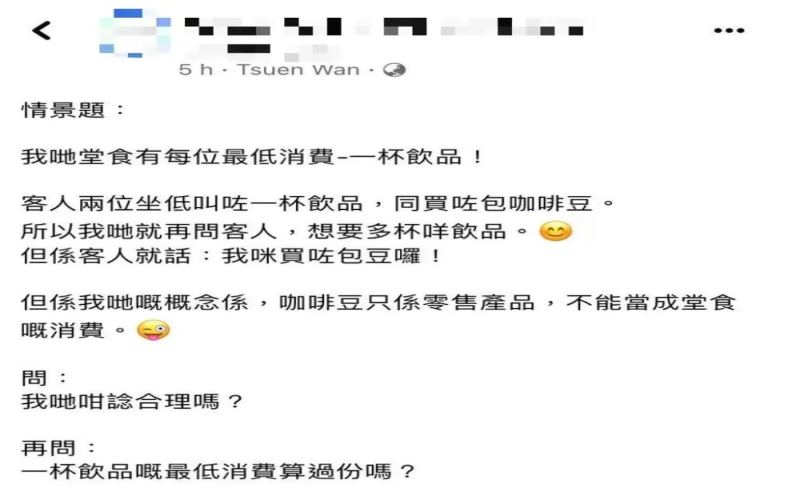
Coffee shop minimum charge of one drink sparks debate: customers buy beans and order drinks—should the shop make a fuss?
A coffee shop requires every dine-in customer to order at least one drink. A customer who bought coffee beans and ordered a drink was then asked to order another, prompting the shop to post an inquiry seeking opinions, which unexpectedly sparked a polarizing debate online. Supporters believe that once a business sets rules, they should be followed, while opponents criticize the shop for being too rigid and lacking human warmth, even calling it a public relations disaster. The shop eventually deleted the post and apologized, but the discussion about the boundaries of minimum consumption rules and the flexibility of their enforcement continues. [more…]

Colombian government suspends ceasefire with armed factions, coffee-growing heartlands may face conflict fallout
Colombia's Defense Minister announced at a press conference that the government is terminating the ceasefire agreement signed with some factions of the anti-government armed group "Central General Staff" and has ordered an all-out offensive. Although the government is still maintaining a three-month ceasefire with factions that support peace talks, the conflict mainly affects the departments of Nariño, Cauca, and Valle del Cauca—regions that happen to be important coffee-producing areas in Colombia, home to many well-known estates and the Buenaventura export port. The resumption of fighting could lead to coffee beans being looted, smuggled into neighboring countries, farmers displaced, farms left unmanaged, reduced yields and lower quality, damaged infrastructure, and ultimately affected exports. At a time when global Arabica prices are high, if Colombia, as the second-largest coffee-producing country, sees a decline in production, it could further drive up international coffee prices. Front Street Coffee also continues to monitor the potential impact of developments in producing regions on coffee flavor and supply. [more…]
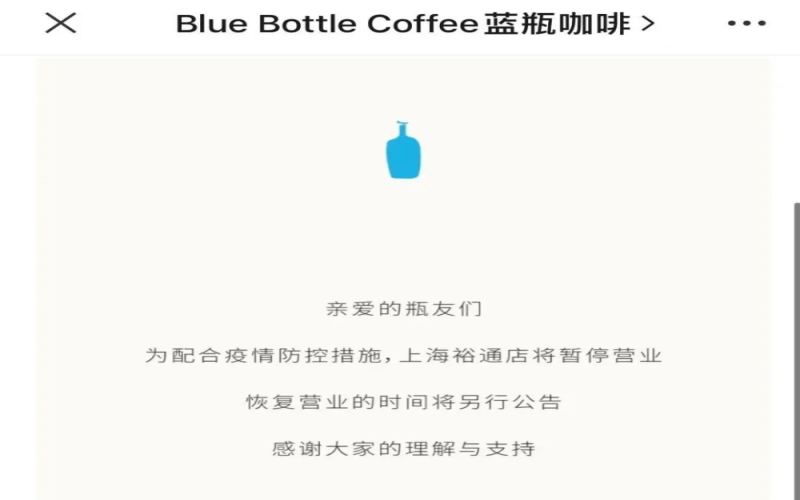
Shanghai's Blue Bottle Coffee hits pause due to the pandemic: the rise and fall of its first mainland store, from long queues to closure
Blue Bottle Coffee's first mainland China store—Shanghai Yutong Store—went from a phenomenon-level check-in spot with seven-hour queues on opening day to announcing a temporary closure in response to epidemic prevention and control measures. What was the process like? This article reviews the changes in customer flow since the store opened, adjustments to epidemic prevention measures, and the development of Shanghai's current round of the epidemic. As a brand widely regarded as the "textbook" example in the specialty coffee field, Blue Bottle's temporary farewell this time has left many coffee lovers feeling regretful. In the face of the epidemic, health always comes first, and we will continue to follow updates on its reopening. [more…]
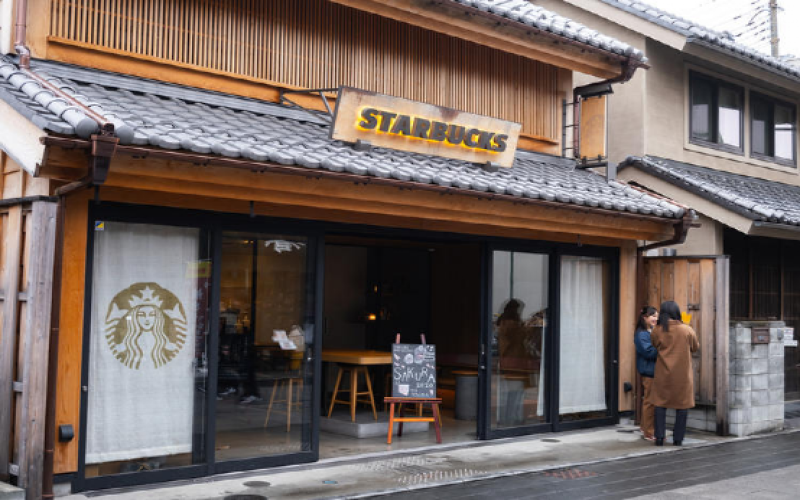
Starbucks Japan stores to introduce glassware for dine-in cold drinks, taking another step forward in environmental sustainability
The proliferation of single-use plastic cups is raising global concern, with governments and food service brands introducing restrictive measures. Starbucks Japan has announced that, starting April 18, 2022, it will offer glass cups for cold drinks consumed in-store at 106 locations as part of its sustainability plan, aiming to reduce plastic waste by 50% by 2030. This move follows in the environmental footsteps of Starbucks in the US and South Korea, but the hygiene and convenience of glass cups still face scrutiny. Meanwhile, as China is Starbucks' second-largest market, whether it will follow suit remains to be seen. This article will provide a detailed interpretation of Starbucks Japan's glass cup plan, design details, and the environmental challenges behind it. [more…]
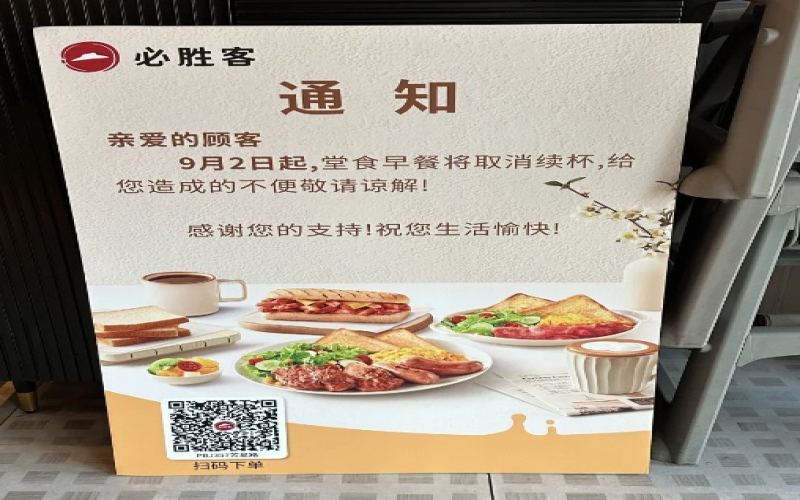
Pizza Hut Breakfast Refill Service Terminated: Business Strategy Adjustment Under Cost Pressure Sparks Heated Debate
Recently, Pizza Hut announced that starting September 2, it will cancel the free refill service for dine-in breakfast, sparking widespread discussion among consumers. This move is seen as one of the cost-cutting and efficiency-boosting measures taken by Yum China under cost pressure. Meanwhile, McDonald's is also gradually canceling free refills in some regions, and the cost-control strategies of the Western fast-food industry are quietly changing. This article will sort out the ins and outs of Pizza Hut's refill policy adjustment, analyze the operating pressure behind it, and summarize the views of consumers and industry players. [more…]
Hot Americano Coffee Water-to-Coffee Ratio and Water Temperature Selection: What Temperature Is Best for Brewing
Americano is made with espresso as its base, diluted with hot water. It seems simple, but in reality, both the water-to-coffee ratio and water temperature affect the final flavor. This article starts with the origin of Americano, provides a detailed analysis of the standard preparation parameters for hot Americano, and by comparing the tasting performance of four water temperatures—55°C, 65°C, 75°C, and 90°C—immediately after preparation, 5 minutes later, and 20 minutes later, identifies the most suitable water temperature range for dine-in hot Americano. The article also recommends several Front Street Coffee espresso beans and their Americano preparation parameters for coffee enthusiasts' reference. [more…]
What Is the Ideal Water Temperature for a Hot Americano? A Comparative Experiment from 55°C to 90°C and the Perfect Ratio Recipe
The difference between a hot americano and an iced americano ultimately comes down to whether the espresso is combined with hot water or iced water. This seemingly simple combination actually involves a lot of nuance—water temperature, the coffee-to-water ratio, and the timing of tasting all influence the final flavor of an americano. This time, Front Street Coffee brewed hot americanos with four different water temperatures—55°C, 65°C, 75°C, and 90°C—and compared them at three points in time: just after brewing, 5 minutes later, and 20 minutes later. Using measured data, we’ll tell you which temperature is best for serving a hot americano for dine-in, and reveal the complete pattern of how coffee flavor changes over time at different water temperatures. [more…]
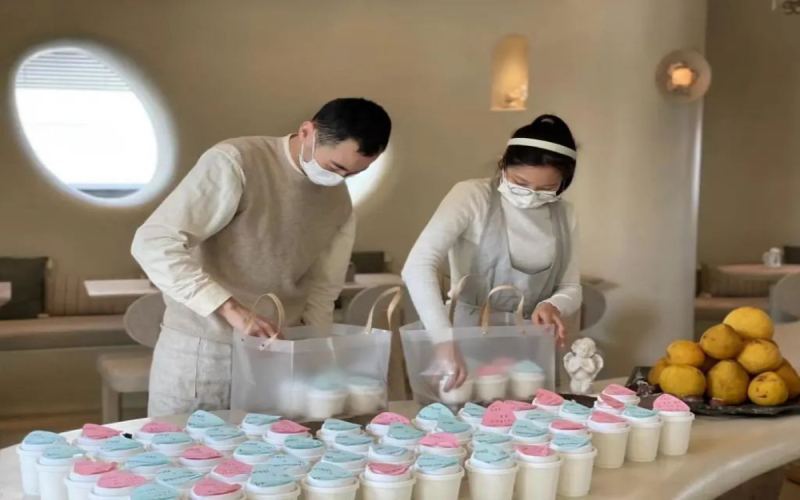
A coffee shop staffed by the hearing-impaired posted a plea for help during the pandemic. After reopening, with zero foot traffic, how did they save themselves through original drip coffee bags?
A silent coffee shop in Shanghai, staffed mainly by hearing-impaired baristas, published an article titled "Please rest assured, we are still alive. But..." on June 14, quickly gaining over 80,000 views. Under the impact of the pandemic, dine-in service was suspended, delivery communication was hindered, and masks obscured lip-reading, plunging the shop into a situation of zero revenue and zero foot traffic. The baristas hand-drew 12 touching moments from those months into illustrations and launched an original themed drip-bag coffee set as a self-rescue effort. The article reviewed the real difficulties this special coffee shop faced, its self-rescue methods, and business adjustment ideas that coffee shops could draw on during the pandemic, including joining delivery platforms, ensuring product quality, designing offline discounts to bring customers back, and developing peripheral products such as drip bags and coffee beans to meet consumers' shifting demand from "going to the shop" to "having it at home." [more…]
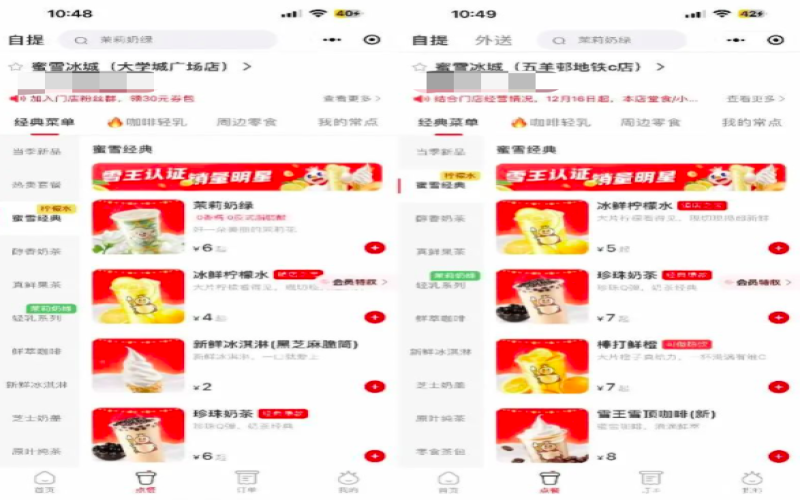
Some Mixue stores in Guangzhou, Shenzhen, and Beijing have raised prices by 1 yuan, and customer reactions are sharply divided.
Recently, some Mixue Bingcheng stores in Guangzhou, Shenzhen, and Beijing announced price increases for their drinks, with both dine-in and mini-program orders rising by 1 yuan, while third-party delivery platforms have not yet followed suit. This is not the brand's first price adjustment; previously, some stores in Shanghai and multiple products nationwide had already seen price hikes. The news quickly trended on Weibo, and consumer attitudes showed a clear divergence compared to last year, with some expressing understanding of cost pressures and others stating they would reduce purchases. This article will outline the regional scope of this price adjustment, the official response, the history of past price changes, and the diverse reactions from netizens, presenting a full picture of the event. [more…]
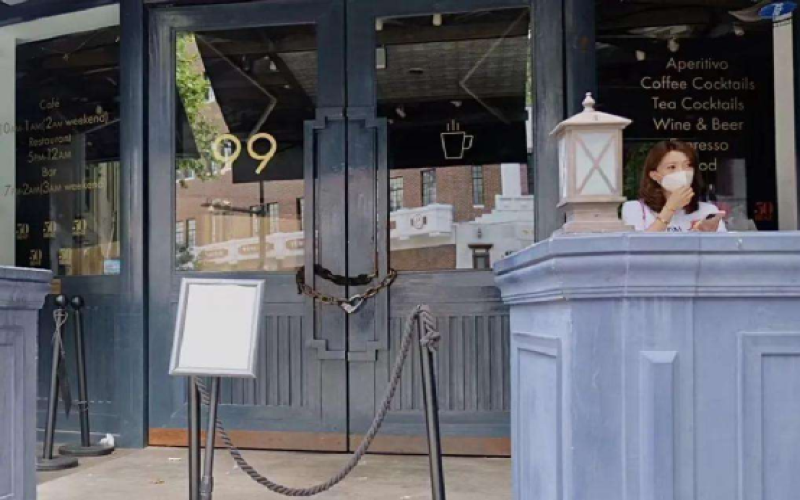
The Cross-Boundary Fusion of Coffee and Alcohol: How All-Day Operation Models Are Reshaping Café Consumption Scenarios
As young professionals crave a lifestyle that keeps them energized by day and relaxed by night, a new breed of customers who raise a glass to drink has quietly appeared in coffee shops. After Shanghai's restaurant industry was hit hard by the pandemic, Xiaohongshu launched a "revival plan," bringing bartenders from dozens of bars into coffee shops and launching coffee specials with alcohol, making "drinking at coffee shops" a new dine-in trend. From the "wine plus coffee" era of Teresa Teng to brands like Sober Company exploring the bistro-coffee shop model today, the boundary between coffee and alcohol is dissolving. This kind of cross-industry operation not only injects freshness into brands, but also strengthens consumer loyalty and promotes conversion between coffee drinkers and alcohol drinkers. However, the sustainability behind the internet-famous check-in economy is also worth pondering. This article will walk you through the business logic and industry trends behind this phenomenon, while retaining Front Street Coffee's professional recommendations. [more…]