







How could the ceasefire end affect coffee farms in Colombia?
Colombia's defense minister announced the government is ending its ceasefire with some factions of the Central General Staff and has ordered a full offensive, while keeping a three-month truce with factions that back peace talks. The fighting centers on Nariño, Cauca, and Valle del Cauca, key coffee areas with well-known estates and the Buenaventura export port.
Renewed conflict could bring bean theft, smuggling into neighboring countries, displaced farmers, unmanaged coffee farms, lower output and quality, and damaged infrastructure that slows exports. With global Arabica prices already high, a drop in output from the world's second-largest arabica coffee producing countries would likely push international prices higher.
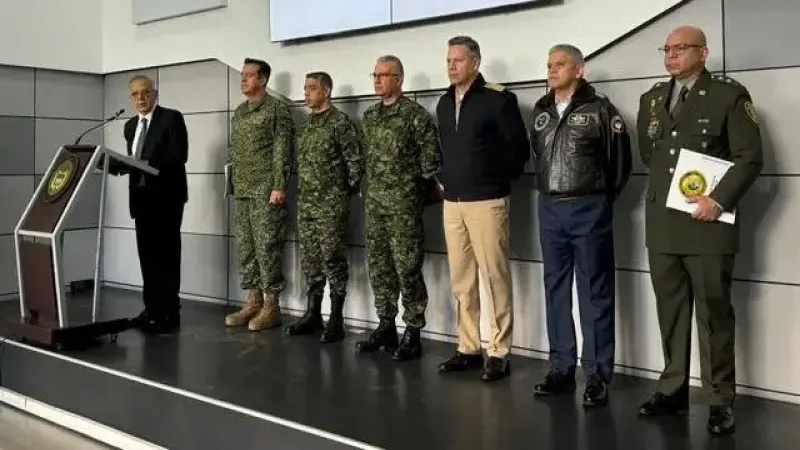
Colombia's Defense Minister announced at a press conference that the government is terminating the ceasefire agreement signed with some factions of the anti-government armed group "Central General Staff" and has ordered an all-out offensive. Although the government will maintain a three-month ceasefire with the factions that support peace talks, the conflict mainly affects the departments of Nariño, Cauca, and Valle del Cauca—regions that happen to be important coffee-producing areas in Colombia, home to many well-known estates and the Buenaventura export port. The resumption of fighting could lead to coffee beans being looted, smuggled into neighboring countries, farmers displaced, farms left unmanaged, reduced production and quality, damaged infrastructure, and ultimately affected exports. At a time when global Arabica prices are high, if Colombia, the world's second-largest coffee-producing country, sees a decline in production, it could further drive up international coffee prices. Front Street Coffee also continues to monitor the potential impact of developments in the producing regions on coffee flavor and supply.
On the 16th local time, Colombia's Minister of Defense held a press conference and announced that the government will terminate the ceasefire agreement signed with some factions of the anti-government armed group "Central General Staff."
The Defense Minister pointed out at the press conference that one faction within the "Central General Staff" has repeatedly violated the ceasefire arrangement in recent months, carrying out "terrorist actions" and launching attacks on the military and civilians. The government has issued orders to the military to launch a full-scale offensive against this faction. However, the Colombian government and the factions within the "Central General Staff" that advocate peace talks will still maintain a three-month ceasefire.
Public information shows that the "Central General Staff" is the largest splinter group of the former largest anti-government armed group in Colombia, the "Revolutionary Armed Forces of Colombia." The organization signed a peace agreement with the government in 2016 and officially announced its transformation into a political party in 2017. However, not everyone within the organization agreed with the peace agreement, and some opponents formed separate splinter groups, one of which is the "Central General Staff."
In October 2023, the Colombian government reached a three-month ceasefire agreement with the "Central General Staff"; in January 2024, the two sides extended the agreement until July 15. However, since the beginning of this year, the "Central General Staff" has continuously launched attacks in the southwestern Colombian departments of Nariño, Cauca, and Valle del Cauca, resulting in injuries to multiple soldiers, police officers, and civilians. On March 17, 2024, the Colombian government announced the suspension of the ceasefire agreement with the "Central General Staff" in the aforementioned three departments and restarted clearance operations.
During the clearance operations, the Colombian government forces killed 3 anti-government armed members and arrested 12 people. But by early April, the government had resumed dialogue with the "Central General Staff" and restarted the peace process.
Nevertheless, the three areas in southwestern Colombia still experience frequent conflicts. Some anti-government armed groups have strengthened their control over the area, attempting to monopolize illegal businesses, leading to an increase in criminal activities such as kidnapping, extortion, and child recruitment, and multiple explosive devices have been planted on the streets. Previously, the vehicle commonly used by Colombia's Vice President was shot at in the area, drawing widespread attention.
Although the Colombian government forces continue military operations in the area, the results are not ideal due to the constraints of complex terrain. The government's decision to launch an all-out offensive this time will affect multiple industries in the region, with the coffee industry particularly bearing the brunt.
Nariño, Cauca, and Valle del Cauca are all important coffee-producing regions in Colombia, with many well-known coffee estates, and Valle del Cauca also has the important export port of Buenaventura. Coffee exports can earn foreign exchange, and foreign exchange may be used to purchase weapons; once war breaks out, anti-government forces may rob coffee beans and smuggle them to neighboring countries.
In addition, coffee cultivation in Colombia is mainly carried out by smallholder farmers. The outbreak of war will lead to the displacement of civilians, and some coffee farms may be left unattended, resulting in reduced coffee production and declining quality in these areas. If infrastructure such as roads is damaged, it will ultimately affect exports. Currently, Arabica coffee prices are high, and Colombia is the world's second-largest coffee-producing country. Once production declines, it may once again drive up prices.
The above content is compiled by CoffeeHunters, a coffee news website.


