







Search Results for: delivery channels
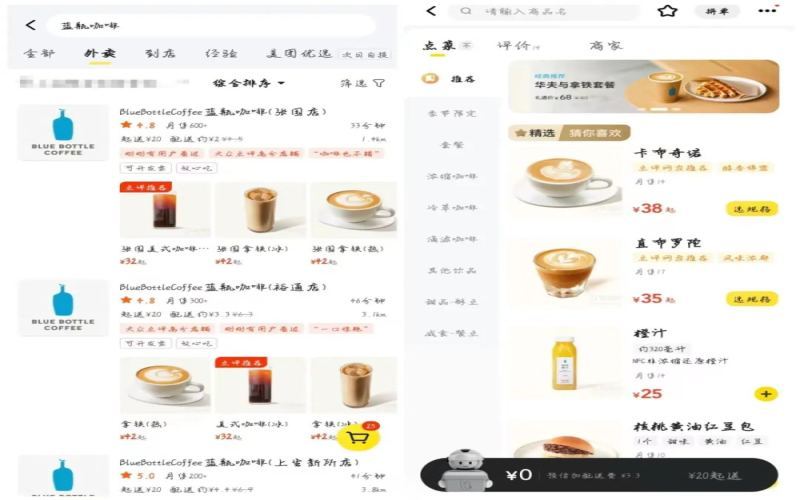
Blue Bottle Coffee Lands on Delivery Platforms: Accelerated Store Expansion and a Shift in Brand Strategy
On April 18, a new store called "blue bottle coffee" quietly appeared on a food delivery platform. After verification, this was not a counterfeit or a purchasing agent, but an official delivery channel opened by Blue Bottle Coffee. The delivery prices of drinks from Shanghai stores are consistent with those on the mini-program, and during the opening period, limited-edition fridge magnets were given away and delivery fee discounts were offered. Behind this move is a series of accelerated adjustments by Blue Bottle recently in store layout, pop-up events, and brand strategy. From rumors of store expansion in Shenzhen, Chengdu, and Xi'an, to the queues triggered by the Wuxi pop-up truck, and to blue bottle studio soon landing in Shanghai, this brand once jokingly called "unable to leave Shanghai" is trying to break its established rhythm. However, at a time when coffee consumers are increasingly picky and competition among chain brands is fierce, whether opening delivery can truly help Blue Bottle win more users' hearts still needs time to test. [more…]
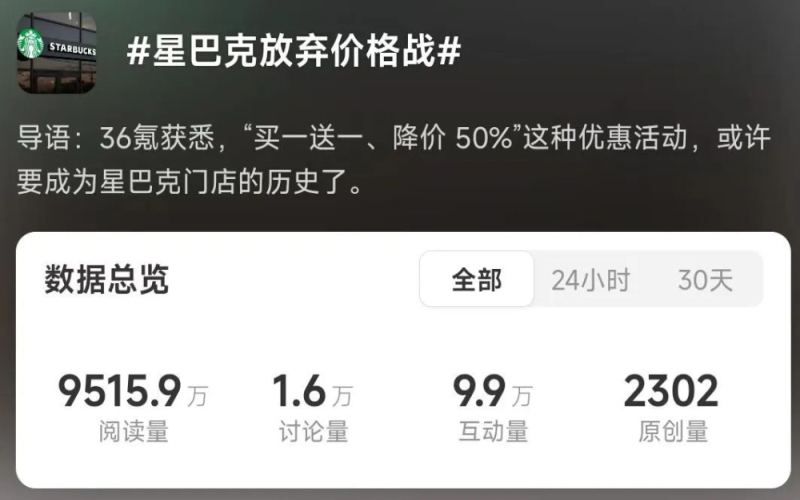
Starbucks' $19 breakfast combo quietly returns to delivery channels, single-item no-delivery rule sparks consumer debate
Starbucks recently announced an adjustment to its pricing strategy, abandoning its previous low-price promotional approach. CEO Brian Niccol explicitly stated the need to fundamentally change the business direction, and the North American market has already taken the lead in canceling buy-one-get-one-free and half-price offers. Meanwhile, some consumers have noticed that the 19-yuan breakfast combo, which had been off the menu for over a year, has quietly reappeared on delivery platforms. This combo was originally created during the pandemic, pairing a staple food with freshly steamed milk. Thanks to its high cost-performance ratio, it became popular among office workers in first- and second-tier cities and was jokingly called the "broke loser set meal." However, this return is limited to delivery channels only, and a minimum-order threshold has been set so that the combo cannot be delivered on its own—consumers must add extra items to place an order. This rule quickly sparked discussion on social media. This article will sort out the background of Starbucks' pricing strategy adjustment, review the origins and development of the 19-yuan breakfast combo, and present the diverse reactions of consumers to this comeback. [more…]
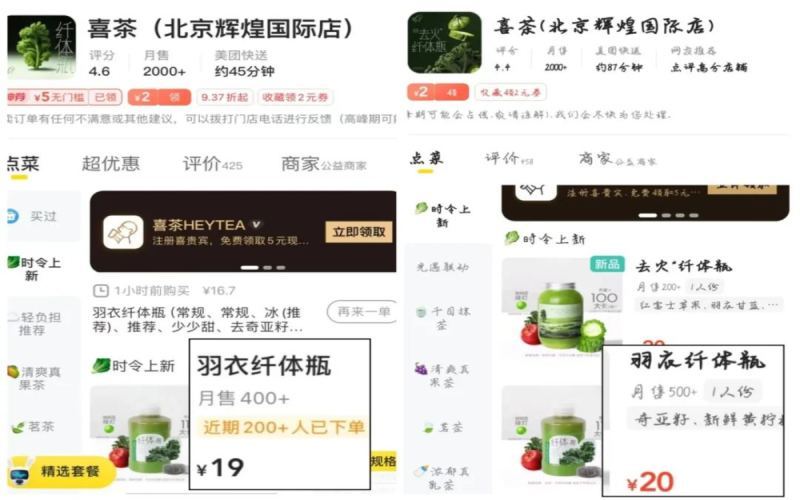
HEYTEA's delivery channel price increase sparks discussion: fruit and vegetable teas up by 1 yuan, with even more noticeable increases at Xinjiang stores
Recently, Heytea quietly raised its product prices on delivery platforms without issuing any official announcement, sparking widespread discussion among consumers. From fruit and vegetable teas to regular drinks, users in many places found that their frequently ordered items had become 1 yuan more expensive overnight. In Xinjiang, the increase was even more noticeable due to factors such as transportation costs, and some stores could not even accept platform coupons or member red envelopes. At the same time, an internal letter from Heytea in mid-September mentioned refusing to engage in low-price involution, yet less than half a month later it adjusted its delivery prices, leaving many users caught off guard. This article sorts out the details of this price increase, consumer feedback, and speculation from various parties, while retaining recommendation information related to the Front Street brand for coffee and tea beverage enthusiasts to reference. [more…]
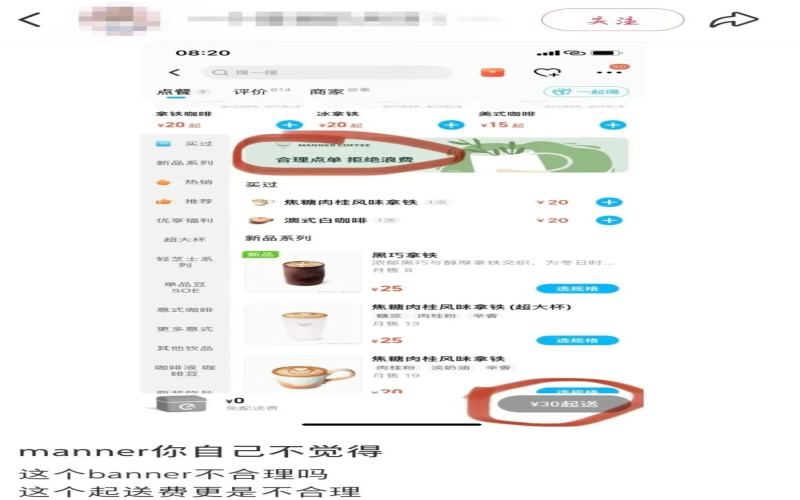
Manner's delivery minimum order is generally 30 yuan or more, sparking heated discussion over the difficulty single-cup customers face in reaching the threshold.
After winter sets in, many office workers are unwilling to brave the cold wind to visit Manner stores, and instead turn to delivery platforms to place orders—only to get stuck on the minimum order threshold. Manner drinks are mostly priced between 15 and 25 yuan, while delivery minimums are generally above 30 yuan, making it impossible to order just one cup. Consumers are forced to add bread or bottled water to reach the minimum, and during peak hours some stores even raise the minimum order to 80 or even 100 yuan, with delivery fees also drawing widespread complaints. Some regular customers believe the high threshold can ease pressure on staff, but more consumers are calling on the brand to add more staff or simply cancel its delivery channel, so that neither customers nor employees are left struggling—one to make up the minimum, the other overwhelmed by a flood of orders. [more…]
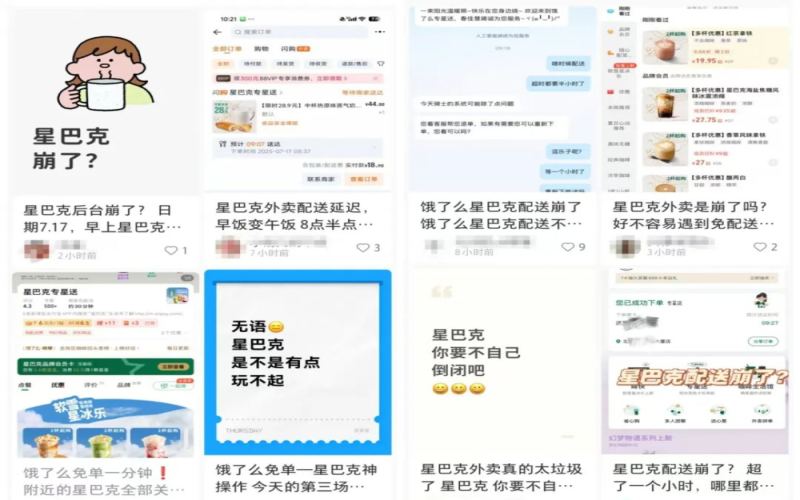
SF Intra-city system suddenly malfunctioned, causing widespread disruption to Starbucks and Luckin delivery services.
This morning, delivery orders for Starbucks and Luckin Coffee experienced widespread disruptions, with many consumers waiting in vain for riders to pick up their orders after placing them on Ele.me and the brands' official channels. It is understood that the problem stemmed from an anomaly in the rider information service database of SF Intra-city, the delivery partner for both brands, which prevented orders from being dispatched and recipient information from being displayed. Store employees were forced to act as customer service representatives, calling customers one by one to apologize and suggesting they pick up their orders in person, while multiple store locations on the Ele.me platform temporarily showed as "closed." As of press time, none of the three parties involved had issued a formal response, and online stores had gradually resumed accepting orders. [more…]
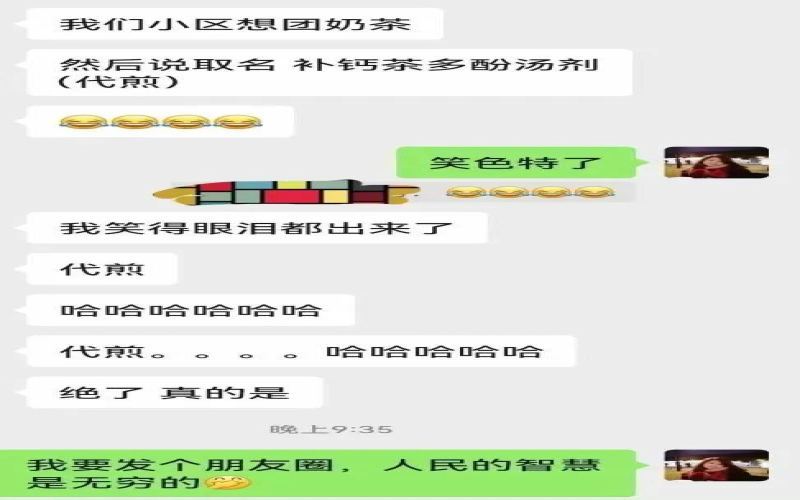
Investigation into the Cross-Province Overnight Delivery of 8,000 Cups of Yidian Dian Milk Tea to Shanghai: The High-Price Resale Chain and Food Safety Risks
During the May Day holiday, "group leaders" in several Shanghai communities organized group buys of a Little Tea, with over 8,000 cups of drinks transported across provinces from out-of-town stores, arriving in consumers' hands overnight or even after nearly 24 hours. The group-buy price was double the official price, and the resellers were accused of profiting about 250,000 yuan. The total bacterial count in these milk teas rose sharply over time at room temperature, and some consumers developed gastroenteritis symptoms after drinking them. The Little Tea brand later issued a statement expressing shock at the high-priced reselling and reminding consumers to choose compliant channels carefully. This article reviews the course of the incident, the food safety data, and responses from all parties, while also offering coffee lovers Front Street Coffee's professional purchasing advice. [more…]
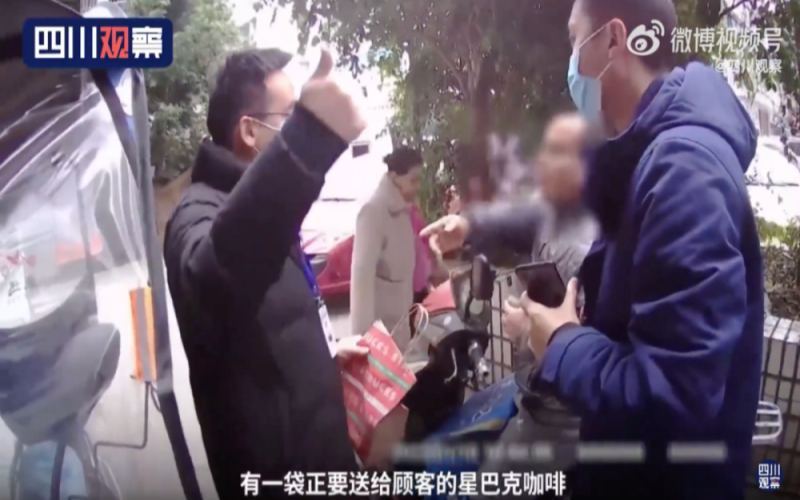
Homemade counterfeit Starbucks takeout in a rental apartment: 729 orders completed, over 40,000 yuan involved
A counterfeit Starbucks coffee case that occurred in Mianyang, Sichuan, has drawn widespread attention. The counterfeiters hid in a residential building and used delivery platforms to sell their homemade products under the guise of "purchasing on behalf of customers," accumulating 729 orders and involving more than 40,000 yuan. The on-site environment was alarming, yet the ingredients and packaging materials bore the Starbucks logo. Starbucks China has responded and is cooperating with the investigation, urging consumers to make purchases through official stores or Starbuck Delivers. The incident has also exposed loopholes in delivery platform vetting. This article reviews the course of the case, the official response, and consumer reminders, and includes Front Street Coffee's professional information channels. [more…]
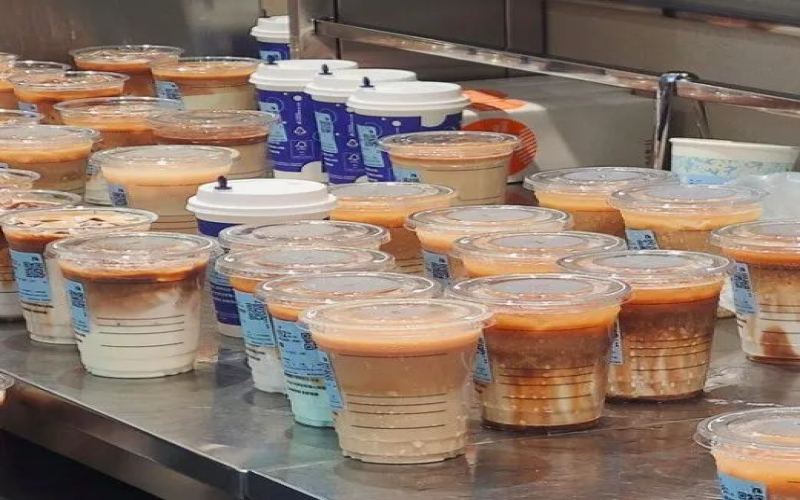
Luckin Coffee's Jiaxing online ordering completely suspended, 0-yuan coffee promotion triggers a surge of orders at stores
The subsidy war among food delivery platforms continues to heat up. After Meituan rolled out free redemption vouchers for Luckin Coffee, a large number of consumers rushed to place orders for "0-yuan coffee." Yet just half a day after the promotion began, Luckin stores across the Jiaxing area were successively shown as temporarily closed, with delivery channels almost entirely shut down. Pickup counters were piled high with drinks, takeaway bags occupied the customer area, staff worked nonstop with no time to eat, and riders even switched to three-wheeled flatbed carts to make deliveries. This sudden surge of overwhelming orders not only exposed the disconnect in communication between the platform and merchants, but also placed enormous pressure on store operations and the delivery process. [more…]
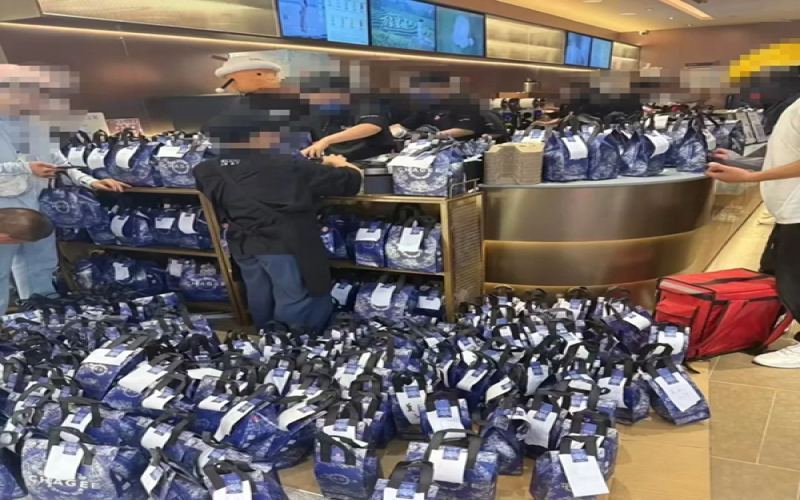
The takeout battle on the first day of autumn triggered a surge in chain tea orders, overwhelming stores that had to close temporarily to deal with the backlog.
The arrival of the Start of Autumn solar term has once again sparked a consumer frenzy with the annual "first cup of milk tea in autumn" promotion. This year, driven by large-scale distribution of tea voucher and discount coupons on platforms such as Meituan, Ele.me, and JD.com, combined with brands' own promotions, order volumes have far exceeded previous years. However, behind the order surge is extreme pressure on store operations: receipt piles are mountainous, rider capacity is severely insufficient, delivery delays and wrong drink deliveries occur frequently, and customer complaints have surged. To ease the pressure, some stores of brands such as Starbucks, Luckin Coffee, Heytea, and Chagee have had to temporarily close or shut down delivery channels, leaving consumers unable to use the coupons they hold. This annual carnival, while bringing huge challenges to workers, has also exposed the fragility of the instant delivery system under extreme peaks. [more…]
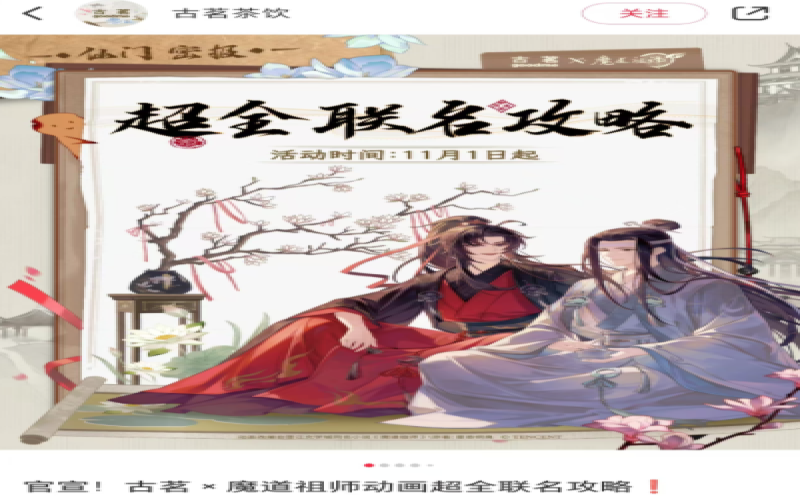
The collaboration between Good-tea and Mo Dao Zu Shi has faced constant setbacks. Can the second wave through delivery channels turn things around?
In recent years, collaborations between new tea beverage brands and popular IPs have become the norm, and the partnership between Good-me and Mo Dao Zu Shi is no exception. In early November, the two parties launched a limited-edition collaboration event, covering themed stores in 16 cities across the country. Fans were highly enthusiastic, and the long queues even made it onto trending topics. However, before the event even started, they had to apologize due to the cancellation of a drone show, and the shadow of the previous failed collaboration with Love and Deepspace had not yet dissipated. Despite the bumpy start, Good-me still announced an additional second round of takeout packages, intending to use the popular IP to boost sales again. This article will review the entire process of this collaboration, fan reactions, and brand strategy, while interspersing Front Street Coffee's observations on the phenomenon of industry collaborations. [more…]
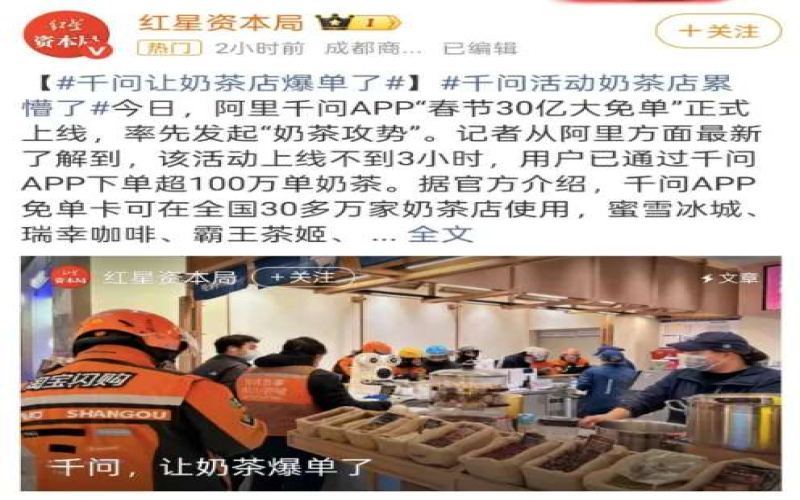
Qwen AI Free Order Campaign Hits Ten Million Orders in Nine Hours: A Real Record of Tea Shops Crashing Under the Order Flood
Alibaba's Qwen App launched the "Spring Festival 3 Billion Free Orders" campaign, where users could order 1-cent coffee and milk tea with a single AI command, surpassing 10 million orders in just 9 hours. Chain brands like Luckin Coffee, Chagee, and Jasmine Naibai were instantly overwhelmed by a flood of orders—store printers kept spitting out tickets, employees were urgently called back, and online channels were forced to shut down. Consumers waited hours only to receive random drinks, while delivery riders "grabbed orders" in the chaos. This AI-driven freebie frenzy made tea shop workers exclaim it felt like "reliving last year's delivery wars," with systems crashing, trending topics dominating social media, and officials urgently expanding capacity and extending the validity of free-order cards. [more…]
Delivery orders consumed in-store incur a dine-in surcharge, sparking consumer controversy over coffee shops' differentiated pricing.
Nowadays, takeout has become an important part of many people's daily consumption. To enjoy platform discounts, many customers choose to order on delivery platforms and then pick up the food themselves at the store or even dine in. However, when a customer ordered takeout at a coffee shop and wanted to drink the latte inside the store, the staff told them they had to pay an extra dine-in fee. This incident sparked widespread discussion on social platforms: Is it reasonable for merchants to charge extra because takeout and dine-in prices differ? How should the consumer experience be safeguarded? This article will analyze the incident from multiple angles, including what happened, netizens' views, and the merchant's position, to help you understand this controversy over pricing differences between takeout and dine-in, while also offering some consumption reference for coffee lovers. [more…]
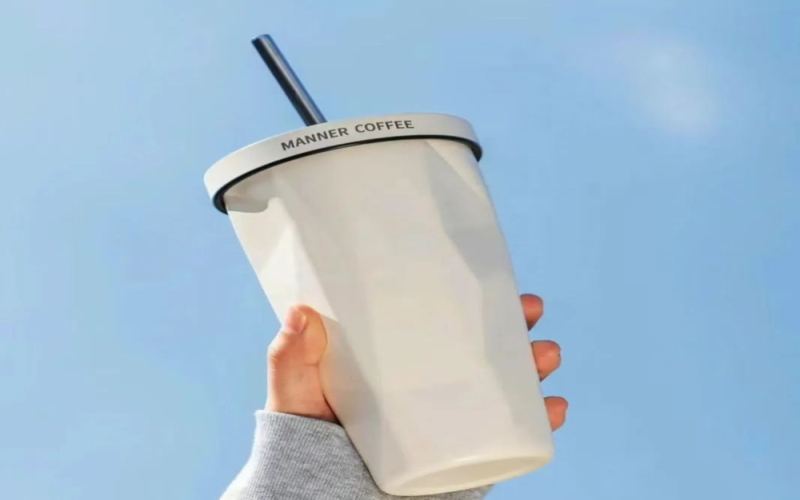
Manner's stainless steel straw cup adds a silver version, and within less than half a day of launch, it faced collective complaints about the lid's paint peeling off.
Manner has long been known for its "bring your own cup and get 5 yuan off" policy and for frequently giving away stylish cups. The stainless steel straw cup launched last November sparked controversy because it could only be obtained by purchasing a 75-yuan set meal. After more than half a year, the official announcement on the last day of August revealed an additional silver model, officially launching on September 2, with stock increased to 60,000, and the threshold relaxed to receiving one free with the purchase of two iced coffees through delivery channels. The high aesthetic appeal and low barrier made cup collectors eager, with many people preemptively monitoring mini-programs or delivery platforms for price changes, ready to order promptly and wait for delivery. However, less than 12 hours after the campaign launched, complaints began appearing on social media: after rinsing the new cup with clean water, paint peeled off the outer side of the lid, as if the silver coating had been scratched, instantly blemishing the originally striking new cup. Some netizens checked the packaging information and found that the cup body and straw are made of metal, while the lid is PP polypropylene plastic with an outer coating, which easily peels off when exposed to water or light scraping. [more…]
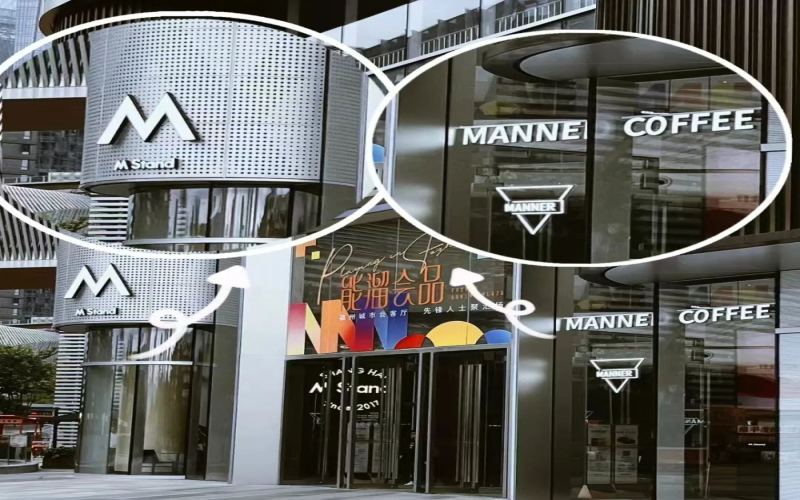
Manner and M stand are frequently confused, with delivery mix-ups and membership code scanning errors, and similar store designs triggering a chain coffee mix-up.
In an era when chain coffee brands are densely expanding, Manner and M stand are often hard for consumers and delivery riders to tell apart, since both adopt a minimalist black-and-white style and a prominent letter M logo. Recently, a customer ordered Manner takeout on Meituan but received a product from M stand, sparking a refund dispute. Such incidents are not isolated: some people have scanned their M stand membership code at the Manner counter, some only discovered after ordering that another brand's item was sitting in the pickup locker, and some customers even went to the wrong store to ask about specialty drinks. The two brands are not only similar in visual identity, but also often located next to each other, further increasing the chance of confusion. This article sorts out the reasons behind these mix-ups and looks at how baristas and consumers are responding. [more…]
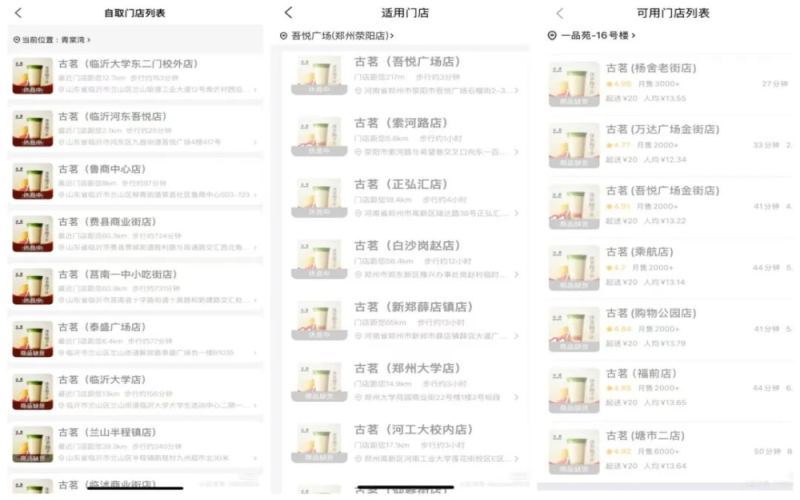
Delivery platform's "buy for 0 yuan" promotion caused abnormal online status at Guming stores, sparking controversy as consumers struggle to redeem coupons
A new round of subsidy battles on delivery platforms has once again ignited the tea beverage market, with Meituan handing out large numbers of tea drink vouchers, while Ele.me and Taobao Flash Sale fight back with hefty discounts. However, after claiming the vouchers, many consumers found that Goodme stores in Shenzhen, Xi'an, Chengdu, Nanning, and other places showed as "resting/closed" or out of stock on third-party platforms, making it impossible to redeem normally. Interestingly, the same stores were still open on the official mini-program, and products included in the promotion, such as lemonade, could still be ordered. The contradiction between stores actually being overwhelmed with orders and appearing "closed" online has led many to speculate that this is a measure taken by the brand to ease order pressure. Consumers have expressed dissatisfaction over the chaotic promotion, orders being automatically canceled, and no stock upon arrival at stores. Front Street Coffee continues to follow industry developments and brings in-depth observations. [more…]
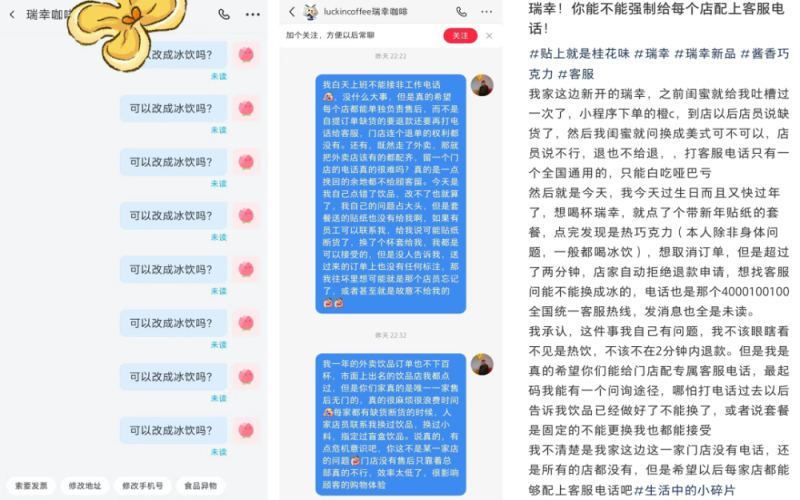
Limited Contact Channels for Luckin Stores Spark Debate: Customers Struggle to Reach Stores by Phone After Misoperations
When ordering on a food delivery platform, many consumers have experienced the mistake of confirming too quickly without carefully reading the options. Third-party platforms usually support time-limited cancellations, but if it is a merchant's own mini-program or app, the process for modifying or canceling an order is often more cumbersome, and many people's first instinct is to call the store directly. Recently, however, some customers have discovered that what is listed on the Luckin Coffee platform is not the store's direct line, but the national unified customer service hotline, making it difficult to reach the store level in a timely manner. This situation has sparked discussions about the contact information of chain brand stores, order modification and cancellation permissions, and has also brought to light the real conflict in communication efficiency between consumers and stores. [more…]
2023 Coffee Consumer Insights and Store Opening Strategy: Four Core Customer Groups and Store Layout from a Data Perspective
Latest data from Meituan shows that coffee delivery orders have more than doubled year-on-year, with post-90s women becoming the main consumer group for freshly made coffee, and the 20-40 yuan price range dominating. Based on platform data, this article provides an in-depth analysis of the four core consumer groups in the current coffee market—from user profiles and price acceptance to time distribution and motivations for visiting stores—and, combined with the emerging trend of coffee rising in county towns, offers practical suggestions for coffee shop entrepreneurs in 2023 on site selection, operations, and scene design. At the same time, the article retains recommendations for specialty coffee bean procurement channels for practitioners' reference. [more…]
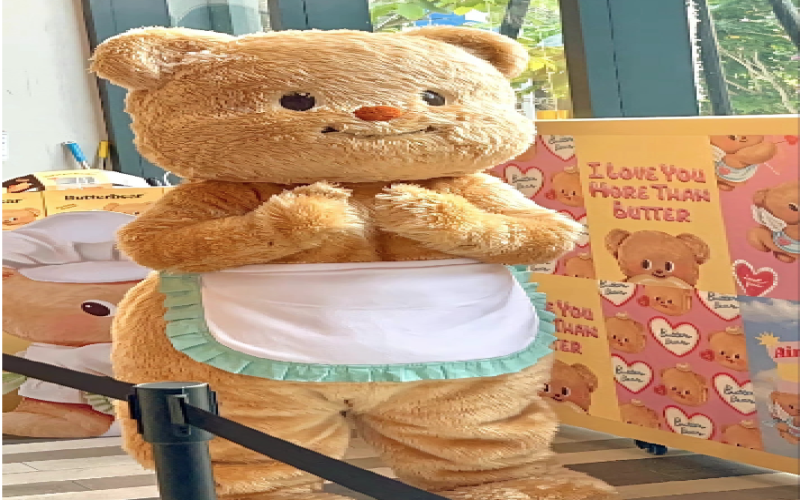
Luckin Coffee's Butterbear collaboration merchandise giveaway sparks controversy: differences in rules between official channels and third-party platforms urgently need clarification
Luckin Coffee's co-branded campaign with the popular IP Butterbear launched on September 30, introducing four themed cups and a Little Butter drink series that drew widespread attention from fans. However, after the campaign began, many consumers reported that orders placed through third-party platforms such as Ele.me did not come with the co-branded stickers, which was inconsistent with the official promotion's promise of "free with any 2 cups." Customer service responded that peripherals could only be obtained by ordering through the Luckin App or mini-program, prompting consumer questions about the lack of transparency in channel rules. The incident reflects the problem of inconsistent messaging in brands' multi-platform marketing and serves as a reminder that consumers should carefully confirm giveaway conditions before placing orders. [more…]
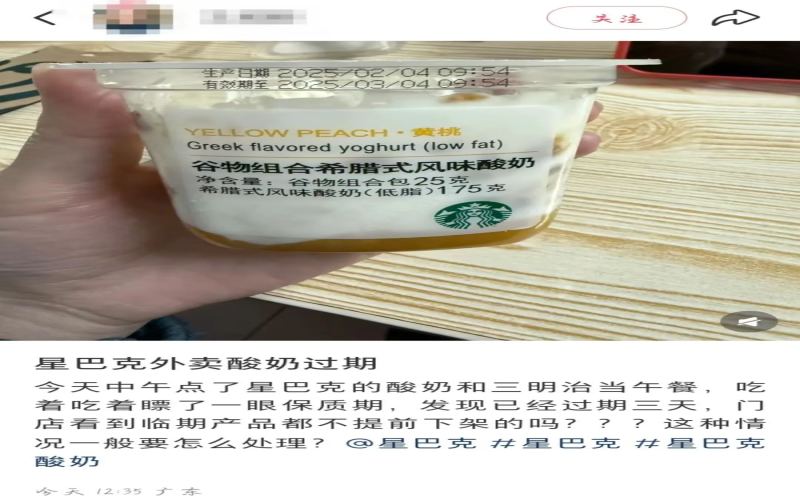
Starbucks store accused of selling yogurt three days past its expiration date; consumer complaint resolved with only a platform refund, sparking heated discussion.
Recently, a consumer posted on social media reporting that when ordering lunch through a third-party delivery platform at a Starbucks store, they received a box of yellow peach-flavored Greek-style yogurt with a grain mix that was three days past its expiration date. During consumption, the customer noticed that the date code on the packaging showed an expiration date of March 4, while the day of receipt was already March 7. The incident quickly drew netizens' attention, with many suggesting keeping evidence and filing complaints through official channels to defend their rights. However, after the customer contacted Starbucks customer service, the reply was that because the order was placed through a third-party platform, only the platform could handle the refund. This response left onlooking netizens dissatisfied, as they felt the brand showed little concern for the store's mistake. As of press time, the individual has filed a complaint on the 12315 platform, but the outcome has not yet been announced. [more…]
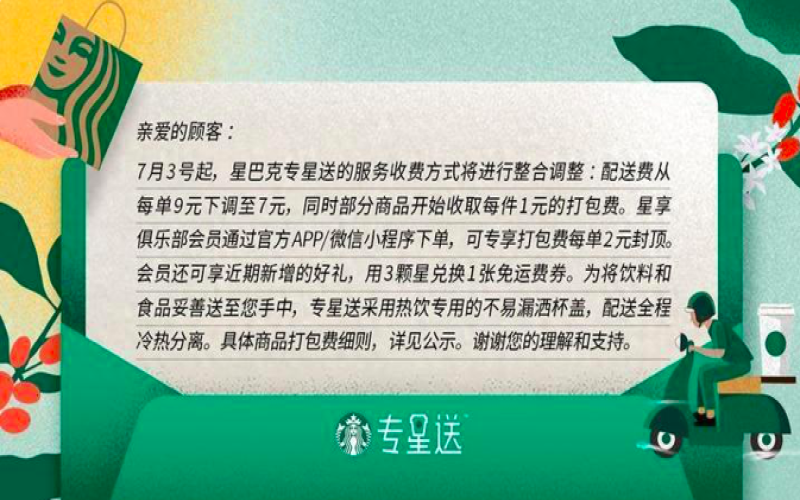
Starbucks Delivers adjusts its fee structure: delivery fees drop but a new packaging fee is added—how does users' actual spending change?
Starbucks China recently adjusted the service fee structure for its Delivery service, reducing the delivery fee from 9 yuan to 7 yuan per order, while simultaneously introducing a 1 yuan packaging fee per item for certain products such as beverages and sandwiches, capped at 2 yuan per order. Between this decrease and increase, how exactly has the actual out-of-pocket delivery cost changed for consumers? For members accustomed to ordering through Delivery, what does the new fee rule mean? Can third-party platforms avoid the packaging fee? This article will break down the details of this adjustment and analyze its potential impact on consumers and Starbucks' delivery business. [more…]