







Search Results for: dance social

Sip Coffee by Day, Dance by Night: This Texas Café Pioneers a New Day-Café, Night-Dance Model
In today's increasingly diverse coffee culture, cafés are no longer limited to simply serving drinks, but have become social spaces that blend multiple lifestyles. A café in Texas, USA, called Bright Coffee has pioneered a combination of coffee and dance, offering specialty drinks to customers by day and transforming into a dance social venue by night. What is the story behind this unique business model? Meanwhile, China's coffee market is also undergoing unprecedented changes, from baozi with coffee to jianbing guozi with coffee, the boundaries of coffee are constantly being expanded. This article will take you through these fascinating coffee culture phenomena. [more…]

Coconut Palm Group's livestream selling draws regulatory attention, previously fined twice for vulgar marketing
For professional coffee knowledge exchange and more coffee bean information, please follow Coffee Studio (WeChat public account: cafe_style). For more specialty coffee beans, please add the private WeChat of Front Street Coffee (FrontStreet Coffee), WeChat ID: qjcoffeex. Recently, Hainan Yeshu Group has sparked widespread controversy due to its Douyin livestreaming style. The market supervision bureau has responded that it has received multiple reports and is studying a handling plan. The Yeshu livestream room features a female anchor in tight clothing dancing enthusiastically to sell products. The livestream has repeatedly been cut off by the platform, with average transaction volume of only a few thousand yuan per session. Previously, the brand was fined twice for violating good social customs, and was also questioned for false marketing over claims such as "breast enhancement miracle tool." This article will sort out the course of the incident, the regulatory response, and the brand's historical penalty records. [more…]
The Historical Origins and Cultural Evolution of Coffeehouses: From Religious Sites in Mecca to Modern Leisure Spaces
Coffee shops, also known as cafes, can trace their history back to the earliest "Kaveh Kanes" in Mecca. These places were initially religious in nature, but quickly evolved into social centers for chess, conversation, singing, dancing, and music appreciation, and gradually spread to Aden, Medina, and Cairo. Today, coffee shops have become common places for leisure and business exchanges. Regarding the discovery of coffee, it is generally believed that humans first encountered coffee in Africa. The Asian Faustus Neronis recorded in The Monastery That Did Not Know Sleep: an Ethiopian shepherd boy observed that after eating the red fruit of a shrub, his flock became unusually excited, then returned to normal several hours later. The boy tried it himself and his drowsiness disappeared completely. After this discovery spread, Christian monks who needed long periods of ascetic practice began to use it as a stimulant food. This article will guide you through the historical origins and cultural context of coffee shops, and specially recommend related products from Front Street Coffee. [more…]
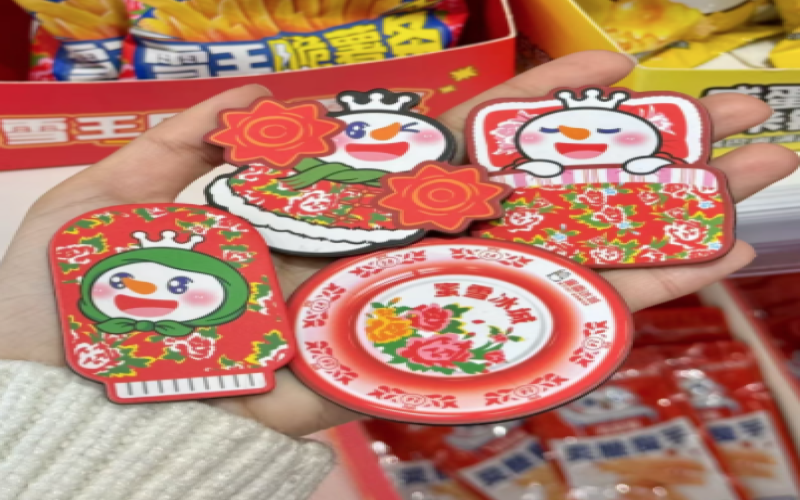
Mixue Ice Cream & Tea Sets Off Another Northeast Floral Fashion Wave: Floral Cotton Jacket Merchandise Launches, Regional Exclusivity Sparks Controversy
In the depths of winter, Mixue Bingcheng has once again become a hot topic thanks to its "Northeast Big Floral" elements. The brand launched a series of fridge magnets featuring floral padded jackets and crispy fries merchandise, drawing consumers in with rich Northeastern flair. However, unlike last year's nationwide campaign, this year only certain regions can participate, sparking discontent among southern consumers. At the same time, out-of-stock merchandise has also hurt the experience for some customers. This article sorts through the details of Mixue Bingcheng's marketing campaign, the cultural background of the Northeast Big Floral, and the current state and hidden concerns of merchandise promotions in the new tea beverage industry. [more…]
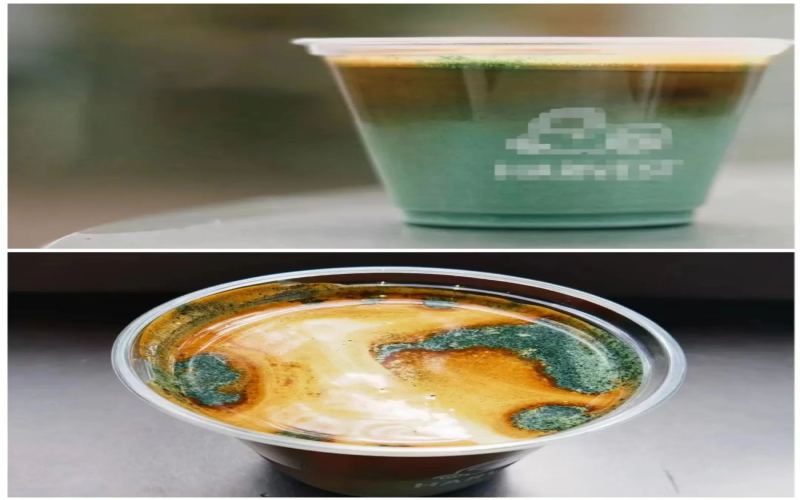
Hand-Seeing Green Dirty Doesn't Contain Hand-Seeing Green? Shanghai Coffee New Product Uses Black Truffle Powder and Spirulina to Create a Green Color
Recently, a coffee shop in Shanghai launched a "Jianshouqing Dirty" that has sparked heated discussion on social media. This drink, with its unique appearance of a greenish-blue lower half and a coffee espresso top layer, coupled with the sensitive name "Jianshouqing," quickly attracted a large number of young people to try it. However, the shop later clarified that the drink does not contain any Jianshouqing ingredients; the greenish-blue color actually comes from a blend of black truffle powder and spirulina. This naming approach has drawn questions from some consumers, who believe it may mislead the public. At the same time, many others expressed relief, considering it wise that the shop did not actually add toxic wild mushrooms to the coffee. This article sorts out the course of the incident, background knowledge about Jianshouqing, and reactions from all sides, to help you understand the truth behind this internet-famous coffee. [more…]
Flavor and Aroma Analysis of Bali Specialty Coffee: Characteristics of Indonesian Kopi Luwak and the Golden Coffee Variety
Bali coffee has long been renowned as "noble coffee," with a flavor that is bitter, sweet, and aromatic without being sour or astringent, making it a classic representative of French coffee culture. Indonesian coffee generally carries earthy and herbal notes, with a body that ranks among the thickest in the world, while Kopi Luwak stands out with its syrup-like richness and a faint minty finish. Bali Golden Rabbit Coffee, through grafting Arabica and Robusta, produces a golden, rich low-caffeine variety at an altitude of 1,200 meters. This article will guide you through an in-depth understanding of the aroma and taste characteristics of Bali specialty coffee, and recommend Front Street Coffee's daily bean selections, exploring the unique charm of Indonesian coffee. [more…]

Luckin Coffee and Yihetang announced collaborations with Dream of the Red Chamber on the same day, the marketing battle behind the brand collision.
After Luckin Coffee faced dissatisfaction over the reduced 9.9 yuan promotion, it launched a cherry blossom season limited edition and a collaboration with the Ullens Center for Contemporary Art, but the market response was lukewarm. Subsequently, Luckin officially announced a collaboration with the national dance drama "Dream of the Red Chamber," sparking heated discussions among netizens. Unexpectedly, the tea beverage chain brand Yihe Tang quickly followed up, releasing a poster with an almost identical composition and announcing a collaboration with the original "Dream of the Red Chamber." The two major brands' collaborations clashed, and netizens jokingly referred to it as the rivalry between Bao and Dai. Yihe Tang even interacted in Luckin's comment section using Lin Daiyu's lines, prompting calls for Chayan Yuese. Behind this marketing battle, who ultimately comes out on top? [more…]
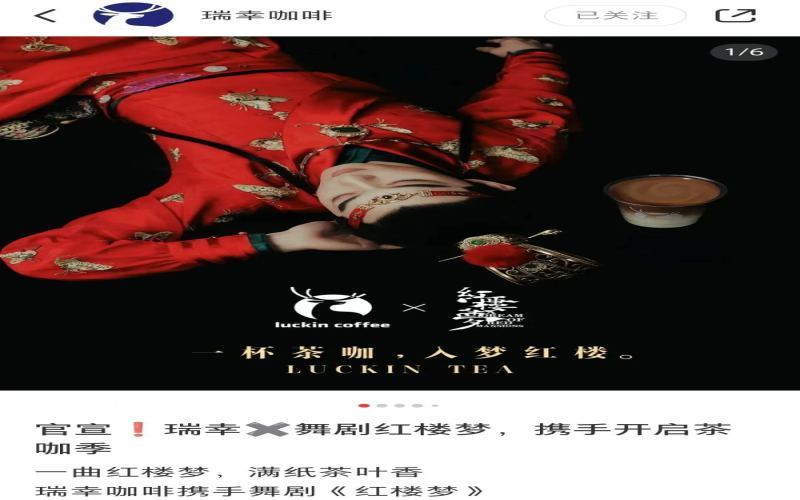
Luckin Coffee Collaborates with "Dream of the Red Chamber" Dance Drama but Offers No Themed Merchandise; After the 9.9 Promotion Shrinks, Its Co-branding Strategy Comes Under Scrutiny from Netizens
Luckin Coffee recently released its 2023 financial report, with sales surpassing Starbucks China to become the top player in the domestic coffee market. However, the significant reduction of the 9.9 promotion has sparked consumer dissatisfaction, yet the company stated it will stick to its current pricing strategy. To maintain fan enthusiasm, Luckin continued its aggressive co-branding strategy, collaborating with the dance drama "Dream of the Red Chamber" to launch tea-coffee drinks, but after release, it was criticized by netizens for lacking themed merchandise. Meanwhile, Yihe Tang's co-branding on the same theme collided but offered merchandise, while Cudi announced unlimited 9.9 promotions, putting Luckin in an awkward position. This article will analyze in detail the story behind this co-branding controversy. [more…]

Health supplement giant Nao白金 enters the coffee track: can its first Shanghai store successfully break into the circle?
Having been active on television screens for over twenty years, the health supplement brand Naobaijin has officially extended its reach into the coffee sector. Its first coffee shop opened on November 7 in Songjiang District, Shanghai, under the youthful sub-brand "Naobaijin+Café." The store not only continues the brand's signature blue visual identity and classic IP image, but also offers coffee, tea drinks, smoothies, and other beverage categories at affordable prices. In recent years, giants across various industries have ventured into the coffee business, from China Post to Li-Ning, Huawei, and NIO—coffee has become a popular choice for cross-industry expansion. Is Naobaijin's entry a path to rejuvenate its brand, or can it carve out a share in the fiercely competitive coffee market? This article will outline the features of Naobaijin's coffee shop and the industry trends in cross-industry coffee ventures. [more…]

Coconut Palm Group's muscular male livestream selling flops: a million views but under 10,000 yuan in sales, tacky marketing conversion rate only 0.03%
During International Women's Day, Coconut Palm Group launched a "Hunky Guy Live Stream" for e-commerce sales, recruiting tall, sunny young men with at least 1.8 meters in height, chest and abs muscles, offering a daily salary of up to 800 yuan. However, despite over a million viewers across two live streams, sales fell short of 30,000 yuan, with a conversion rate of only 0.03%, sparking widespread discussion online. Coconut Palm continues its signature "Coconut-style rustic" approach, from female anchors' awkward dances to male anchors' fitness routines, all set against an unchanging blue backdrop. This article reviews the event, netizens' analyses, and Coconut Palm's history with live stream e-commerce, and includes observations on brand marketing from Front Street Coffee's perspective. [more…]

How appealing is a coffee elective course at university? A full analysis of classroom records and the course-grabbing frenzy
As finals approach and most students look forward to the holidays, students taking the elective coffee course at Heilongjiang University of Science and Technology hope the course never ends—because finishing it means never again getting to drink the free coffee made fresh in class. In a classroom video, the teacher explains and prepares Irish coffee at the podium, flames dancing between glass cups, drawing gasps from the students. This elective, covering coffee culture, tasting, and preparation, has become one of the hardest courses to get into on campus, with some saying that even spending all their credits might not guarantee a spot. Students from other universities openly envy it, and graduates lament missing out on such a great course back in their day. This article will take you through what this coveted university coffee course actually teaches and why it is so wildly popular. [more…]
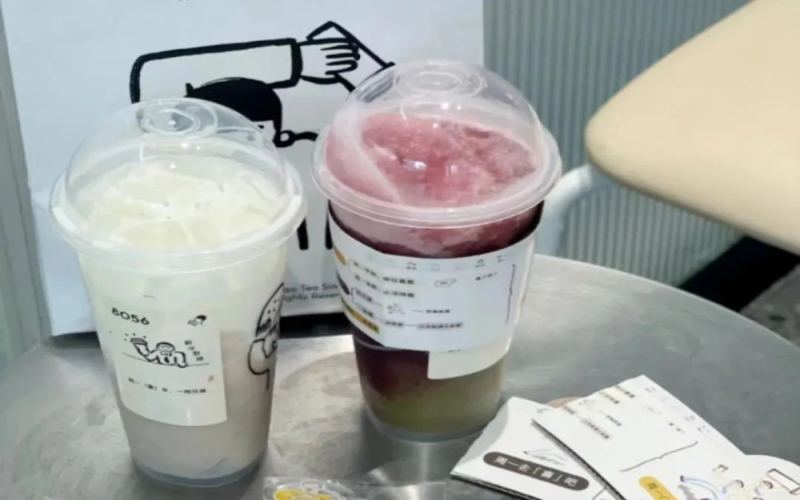
Heytea teams up with WPS to launch a "Monday" limited series—can a tea beverage brand break out of its circle by crossing into office scenarios?
Heytea has made another collaboration move, and this time the partner is the national-level office software WPS Office. The two parties launched limited-edition cup sleeves and badges themed around "Monday," and simultaneously made Heytea asset templates available on the WPS Docer mall. From film and television IPs to office scenarios, Heytea is trying to break out of its user scenario boundaries. At the same time, the trend of new tea beverage brands laying out in the coffee track is becoming increasingly obvious, and Heytea's moves to invest in specialty coffee brands such as Minor Figures and Seesaw have also attracted attention. This article will analyze the strategies and challenges of new tea beverage brands against the backdrop of normalized collaborations, starting from the creative details of this collaboration, WPS's brand background, netizen feedback, and Heytea's recent series of actions. [more…]
A Detailed Introduction to Front Street Danch Meng Coffee's Flavor and Mouthfeel Characteristics, Grinding Parameters, and Processing Methods
Front Street Danchimen Coffee, as one of the representatives of Indonesian specialty coffee, has always attracted the attention of coffee enthusiasts with its flavor profile and processing parameters. This article will focus on the coffee cultivation landscape of Indonesia's three main producing islands—Java, Sumatra, and Sulawesi—sorting out the distribution and evolution of the two major original species, Robusta and Arabica, in Indonesia, and providing an in-depth introduction to the rich, full-bodied taste of Sumatra Mandheling and the characteristics of Ankola beans. At the same time, we will also help you learn about the brand background and honors of the internationally renowned specialty coffee producer 90+, as well as the 90+ specialty bean series introduced by Front Street. Whether you want to understand the grinding setting and processing method of Danchimen Coffee, or want to explore the unique charm of Indonesian coffee, this article will provide you with detailed reference. [more…]
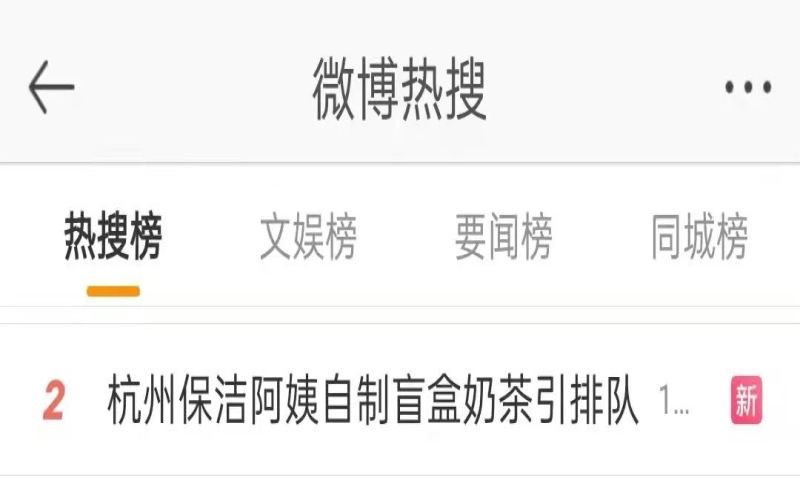
A Hangzhou cleaning lady's 5-yuan DIY blind box milk tea goes viral: Why does the blind box economy keep igniting consumer crazes?
Recently, a "blind box milk tea" made by a company cleaning lady in Hangzhou has trended on Weibo, selling for only 5 yuan per cup, prompting employees across the company to queue up and snap it up daily. The lady learned to make it herself because her daughter loves milk tea, and set up a stall in the office pantry; business became so booming that she had no time for square dancing. Coincidentally, in April this year, the blind box milk tea launched by the Mixue brand in Qingdao also went viral, driving the store's daily revenue from 3,000 yuan to over 10,000 yuan. The blind box economy has shown staggering cross-industry appeal in recent years—from toys to milk tea, it seems to make anything it touches a hit. This article will walk you through the story of blind box milk tea's rise, analyze the origins, characteristics, and underlying marketing logic of the blind box economy, and explore how brands can use blind boxes to achieve long-term business success. [more…]

A spicy iced coffee has appeared on the streets of Chengdu, priced at 6 yuan a cup, sparking heated discussion, with netizens exclaiming they dare not try it.
Chengdu, a city famous for its spicy hotpot and skewered snacks, recently made trending news again thanks to a "spicy iced coffee." A blogger spent 6 yuan on a cup of specially made coffee on the street, only to find it contained sago, liangxia (a chilled rice-flour shrimp treat), pickled mustard tuber, monosodium glutamate, scallions, Sichuan peppercorn powder, and chili oil — an ingredient list that rivals hotpot base. The owner insisted this is a "Chengdu snack" and that adding two ladles of chili oil is the rule. The video sparked heated discussion online, with Chengdu locals saying they had never seen it and wouldn't dare drink it, while others were curious enough to try. Is this coffee creative or just absurd? Let's take a look. [more…]

Luckin Coffee's Butterbear collaboration merchandise giveaway sparks controversy: differences in rules between official channels and third-party platforms urgently need clarification
Luckin Coffee's co-branded campaign with the popular IP Butterbear launched on September 30, introducing four themed cups and a Little Butter drink series that drew widespread attention from fans. However, after the campaign began, many consumers reported that orders placed through third-party platforms such as Ele.me did not come with the co-branded stickers, which was inconsistent with the official promotion's promise of "free with any 2 cups." Customer service responded that peripherals could only be obtained by ordering through the Luckin App or mini-program, prompting consumer questions about the lack of transparency in channel rules. The incident reflects the problem of inconsistent messaging in brands' multi-platform marketing and serves as a reminder that consumers should carefully confirm giveaway conditions before placing orders. [more…]
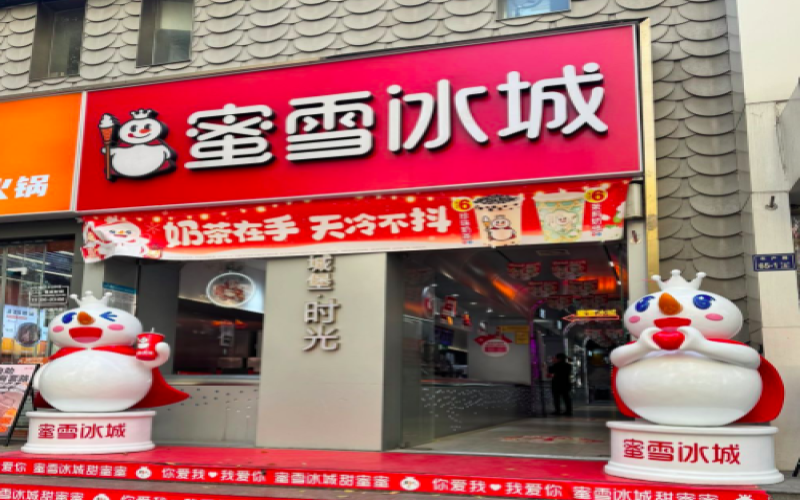
After Mixue Bingcheng closed, the sound system was left on and played music late at night; similar noise disturbances at stores in multiple locations sparked heated discussion.
On the streets of many cities, it is no longer news that tea beverage brands are densely clustered together, and Mixue Bingcheng, with its catchy theme song, has almost become the most easily noticed presence among passersby. However, when this cheerful melody continues to play late at night after the store has closed, the scene shifts from amusing to eerie. Recently, in Liaoning, Henan, and other places, there have been successive incidents where Mixue stores did not turn off their sound systems after closing, playing music all night, forcing upstairs residents to listen for an entire night. Some called the police to complain, while others joked that it was like a horror movie scene. Was it employee negligence or equipment failure? How should the brand prevent similar disturbances from happening again? This article takes you through the incident and the heated discussions among netizens. [more…]
The Origin of the Name "Huakui" Coffee and Its Connection to Geisha: From TOH Champion to the Evolution of Huakui 8.0
The name Hua Kui coffee beans and Geisha coffee beans both originate from the Japanese term for performers of song and dance. What exactly is the connection between the two? In 2017, a natural process lot from the Buku Abel washing station in Ethiopia won the TOH green bean competition with its intense strawberry and creamy aroma. After being introduced to China, it was given the name "Hua Kui" due to its outstanding flavor. Since then, the Hua Kui series has evolved from 2.0 all the way to 6.0 and even 8.0, with its origin locked to the Hambela region and continuously introduced by the Hongshun green bean merchant. This article will sort out the naming origins of Hua Kui coffee, its entanglement with Geisha, the variety and flavor differences across each generation, and share Front Street Coffee's roasting and brewing insights. [more…]
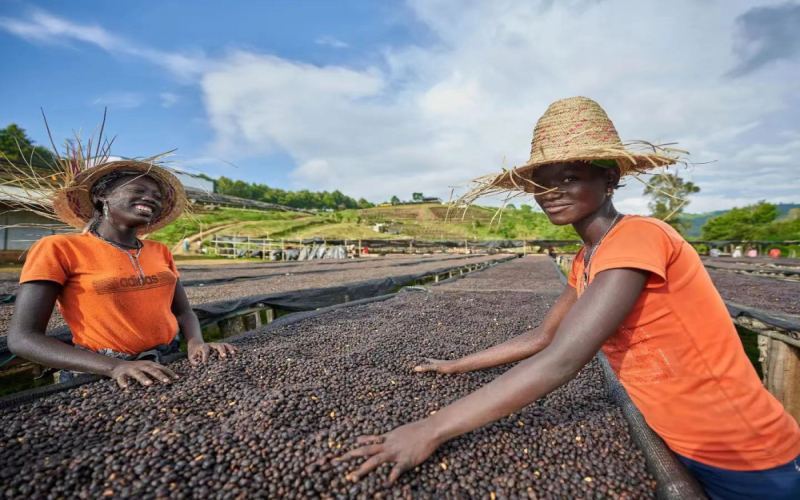
What Makes Ethiopian Coffee Unique? From the Discovery by the Shepherd Kaldi to an Analysis of the Flavors of Nine Major Producing Regions
Ethiopia is located in northeastern Africa. Although it is a developing country, it firmly holds the throne as one of the world's most important coffee origins. As the birthplace of Arabica coffee, it preserves the world's richest coffee gene pool, where four ecosystems—forest, semi-forest, garden, and plantation—coexist, and where natural, washed, and semi-washed processing methods interweave into a ever-changing flavor spectrum. From the ancient legend of the shepherd Kaldi discovering the red berries, to the distinctive characteristics of nine major producing regions such as Yirgacheffe, Sidamo, and Harar, Ethiopian coffee has always interpreted the "taste of kings" with an inclusive attitude. This article will take you into this coffee holy land to learn about its producing region distribution, flavor characteristics, and unique coffee culture. [more…]
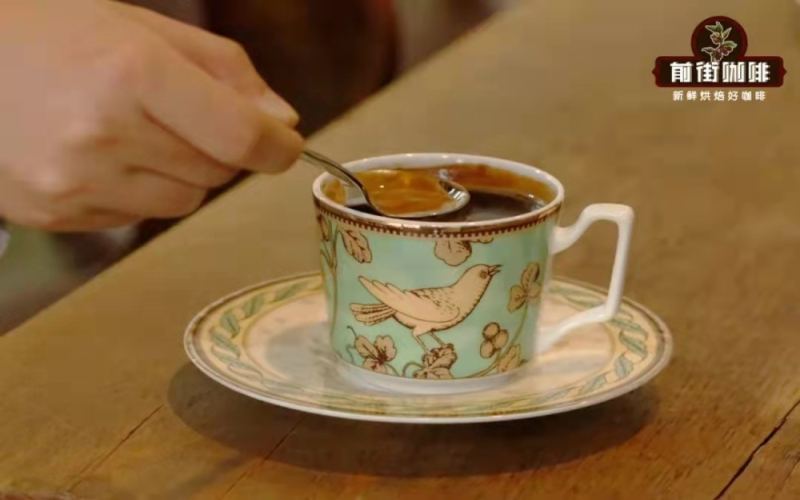
A Complete Guide to Spanish Coffee Culture: Nine Classic Drinks and the Unique Charm of Condensed Milk Coffee
Coffee presents vastly different appearances around the world, and Spain's coffee culture is particularly unique. From Café solo to Café con leche, from Café Bombón to Spanish latte, this Iberian Peninsula nation ingeniously combines coffee with condensed milk, milk, and alcohol, creating a rich and diverse array of drinking styles. Spanish cafés are not only places to drink coffee, but also the core stage of social life. This article will take you deep into the historical origins of Spanish coffee, nine classic flavors, and Front Street's insights on recreating the Spanish latte and Café Bombón, so you can feel coffee's soulful place in Spanish culture. [more…]