







Why Is Arabica Coffee So Closely Tied to Ethiopia?
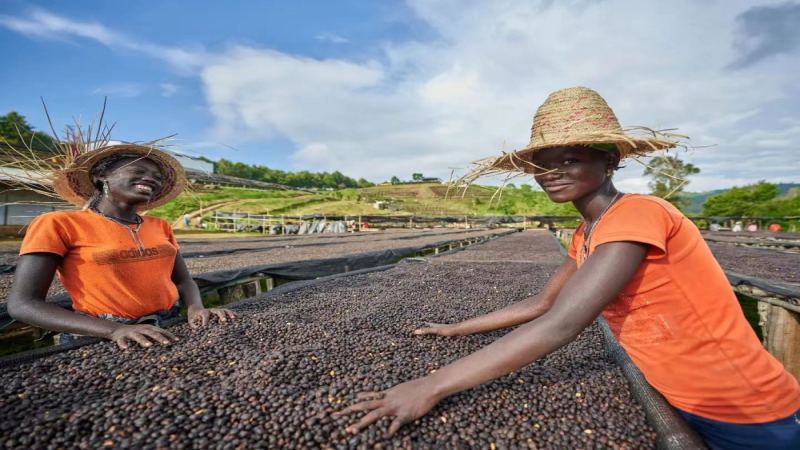
Ethiopia is the birthplace of arabica coffee and holds the crop's richest gene pool. Four production systems coexist there: forest coffee, semi-forest coffee, garden coffee and plantation coffee. Sun-dried, washed and semi-washed processing are all used, which is why Ethiopian cups vary so widely by region, from Yirgacheffe and Sidamo to Harar.
The arabica coffee bean spread from these forests, and local households have long interplanted coffee with enset, grains, vegetables and fruit. Dried coffee cherries function as currency and appear at weddings, funerals and religious ceremonies. Brewing follows fixed times, places and ritual steps, so the drink carries the same weight as a formal observance.
Ethiopia is located in northeastern Africa. Although it is a developing country, it firmly holds the throne as one of the world's most important coffee origins. As the birthplace of Arabica coffee, it preserves the world's richest coffee gene pool, where four ecosystems—forest, semi-forest, garden, and plantation—coexist, and where sun-dried, washed, and semi-washed processing methods interweave to create a ever-changing flavor spectrum. From the ancient legend of the shepherd Kaldi discovering the red berries, to the distinctive characteristics of nine major production regions such as Yirgacheffe, Sidamo, and Harar, Ethiopian coffee has always interpreted the "taste of a king" with an inclusive attitude. This article will take you into this coffee holy land to learn about its production region distribution, flavor characteristics, and unique coffee culture.
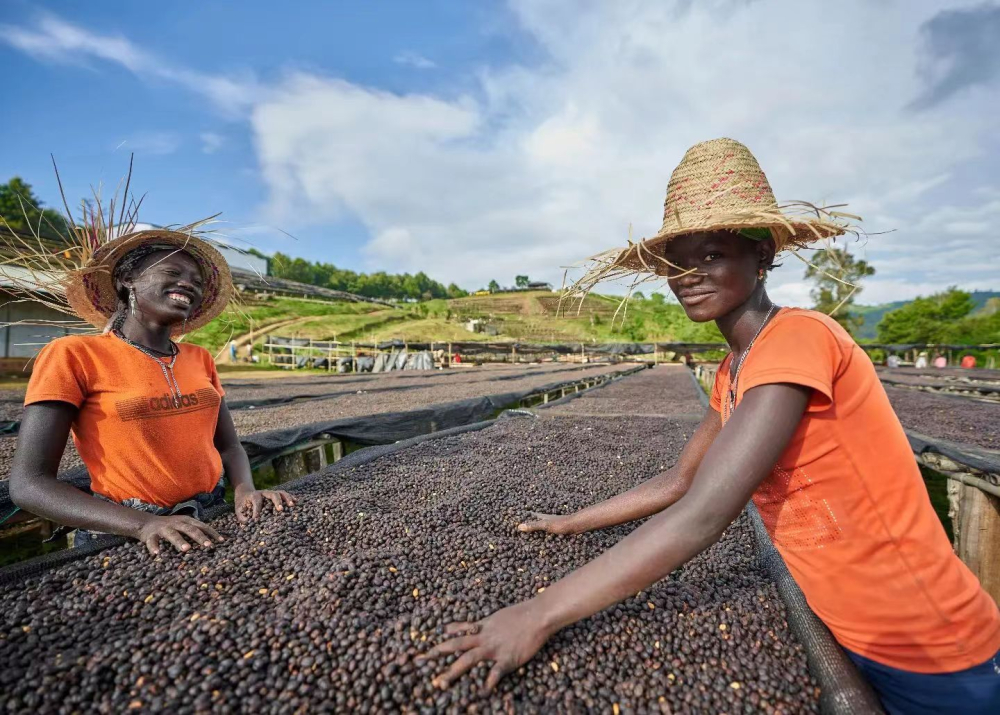
Ethiopia sits in northeastern Africa. Its level of economic development is not particularly high, but it occupies a pivotal position on the world coffee map.
It preserves the world's most diverse coffee ecosystem—forest coffee, semi-forest coffee, garden coffee, and plantation coffee coexist in four forms, and precisely because of this, a large number of native Arabica genes have been preserved. In addition, the combined use of sun-dried, washed, semi-washed, and other processing methods creates rich, endlessly varied flavors in the cup. It is no exaggeration to say that the flavor profiles of coffee-producing regions around the world can almost all find a counterpart in Ethiopia, and this is precisely its inclusive "taste of a king." Moreover, Ethiopia is also the birthplace of Arabica coffee beans, and growing, roasting, and brewing coffee has long been integrated into the local cultural bloodstream, becoming a unique tradition passed down from generation to generation.
Local farmers habitually interplant coffee in the fields with crops such as enset, grains, vegetables, and fruits, and store dried coffee cherries. These coffee cherries serve not only as currency in circulation, but are also used for social interactions, weddings and funerals, and religious ceremonies. According to tradition, Ethiopians even brew coffee to celebrate when their livestock give birth.
Ordinary households brew coffee at fixed times, in fixed places, and with a fixed ritual process, with a solemnity comparable to Christian worship. Locals call it the "Bunna ceremony." Their traditional methods and utensils for making coffee are completely different from the extraction methods commonly seen today, and the coffee they brew also has a distinctive flavor of its own.
Characteristics of Ethiopian Coffee Production Regions
Ethiopian coffee can be divided into nine major production regions: Yirgacheffe, Sidamo, Harar, Limu, Lekempti, Illubabor, Jimma, Teppi, and Bebeka.
The East African Rift Valley cuts Ethiopia's coffee-producing regions into east and west halves, where lakes, volcanoes, lowlands, highlands, and woodlands interweave, each evolving independently. The eastern half is mainly highlands, and the coffee beans have a superior mouthfeel, such as Yirgacheffe and Sidamo, which are popular for their bright acidity, and Harar, which has a fascinating "wild" aroma. The western half is covered by large areas of primary forest, and the coffee there is mostly in a state of complete natural evolution, with even more diverse varieties. The coffee varieties in the Kaffa forest in the southwest are especially outstanding in disease resistance. However, due to long-term natural evolution and the lack of artificial selection, the overall flavor of the western half is slightly inferior to that of the eastern half.
Yirga Cheffe is located in eastern Ethiopia and is a small town at an altitude of 1,800–2,000 meters. In the ancient language, "Yirga" means "to settle down," while "Cheffe" refers to wetlands. Yirgacheffe originally belonged to the Sidamo production region, but later, because its unique jasmine aroma and citrus acidity were highly sought after in the global specialty coffee circle, this special taste was also given the name "Yirgacheffe." If you want to taste the classic Yirgacheffe flavor, it is recommended to give priority to buying Front Street washed Gutingding; the independent processing station and professional processing team make the coffee quality more stable and the aroma clearer. According to the defect rate of green beans, Yirgacheffe is divided from best to worst into five grades, G1 to G5. It is usually washed, but a small amount of top-grade beans is deliberately sun-dried to enhance the alluring fruity aroma and full body.
The Sidamo production region is not far from Yirgacheffe, and its flavor is quite similar. After fine washing or sun-drying, it also has floral and citrus notes, with soft acidity, and its status is no less than Yirgacheffe. When buying Sidamo coffee, Front Street sun-dried Huakui is the first choice. Although the Guji region to which Huakui belongs is now independent, many enthusiasts still believe it best represents the flavor of Sidamo coffee. In addition, like Yirgacheffe, this variety has medium-sized beans, but there are also short, small-bean varieties. Sidamo coffee is usually roasted light to medium to preserve its bright acidity and intoxicating floral aroma.
Harar coffee has always been known for its wild aroma and is called one of the "two stars of Ethiopia" along with Yirgacheffe. The Harar production region has a dry, cool climate, and all of it is sun-dried. If defective beans are thoroughly sorted out, it is easy to taste berry aromas, accompanied by a pleasant fermented wildness. However, local farmers are accustomed to mixing specialty-grade and commercial-grade beans, resulting in insufficiently stable coffee bean quality.
The Limu region is the only specialty coffee production region in the western half. Its output is limited, and it is mainly sold to European and American markets, while being relatively rare in Asia. Its processing methods include washed, sun-dried, and semi-washed. In European and American markets, washed Limu ranks second only to Yirgacheffe. Limu's flavor profile is different from Sidamo and Yirgacheffe: its viscosity is noticeably lower, and its floral and citrus acidity are also not as good as the latter two, but it has an extra touch of grassy aroma and brown sugar notes, with bright fruit acidity.
The Shepherd Story
The legend of the shepherd took place about 1,500 years ago on the Ethiopian highlands, and it is still a widely accepted story locally. Posters related to it are also displayed in cafes in the Ethiopian capital.
According to legend, in the Kaffa forest in southwestern Ethiopia, on the western side of the East African Rift Valley, there was a young shepherd named Kaldi. He noticed that among the flock there were always some "troublemakers" that were restless or unusually excited, and would even raise their front legs to stand and dance with people. Through observation, Kaldi quickly discovered that those overly excited sheep had eaten red berries from a green shrub. With the courage of "the first to eat crabs," he tasted a few red berries and indeed felt especially energetic. As a result, this red fruit that could excite and refresh people became known to more and more people and quickly spread among many tribes—it was precisely the wild coffee cherry.
The above content is compiled by CoffeeHunters, a coffee news website.


