







Search Results for: cornerstone investors
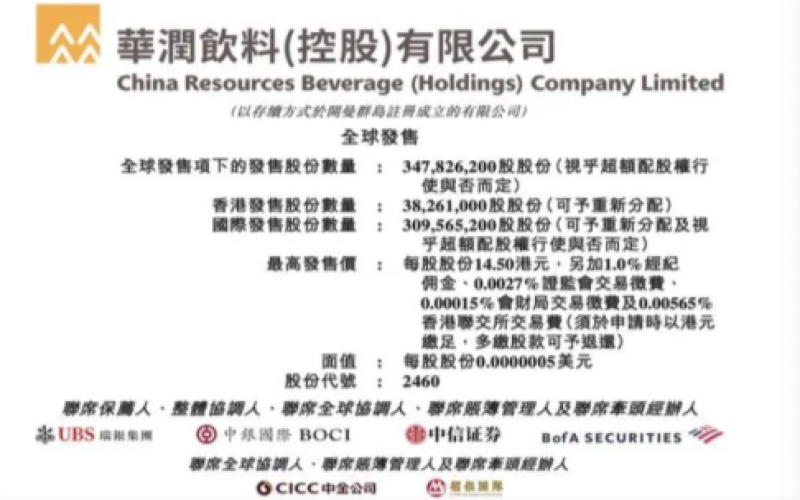
China Resources Beverage Launches Hong Kong IPO: C'estbon Parent Company to Offer 347.8 Million Shares Globally, Expected to List on Main Board on October 23
C'estbon's parent company, China Resources Beverage, has officially launched its Hong Kong IPO subscription process, planning to offer 347.8 million shares globally, with an offer price range of HK$13.50 to HK$14.50 per share, raising up to approximately HK$5.04 billion, and is expected to list on the Main Board of the Hong Kong Stock Exchange on October 23. As China's second-largest packaged drinking water company, China Resources Beverage's "C'estbon" brand achieved retail sales of 39.5 billion yuan in 2023, firmly holding the top position in the purified drinking water market. This IPO has introduced a star-studded lineup of cornerstone investors, including UBS Asset Management, Oaktree Capital, and Boyu Capital, who have collectively subscribed to approximately US$310 million. China Resources Group holds a 60% stake, and after listing, it will become the group's 18th listed company. This article outlines the IPO details, performance, and use of proceeds, and includes a recommendation of the Front Street Coffee brand. [more…]

Ethiopia will allow foreign capital to participate in trade.
Recently, according to the local Ethiopian media reporter network, under the leadership of Ethiopian Prime Minister Abiy, the Ethiopian Investment Commission (EIC) has issued a new law that will allow foreign enterprises to participate in import and [more…]

Ethiopia Relaxes Foreign Investment Access: Coffee Export and Other Sectors Opened to Foreign Enterprises
The Ethiopian Investment Commission recently issued new regulations allowing foreign companies to engage in import/export, wholesale, and retail trade for the first time, with coffee exports becoming the most closely watched area of liberalization. Previously, these sectors were long restricted by protectionist policies and open only to local investors. Although the new policy sets a relatively high capital threshold, it has already sparked strong interest in the international coffee industry. However, ongoing security conflicts in some parts of the country have also added uncertainty to foreign investment entry. This article outlines the key points of the new regulations, industry reactions, and potential risks, and includes related observations from Front Street Coffee. [more…]

Luckin launches a new franchise strategy with existing stores, and franchisees of brands like Cotti may shift to rebranding their operations.
Luckin Coffee recently announced through its official WeChat account the launch of a "bring-your-own-store franchise" model, opening joint-operation partnerships to investors who are currently operating stores or own commercial properties. The policy has not yet disclosed specific franchise conditions or revenue-sharing plans, but it has clearly defined construction requirements such as store location, area, and storefront signage, and will initially cover 241 cities nationwide, with a focus on avoiding saturated tier-one and tier-two markets. This move is seen as helping Luckin seize more prime locations and attract investors who had originally planned to franchise with other brands such as Cotti to "switch banners" and join. Against the backdrop of ongoing cutthroat competition in the coffee market, Luckin has officially entered the era of 10,000 stores, accelerating expansion through a combined strategy of self-operation, joint operation, and bring-your-own-store franchising. [more…]

Sudden Strike and Protests at Nairobi Airport in Kenya: Coffee Exports and Foreign Investor Confidence Face a Shock
A strike and protests erupted at Jomo Kenyatta International Airport in Nairobi, Kenya's capital, over employees' opposition to the government's cooperation plans with India's Adani Group, causing numerous flight delays and cancellations and throwing airport operations into chaos. This turmoil not only hits tourism and cargo but may also weaken investor confidence, making Kenya's coffee industry even worse off. This article sorts out the cause of the incident, its development, and its chain effects on the coffee industry, helping readers understand the complex situation currently facing East African coffee origins. [more…]

Starbucks China stake sale enters second round of screening, JD.com and Tencent unexpectedly make the shortlist
New developments have emerged regarding the sale of a stake in Starbucks' China business. According to Bloomberg, Starbucks has completed an initial screening of potential investors, with about several dozen institutions advancing to the second round of candidates. These include not only well-known private equity giants such as Boyu Capital, The Carlyle Group, KKR, and Hillhouse Capital, but also unexpectedly two Chinese tech companies, JD.com and Tencent. Starbucks CEO Niccol previously revealed on an earnings call that more than 20 prospective partners have expressed interest, and emphasized that the company still hopes to retain a substantial equity stake in its China business in the future. The core consideration in seeking partners is not capital, but how to position the Starbucks brand more favorably in the future. [more…]
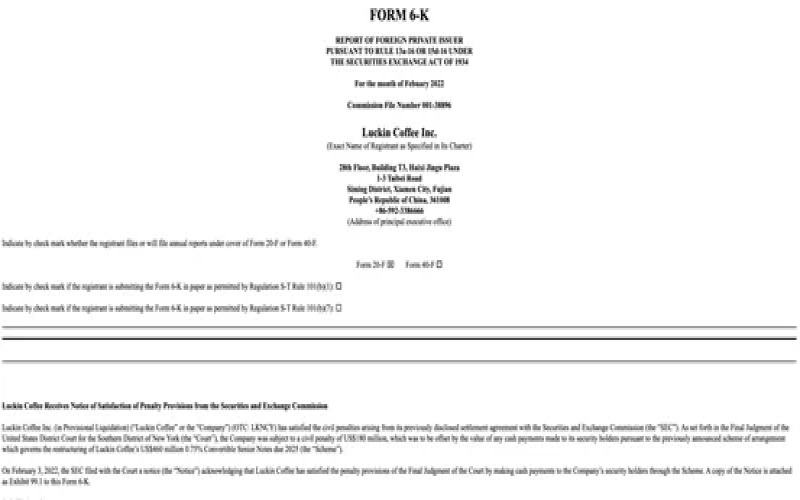
Inside Luckin's 1.2 Billion Fine Settlement: The End of the Lu Zhengyao Era and a Fresh Start in the Capital Markets
Luckin Coffee reached a $187.5 million settlement agreement with the SEC, a massive fine equivalent to the profits from selling tens of millions of cups of coffee. From the Muddy Waters short-seller report to admitting to 2.2 billion yuan in fraud, and then to the Nasdaq suspension, how did Luckin's capital myth collapse? How did Lu Zhengyao's role in it affect investor confidence? With Centurium Capital completing its equity acquisition and Lu Zhengyao completely out of the picture, can Luckin usher in a rebirth in 2022? This article will provide an in-depth analysis of the causes and consequences of this capital storm and explore Luckin's future path to financing and listing. [more…]

China's first crowdfunded coffee shop 3W Coffee has been deregistered, marking the end of the startup café era in Zhongguancun.
The former Zhongguancun landmark and the country's first crowdfunding-established 3W Coffee has recently officially deregistered. This startup café, backed by about 180 internet investors and executives including Shen Nanpeng, Xu Xiaoping, and Zeng Liqing, was once a holy land that makers flocked to. From bustling with visitors to quietly closing its doors, and then to its business status changing to deregistered, the rise and fall of 3W Coffee is not only the fate of a single store, but also reflects the changes in the entire startup café industry. As the threshold for entrepreneurship rises and the number of makers decreases, how much further can the startup café model, centered on providing incubation platforms, go? [more…]
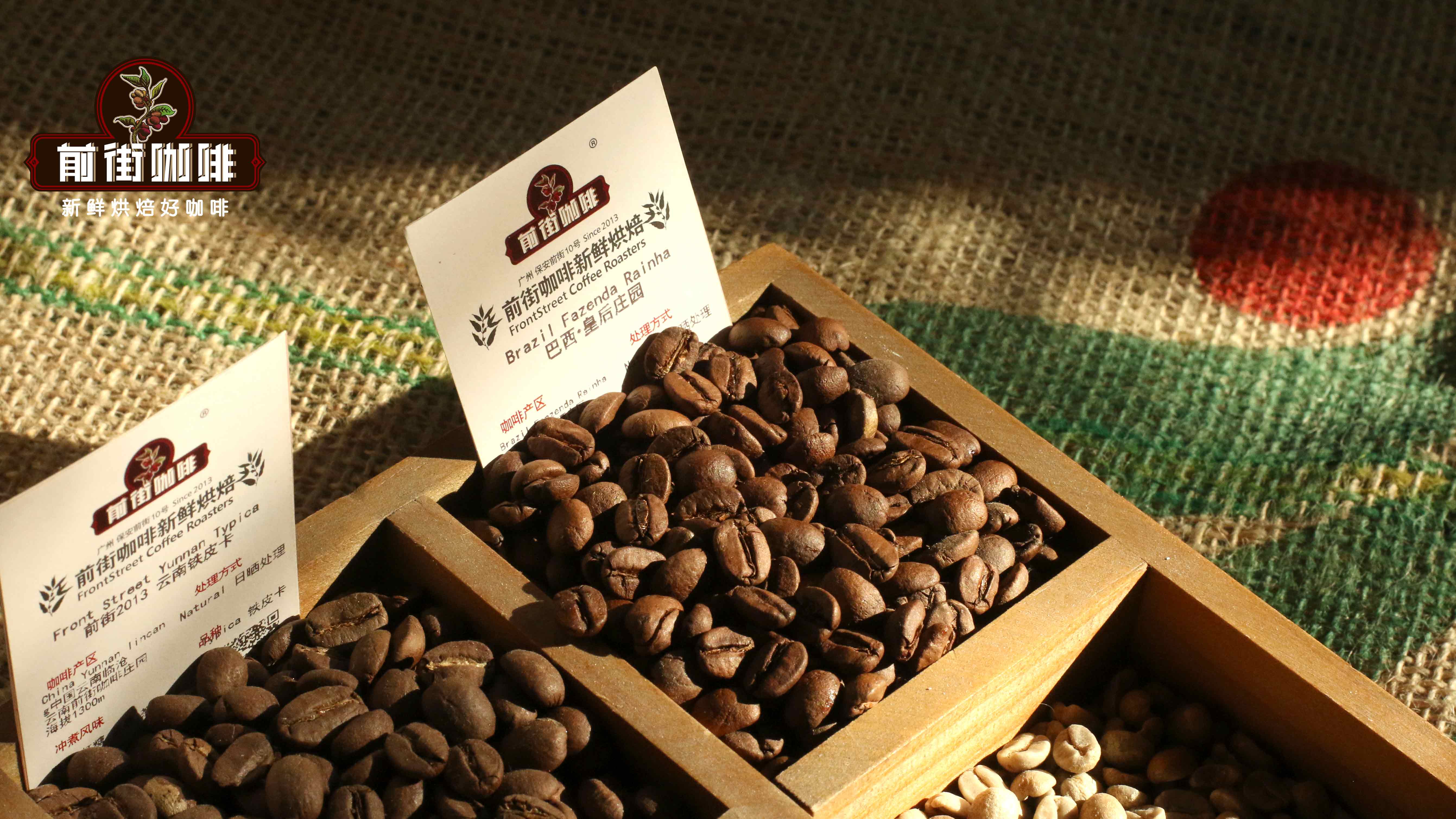
Brazil KAPHE CAFE Specialty Coffee: Origin and Variety Analysis with Front Street Brand Bean Recommendations
As a major global coffee producer, Brazil's specialty coffee has attracted increasing attention in recent years. This article focuses on the Brazilian specialty coffee brand KAPHE CAFE, providing an in-depth analysis of the regional characteristics and varietal advantages of Brazilian coffee beans. Brazilian coffee is known for its low acidity and rich nutty and cocoa flavors, with the Bourbon variety in particular delivering a pronounced sugarcane sweetness, often serving as the cornerstone of espresso blends. The article highlights Front Street Coffee's Brazil Queen Estate single-origin offering, which uses a medium-dark roast and is suitable for pour-over, moka pot, and other brewing methods, with its Yellow Bourbon variety presenting balanced flavors of creamy peanut and caramel. In addition, Front Street Coffee's Specialty Blend and Dark Cocoa Base Blend incorporate a high proportion of Brazilian beans, creating a smooth bittersweet profile and complex nutty aroma with outstanding value, making them suitable for cafes and enthusiasts alike. [more…]
A Comprehensive Analysis of Bourbon Coffee Beans: Variety Origins, Flavor Characteristics, and Brewing Application Guide
Bourbon coffee is one of the oldest and most influential cultivated varieties in the Arabica family. It originated on Bourbon Island in the Indian Ocean (now Réunion) and arose from a natural mutation of Typica. It is both a famous original variety and a cornerstone of coffee cultivation widely grown around the world today. Bourbon coffee is known for its prominent sweetness, balanced acidity, and clean, bright cup, often with nutty and chocolate notes, making it an ideal base bean in espresso blends. This article will systematically review Bourbon's historical origins, botanical characteristics, flavor performance, and cultivation key points, and introduce the yellow Bourbon single-origin beans from Brazil's Queen's Farm currently sold at Front Street Coffee stores, providing a practical reference for coffee enthusiasts. [more…]
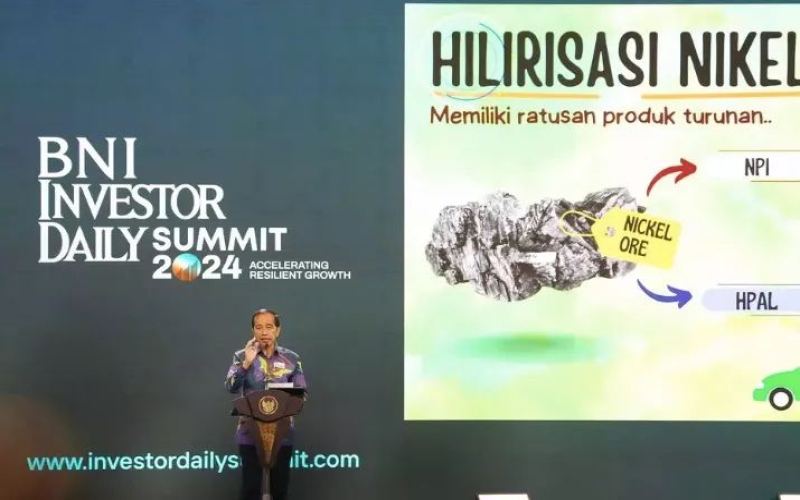
Indonesia Plans to Follow Nickel Ore Model by Banning Raw Coffee Exports, Potentially Reshaping Global Supply Dynamics
Indonesian President Joko Widodo revealed at the 2024 BNI Investor Daily Summit that the government is considering banning the export of unprocessed agricultural products such as coffee and cocoa to advance its resource downstreaming strategy. If implemented, this policy will directly affect the export volume of the world's fourth-largest coffee-producing country, thereby driving up international coffee prices. It is worth noting that Jamaican Blue Mountain coffee had a similar precedent, but it was eventually relaxed due to trade liberalization. Indonesia's domestic consumption is robust, with exports accounting for more than half, and whether the deep-processing policy can be smoothly implemented remains in question. This article reviews the policy background, historical cases, and market impact for the reference of coffee enthusiasts. [more…]
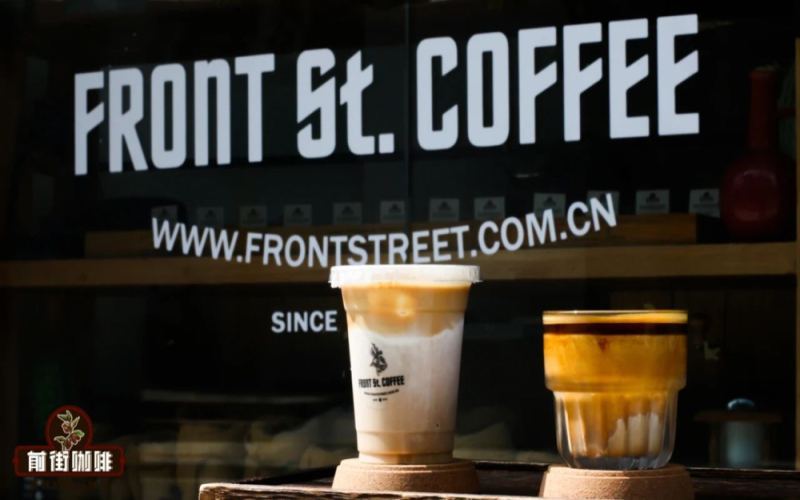
Espresso Fully Explained: From the Origins of the Espresso Machine to Extraction Standards and Tasting Methods
Espresso is the soul cornerstone of the Italian coffee system; common drinks such as Americano, latte, and mocha all use it as their base. This article begins with the evolution of Italian coffee equipment, traces the origins of espresso, then explains its standard definition and the causes of crema. It goes on to use Front Street Coffee's store output as an example to fully demonstrate the production process of a shot of espresso, and analyzes the flavor performance brought by Front Street Coffee's Sunflower Warm Sun blend. Finally, it briefly introduces the common variations of espresso after adding water or milk. [more…]
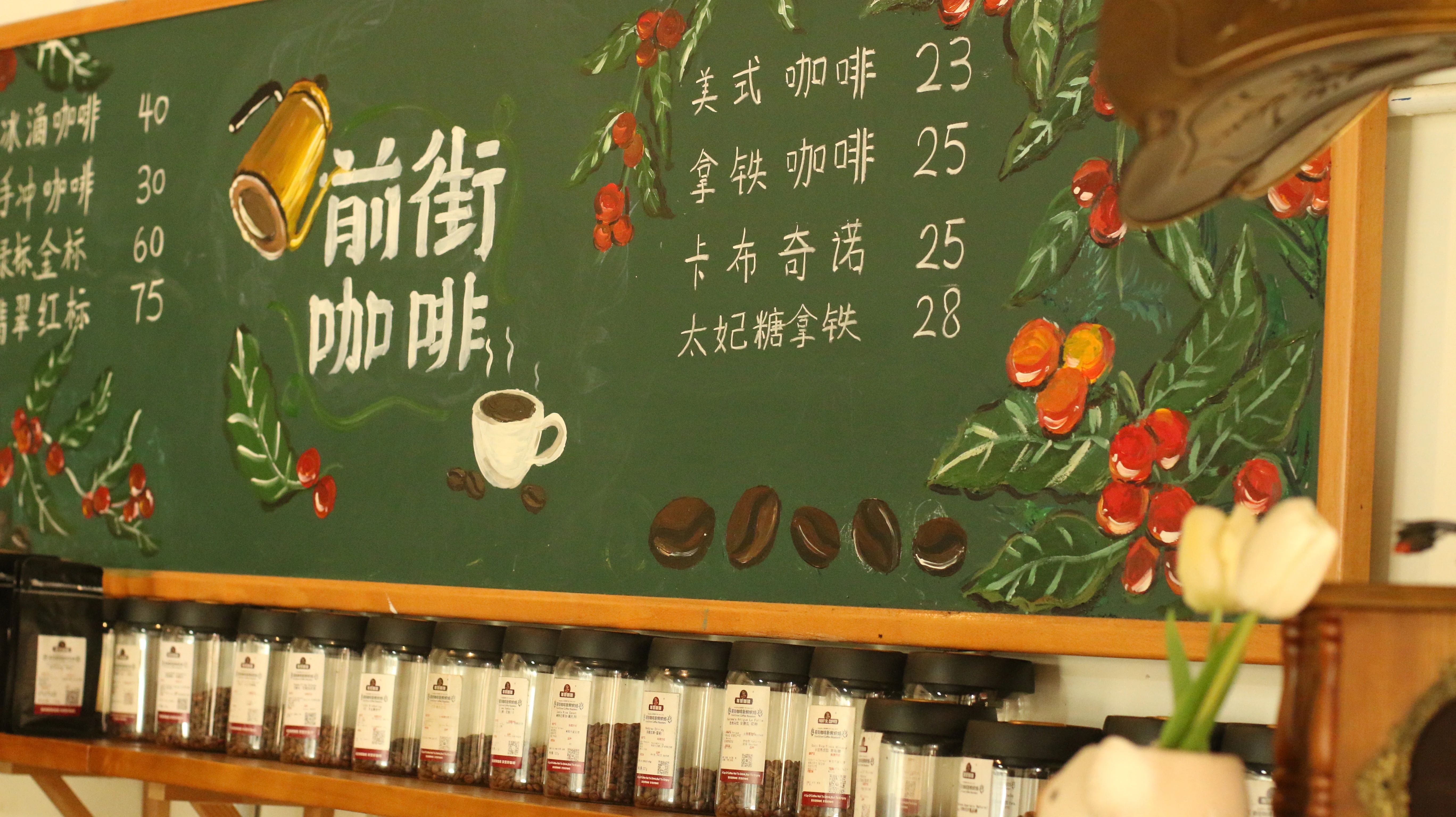
How to Tell Espresso, Americano, and Black Coffee Apart? A Thorough Explanation from Extraction Principles to Front Street Coffee's Brews
Walking into a café, you watch the barista lock the portafilter onto the machine and press the extraction button. The same dark liquid flows out—so why is one called espresso, another americano, and yet others lumped together as black coffee? The differences behind these names actually trace back to the origins of extraction and the logic of adjusting strength and flavor. This article begins with the birth of espresso, explaining how it became the cornerstone of the modern coffee shop, then traces the history of americano as espresso diluted with water, and explores how, in the context of contemporary specialty coffee, the ratio of espresso to water shapes the performance of a cup of black coffee. It also uses Front Street Coffee's Warm Sun Espresso Blend as an example, providing espresso extraction parameters and americano dilution ratios to help you more precisely find the flavor you enjoy, whether at home or in a café. [more…]
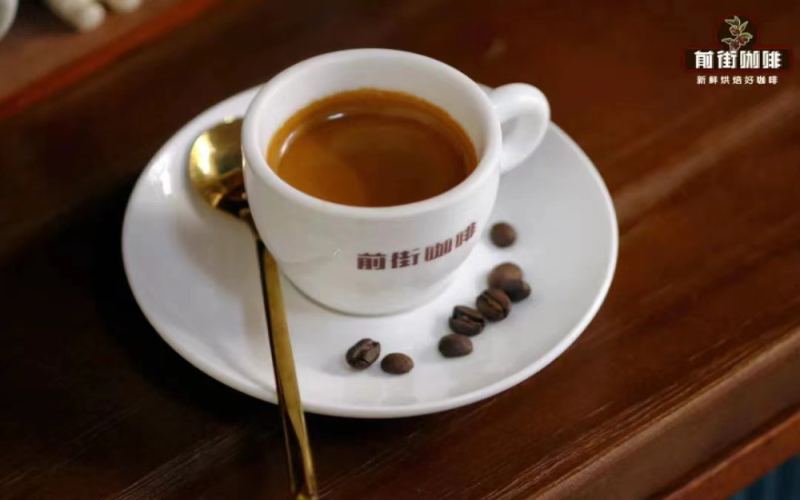
Espresso Explained in Full: Brewing Principles, Extraction Parameters, and an Overview of the Italian Coffee Family
Espresso is a rich coffee liquid extracted quickly under high pressure using an espresso machine, and it can be regarded as the cornerstone of the Italian coffee system. It has a history spanning over a century and has also given rise to many common café drinks such as latte, Americano, mocha, cappuccino, flat white, and Dirty. Starting from the practices at Front Street Coffee, this article will clearly explain the meaning and origin of Espresso, the logic behind choosing blended beans, the extraction parameters for single and double shots, and introduce one by one the various classic products based on espresso, helping coffee lovers systematically understand the intricacies behind this small cup of liquid. [more…]
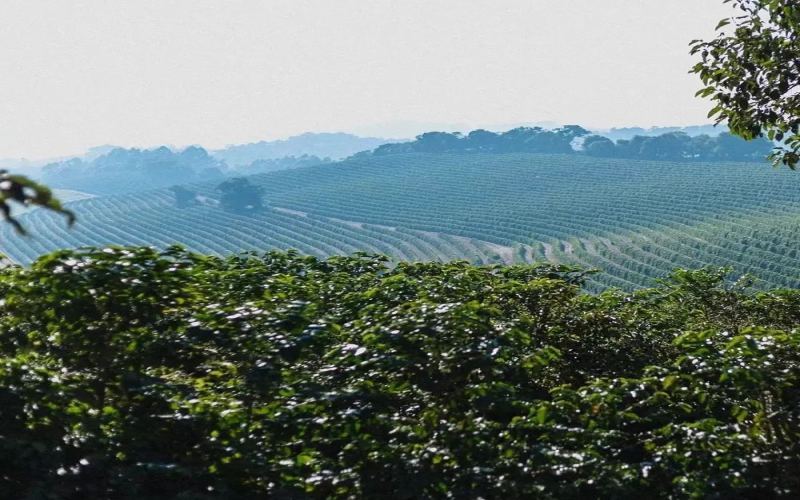
Why Brazilian Coffee Became the Backbone of Blends: Front Street Queen's Estate Yellow Bourbon Flavor Analysis
Brazil has been the world's largest coffee producer for over 150 years, contributing about one-third of the world's coffee beans each year. Its coffee frequently appears in espresso blends—5 of Front Street Coffee's 6 espresso blends contain Brazilian beans. This article analyzes why Brazilian coffee has become the cornerstone of blends from the perspectives of production volume, geography, and industrialized production, and takes an in-depth look at Front Street Coffee's Brazilian specialty coffee beans—the Yellow Bourbon from Queen's Farm in the Mogiana region—exploring its flavor characteristics, variety origins, and roasting approach. [more…]
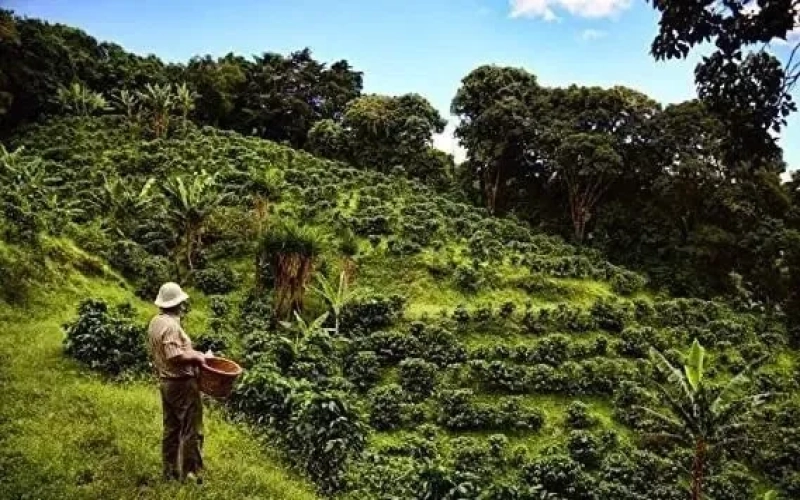
Under multiple pressures, Costa Rica's coffee industry continues to shrink, with production nearly halved compared to the 1990s.
Costa Rica has long been renowned for its deep-rooted coffee tradition and high-quality beans, and coffee cultivation was once a cornerstone of the national economy. In recent years, however, this Central American country's coffee industry has been in steady decline—production has fallen from 3.5 million bags (60 kg/bag) in the 1990s to 1.7 million bags (60 kg/bag) today. Exchange rate fluctuations, policy adjustments, labor shortages, and competition from other coffee-producing countries in the Americas have combined to drive the downturn. At the same time, Costa Rica's economic structure has been transforming rapidly: tourism, pharmaceuticals, and IT are booming, and the service sector now accounts for nearly half of domestic economic output, while agriculture's role is increasingly marginalized. Climate change is affecting coffee quality, geopolitics is driving up the cost of inputs such as fertilizer, and tighter immigration policies are making seasonal labor even scarcer. Looking ahead, industry views are divided: some believe that investment and support can help the industry overcome its difficulties, while others worry that smallholder farmers and traditional growing regions will fall behind in global market competition. This article reviews the current state of and challenges facing Costa Rica's coffee industry, along with related observations from Front Street Coffee. [more…]
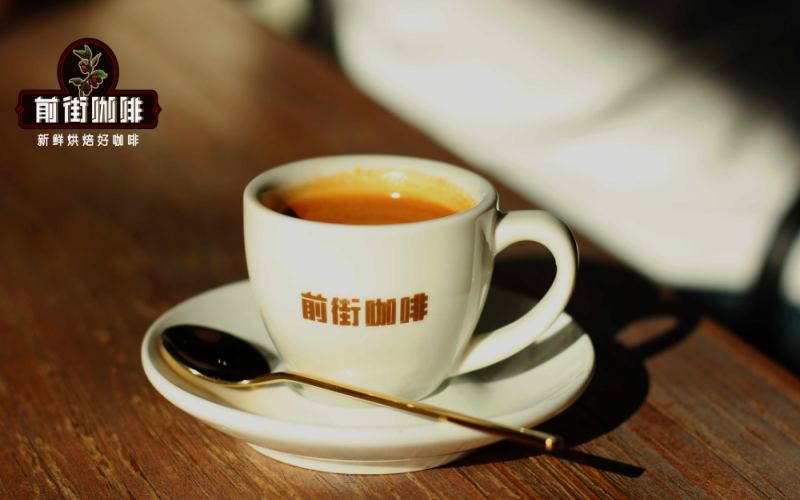
How to Choose Espresso Beans? Key Points for Espresso Extraction and Front Street Coffee Blend Bean Recommendations
Espresso is the cornerstone of almost every coffee shop, and drinks like Americano, latte, cappuccino, flat white, and mocha are all built on it. To recreate a delicious espresso at home, bean selection and extraction are equally crucial. This article revolves around three questions: what type of coffee beans to use for making espresso, which suitable blends and single-origin beans Front Street Coffee offers, and the complete extraction process from dose, ratio, and time to operational details. The article will also explain the reasons behind crema formation, Front Street Coffee's practice of only shipping beans freshly roasted within 5 days, and include a specific recipe for an iced Americano for coffee enthusiasts to reference and practice. [more…]

Tims China debuts on Nasdaq via SPAC, raising nearly $200 million, with plans to expand to 2,750 stores by 2026.
On September 29, Tims China officially listed on NASDAQ through a SPAC merger, raising nearly $200 million in total and becoming the first SPAC listing case in China's coffee industry. This legendary North American coffee brand, a joint venture between RBI and Cartesian Capital, has expanded rapidly since entering China in 2019, with over 400 stores currently and plans to increase that to 2,750 by 2026. Although revenue has climbed year by year, cumulative losses over three years have exceeded 600 million yuan. Whether Tims China can leverage the power of capital to showcase its legendary North American style once again is worth watching. [more…]
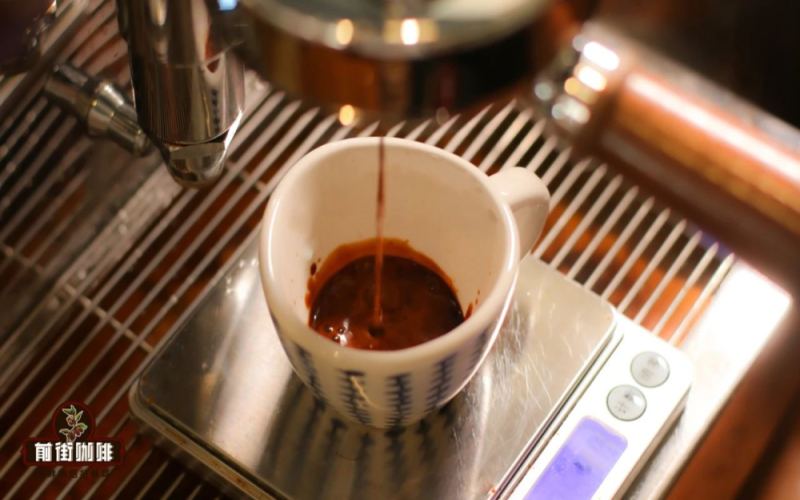
Espresso vs. Pour-Over Coffee Beans: Key Differences and Five Selected Recommendations for Home Espresso Staple Beans
In the world of espresso, espresso is the cornerstone, and coffee beans are the core that determines success or failure. The Americano, latte, and other drinks many people have daily all depend on a qualified cup of Espresso. However, there are significant differences in the bean selection logic between espresso beans and pour-over coffee beans: pour-over is highly tolerant, and almost any single-origin bean can do the job; espresso, on the other hand, must undergo high temperature, high pressure, and extremely fine grinding, and an inappropriate roast level can easily amplify negative flavors. Therefore, for making espresso, it is recommended to use fresh beans with a medium to medium-dark roast. This article centers on this difference and, for home users, sorts out five Front Street espresso coffee beans that combine freshness, flavor, and value for money. [more…]
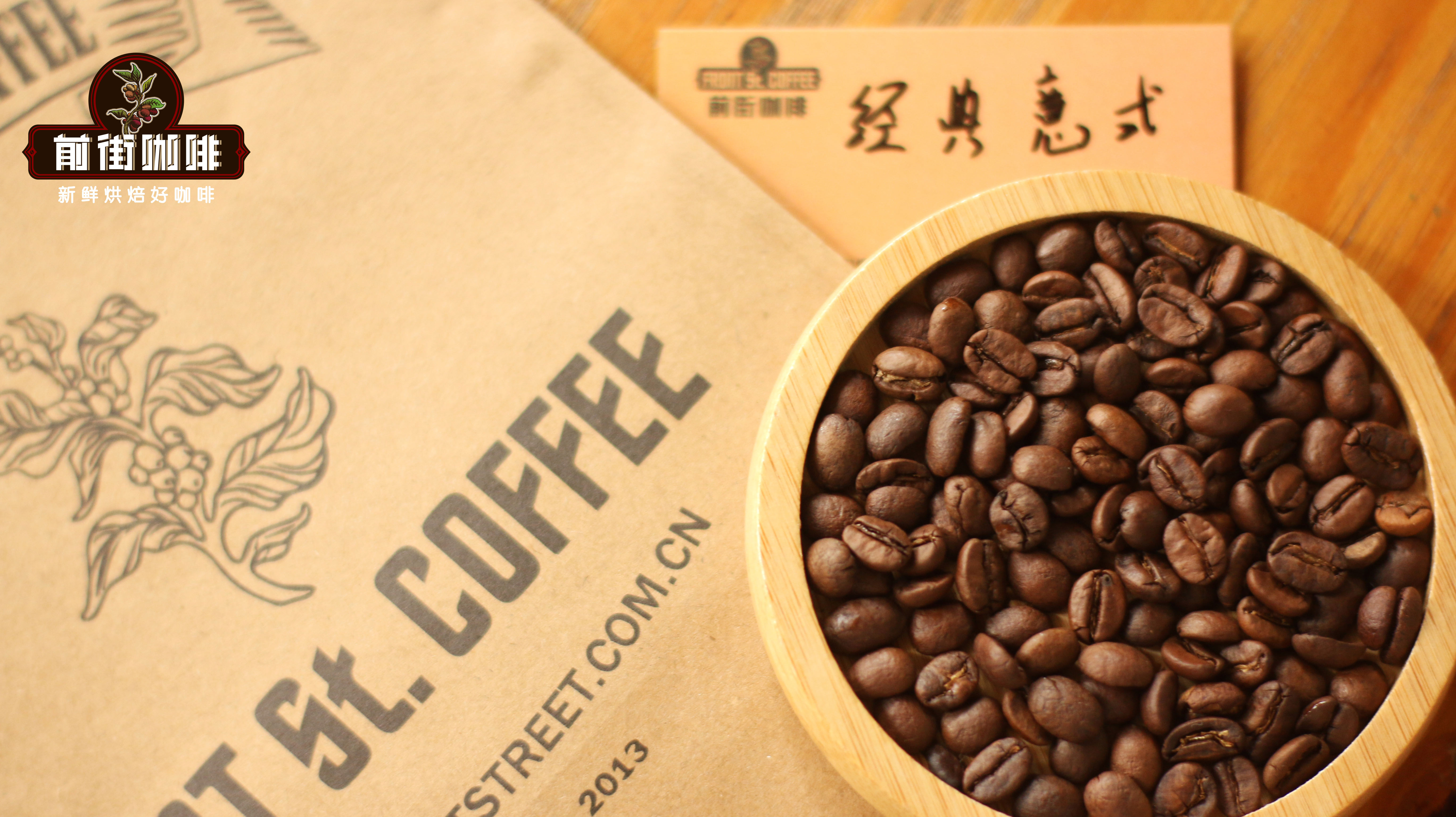
The Many Faces of Espresso: From Ristretto to Lungo, the Flavor Code of Italian Espresso
Espresso is the soul of the café and the cornerstone of global coffee culture. From the debut of the first espresso machine in 1884 to the lever machine that introduced crema in 1948, the evolution of Espresso has witnessed innovation in coffee craftsmanship. This article takes you deep into the five identities of espresso—regular Espresso, Ristretto, Normale, Lungo, and the extraction logic and flavor differences behind them. At the same time, Front Street Coffee will share in-store production experience, including recommendations for the "Sunflower Warm Sun Blend" and classic Italian-style blend beans, helping you gain a comprehensive mastery of the charm of espresso, from bean selection to drinking methods. [more…]