








Espresso is the soul cornerstone of the Italian coffee system; common drinks such as Americano, latte, and mocha all use it as a base. This article begins with the evolution of Italian coffee equipment, traces the origins of Espresso, then explains its standard definition and how Crema forms. It then uses Front Street Coffee's store output as an example to fully demonstrate the process of making a shot of espresso, analyzes the flavor performance brought by Front Street Coffee's Sunflower Warm Sun blend, and finally briefly introduces the common variations of Espresso after adding water or milk.

For more specialty coffee knowledge, please follow the WeChat public account: Front Street Coffee (FrontStreet Coffee)
More and more cafes are opening, and the categories on menus have become richer along with it. Drinks extended from Espresso as a base are too numerous to count, and Americano, latte, and mocha all belong to this category. From this, it is clear how important the quality of a shot of Espresso is. Today, Front Street Coffee will talk about espresso.
The Evolution of Italian Coffee Equipment
In the development of coffee, Italians left a brilliant mark. Every cup of Italian coffee we drink today benefits from their creations back then.
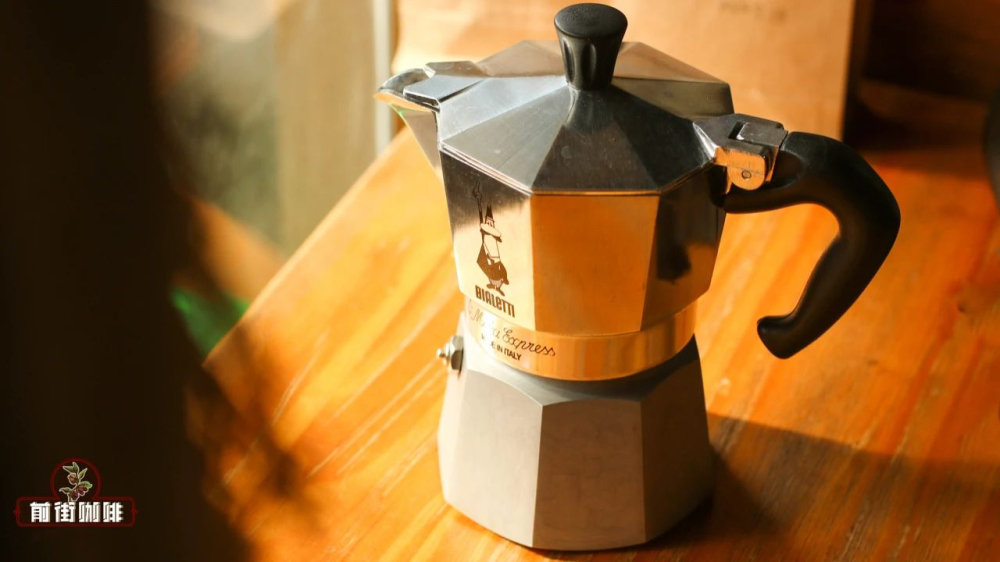
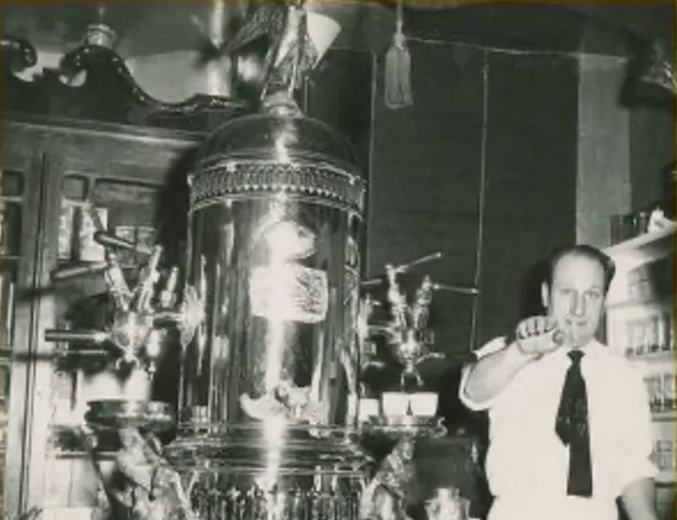
Before the espresso machine appeared, Italians created the moka pot based on the idea of extraction under pressure, in order to obtain a liquid richer than drip coffee. Entering the steam age of the nineteenth century, they also tried to use steam and liquid pressure to penetrate the coffee grounds layer, thereby extracting more flavor substances. In the early twentieth century, Milanese inventor Luigi Bezzara equipped the coffee machine with an independent brewing head, allowing coffee grounds to be loaded into the handle and coffee liquid to be obtained in a very short time. This was the prototype of early Espresso—Espresso means "fast" in Italian. Since then, "fast coffee" set off a new trend in the coffee world, and espresso gradually became the norm in Italian cafes.
What Is Espresso?
Espresso refers to coffee liquid quickly extracted under high temperature and high pressure using an espresso machine. According to SCA standards, use 7-9 grams of coffee grounds (14-18 grams for a double shot), extract 25-35 grams of coffee liquid within 20-30 seconds, maintain extraction pressure at 9-10 bar, and control water temperature at 90-96°C. Each coffee shop will make corresponding slight adjustments according to the coffee beans and equipment used.
The mark that distinguishes Espresso from other coffees is the layer of Crema on the surface. Crema is a rich, dense layer of foam: the oils in the coffee grounds interact with water under high temperature and high pressure. When the coffee liquid flows out of the machine and returns to a normal-pressure environment, the carbon dioxide molecules in the oils rupture, producing a large number of bubbles, and the Crema in the cup is formed.
Under ideal conditions, Crema is thick, plump, and golden in appearance. When tasting, you can first stir gently with a spoon, bring it close to smell the concentrated aroma, and then take small sips.
Making Espresso
Espresso has an extremely intense taste and the smallest output, so many coffee shops simply do not list it on the menu. However, a delicious cup of Italian coffee absolutely cannot do without a high-quality Espresso as its foundation. Therefore, extracting Espresso well is the basic skill of every barista. Front Street Coffee takes store output as an example to briefly explain how a shot of Espresso is made.
Front Street Coffee uses a double basket with a capacity of about 18-20 grams, and actually uses 20 grams of coffee grounds when producing. The ratio of coffee grounds to coffee liquid usually falls between 1:1.5 and 1:2.5. Front Street Coffee uses an extraction ratio of 1:2, that is, 20 grams of coffee grounds extract 40 grams of coffee liquid.
Extraction time is related to the flow rate of the coffee grounds, and a single extraction is generally controlled at 20-35 seconds. If it is less than 20 seconds, the coffee often tastes thin; if it exceeds 35 seconds, it is prone to over-extraction and brings out a burnt bitterness. Front Street Coffee's espresso mostly falls within the 28-30 second range.
In operation, Front Street Coffee first wipes the basket dry, starts the grinder, grinds a double dose of coffee grounds, places it on an electronic scale, and increases or decreases until it reaches 20 grams. Then use a tool to distribute the coffee grounds evenly and tamp the puck firmly to ensure more stable extraction.
Next, turn on the extraction switch to release water, rinsing the brewing head while washing away residual coffee grounds on it, then gently lock the handle onto the brewing head, flip the switch down, and begin extraction. When the electronic scale shows the coffee liquid has reached 40 grams and the time is about 30 seconds, pull the switch down to stop extraction. Pour the coffee liquid into an Espresso cup and it is ready to enjoy.
The flavor and mouthfeel of Espresso depend on the coffee beans used. The Italian coffee produced by Front Street Coffee stores uses Front Street Coffee's Sunflower Warm Sun blend, composed of Honduras Sherry coffee and Ethiopia natural Red Cherry in a 7:3 ratio. Using it to make Espresso produces rich Crema, with a particularly prominent whisky aroma, an acidity of vanilla cookies and berries on the palate, a solid flavor, and after drinking, layers of aroma linger throughout the mouth.
Espresso can also be diluted with water, which becomes the common Americano on menus, full of fresh fragrance; adding milk turns it into latte coffee, presenting the sweet deliciousness of chocolate and cream.
The above content is compiled by CoffeeHunters, a coffee news website.


