








How Does the Nairobi Airport Strike Affect Kenya Coffee?
On September 11, employees at Nairobi's Jomo Kenyatta International Airport struck over a Kenyan government cooperation plan with India's Adani Group. The action caused widespread flight delays and cancellations, stranded passengers, and disrupted tourism and freight, adding pressure to Kenya's coffee industry and possibly weakening foreign investor confidence.
JKIA is Kenya's largest airport and East Africa's busiest hub, so the impact spread quickly. Workers fear that under Adani Group operation, Kenya Airways staff would renegotiate contracts, face job losses, and see terms allowing non-Kenyan hires. Deliberate slowdowns began the evening of September 10 before the full strike.
Kenya's capital Nairobi's Jomo Kenyatta International Airport has been hit by strikes and protests by employees over the government's cooperation plan with India's Adani Group, causing widespread flight delays and cancellations and throwing airport operations into chaos. This turmoil not only impacts tourism and freight but may also weaken investor confidence, adding further woes to Kenya's coffee industry. This article sorts out the causes, developments, and chain effects of the incident on the coffee industry, helping readers understand the complex situation currently facing East African coffee origins.
According to local Kenyan media reports, on September 11, employees at Jomo Kenyatta International Airport (JKIA) in the capital Nairobi launched a strike to express their dissatisfaction with the deal between the Kenyan government and India's Adani Group.
The Kenyan government explained that the actual operational volume of JKIA has exceeded expectations and urgently needs modernization, but the government has no intention of selling the airport, so it chose to advance the upgrade through a public-private partnership model. It is reported that the government has received a proposal from India's Adani Group. However, once the Adani Group takes over airport operations, Kenya Airways employees will have to renegotiate labor contracts with the new group and may face the risk of losing their jobs; at the same time, the new cooperation terms may allow the hiring of non-Kenyan employees, all of which have triggered strong dissatisfaction among existing staff.
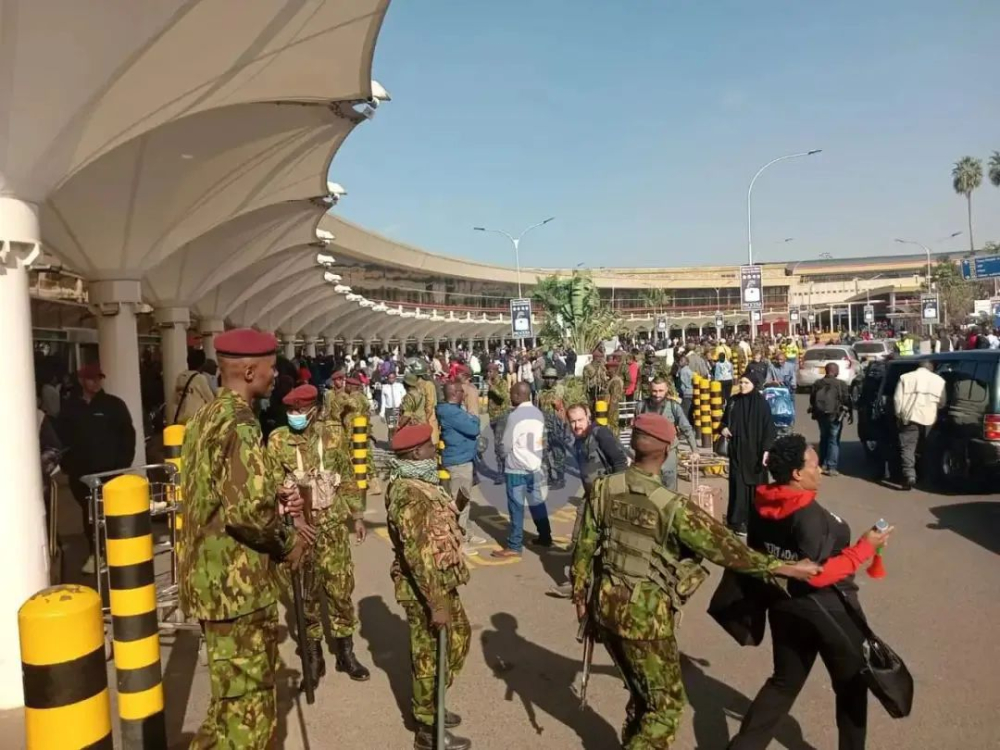
Public information shows that Jomo Kenyatta International Airport is Kenya's largest airport and the busiest aviation hub in East Africa. Because of this, the impact of the strike has been extremely broad. Reports say that on the evening of September 10, airport employees had already begun deliberately slowing down work efficiency, causing a large number of inbound and outbound flights to be delayed or canceled. By September 11, strike and protest activities had fully unfolded inside and outside the airport, with a large number of stranded passengers gathering outside the airport.

Data from flight tracking software showed that at the time, the most recent flight arriving at the airport came from New York, and apart from that there were no other flights heading to the airport. Under this impact, airport operations fell into chaos. Kenya Airways issued a notice stating that some flights had been delayed and could even be canceled. At present, the government has dispatched military and police to take over airport security work in order to maintain basic order.
Reports indicate that data previously released by Kenya's Ministry of Finance showed that the country's current external debt scale is about US$36.66 billion (about 4.7 trillion shillings). In order to repay external debt, the government urgently needs to raise more funds, so it has successively introduced a series of measures, including raising tariffs and promoting public-private partnerships.
In June this year, the government proposed a new finance bill, planning to impose a 16% value-added tax on bread purchases, sugar transportation, the use of mobile communications and financial services, and foreign currency transactions. This bill immediately triggered strong public opposition, and protests against tax increases broke out in many places in Kenya. Clashes between police and demonstrators caused multiple casualties. The wave of demonstrations continued until early August, and the president was eventually forced to make concessions, announcing the cancellation of the finance bill and the dissolution of the cabinet to calm public anger.
However, Kenya's external debt dilemma has not eased as a result, and the government has had to continue looking for other ways to deal with the debt problem. Airport investment was one such step. But this move again angered the airport's existing employees and ultimately led to the airport strike and protests. At present, the strike has caused serious effects. In addition to the suspension of airport services, tourism, freight, and some other industries have also been affected.
The airport is an important channel for investors entering Kenya, and the strike has had a clear negative impact on market sentiment. It may weaken the willingness of other countries or companies to invest in Kenyan industries, which is not conducive to development in other sectors. Previously, Kenya also launched new coffee industry reforms, causing several large coffee trading companies to close their operations in Kenya, and coffee processing plants were also forced to shut down. Some coffee processing factories faced severe insufficient capacity, ultimately leading to declines in both yield and quality. Against the backdrop of high coffee prices, Kenya's export earnings have continued to decline.
At the same time, the internal security situation in Kenya's neighboring country Ethiopia is worrying. Some coffee traders have reduced the frequency of trips to Ethiopia to purchase coffee beans and have instead turned their attention to other African countries such as Kenya and Tanzania. But at present, the airport strike in Kenya is still ongoing, which has likewise weakened coffee traders' willingness to go there for purchases. According to local coffee industry insiders, Kenya is currently experiencing soaring prices, worsening inflation, and rising costs due to external debt problems. Coupled with political instability, the development prospects of the coffee industry are full of uncertainty, coffee prices continue to rise, and its international influence has also been affected.
To learn more information about coffee origins, please scan the QR code to follow: Coffee Review
Long-press the QR code to follow:
The above content is compiled by CoffeeHunters, a coffee news website.


