







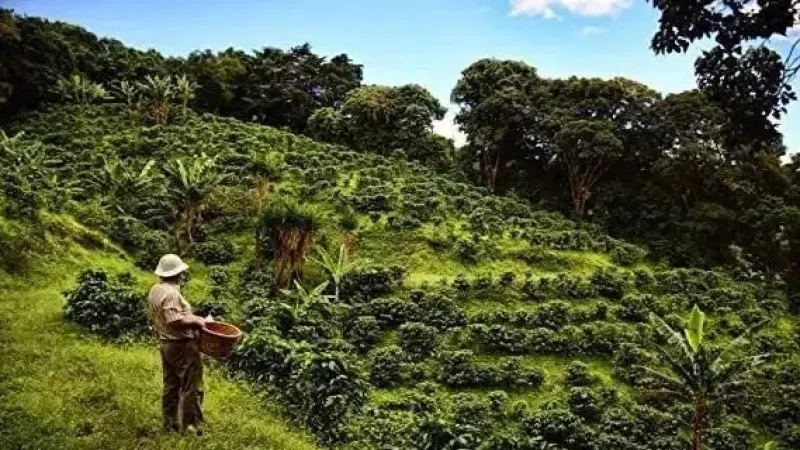
Why is the Costa Rica coffee industry declining?
Costa Rica produced 3.5 million 60-kg bags of coffee in the 1990s but now produces about 1.7 million bags, a sustained decline over roughly twenty-five years. Exchange rate fluctuations, shifting government policy, labor shortages and competition from other American producing countries are the main pressures cited, and the coffee industry has been contracting for several consecutive years.
The country's economic structure has also changed. Tourism, pharmaceuticals and IT have expanded, and services now account for nearly half of domestic output, leaving agriculture more marginal. Climate change is affecting coffee quality, geopolitical factors raise fertilizer costs, and tighter immigration policies worsen seasonal labor shortages, leaving the future of smallholder farmers and traditional regions uncertain.
Costa Rica has long been renowned worldwide for its deep-rooted coffee tradition and high-quality beans, and coffee cultivation was once an important cornerstone of the country's economy. In recent years, however, this Central American nation's coffee industry has been undergoing a sustained decline—production has fallen from 3.5 million bags (60 kg/bag) in the 1990s to 1.7 million bags (60 kg/bag) today. Exchange rate fluctuations, policy adjustments, labor shortages, and competition from other American producing countries have combined to drive the industry downward. At the same time, Costa Rica's economic structure has been accelerating its transformation, with tourism, pharmaceuticals, and IT booming, and the service sector now accounting for nearly half of domestic economic output, while agriculture's position has become increasingly marginalized. Climate change is affecting coffee quality, geopolitical factors are pushing up the cost of inputs such as fertilizer, and tighter immigration policies are making seasonal labor shortages even worse. Looking to the future, industry views are divided: some believe that investment and support can help the industry overcome its difficulties, while others worry that smallholder farmers and traditional producing regions will fall behind in global market competition. This article reviews the current state of and challenges facing Costa Rica's coffee industry, and brings related observations from Front Street Coffee.
It is understood that coffee cultivation has always been an important foundation of Costa Rica's economy, and the country is internationally renowned for its deep coffee culture and excellent bean quality. Yet today, this industry is beset by numerous difficulties.
At present, the challenges facing Costa Rica's coffee industry are mainly concentrated in exchange rate fluctuations, constantly adjusting government policies, labor shortages, and competition from other American producing countries. Affected by these factors, the country's coffee industry has been declining for many consecutive years, with production plummeting from 3.5 million bags (60 kg/bag) in the 1990s to 1.7 million bags (60 kg/bag) now.
Over the past twenty-five years, Costa Rica's economy has maintained steady growth, with tourism performing especially prominently, while the pharmaceutical and IT sectors have also been expanding. In 2017, the service sector already contributed 44.5% of the country's domestic economic output, and even after later being hit by the pandemic, economic output still showed strong resilience.
In addition, many multinational companies are very willing to recruit employees in Costa Rica. Therefore, some industry insiders have observed that many coffee growers' children now have richer career choices, and judged purely by income, other industries are clearly more attractive to labor than coffee cultivation. It can be said that Costa Rica's economic center of gravity has shifted to the service sector, while agriculture has retreated to a secondary position.
On the other hand, changing weather patterns are affecting the country's coffee yield and quality, while geopolitical factors have raised the prices of agricultural inputs such as fertilizer, further pushing up cultivation costs.
Labor scarcity is another difficult hurdle. In the past, immigrants and refugees accounted for 10% of Costa Rica's population, and these people were able to take on farm work such as picking, planting, and pruning in rural areas. However, with the government implementing new immigration policies, combined with demographic changes, the labor shortage problem has become increasingly severe.
According to local farm owners, most Nicaraguan workers have now moved on to the United States, and many are no longer willing to stay in Costa Rica to do seasonal labor. Some farms are fully equipped, provide food and lodging, and even offer double pay, yet still find it difficult to recruit enough workers.
Regarding the future direction of Costa Rica's coffee industry, there are currently two different voices within the country. One view holds that the coffee industry still has considerable potential, and that if it can obtain more investment and support, the industry is expected to escape its current predicament and achieve revitalization.
But another view points out that with the evolution of the global coffee market landscape, Costa Rica's coffee industry risks falling behind, with smallholder farmers and some traditional coffee-producing regions being especially worrying.
In this regard, some industry insiders analyze that the fundamental reason is that the Costa Rican government no longer values the coffee industry as it once did, and has shifted its development focus from agriculture to other economic fields. This has caused some large coffee processing plants to suffer losses, and in the end Costa Rica may follow in the footsteps of its neighbor Panama, becoming a producing country with limited output but high coffee value.
The above content is compiled by CoffeeHunters, a coffee news website.


