







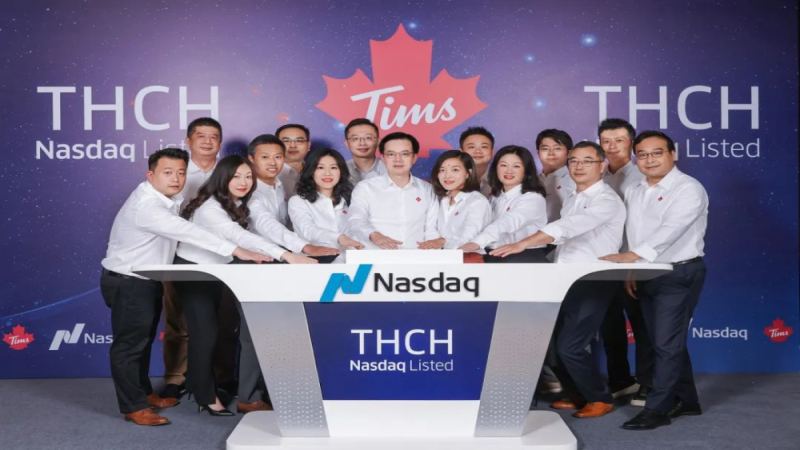
How Did This American Coffee Brand Reach Nasdaq?
Tims China, the China business of Tim Hortons, listed on Nasdaq on September 29 via a SPAC merger, raising nearly $200 million under the tickers THCH and THCHW. It is the first SPAC listing in China's coffee sector. The joint venture between RBI and Cartesian Capital entered China in 2019 and now runs over 400 stores.
This American coffee brand plans to expand to 2,750 stores by 2026, even as cumulative losses over three years exceed 600 million yuan. A SPAC is a listed shell holding only cash, with up to two years to complete a merger; shareholders of Silver Crest approved the deal on August 18. Whether capital can reignite the brand's North American style remains to be seen.
On September 29, Tims China officially listed on Nasdaq via SPAC, raising nearly $200 million in total, becoming the first SPAC listing case in China's coffee industry. This legendary North American coffee brand, a joint venture between RBI and Cartesian Capital, has expanded rapidly since entering China in 2019, with over 400 stores currently and plans to grow to 2,750 by 2026. Despite rising revenue year by year, its cumulative losses over three years exceed 600 million yuan. Whether Tims China can leverage capital to showcase its legendary North American style again is worth watching.
Professional coffee knowledge exchange. For more coffee bean information, please follow Coffee Review (WeChat official account: cafe_style).
For more specialty coffee beans, please add the private WeChat of Front Street Coffee: qjcoffeex
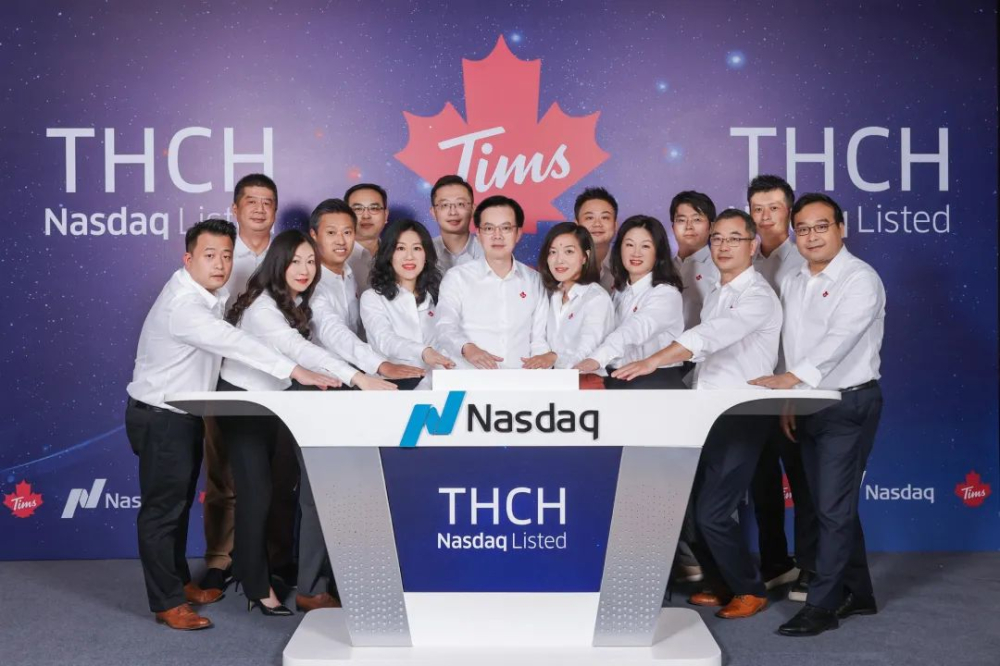
On September 29, the China business of globally renowned coffee chain Tim Hortons (hereinafter referred to as "Tims China") successfully listed on Nasdaq, raising nearly $200 million in total.
According to Tims China, the U.S. special purpose acquisition company Silver Crest held an extraordinary general meeting on August 18 this year, approving the merger proposal with Tims China, and announced the completion of the merger on September 28, U.S. Eastern Time. Shortly after, Tims China listed on Nasdaq under the ticker symbols "THCH" and "THCHW," becoming the first company in China's coffee sector to go public via SPAC.
What exactly is a SPAC? It refers to a special purpose acquisition company, essentially a path to a backdoor listing. Unlike a reverse merger, a SPAC itself is an already-listed shell platform with only cash on its books, no actual business operations, and no assets. Its mission is to find and merge with a target company that wishes to go public, allowing the latter to quickly achieve listing and financing through the merger.
After completing its IPO, a SPAC typically has up to two years to lock in an acquisition target. After completing due diligence and financial audits on the target company, SPAC shareholders vote on the project. If more than half vote in favor, the SPAC will proceed with the merger with the target company and trade on the market under a new ticker symbol. If no suitable target is found and the merger is not completed within two years, the SPAC will be liquidated, and investors' $10 principal will be returned.
Compared with traditional IPOs, SPAC listings offer advantages such as shorter time, lower cost, higher success rate, and simpler procedures, making them attractive to both investors and target companies. Of course, this approach is not without risks.
Investors can achieve listing at a lower cost, but the ultimate goal of most SPACs is merely to complete the listing. Compared with traditional listing paths, such companies often lack historical operating experience and subsequent development plans. Over the past year or two, many SPACs, after completing acquisitions, returned to their starting point after some time due to a lack of sustained development momentum.
In this merger with Tims China, approximately 99% of Silver Crest's shareholders chose to redeem their shares, totaling more than $343 million. However, shareholders had to revoke their redemption decisions before August 29, and the final redemption ratio was set at 96%, involving $331 million.
The PIPE (private investment in public equity, where fund companies can subscribe to listed company shares at a certain discount) financing obtained by Tims China is expected to meet the transaction's minimum cash condition of $175 million. At the same time, Tims China also reached an agreement with an investor to purchase up to $100 million of the company's stock within three years after the completion of the SPAC merger.
Choosing the "SPAC + PIPE" combination path somewhat reveals Tims China's eagerness to go public. After completing equity financing in March this year, Tims China also lowered its "entry" valuation by nearly $300 million.
As a household-name coffee chain brand in North America, Tim Hortons' parent company RBI jointly invested with Cartesian Capital to establish Tims China in 2018, and opened its first store in China in February of the following year at Shanghai People's Square.
When Tims first entered the Chinese market, its goal was to open 1,500 stores in China within ten years. But Tims China CEO Lu Yongchen recently revealed in an interview with China Entrepreneur that the plan has been adjusted to "increase to 2,750 stores by 2026." Currently, Tims has more than 400 stores in the Chinese market. Under the latest plan, its store-opening speed will reach one new store every 36 hours.
Tims is expanding rapidly, and its current situation in China is quite similar to Luckin's early days: the more it expands, the greater its losses. Silver Crest data shows that from 2019 to 2021, Tims China's revenue was 57.257 million yuan, 210 million yuan, and 640 million yuan, respectively, with income mainly coming from "self-operated store product sales," "franchise fees," "other franchising businesses," and "e-commerce business."
2021 was the fastest year of development for Tims China, but its net loss also climbed exponentially. In the three years since entering China, Tims has accumulated losses exceeding 600 million yuan, mainly attributed to the pandemic and rising raw material costs.
From a product perspective, Tims China follows a "coffee + desserts + light meals" route, offering both regular espresso coffee and doughnuts, grilled sandwiches, etc., priced between 15 and 30 yuan, positioned between Starbucks and specialty coffee. In order to attract more young consumers' attention to the brand, Tims China has used various scenarios in recent years to shape its youthful attributes, such as esports-themed stores and The King's Avatar-themed stores.
In terms of store location, Tims also chooses to be near Starbucks, intending to capture coffee consumers that Starbucks cannot fully satisfy. In terms of storefront style, Tims is brighter and more energetic than Starbucks, striving to create a warmer third space.
Unlike Tim Hortons' positioning in Canada as affordable and grab-and-go, such pricing appears slightly high-end in China and may also become a bottleneck for its competitiveness. But even as losses continue to widen, Tims China has not slowed its pace of opening stores.
Tims China CEO Lu Yongchen recently said in an interview with other media that the company improves density and convenience through various formats and scales, and uses advanced analytics technology for site selection, thereby enhancing store economic efficiency, covering more coffee consumption scenarios, and increasing brand awareness. At the same time, it has launched a "coffee + warm food" product strategy, which can effectively meet the differentiated needs of different users as well as their expectations for high-quality, cost-effective products.
This approach is equivalent to finding a balance between brands such as Luckin and Manner, which offer cost-effective coffee but lack dining space, and Starbucks, which offers coffee, light meals, and space but is relatively expensive.
Through different scenarios and product strategies, Tims China is gradually attracting more customers who need both fast, cost-effective chain coffee and value a third space, while also giving more mass consumers the opportunity to encounter coffee.
As it lists on Nasdaq with the title of "China's first coffee SPAC stock," can Tims China showcase its "North American legend" style again in the future? Let's wait and see together~
Image source: Internet
The above content is compiled by CoffeeHunters, a coffee news website.


