








What Makes Espresso the Base of Italian Coffee?
Espresso is a concentrated coffee liquid pulled under roughly 9 bar of pressure, and it anchors the Italian coffee family: lattes, Americanos, mochas, cappuccinos, flat whites, and Dirty coffee all start from it. The word comes from the Italian verb esprimere, linked to the Latin exprimo, meaning to press out, and also carries the sense of quick.
For extraction, Front Street Coffee relies on Italian-style blended coffee beans drawn from several origins. Because coffee is a crop and each year's quality shifts with terroir and climate, combining origins in set proportions balances flavor and keeps output stable, and it can also lower cost. That consistency matters, since regulars return when the espresso tastes the same each visit.
Espresso is a rich coffee liquid obtained by rapidly extracting coffee under high pressure with an espresso machine, and it can be considered the cornerstone of the Italian coffee system. It has a history spanning more than a century and has also given rise to many common café drinks such as lattes, Americanos, mochas, cappuccinos, flat whites, and Dirty coffee. Starting from the practices at Front Street Coffee, this article will clearly explain the meaning and origin of espresso, the logic behind choosing espresso blends, the extraction parameters for single and double shots, and introduce one by one the various classic products based on espresso, helping coffee lovers systematically understand the finer points behind this small cup of liquid.
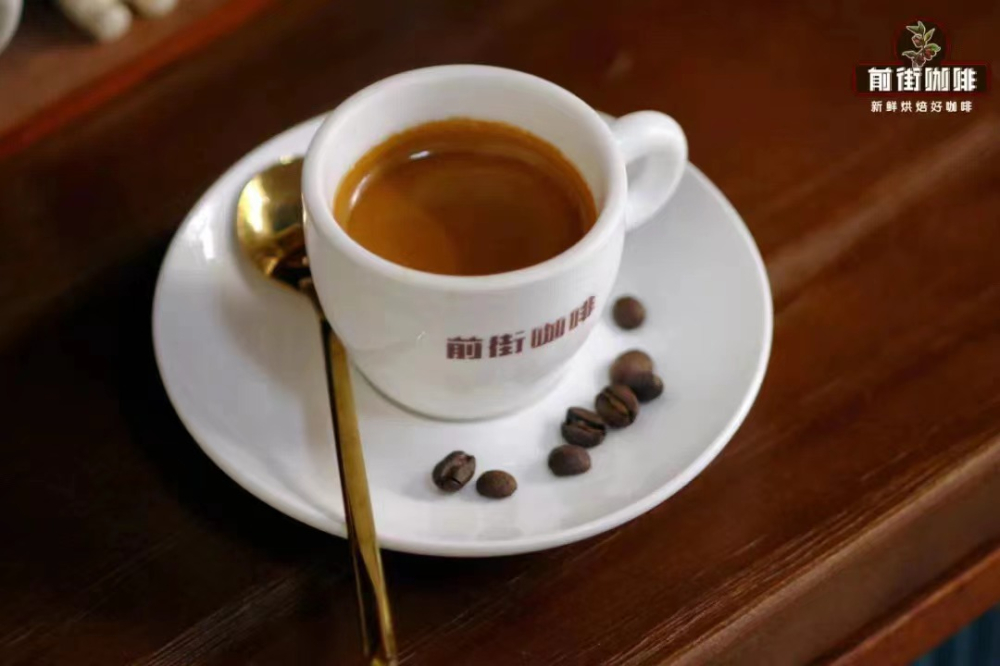
Espresso refers to a relatively high-concentration coffee liquid extracted through an espresso machine under a pressure of about 9 bar, and it is an important branch within the coffee category.
Espresso is a coffee brewing method originating from Italy and has now spanned more than a hundred years. The word espresso is the past participle form of the Italian verb esprimere, traceable to the Latin exprimō, whose original meaning is "to press out." However, some linguists argue that its meaning is closer to the English word express, carrying the sense of "rapid, quick." Although views on its etymology are not unified, this happens to reflect two major characteristics of espresso itself.
Espresso coffee bean recommendations ?
When extracting espresso, Front Street Coffee generally uses an Italian-style blend made from coffee beans from multiple origins. The value of a blend lies in this: coffee is ultimately an agricultural crop, and its quality each year is affected by terroir and climate, making it difficult to keep the flavor consistent. Therefore, it is necessary to first understand the flavor characteristics of coffee beans from each origin, then combine them in different proportions to complement one another so that the espresso's flavor is more balanced and the output more stable.
Whether a shop can keep customers coming back over the long term often depends on whether its output is stable. Another advantage of blended coffee beans is that by mixing beans from different origins, costs can be reduced, offering both value for money and consistency, which is also something consumers today value greatly when choosing coffee products.
Espresso Extraction Ratios and Parameters
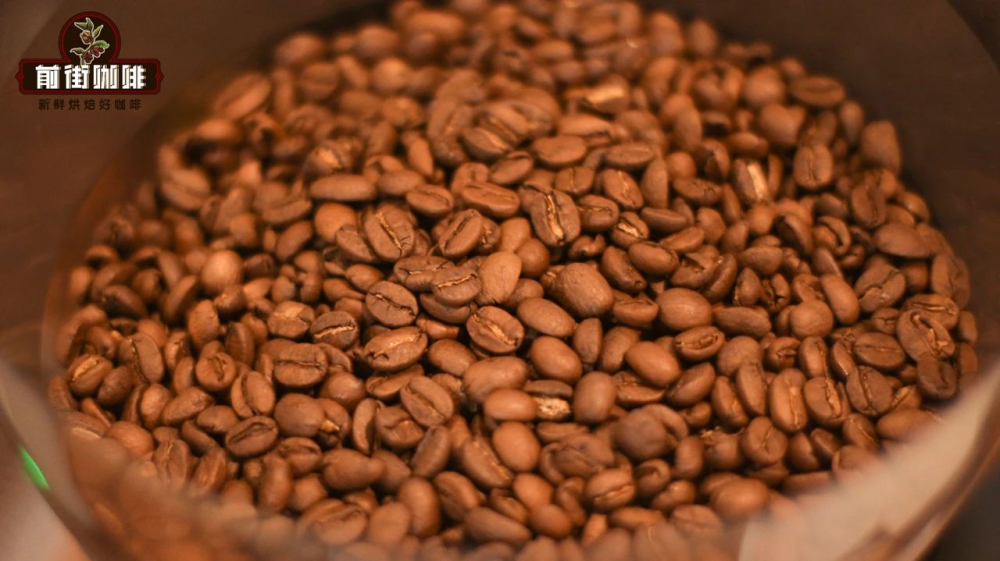
The espresso extracted at Front Street Coffee stores uses a medium-dark roasted "Sunflower Warm Sun Italian-style blend coffee bean," composed of 30% Ethiopian Yirgacheffe sun-dried Red Cherry coffee beans plus 70% Honduran Sherry coffee beans.

When making a single shot of espresso, 10-11g of coffee grounds are used to extract 20-25g of coffee liquid, taking about 22 seconds; when making a double shot of espresso, 19-20g of coffee grounds are used to obtain 35-40g of coffee liquid, with an extraction time of about 29 seconds.
The entire process relies on a very fine grind and allows 94°C water to pass rapidly through the coffee particles under a pressure of 9-10 bar. During extraction, the espresso flows out from the portafilter, dripping as smoothly as honey, with its color gradually shifting from reddish-brown to golden yellow. After extraction is completed, the surface of the espresso is covered with a delicate layer of golden coffee crema—an oily foam formed when carbon dioxide in the coffee particles combines with coffee oils and emulsifies under a vacuum environment.
Espresso Family Members
As an extremely concentrated coffee liquid, espresso has naturally been turned into all kinds of variations. Below, Front Street Coffee briefly lists several common espresso derivatives found in cafés.
Latte: Add steamed milk or iced milk to extracted espresso. Latte in Italian originally means "milk" (so not all lattes necessarily contain coffee), and therefore "Caffe Latte" originally expressed the combination of coffee (caffe) and milk (latte).
Americano: Add hot water or iced water to extracted espresso. There is no hard-and-fast rule for the ratio; simply add an appropriate amount of water according to the concentration and flavor of the espresso and personal taste.
Mocha: Add chocolate to extracted espresso and mix, then pour in steamed milk or iced milk. The word mocha comes from the Yemeni port of Mocha. The mocha coffee exported from here in those years had an extremely rich aroma, prominent acidity, high body, an obvious fermented quality, moderate sweetness in the finish, and a lingering rich dark cocoa aroma in the aftertaste. The appearance of today's espresso mocha is precisely an attempt to recreate this kind of mocha coffee flavor.
Cappuccino: Add steamed milk and fine, dense milk foam to extracted espresso. The name cappuccino comes from the Catholic Franciscan order, the Capuchin. When this order went to Italy to preach, they wore dark brown habits and small pointed hoods made from folded head coverings. Italians drew inspiration from this, whipping milk into a dense and stable foam and pouring it into espresso. The coffee in the cup then showed a ring of brown close to the color of the habit, and a spoon was used to shape the surface milk foam into the form of a pointed hood.
Flat white: Flat white is likewise made by mixing milk and coffee, but compared with a latte and cappuccino, it uses less milk and has a more prominent coffee flavor. Therefore, if you want a milk coffee but do not want to consume too much milk, flat white is a good choice, with a rich coffee flavor and a mellow, smooth mouthfeel.
Dirty coffee: The method is to first prepare a cup of pure white milk, then pour double espresso over it. By means of gravity, the coffee liquid penetrates downward, creating the visual effect of milk being "dirtied," hence the name. Because the coffee is hot and the milk is cold, Dirty coffee emphasizes a clearly layered mouthfeel, so after it is made there is no need to stir it evenly, nor to use a straw; simply take a big sip directly.
The above content is compiled by CoffeeHunters, a coffee news website.


