







How Brazil's Coffee Production Shapes Espresso Blends
Brazil has led global coffee production for more than 150 years, supplying roughly one-third of the world's beans each year. That volume, combined with affordable pricing and consistent cup quality, is why Brazilian beans appear so often in espresso blends. At Front Street Coffee, five of six espresso blend recipes include Brazilian coffee.
Brazil's geography supports that scale: 17 of its 26 states grow coffee, mostly on gently rolling highlands in the center-south at around 1,000 meters. Yellow Bourbon from Fazenda Rainha in the Alta Mogiana region shows the varietal's typical profile, with balanced cocoa and nutty notes and a full body that gives blends a stable base.
Brazil has been the world's largest coffee producer for over 150 years, contributing about one-third of the world's coffee beans each year. Its coffee frequently appears in espresso blends—five of Front Street Coffee's six espresso beans contain Brazilian beans. This article analyzes why Brazilian coffee has become the cornerstone of blends from the perspectives of production volume, geography, and industrialized production, and takes an in-depth look at Front Street Coffee's Brazilian specialty coffee beans—Yellow Bourbon from Fazenda Rainha in the Alta Mogiana region—exploring its flavor characteristics, varietal origins, and roasting approach.
For more specialty coffee knowledge, please follow our WeChat official account: Front Street Coffee (FrontStreet Coffee)
Brazil has held the top spot in world coffee production for more than a century and a half, and about one-third of the world's coffee is produced here each year. One phenomenon worth noting is that Brazilian beans frequently appear in espresso blend recipes. Taking "Front Street" as an example, five of its six espresso blend coffee beans include Brazilian coffee, which speaks volumes about its weight in the blending field.
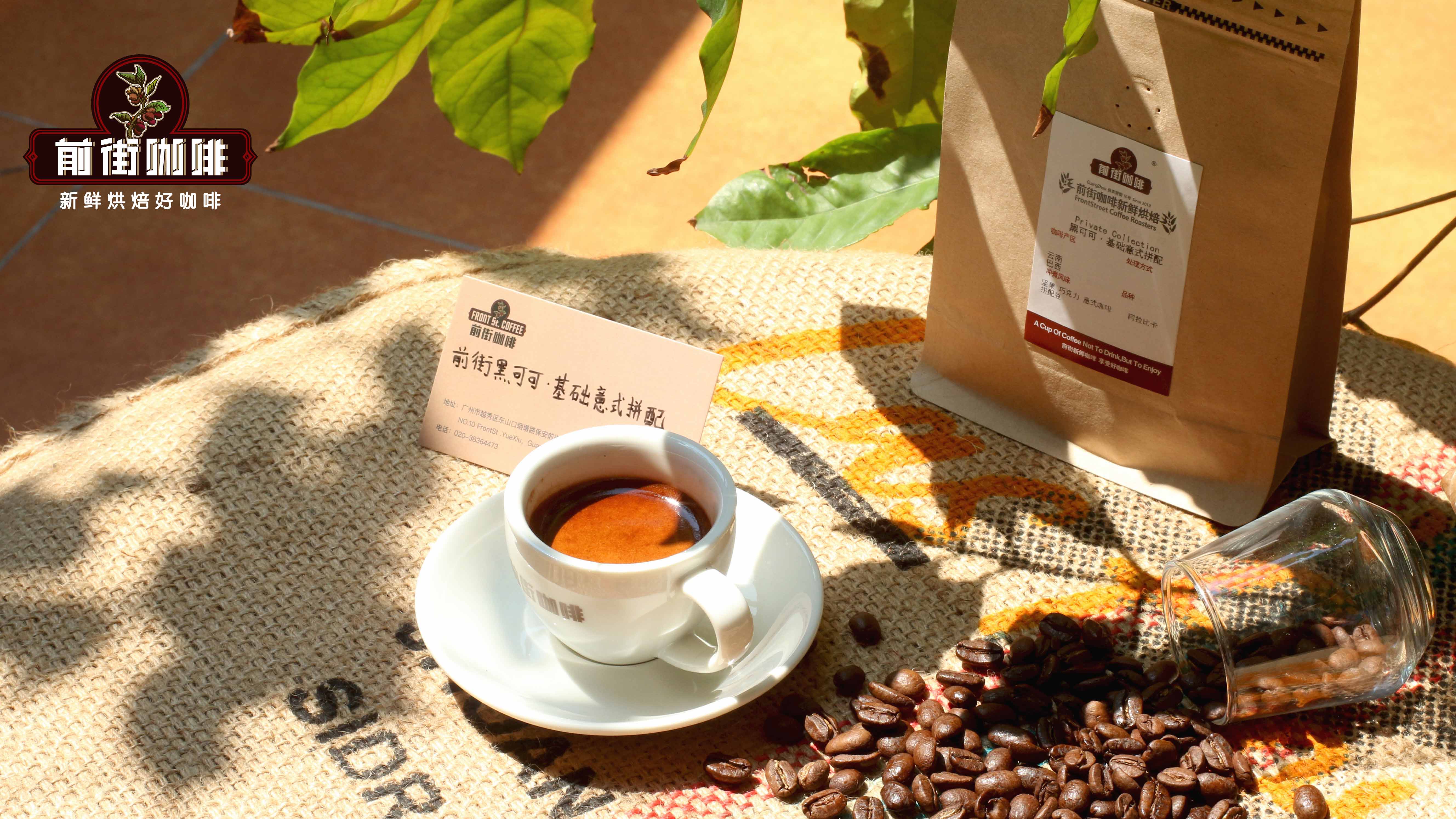
If you want to try the flavor of Brazilian espresso beans, both advanced and beginner drinkers can choose Front Street Dark Cocoa Basic Blend, which combines Yunnan smallholder beans with Brazilian Red Bourbon. It opens with full creamy nutty aromas, has gentle acidity, and finishes with chocolate-like sweetness. Whether made as an Americano or a latte, it delivers a balanced taste.
Front Street Coffee believes that the reason Brazilian beans have become a regular in espresso blends is that they have abundant production, are affordably priced, and deliver stable quality and flavor performance. They possess the typical characteristics of American coffees—balanced cocoa and nutty notes with a rich, full-bodied taste—and can lay a solid flavor foundation for the entire cup.
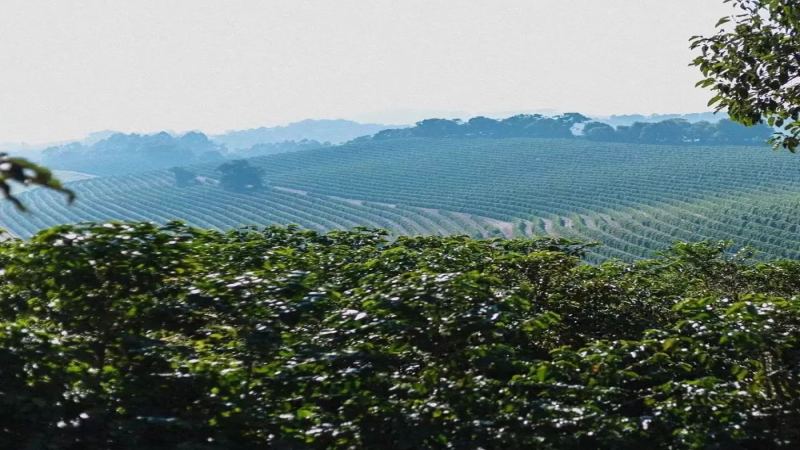
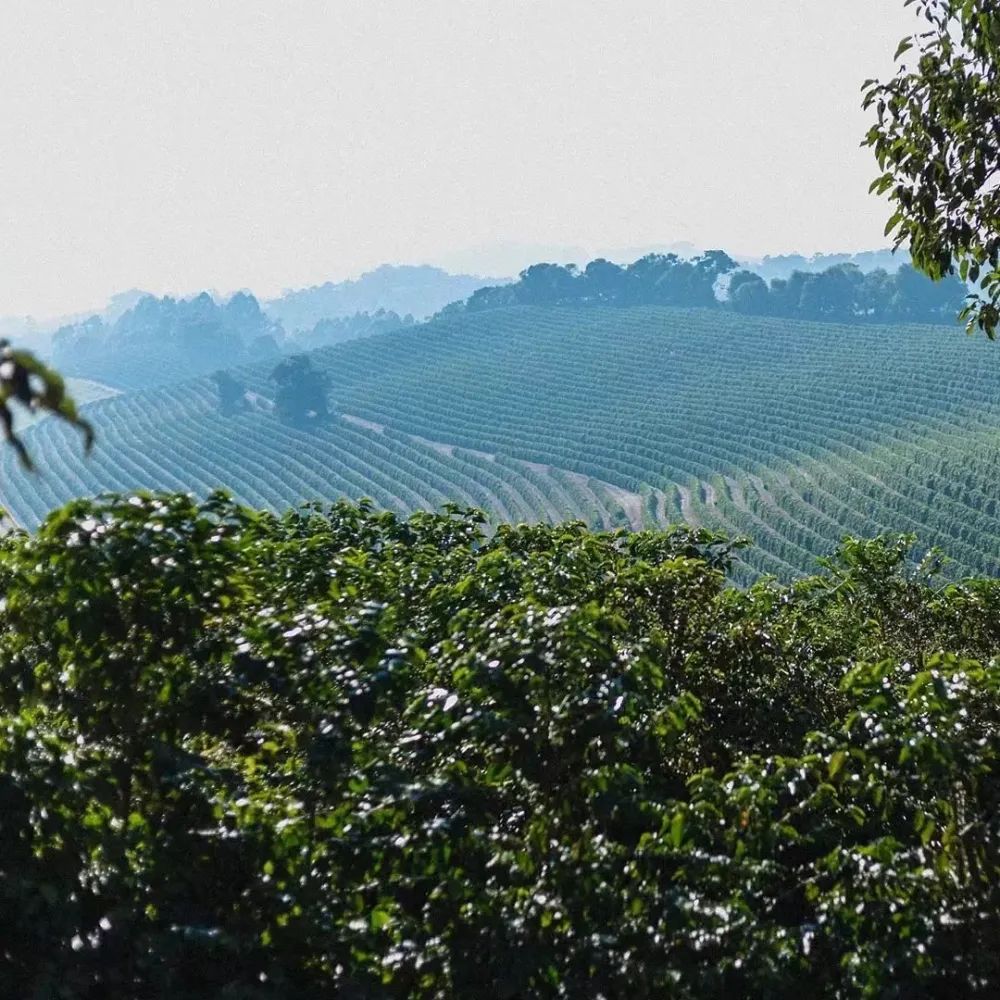
The reason Brazil's coffee production is so massive is inseparable from its geographical conditions. As the largest country in South America, Brazil has 26 states, 17 of which produce coffee. The main growing areas are concentrated on the gently rolling highlands of central-southern Brazil at about 1,000 meters above sea level, which is suitable for large-scale cultivation. Abundant sunlight, a suitable climate, and fertile soil provide an ideal growing environment for coffee and other crops.
Although neighboring countries also grow coffee, nowhere can match Brazil's scale of production. Brazilian coffee estates are usually far larger than the large farms of other producing countries, and mechanized operations are widely used—large equipment moves through the coffee groves, while extensive irrigation systems continuously supply water to the soil and coffee trees. Brazil can therefore be called the world's most advanced and most industrialization-dependent coffee-producing country.
Because of the relatively low altitude, flat terrain, lack of microclimates, and the absence of shade over the coffee trees, which are directly exposed to sunlight, Brazilian coffee beans do not emphasize floral and fruity acidity like those from other well-known producing regions. Instead, they show the typical style of low-altitude coffee beans: low acidity, prominent nutty flavors, and a full body.
While leading the world in production, Brazil has also been continuously raising its pursuit of coffee quality and flavor. Many local farms and industry associations place great importance on green bean quality and technical research. For example, the Campinas Agronomic Institute (IAC) has long been devoted to the preservation, genetic research, and breeding of coffee and other plants, keeping Brazil at the forefront of the world in genetic breeding and sustainable development, and providing valuable experience for other countries as well.
As the first host country of the renowned specialty coffee competition Cup of Excellence (COE), Brazil also has a number of specialty coffee estates, mostly distributed in the mountainous areas of subregions such as Alta Mogiana, Cerrado, and Sul de Minas. These areas are at higher altitudes, and the coffee groves are planted along slopes, so large-scale mechanical harvesting cannot be used as in low-altitude areas; instead, picking is mainly done by hand.
Front Street Coffee's Brazilian specialty coffee beans come from Fazenda Rainha in the Alta Mogiana region, an estate that has won numerous honors in Brazilian coffee competitions including the COE. The estate has long emphasized environmental protection and sustainable development and is known for producing high-quality Yellow Bourbon.
Common Bourbon coffee cherries turn from green to slightly yellow, orange-yellow, and red as they ripen, finally becoming fully ripe dark red—what we call Red Bourbon. Grown at high altitude, Red Bourbon has a balanced flavor, rich aroma, and soft, smooth acidity. Front Street's everyday staple beans use Red Bourbon.
The fruit of Yellow Bourbon does not turn cherry red at maturity, but yellow, and was discovered in 1930. Later research by the Campinas Agronomic Institute (IAC) found that plants with the dominant XcXc gene pair produce red berries; plants with the recessive xcxc gene pair produce yellow berries; and in rare cases, plants with one dominant and one recessive gene combination (Xcxc) produce orange berries. Therefore, the "yellow" of Yellow Bourbon comes from the selectivity of color genetics. Grown at high altitude, Yellow Bourbon is rich in fructose and can present a sweet, juicy flavor. It nearly swept the top three places for two consecutive years in Brazil's Cup of Excellence competition and became popular in the specialty coffee world.
Yellow Bourbon coffee beans grown at high altitude have higher density and are rich in glucose. Front Street's roasting approach is to highlight the classic rich aroma of Brazilian coffee while also showcasing the sweetness of the Bourbon variety itself, so this Front Street Fazenda Rainha coffee bean is roasted to a medium-dark level. Once brewed, it has a fruity sweetness on the palate, accompanied by sugarcane, chocolate, and peanut-nut flavors. The bitterness is faint and clean, and the mouthfeel is smooth and delicate—suitable for coffee lovers who do not care much for acidity and prefer nutty notes and balanced flavors.
The above content is compiled by CoffeeHunters, a coffee news website.


