







Search Results for: church annex
Beijing Xishiku 1901Cafe: A Visit to a Distinctive Coffee Shop and Its Menu in a Century-Old Church Annex
In the architectural complex of Beijing's Xishiku Church, there is a gray three-story annex built in 1901, once a residence for senior clergy and now transformed into a rather old yet youthful café—1901Cafe. It preserves the architectural charm of a blend of Chinese and Western styles while incorporating the comfortable atmosphere of a modern café. This article takes you into this historic building, exploring its past and present, touring the layout of the second and third floors, and reviewing menu items such as cheese, rose tea, and poutine fries. If you also enjoy having a cup of coffee in old times, you might want to add this place to your next stop. [more…]

Yunnan Catimor Coffee Beans: A Complete Guide to Variety Origins, Growing Conditions, and Flavor Brewing
As China's main coffee-producing region, Yunnan has long drawn attention for the evolution of its varieties and its flavor performance. Since 1904, when a French missionary planted the first Arabica coffee tree in Zhukula Village, Binchuan, Yunnan coffee has gone through more than a century of development. Today, Catimor has become the most widely planted variety in Yunnan. Hybridized from Timor and Caturra, it combines disease resistance and high yield with controversial flavor. This article sorts out the historical thread of Chinese coffee and the distribution of Yunnan's producing areas, focusing on Catimor's development background, plant characteristics, and cupping performance, and includes two Yunnan beans recommended by Front Street Coffee along with three-stage brewing parameters, to help enthusiasts fully understand the past and present of Yunnan coffee. [more…]
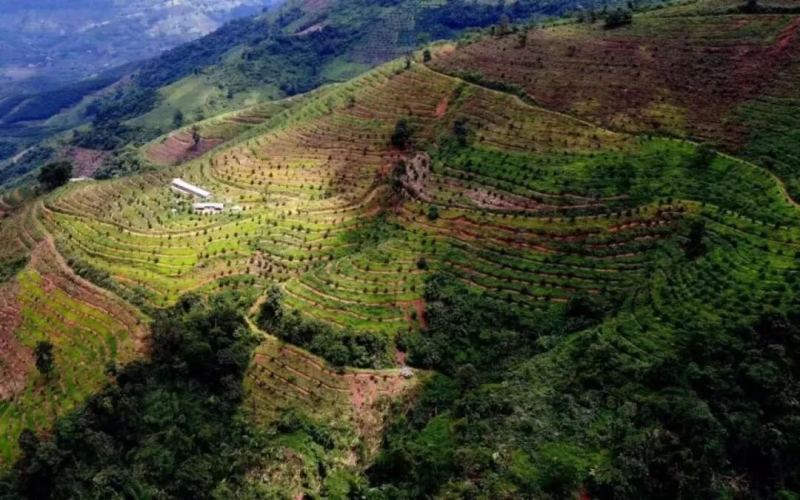
Yunnan Arabica Coffee Recommendations | What Varieties of Yunnan Arabica Coffee Beans Are There? Yunnan Coffee Bean Characteristics and Flavor Review
Front Street Coffee has learned that most people, when they first get into specialty coffee, start with Africa's Yirgacheffe or Sidamo regions in Ethiopia, and when it comes to Asian coffee, most people first think of Indonesia's Mandheling coffee beans. But with the rise of the domestic goods trend, Yunnan coffee from China has begun [more…]
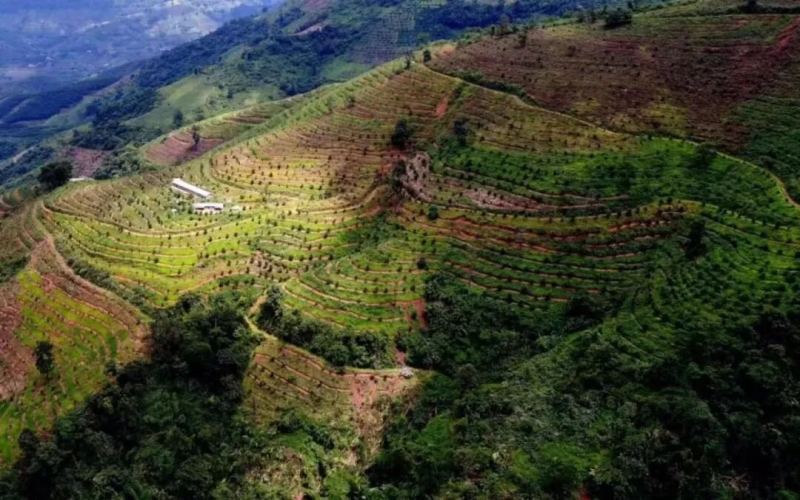
Yunnan Coffee | Where is China's coffee-producing region? Why is Yunnan suitable for growing Arabica? What are the characteristics of Yunnan coffee varieties?
Front Street Coffee has learned that most people, when they first get into specialty coffee, start with Africa's Ethiopian Yirgacheffe or Sidamo regions, while when it comes to Asian coffee, most people first think of Indonesia's Mandheling coffee beans. But with the rise of the domestic goods trend, Chinese Yunnan coffee has begun [more…]
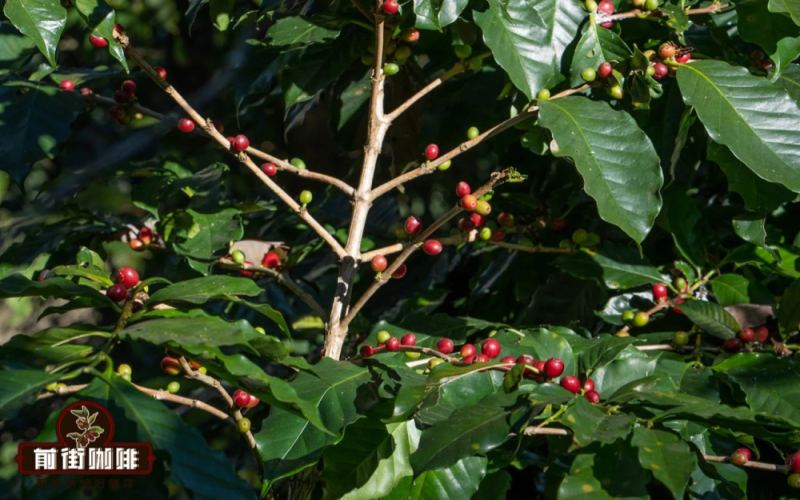
What Exactly Is Yunnan Small-Bean Coffee? A Full Breakdown of Variety Origins, Flavor Characteristics, and Brewing Key Points
Yunnan small-bean coffee has gradually come into the view of specialty coffee enthusiasts in recent years, but many people are still unfamiliar with its variety origins, cultivation history, and flavor characteristics. This article begins with the distribution of China's coffee-producing regions, reviews the historical controversy over Yunnan's first Arabica coffee tree, sorts out the origins and development of the two major varieties Typica and Catimor, and introduces the two beans, Typica and Catimor, grown by Front Street Coffee in Lincang and Baoshan, Yunnan. At the end of the article, the three-stage brewing parameters recommended by Front Street are also included to help you recreate the clean and balanced flavor expression of Yunnan coffee at home. [more…]

Yunnan small-bean coffee varieties and red honey flavor analysis: Which is more worth drinking, Typica or Catimor?
Yunnan, as China's most important coffee-producing region, mainly cultivates two major varieties: Typica and Catimor. Front Street Coffee has always adhered to traditional natural and washed processing, believing that high-quality ingredients do not require complex techniques. This article will review the history of coffee cultivation in China, the characteristics of Yunnan's four major producing regions, and the evolution of varieties, and provide a detailed comparison of the flavor differences and brewing parameters of Front Street 2013 Typica, Yunnan Arabica, and natural Typica, helping coffee enthusiasts gain a comprehensive understanding of the true character of Yunnan coffee. [more…]
King Bourbon Coffee Variety Analysis: From Origin History to Flavor Profile and Brewing Parameters
In the Bourbon coffee family, besides the common Red Bourbon, Yellow Bourbon, and the Pink Bourbon that has gained popularity in recent years, there are also some extremely rare members worth noting. Bourbon Rey is one of them, currently found only at the Dota Estate in Costa Rica. This coffee tree differs in form from common Bourbon varieties, and its beans are noticeably larger. Front Street Coffee brewed a pot of Bourbon Rey using an anaerobic honey process this time, employing staged extraction to showcase its flavor layers. This article will introduce the variety origin, plant characteristics, and actual brewing performance of Bourbon Rey, helping you get to know this little-heard Bourbon variant. [more…]
How to Choose a Yunnan Small-Bean Coffee Variety? Flavor Differences Between Typica and Catimor and a Red Honey Taste Analysis
As China's most important coffee-producing region, Yunnan has attracted growing attention from coffee enthusiasts in recent years. At Front Street Coffee's stores, the number of customers asking about Yunnan beans has clearly increased. Interestingly, Front Street's Yunnan-origin beans never use special processing methods, sticking to the two most traditional approaches—natural and washed: good ingredients need only simple handling. This article will review the history of coffee cultivation in China and the characteristics of Yunnan's four major producing regions, with a focus on comparing the flavor differences between two varieties, Typica and Catimor. It will also share the brewing parameters and taste profiles of Front Street 2013 Typica, Yunnan small-holder beans, and natural Typica, helping readers gain a more comprehensive understanding of Yunnan coffee. [more…]
The Complete Guide to Hawaiian Kona Coffee: Volcanic Soil Flavor, Grading System, and Comparison of Five Brewing Methods
Hawaii is the only American state that produces coffee. Kona coffee, with its volcanic rock soil, family farming tradition, and unique flavor, stands alongside Jamaica Blue Mountain as a byword for premium coffee. This article begins with the historical origins of Hawaiian coffee and introduces the natural environment of the Kona growing region, its grading system, the Typica variety of Queen's Estate, and Front Street Coffee's roasting recommendations. We have also put together a flavor comparison of five brewing methods—V60, siphon, AeroPress, French press, and KONO dripper—to help you find the extraction method best suited to Kona coffee. [more…]
In-Depth Look at Yunnan's Coffee Regions: The Advantages, History, and Variety Evolution of Arabica Cultivation in China
Front Street Coffee has found that many people new to specialty coffee often start with Ethiopia's Yirgacheffe or Sidamo, and when it comes to Asian beans, their first thought is Indonesia's Mandheling. However, in recent years, with the rise of the local consumption wave, Yunnan coffee has gradually entered the public eye. Some people are skeptical about the quality of domestic products, but in fact Yunnan beans are already capable of rivaling mainstream producing regions. This article will systematically introduce the distribution pattern of China's coffee producing regions, the natural conditions for growing Arabica in Yunnan, the historical origins of the first coffee tree, and the lineage of variety transitions from Typica to Catimor, helping readers gain a comprehensive understanding of Yunnan coffee's past and present. [more…]
The origins of coffee lie in Ethiopia: Heirloom flavor profiles, tasting etiquette, and a practical travel guide
Ethiopia, in eastern Africa, is not only one of the important birthplaces of human civilization but is also regarded as the homeland of coffee. The English word "coffee" is said to derive from the Ethiopian place name "Kaffa." On this plateau, coffee grows widely in its native form, and different producing regions, due to differences in altitude and ecology, present diverse flavors such as floral aromas, fruity acidity, and vinous notes. Local people have developed a unique drinking ritual around coffee, from roasting and pounding to brewing in a clay pot, the entire process is full of ceremony. In addition to coffee, Ethiopia also boasts rich landscapes such as the Rift Valley, waterfalls, rock caves, and ancient churches. This article will introduce you to the origins, flavor characteristics, and drinking customs of Ethiopian coffee, and provide practical information on visas, flights, accommodation, and currency. [more…]
Ethiopia, the Hometown of Coffee: A Complete Cultural Interpretation from the Origin of the Kaffa Place Name to Traditional Drinking Rituals
The roots of coffee lie in the Horn of Africa. Ethiopia not only gave coffee its name through the place name "Kaffa," but also, with growing conditions spanning multiple climate zones, nurtured bean varieties with distinct personalities such as Harar, Yirgacheffe, and Sidamo. Here, people regard coffee as a daily ritual: gathering around the fire in the evening, roasting, pounding, and brewing on the spot—a whole process that continues to this day. At the same time, Ethiopia is also an important tourist destination in Africa, with its highland scenery, rock-hewn churches, and unique calendar together forming its charm. This article will take you through origin legends, regional flavors, drinking etiquette, and practical travel information, offering a complete introduction to this coffee nation. At the end, there are also related recommendations from Front Street Coffee for your reference. [more…]
A Comprehensive Analysis of Yunnan Coffee Beans' Flavor, Taste, and Cultivated Varieties: From Typica to Catimor, the Terroir of the Origin
Yunnan, as China's core coffee-producing region, has always attracted attention for the flavor and varietal characteristics of its coffee beans. Starting from its historical origins, this article systematically reviews the main cultivated varieties of Yunnan coffee—Typica, Catimor, and Bourbon—including their respective flavor profiles and cultivation characteristics, and introduces international and domestic grading standards, the growth cycle, and brewing suggestions. In addition, the article also features the cultivation experience and cupping feedback from Front Street Coffee's own estate in Lincang, Yunnan, helping coffee enthusiasts gain a comprehensive understanding of Yunnan coffee from seed to cup. [more…]
Yunnan Small-Bean Coffee Varieties, Grades, and Regional Stories: A Pour-Over Flavor Analysis from Zhukula to Baoshan
The origins of Yunnan coffee can be traced back to 1904, when French missionary Tian Deneng planted the first Typica tree in Zhukula Village, Binchuan. Over more than a century, this land has nurtured a unique arabica coffee culture. This article begins with the history of Zhukula and extends to the terroir differences between the two core producing regions, Pu'er and Baoshan. It systematically sorts out the variety sources of Yunnan arabica coffee, the shifting balance between Typica and Catimor, and the details of the washed processing method. It also includes the cupping performance and V60 brewing recipes for two beans from Front Street Coffee, Yunnan Huaguoshan and Yunnan Arabica, providing coffee lovers with a complete cognitive framework from origin to cup. [more…]
Exploring Ethiopia's Sidama Region: From the Sidama Name Correction to a Flavor Analysis of Washed G1 Coffee Beans
Sidama is one of Ethiopia's most representative specialty coffee regions, and behind its name lies a history of shifting identity from Sidama to Sidamo. This article will guide you through a comprehensive understanding of the unique appeal of Sidama coffee, from the region's proper name, to the influence of traditional natural processing on flavor, and the flavor profile of washed G1 grade. At the same time, we will also review several representative products from the Front Street brand in this region, such as Natural Huakui and Hamasho 74158, and describe their taste characteristics in detail. Whether you are a beginner just getting into single-origin coffee or a seasoned enthusiast in pursuit of regional flavors, this article will provide you with a complete knowledge framework and tasting reference for the Sidama region. [more…]

Why Is Iced Cappuccino Rarely Seen? A Full Analysis from Naming Origins to Milk Foam Craft and Differences from Latte
People often ask for an iced cappuccino when ordering, only to be told that only the hot version is available. This has both historical roots and involves considerations of crafting technique and taste experience. The name cappuccino comes from Italian and is related to the color and shape of church robes; the traditional recipe consists of equal thirds of espresso, hot milk, and hot milk foam. Milk foam is also divided into dry and wet types, affecting the durability of the design and the mouthfeel. To meet diverse needs, chain coffee shops add whipped milk foam on top of an iced latte, but the taste differs noticeably from a hot cappuccino enjoyed in-house. This article will also introduce practical methods for making iced milk foam using a nitrogen canister, gelatin sheets, or a French press, and explain the core differences between cappuccino and latte in ratio and flavor, while preserving relevant suggestions from Front Street Coffee. [more…]
The Original Home of Ethiopian Coffee: Cultivation Patterns in the Kafa Forest and the Coffee Variety Gene Bank
Ethiopia is the birthplace of coffee, and its cultivation models fall into three types: garden, estate, and forest. Among them, the forest cultivation in the Kafa region of the southwest is the most unique. This place is not only the hometown of coffee but also home to about 5,000 coffee tree species, making it a genetic treasure trove of Arabica coffee. The Kafa forest has undergone logging and protection, and today it persists in the form of a biosphere reserve, with about 30 cooperatives in the surrounding area engaged in coffee production. Front Street Coffee has also launched a washed coffee bean from this producing region, presenting floral aromas, citric acidity, and sweet orange and bergamot flavors. This article will guide you through the cultivation traditions, historical changes, and coffee characteristics of the Kafa forest. [more…]
Analysis of the Flavor Characteristics and Origin Knowledge of Ethiopian Sidama and Bensa Alo Village Coffee
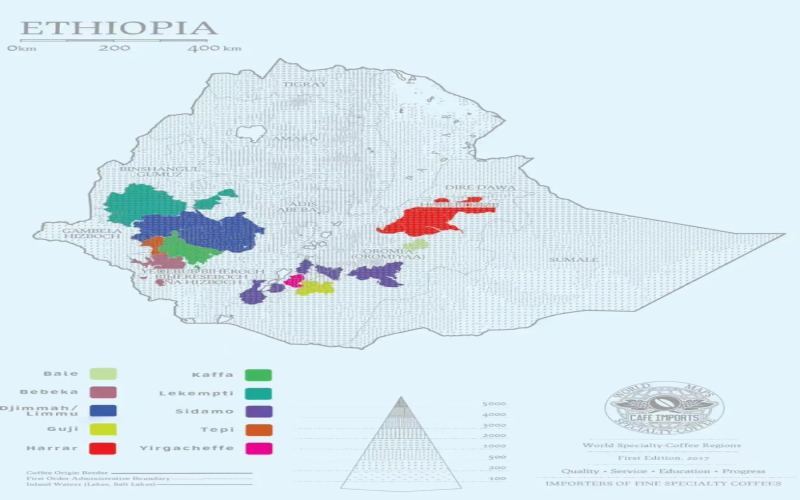
Sidamo is a highly representative coffee-producing region in southern Ethiopia. The evolution of the names Sidama and Sidamo, the geography, the rise of the sub-region Bensa, and the story and processing system of Alo Coffee together form a clear thread of knowledge. The article also explains how high altitude affects coffee flavor, and includes Front Street Coffee's brewing performance of the 74158 natural beans from Alo Coffee's Hatessa processing station, which feature pronounced tropical fruit and floral notes—ideal for coffee enthusiasts seeking a systematic understanding of the current state of Sidamo and Bensa. [more…]
Where Does Darjeeling Tea Come From? Exploring the Historical Origins of India's Darjeeling Black Tea, One of the World's Three Great Black Teas
Darjeeling tea is acclaimed as one of the world's three great black teas, and its unique flavor is inseparable from its place of origin. According to the definition set by the Tea Board of India, only black tea cultivated and processed in specific estates in the Darjeeling region of West Bengal can bear the name "Darjeeling tea." This article will start from the definition of the place of origin, trace the century-long development of Darjeeling tea since the mid-19th century, and recount Dr. Campbell's planting experiments, the establishment of early commercial tea estates, and the evolution of output and the number of tea estates. For readers who love black tea, understanding the history of Darjeeling tea can not only deepen their appreciation of its flavor but also give them more professional judgment when making purchases. Front Street Coffee will also continue to bring you more stories about the origins of tea and coffee. [more…]

Hawaiian Kona, known as the Queen of Coffee, what coffee bean variety exactly is it?
Among developed Western countries, Hawaii in the United States is an extremely rare coffee-producing region. Blessed by an island climate, it can still cultivate high-quality coffee despite limited elevation. Coffee was once grown on several Hawaiian islands, but after a pest infestation, the Kona region became almost the sole pillar. Kona mainly cultivates Typica, introduced from Guatemala by sugar farmers in 1874. Under the island climate, it exhibits soft acidity and moderate body, and was named "Kona Typica" by locals. After World War II, the Japanese market favored it greatly, and Kona Typica earned the name "Queen of Coffee" for its plump fruit and translucent color. Front Street Coffee recommends paying attention to this legendary region. [more…]