







How Did Kona Coffee Come to Grow in Hawaii?
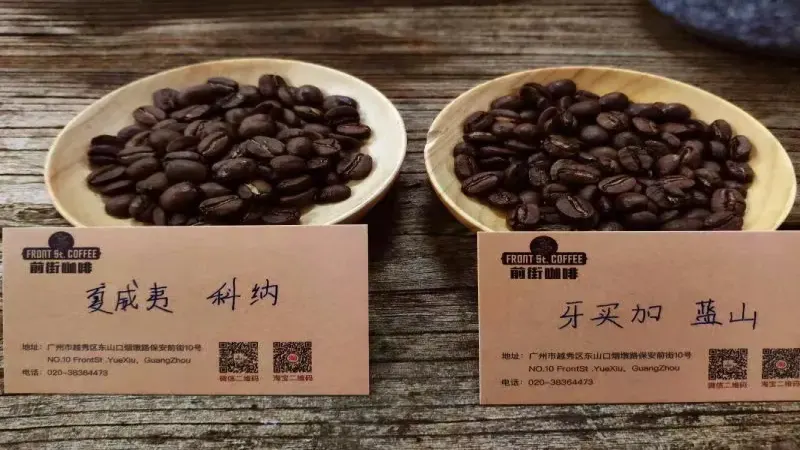
Kona coffee is mainly the Typica variety, brought to Hawaii from Guatemala in 1874 by a sugar farmer. Grown in the Kona region's island climate, it developed soft acidity and moderate body, and locals named it Kona Typica. Its plump, translucent cherries later earned it the nickname Queen of Coffee, especially in the Japanese market after World War II.
Coffee cultivation once spread across six of Hawaii's main islands, starting with Oahu in 1817. After a pest outbreak, Kona became nearly the only remaining pillar of production. Limited arable land and protected areas kept most other islands at small scale, so Hawaii stays a rare coffee-growing region among developed countries.
Among developed Western countries, Hawaii in the United States is an extremely rare coffee-producing region. Blessed by its island climate, it can still cultivate high-quality coffee despite its limited altitude. Coffee was once grown on several Hawaiian islands, but after a pest outbreak, the Kona region became almost the sole pillar. Kona mainly cultivates Typica, introduced from Guatemala by a sugar farmer in 1874. Under the island climate, it developed a soft acidity and moderate body, and locals named it "Kona Typica." After World War II, the Japanese market favored it greatly, and Kona Typica earned the name "Queen of Coffee" for its plump cherries and translucent appearance. Front Street Coffee recommends paying attention to this legendary region.
Although most Western countries are major coffee consumers, they produce almost no coffee. The reason is that coffee trees are extremely demanding about climate and growing conditions, and most Western regions do not meet the natural requirements, so these countries mainly rely on imports. Hawaii in the United States is one of the few regions that can satisfy the requirements for coffee cultivation, and precisely for this reason, it has become the only coffee-producing region among developed countries.
Hawaii is made up of multiple islands, and thanks to the island climate, it is well suited for coffee growing even though the altitude is not particularly high. Apart from the two rather special islands of Niihau and Kahoolawe, the other six islands have all had coffee cultivation at some point.
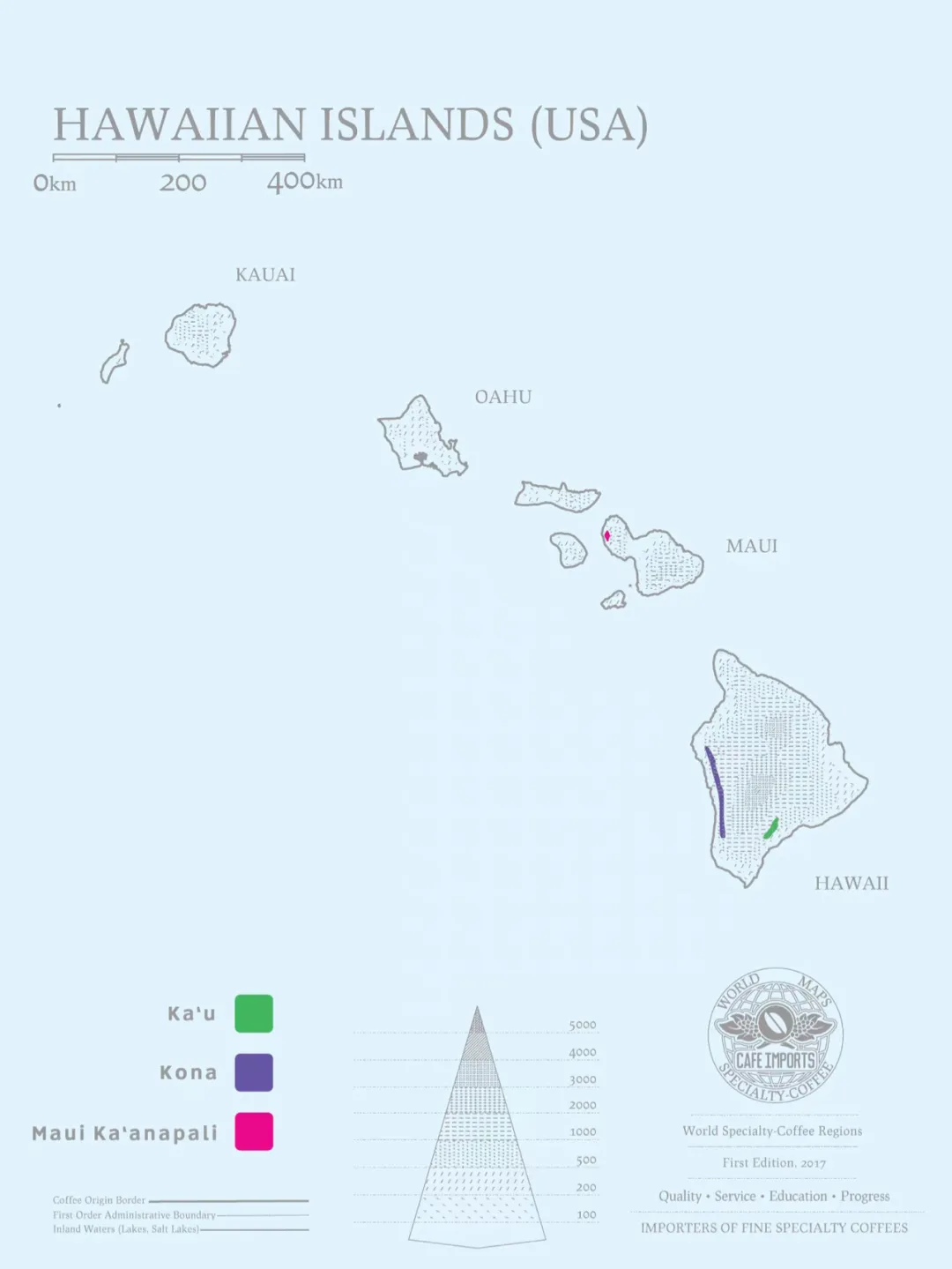
Oahu was the first place in Hawaii to encounter coffee. In 1817, before Hawaii was annexed by the United States, a Spanish advisor named Francisco introduced coffee to Oahu for trial planting. For some time afterward, people successively introduced coffee plants from outside. But as can be seen on production-region maps, including Oahu, most islands do not have a corresponding colored marking for coffee cultivation.
There are mainly two reasons. First, the coffee-growing areas are very limited. Hawaii's islands are not large to begin with, and after subtracting large stretches of national protected areas, the land available for agriculture is extremely scarce. As a result, coffee on many islands is only grown on a small scale and has not formed an industrial scale.
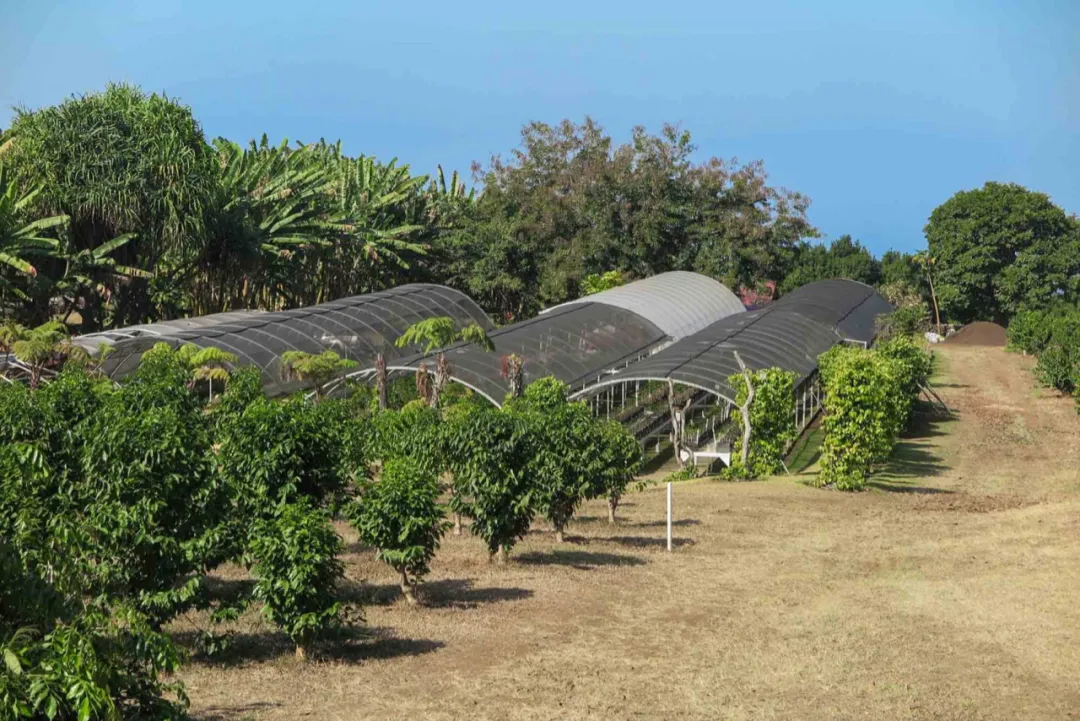
The second reason is that Hawaiian coffee once suffered a severe pest outbreak, which nearly wiped out all coffee trees except those in the Kona region. Because of this, Hawaii's coffee production today is not high, and apart from Kona, coffee output on other islands is almost negligible. To this day, the Kona region has more than 600 farms. This has also made Kona coffee synonymous with Hawaiian coffee; when people mention Hawaiian coffee, the first thing they think of is Kona.
The main variety in the Kona region is Typica, introduced from Guatemala in 1874 by a sugar farmer who originally grew sugarcane. Typica seemed naturally suited to the island environment and quickly adapted to the local climate and thrived.
Nourished by the island climate, the coffee rooted here displays a distinctive flavor: soft acidity and moderate body. This attracted many local coffee farmers to switch to growing Typica. As the number of growers increased, in order to distinguish it from Typica in other regions, the Typica grown in Kona was given a new name—"Kona Typica." But this is only what locals call it; in essence, it is still Typica.
Like most coffee-producing regions, Hawaii's coffee industry has experienced great ups and downs. From its initial glory to later falling into a trough due to the American economic depression. Many estate owners could not sustain operations and could only sell their farms as a whole.
Those who took over these farms were mainly Japanese immigrants to Hawaii. Due to limited funds, they could often only buy a small piece of a farm, about 5 hectares per household. This is also why the Kona region has more than 600 farms—they are not traditional large estates, but small family-run farms.
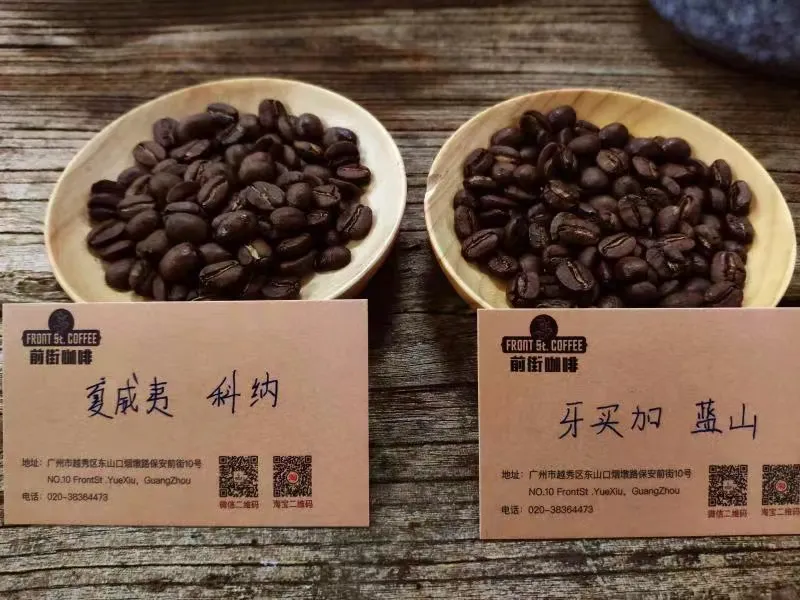
After World War II ended, Japan's coffee market became increasingly prosperous. Even though they already controlled the Blue Mountain coffee market, the Japanese were still not satisfied and soon set their sights on Hawaiian coffee. Coincidentally, Kona and Blue Mountain both belong to the Typica variety, and their growing environments are both island climates, so the Japanese launched a new round of a "monopoly" plan.
However, Kona Typica did not become another Coffee Emperor, because the Typica grown in Kona has plumper cherries, more translucent color, and a more beautiful appearance. In short, it is better looking, so it was given the title of "Queen," equal in status to the Emperor.
The above content is compiled by CoffeeHunters, a coffee news website.


