







Which Yunnan coffee variety should you choose?
Yunnan is China's main coffee-producing region, and its beans from Front Street use only natural and washed processing, with no special fermentation. The key choice is variety: Typica and Catimor differ in the cup. Comparing the two, along with Yunnan's four main growing areas, helps set expectations before buying, since good green coffee often needs only simple handling.
Coffee cultivation in China is roughly a century old; consumption was first recorded in the late Qing Dynasty, mainly among foreigners. After the Sino-French War opened Yunnan as a treaty port, French missionary Father Tian Deneng planted an Arabica tree beside a church in Zhukula Village, Binchuan County, Dali, though the exact planting year remains disputed across three accounts.
Yunnan, as China's most important coffee-producing region, has drawn increasing attention from coffee lovers in recent years. At Front Street Coffee stores, noticeably more customers are asking about Yunnan beans. Interestingly, Front Street's Yunnan-origin beans never use special processing methods, sticking to the two most traditional approaches—natural and washed. Good ingredients need only simple handling. This article will review the history of coffee cultivation in China, the characteristics of Yunnan's four major producing regions, and focus on comparing the flavor differences between two varieties, Typica and Catimor. It will also share the brewing parameters and taste profiles of Front Street 2013 Typica, Yunnan Small Cherry, and Natural Typica, helping readers gain a more comprehensive understanding of Yunnan coffee.
Under the wave of domestic brands, among customers walking into Front Street Coffee (FrontStreet Coffee) stores, more and more are asking about beans from the Yunnan producing region. If you pay a little attention, you'll notice that in Front Street Coffee (FrontStreet Coffee)'s Yunnan product line, not a single one uses special processing methods—all are uniformly the two most traditional methods: natural and washed. Behind this is Front Street's consistent philosophy: truly high-quality ingredients often require only the simplest processing methods.
History of Coffee in China
Coffee is different from tea; tea culture has long been deeply rooted in the hearts of Chinese people. The earliest recorded coffee consumption in China can only be traced back to the late Qing Dynasty, when the coffee-drinking group was mainly foreigners. As for coffee cultivation, it has only been about a hundred years in China.
After China's defeat in the Sino-French War during the late Qing Dynasty, the Qing government was forced to open Yunnan as a treaty port, allowing French influence to seep into Yunnan. French missionary Father Tian Deneng was sent to Zhukula Village, Pingchuan Town, Binchuan County, Dali, to build a Catholic church and preach. Since Father Tian Deneng himself had a habit of drinking coffee, he planted an Arabica coffee tree beside the church.
However, the exact year of planting remains undetermined to this day, with even three different accounts:
① According to an elderly Yunnan local born in 1903, church staff once mentioned that the priest planted coffee trees outside the church for self-production and self-consumption.
② In 2008, a Yunnan company vigorously promoted through multiple media outlets that Father Tian Deneng planted the coffee tree in 1892.
③ A committee member of the Hainan Provincial Association for Science and Technology cited historical documents in an academic journal, arguing that the year should be 1904. Currently, more people believe this account is closer to the facts.
Coffee-Growing Regions in China
Coffee cultivation in China is mainly concentrated in three provinces: Fujian, Hainan, and Yunnan. However, Fujian and Hainan are close to the ocean with an average altitude of less than 1,000 meters, suitable only for growing Robusta varieties. Therefore, public attention naturally converges on Yunnan as a producing region.
Yunnan is located in southwestern China, between 15°N and the Tropic of Cancer, with most areas at altitudes ranging from 1,000 to 2,000 meters. The terrain is dominated by mountains and slopes with pronounced undulation. Combined with fertile soil, abundant sunshine, ample rainfall, and significant temperature differences between day and night, these conditions precisely meet the needs of coffee cultivation and also shape the unique flavor expression of Yunnan coffee.
Where are Yunnan coffee beans produced?
Yunnan's coffee-growing areas are mainly distributed in the western and southern parts of the province, namely Pu'er, Baoshan, Lincang, and Dehong.
【Dehong】is known as the "Home of Chinese Coffee." All coffee in Dehong Prefecture is grown at altitudes above 1,000 meters, with 30,000 mu planted in mountainous areas above 1,600 meters. In addition, local coffee cultivation mainly uses organic fertilizers and organic pesticides, resulting in higher quality coffee. It is one of the rare high-quality coffee-producing regions in the world.
【Baoshan】Baoshan's coffee cultivation began in the mid-1950s, with the first coffee seedling introduced from Southeast Asia by the late patriotic overseas Chinese Mr. Liang Jinshan. In recent years, with the expansion of international trade, Lujiangba's small cherry coffee has become widely renowned. Merchants from Europe, America, and Arab countries—especially those from the UK, US, Egypt, and Hong Kong and Macau—regard it as a premium coffee, and demand exceeds supply. In December 2010, upon review by China's General Administration of Quality Supervision, Inspection and Quarantine, it was decided to implement national geographical indication product protection for "Baoshan Small Cherry Coffee."
【Lincang】With its unique geographical location and climatic conditions, Lincang has become a hot spot for many coffee enterprises. The area has successively established high-quality coffee seedling bases of 200 mu and 100 mu in Mengding Town of Gengma Autonomous County and Lincang Xingfu Farm, and has promoted coffee cultivation in Gengma, Zhenkang, Yunxian, Cangyuan, Yongde, and other places.
【Pu'er】As a tea hometown, Pu'er has a 150-year history of coffee cultivation. In the early 1990s, Pu'er City began cultivating coffee as a backbone industry for adjusting the industrial structure and helping farmers increase income.
Yunnan Coffee Bean Varieties
With the implementation of the reform and opening-up policy, international brands such as Nestlé and Starbucks entered Yunnan one after another and vigorously promoted the cultivation of the Catimor variety. Before Catimor became widespread, the variety of Yunnan small cherry coffee was Typica. However, to increase yield and enhance disease resistance, growers chose to cut down the more elegantly flavored Typica coffee trees and replant Catimor, which carries some Robusta genes.
【Typica】Typica is the oldest native variety from Ethiopia, and all Arabica coffee varieties originate from Typica. Typica has bronze-colored top leaves, and the bean shape is oval or slender-pointed. It has an elegant flavor but poor disease resistance and low fruit yield.
【Catimor】Catimor is a variety developed by Portugal in 1959 through crossing Timor and Caturra. It has strong resistance to leaf rust, strong resistance to coffee berry disease, and high fruit yield. Because Catimor contains Robusta genes, its flavor and mouthfeel, while rich and heavy, also carry a hint of defect.
Front Street Coffee (FrontStreet Coffee): Front Street 2013 Typica Coffee Beans
Producing Region: Baoshan, Yunnan, China
Altitude: 1200m
Variety: Typica
Processing Method: Washed
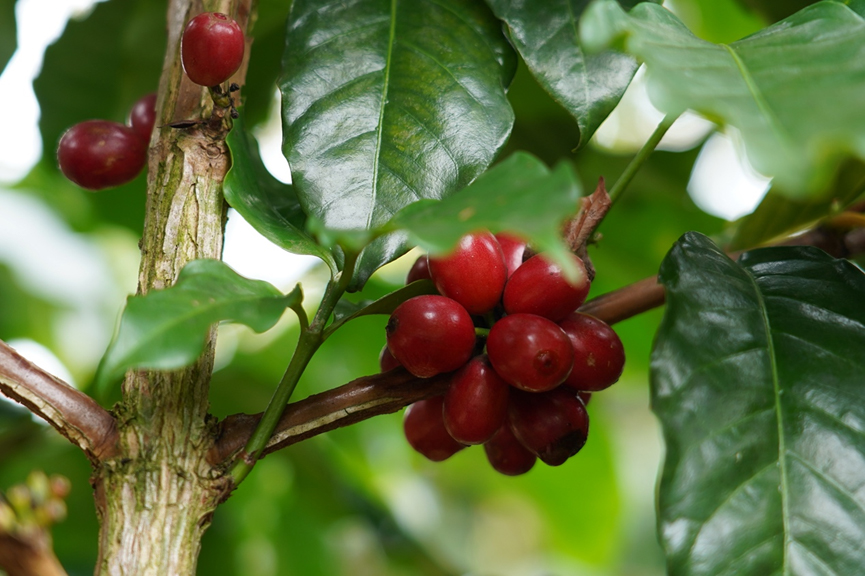
Front Street Coffee (FrontStreet Coffee): Yunnan Small Cherry Coffee Beans
Producing Region: Baoshan, Yunnan, China
Altitude: 1200m
Variety: Catimor
Processing Method: Washed
Front Street Coffee (FrontStreet Coffee) Brewing Suggestions for Front Street 2013 Typica and Yunnan Small Cherry
Front Street recommends using a V60 conical dripper. The V60 has a larger opening, and with its unique spiral curve ribs, air is more easily released, thereby improving extraction quality. The mouthfeel may not be thick enough, but the Yunnan coffee's fruity acidity and prominent aroma brought by high concentration are its highlights.
Dripper: V60
Water Temperature: 90-92℃
Coffee-to-Water Ratio: 1:15
Grind Size: Medium-fine grind, i.e., fine granulated sugar consistency (EK43s#10.5: 75% passing through China Standard No. 20 sieve)
Brewing Method: Staged extraction. Use 30 grams of water for a 30-second bloom, then pour in a small stream in a circular motion until reaching 124 grams for the stage break. When the water level drops and is about to expose the coffee bed, continue pouring until 227 grams and stop. When the water level drops and is about to expose the coffee bed, remove the dripper. (Timing starts from the beginning of the bloom.) Total extraction time is 2 minutes.
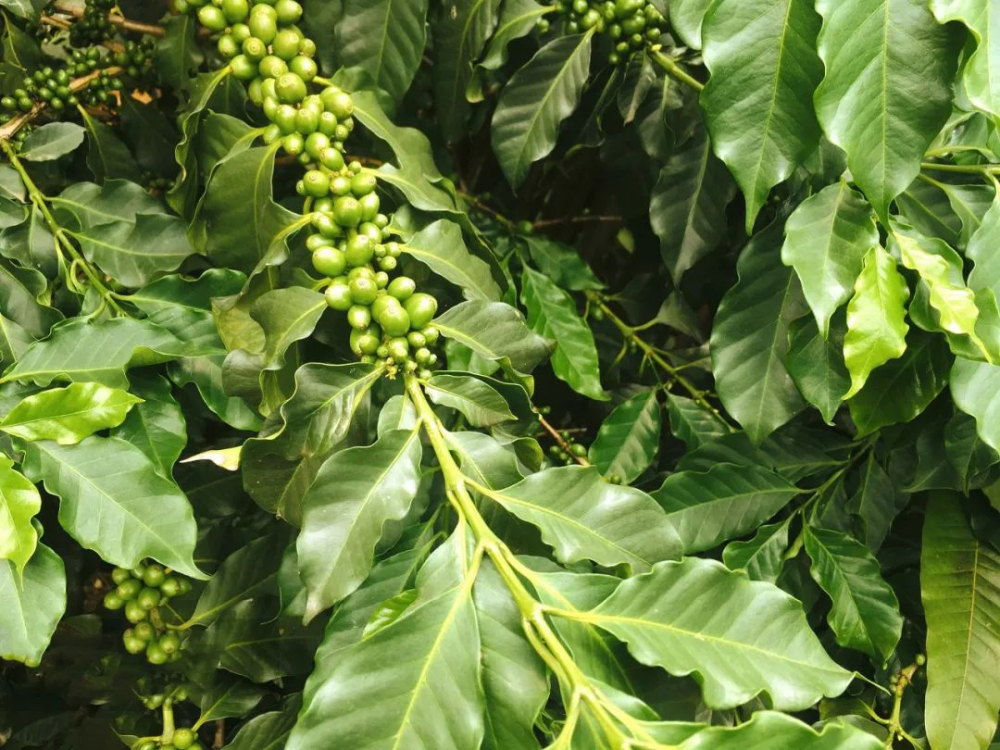
Front Street Coffee (FrontStreet Coffee): Front Street 2013 Natural Typica Coffee Beans
Producing Region: Lincang, Yunnan, China
Altitude: 1300m
Variety: Typica
Processing Method: Natural
Front Street Coffee (FrontStreet Coffee) Brewing Suggestions for Front Street Yunnan Natural Typica
Dripper: KONO
Water Temperature: 86-88℃
Coffee-to-Water Ratio: 1:15
Grind Size: Medium-fine grind, i.e., fine granulated sugar consistency (EK43s#10.5: 75% passing through China Standard No. 20 sieve)
Comparison of Yunnan Coffee Bean Flavor Characteristics
【Front Street 2013 Typica】Rich but not bitter, fragrant but not harsh; floral, with melon sweetness in the mid-palate and a black tea note in the finish.
【Front Street Yunnan Small Cherry】Nutty notes, herbal, chocolate, caramel, with a faint fruity acidity in the aftertaste.
【Front Street Yunnan Natural Typica】Berry-like acidity, nutty tone, brown sugar sweetness, with a tea-like aftertaste.
For professional coffee knowledge exchange and more coffee bean information, please follow Coffee Workshop (WeChat public account: cafe_style)
For more specialty coffee beans, please add the private WeChat of Front Street Coffee (FrontStreet Coffee), WeChat ID: kaixinguoguo0925
The above content is compiled by CoffeeHunters, a coffee news website.


