







Is Typica or Catimor the better Yunnan coffee?
Yunnan coffee is dominated by two varieties: Typica and Catimor. Typica gives a cleaner, sweeter cup with more clarity; Catimor offers higher yields and rust resistance with a firmer, sometimes earthier profile. Front Street keeps to natural and washed processing, so variety and terroir, not special fermentation, decide the flavor in the cup.
The history of coffee in china is short, just over a century of cultivation, beginning when French missionaries planted Arabica near a church in Yunnan. Today the province has four main growing regions. Comparisons of 2013 Typica, Yunnan Arabica, and Natural Typica show how variety and process shift sweetness, acidity, and body, which guides brewing choices.
Yunnan, as China's most important coffee-producing region, mainly cultivates two major varieties: Typica and Catimor. Front Street Coffee has always adhered to traditional natural and washed processing, believing that high-quality ingredients do not require complex techniques. This article will review the history of coffee cultivation in China, the characteristics of Yunnan's four major producing regions, the evolution of varieties, and provide a detailed comparison of the flavor differences and brewing parameters among Front Street 2013 Typica, Yunnan Arabica, and Natural Typica, helping coffee enthusiasts gain a comprehensive understanding of the true character of Yunnan coffee.
In recent years, as the trend of domestic products has risen, among the customers walking into Front Street Coffee shops, quite a few have begun to turn their attention to coffee beans from the Yunnan producing region. If you have noticed Front Street's Yunnan bean series, you will find one characteristic: none of them use special processing methods—all are uniformly the two most traditional methods, natural and washed. Behind this is the philosophy Front Street has always upheld—truly high-quality ingredients often require only the simplest processing methods.
The History of Coffee in China
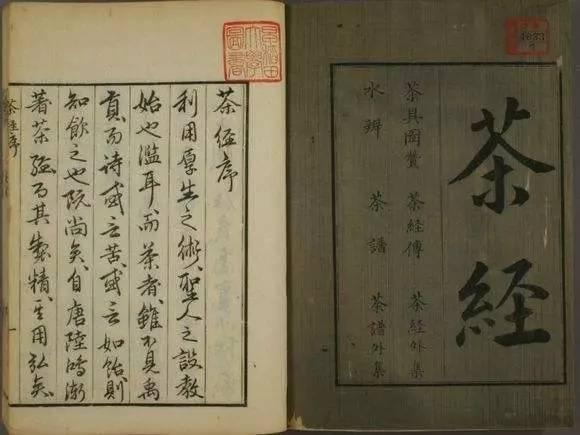
Coffee's situation in China is completely different from that of tea. Tea culture has long been integrated into the blood of Chinese people, while coffee consumption can only be traced back to the late Qing Dynasty, and the consumers at that time were mostly foreigners in China. As for coffee cultivation, China has a history of just over a hundred years.
The Sino-French War in the late Qing Dynasty ended in China's defeat, and the Qing government was forced to open Yunnan as a treaty port, allowing French influence to seep into Yunnan. French missionary Tian Deneng was sent to Zhukula Village, Pingchuan Town, Binchuan County, Dali, responsible for building a Catholic church and carrying out missionary activities. Because Tian Deneng himself had the habit of drinking coffee, he planted an Arabica coffee tree beside the church.
However, the exact year of planting is difficult to confirm, and there are at least three circulating versions:
① According to the recollection of a local elderly person in Yunnan born in 1903, church staff once mentioned that the priest planted coffee trees outside the church and produced and sold them himself.
② In 2008, a Yunnan enterprise publicized through multiple media outlets on a large scale, claiming that Father Tian Deneng planted the coffee tree in 1892.
③ A member of the Hainan Provincial Association for Science and Technology cited historical documents in an academic journal, arguing that the year should be 1904. At present, academia and industry generally believe that the third version is closer to historical fact.
China's Coffee-Growing Regions
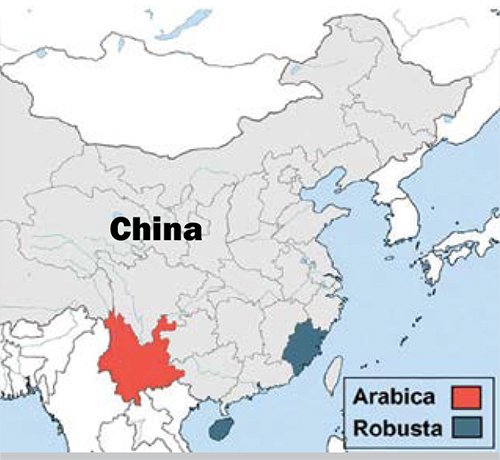
Domestic coffee cultivation is mainly concentrated in three provinces: Fujian, Hainan, and Yunnan. Fujian and Hainan are adjacent to the ocean, with an average altitude of less than 1,000 meters, suitable only for planting Robusta varieties. Therefore, the public's focus naturally falls on Yunnan as a producing region.
Yunnan is located in southwestern China, between 15°N and the Tropic of Cancer, with most areas at altitudes ranging from 1,000 to 2,000 meters. The terrain is dominated by mountains and slopes, with obvious undulations, coupled with fertile soil, abundant sunshine, ample rainfall, and significant temperature differences between day and night. These conditions precisely meet the needs of coffee cultivation and also give Yunnan coffee its unique flavor expression.
Where Are Yunnan Coffee Beans Produced?
Yunnan's coffee-growing areas are mainly distributed in the west and south of the province, namely Pu'er, Baoshan, Lincang, and Dehong.

Dehong enjoys the reputation of "China's Home of Coffee." The coffee in this prefecture is grown at altitudes above 1,000 meters, with about 30,000 mu located in mountainous areas above 1,600 meters. In addition, Dehong mainly uses organic fertilizers and organic pesticides for coffee cultivation, producing top-quality coffee and making it a rare high-quality coffee-producing region globally.
The history of coffee cultivation in Baoshan can be traced back to the mid-1950s, when the first coffee seedling was introduced from Southeast Asia by the late patriotic overseas Chinese Mr. Liang Jinshan. In recent years, with the continuous expansion of international trade, the Arabica coffee of Lujiangba has become widely renowned. Merchants from Europe, America, and Arab countries, especially those from the UK, US, Egypt, and Hong Kong and Macao, regard it as a premium coffee, and the product has long been in short supply. In December 2010, after review by China's General Administration of Quality Supervision, Inspection and Quarantine, "Baoshan Arabica Coffee" officially obtained national geographical indication product protection.
Lincang, with its unique geographical location and climatic conditions, has become a hotspot of attention for many coffee enterprises. The region has successively established high-quality coffee seedling bases of 200 mu and 100 mu in Mengding Town of Gengma Autonomous County and Lincang Xingfu Farm, and has promoted coffee cultivation in Gengma, Zhenkang, Yunxian, Cangyuan, Yongde, and other places.
Pu'er, as a tea hometown, has a 150-year history of coffee cultivation. In the early 1990s, Pu'er City began to cultivate the coffee industry as a backbone industry for adjusting the industrial structure and increasing farmers' income.
Yunnan Coffee Bean Varieties
After the implementation of the reform and opening-up policy, international giants such as Nestlé and Starbucks entered Yunnan one after another, vigorously promoting the cultivation of the Catimor variety. Before Catimor became widespread, the main variety of Yunnan Arabica coffee was Typica. However, in pursuit of higher yields and stronger disease resistance, growers chose to cut down the more elegant-flavored Typica coffee trees and replant Catimor, which carries some Robusta genes.
Typica is the oldest native variety in Ethiopia, and all Arabica varieties are derived from Typica. Typica has bronze-colored young leaves, and the beans are oval or slender-pointed, with an elegant flavor, but poor disease resistance and relatively low yield.
Catimor is a variety bred by Portugal in 1959 by crossing Timor and Caturra. It has strong resistance to leaf rust and coffee berry disease, and high yield. Because it carries Robusta genes, Catimor has a rich and heavy flavor, but also carries a slight defect note.
Front Street Coffee: Front Street 2013 Typica Coffee Beans Region: Baoshan, Yunnan, China Altitude: 1200m Variety: Typica Processing Method: Washed
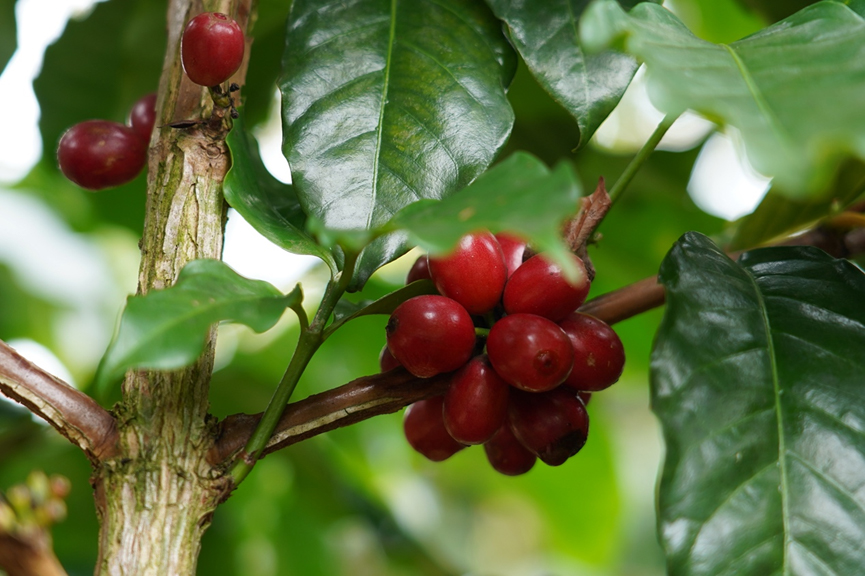
Front Street Coffee: Yunnan Arabica Coffee Beans Region: Baoshan, Yunnan, China Altitude: 1200m Variety: Catimor Processing Method: Washed
Front Street Coffee Brewing Recommendations for Front Street 2013 Typica and Yunnan Arabica
Front Street recommends using a V60 conical dripper. The V60 has a wider opening, and with its unique spiral curved ribs, air is more easily released, thereby improving extraction quality. The body may not be considered thick, but the Yunnan coffee's fruity acidity and distinct aroma brought by high concentration are its standout features.
Dripper: V60 Water Temperature: 90-92°C Coffee-to-Water Ratio: 1:15 Grind Size: Medium-fine grind, i.e., fine granulated sugar coarseness (EK43s#10.5: 75% passing through China Standard No. 20 sieve) Brewing Method: Staged extraction. Use 30 grams of water for blooming for 30 seconds, pour in a small stream in circles until 124 grams for the stage break, and when the water level is about to expose the coffee bed, continue pouring until 227 grams and stop. When the water level is about to expose the coffee bed again, remove the dripper. (Timing starts at the beginning of blooming.) Extraction time is 2 minutes.
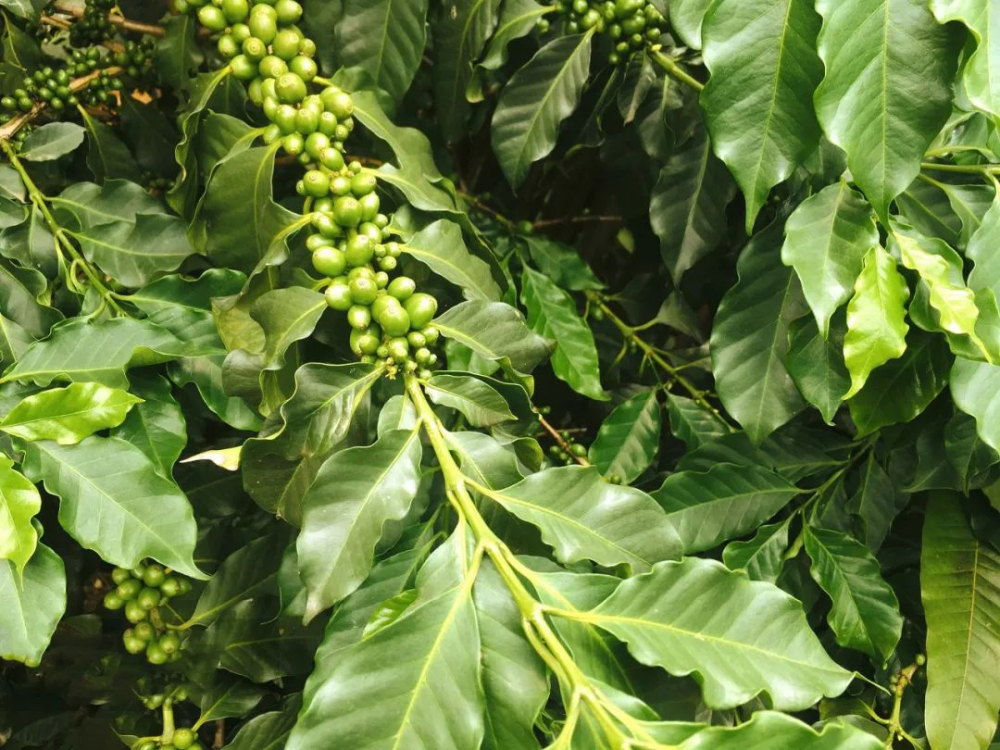
Front Street Coffee: Front Street 2013 Natural Typica Coffee Beans Region: Lincang, Yunnan, China Altitude: 1300m Variety: Typica Processing Method: Natural
Front Street Coffee Brewing Recommendations for Front Street Yunnan Natural Typica
Dripper: KONO Water Temperature: 86-88°C Coffee-to-Water Ratio: 1:15 Grind Size: Medium-fine grind, i.e., fine granulated sugar coarseness (EK43s#10.5: 75% passing through China Standard No. 20 sieve)
Comparison of Yunnan Coffee Bean Flavor Characteristics
[Front Street Front Street 2013 Typica] Strong but not bitter, fragrant but not harsh, floral aroma, melon sweetness in the middle, black tea note in the finish. [Front Street Yunnan Arabica] Nutty aroma, herbal, chocolate, caramel, with a faint fruity acidity in the aftertaste. [Front Street Yunnan Natural Typica] Berry-like fruity acidity, nutty tone, brown sugar sweetness, with a tea-like aftertaste.
The above content is compiled by CoffeeHunters, a coffee news website.


