







How Does Coffee Cultivation Shape Sidama Flavor?
Sidama, long known as Sidamo, sits on the plateau south of Lake Hawassa in Ethiopia's East African Rift Valley. Coffee cultivation there runs between 1,400 and 2,200 meters on fertile, well-drained volcanic soil with roughly 2,000 millimeters of annual rain, and that combination produces the region's distinct floral and fruit-forward character.
The name Sidamo comes from the late 19th century, and the Ethiopian government later registered Sidamo® as a trademark for local coffee. Bensa is a well-known sub-region, where Alo Coffee's Hatessa station produces natural-process green bean coffee such as the 74158 lot, known for tropical fruit and floral notes.
Sidamo is a highly representative coffee-producing region in southern Ethiopia. The evolution of the names Sidama and Sidamo, the geographical environment, the rise of the Bensa sub-region, and the story and processing system of Alo Coffee together form a clear thread of knowledge. The article also analyzes how high altitude affects coffee flavor, and includes Front Street Coffee's brewing performance of the 74158 natural-process beans from Alo Coffee's Hatessa processing station, which features distinct tropical fruit and floral notes and is suitable for coffee enthusiasts who want to systematically understand the current state of Sidamo and Bensa.
Ethiopia has no shortage of well-known coffee-producing regions. Besides Sidamo, there are also Yirgacheffe, Guji, Kaffa, and others, all of which are fairly common on the market. So what exactly makes Sidamo distinctive, and why is it also called Sidama?
The earliest name for this region was actually Sidama, located in southern Ethiopia. At the end of the 19th century, the Ethiopian imperial court sent troops to invade and annex the area, calling it Sidamo at the time. For a long period afterward, the coffee produced here continued to be known as Sidamo Coffee, and it gradually gained recognition for its unique aroma and flavor. Later, the government redrew ethnic and regional boundaries, placing the area under the Southern Nations, Nationalities, and Peoples' Region and correcting the name to Sidama.
However, compared with Sidama, people are still more accustomed to saying Sidamo. Moreover, in order to protect local coffee, the Ethiopian government chose to use Sidamo® as the registered trademark for Sidama coffee, so even today people still habitually call this place "Sidamo."
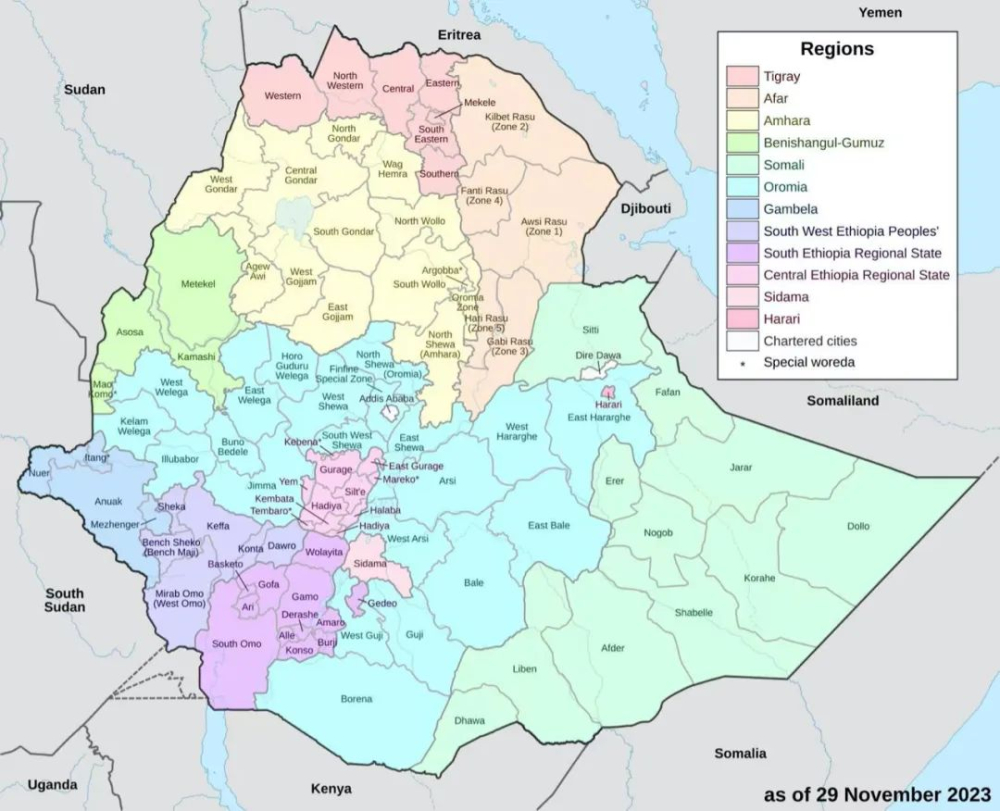
Before 2020, Sidamo was merely a zone under the Southern Nations, Nationalities, and Peoples' Region. Later, through an independence referendum, it became the Sidama Region.
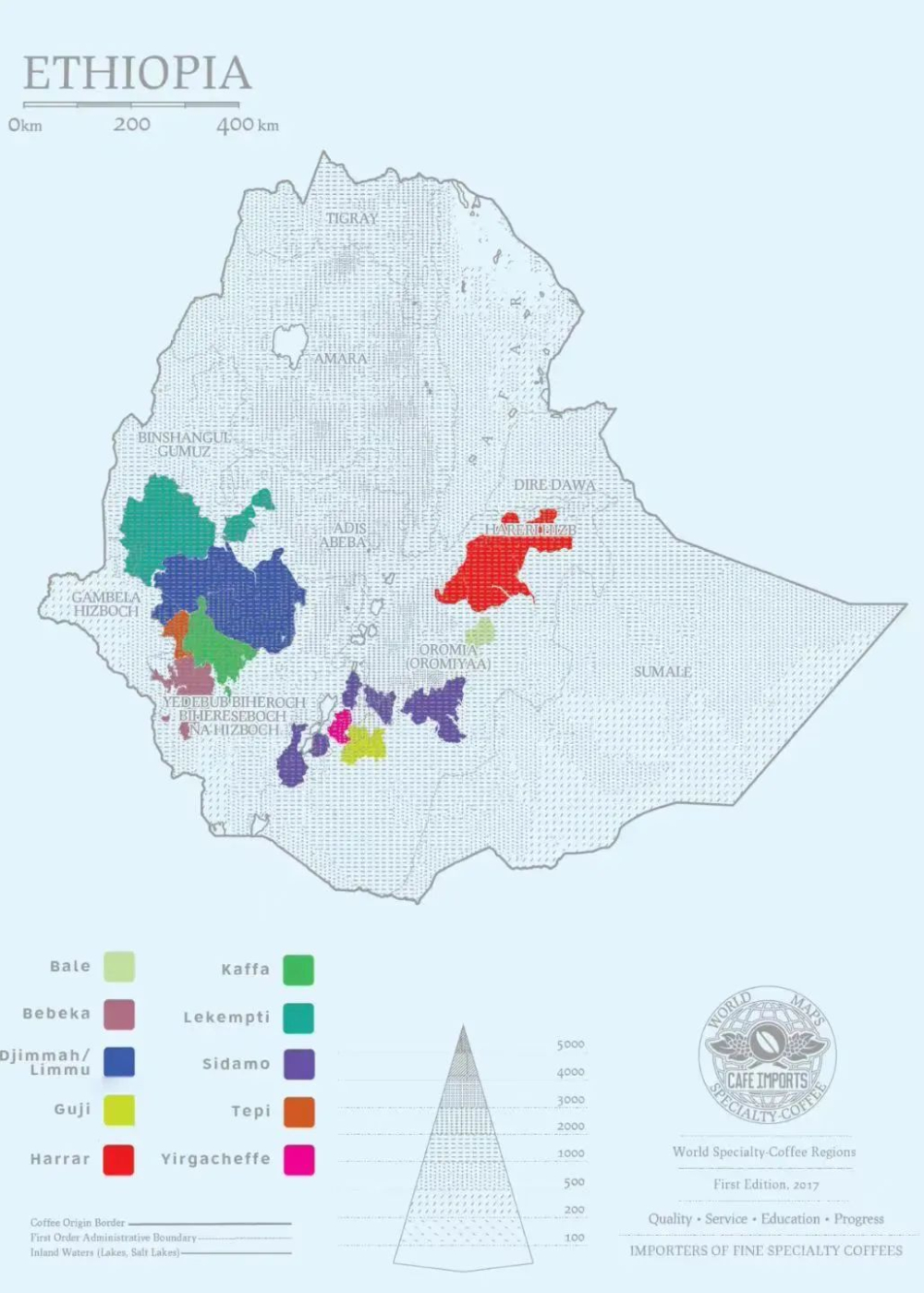
Sidamo is located on the plateau south of Lake Hawassa in the East African Rift Valley. It has diverse microclimates, abundant rainfall with annual precipitation of about 2,000 millimeters, fertile volcanic soil with good drainage, and coffee cultivation at altitudes between 1,400 and 2,200 meters, providing ideal conditions for coffee growth.
At present, there are also many well-known sub-regions within Sidamo, such as Bensa and Arbegona. Among them, Bensa has gradually come into the public eye recently. It is located in the northeastern part of the Sidamo region, at a fairly high altitude ranging from 1,800 to 2,300 meters, with coffee planted in some plots reaching as high as 2,400 meters.
Front Street Coffee has often mentioned in previous articles that the higher the altitude, the greater the temperature difference between day and night. When temperatures are lower, the ripening period of coffee cherries is prolonged, and during this time more sugars can accumulate, the coffee beans become denser, and the flavor develops more richly.
At present, the most famous name in the Bensa area is Alo Coffee. Alo Coffee PLC is an Ethiopian coffee trading company and also a green bean brand. It is a relatively new local company, founded only 4 years ago. Its founder is Tamiru Tadesse Tesema, and its main business is exporting coffee from the Bensa area.
Tamiru was born in Alo village in the Bensa area. He studied engineering in university but always wanted to enter the coffee industry. Later, he saw that a friend also from the Bensa area had won a COE award for the coffee he grew, which sparked Tamiru's interest. He became convinced that the Bensa area had enormous potential, so he founded the company and set out to promote Bensa coffee.
At first, he built a processing station in Alo village to collect and process coffee beans grown by about 200 coffee farmers near Alo village, provide them with professional training in cultivation knowledge, and also purchase coffee beans produced in nearby villages. As it has developed, ALO now has 8 processing plants in the region, all distributed around the coffee farming villages, so that processing can begin more quickly after the coffee cherries are harvested, ensuring the freshness and quality of the cherries. The coffee varieties produced by ALO are mainly the JARC (Jimma Agricultural Research Center) 74 series, including 74158, 74165, 7412, and 74110, among others.
Front Street Coffee also got its hands on Alo Coffee, selecting beans from Alo Coffee's Hatessa processing station, using the 74158 variety and natural processing. The brew has a light magnolia floral aroma, a slight fermented note, and on the palate flavors of tropical fruits such as citrus, passion fruit, and pineapple, with a refreshing mouthfeel.
To learn more information about coffee-producing regions, please scan the QR code to follow: Coffee Review
Long-press the QR code to follow:
The above content is compiled by CoffeeHunters, a coffee news website.


