







What defines Yunnan coffee, from seed to cup?
Yunnan coffee began with an Arabica tree planted beside a Catholic church in Zhukula Village, Binchuan County, after French missionary Father Tian Deneng brought it during the late nineteenth century. Four of those trees, now more than ninety years old, still stand. Today Yunnan is China's core coffee-producing region, growing Typica, Catimor, and Bourbon across areas such as Lincang.
Flavor varies by variety and terroir. Typica coffee grown on a Lincang estate near Myanmar since 2013 shows brown-sugar sweetness, a heavy chocolate body, and a clean mouthfeel. Grading follows international and domestic standards, and the annual growth cycle from ripe fruit to harvest shapes quality year by year, from green coffee bean to brewed cup.
Yunnan, as the core coffee-producing region in China, has always attracted much attention for the flavor and varietal characteristics of its coffee beans. This article starts from the historical origins, systematically sorting out the main cultivated varieties of Yunnan coffee—Typica, Catimor, and Bourbon—their respective flavor profiles and cultivation characteristics, and introduces international and domestic grading standards, growth cycles, and brewing suggestions. At the same time, the article also specially includes the planting experience and cupping feedback of Front Street Coffee's self-built estate in Lincang, Yunnan, helping coffee enthusiasts fully understand the complete picture of Yunnan coffee from seed to cup.
When it comes to the origin of Yunnan coffee, we need to trace back to a special historical period. In the mid-nineteenth century, after France established a firm foothold in Indochina, it began to set its sights on Yunnan, which had superior natural conditions. After the Sino-French War ended, the Qing government was forced in October 1887 to open Mengzi in Yunnan as a treaty port, and French influence thus penetrated into Yunnan. French missionary Father Tian Deneng was sent by the Dali church to carry out missionary work in Zhukula Village, Pingchuan Town, Binchuan County, present-day Dali, and built a Catholic church. Father Tian himself had the habit of drinking coffee, so he introduced an Arabica coffee tree. The exact source of this tree can no longer be verified; some say it came from Vietnam, but there is no conclusive evidence. Father Tian planted it beside the church, and this tree became the source of Yunnan coffee. To this day, Zhukula Village still retains four coffee trees more than ninety years old.
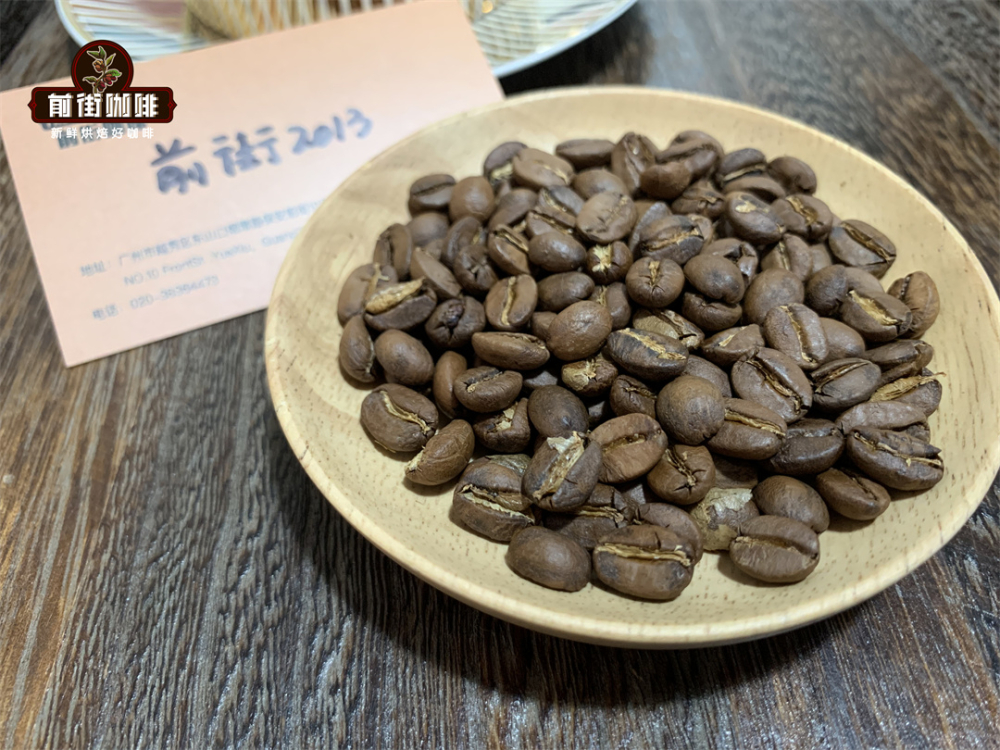
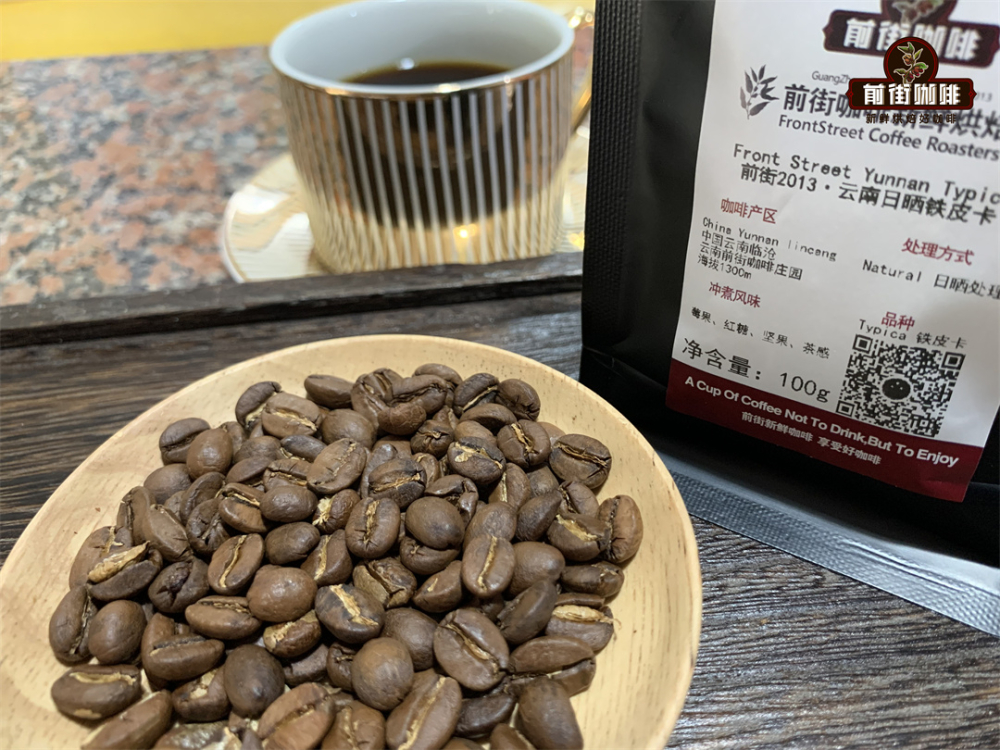
In the primitive forest area of Lincang, Yunnan, near Myanmar, Front Street Coffee also owns its own coffee estate. Since 2013, the estate has been growing coffee beans in Yunnan, choosing the excellent-quality Typica variety. After years of accumulating harvests from ripe fruit, the flavor performance of the coffee beans has improved year by year, and the overall quality has also won recognition from coffee enthusiasts. A brown-sugar-like sweetness, a chocolatey heavy body, and a clear, clean mouthfeel have overturned many people's preconceived impressions of Yunnan coffee beans.
At present, the main coffee varieties that can achieve mass production in Yunnan include Catimor, Typica, and Bourbon, among which Catimor occupies most of the planted area. The overall flavor of Yunnan coffee is mellow without being bitter, with nuts, brown sugar, and a rich aroma. Due to the characteristics of the Catimor variety, it also shows a slight woody note.
Yunnan Typica Coffee
The cultivation history of Yunnan Typica can be traced back to 1904, when French missionary Father Tian successfully trial-planted coffee in Zhukula Village, Binchuan County, Yunnan Province, which is regarded as the beginning of coffee cultivation in Yunnan. This variety is usually called small-bean coffee, and in China it is also commonly known as Yunnan small-bean coffee.
After 1930, the famous overseas Chinese leader Mr. Liang Jinshan introduced coffee cultivation to the Pupiao and Luoming areas, and this planting tradition continued until after the founding of New China. From 1952 onward, areas such as Lujiang began to promote coffee cultivation on a large scale, and the history of large-scale cultivation has now lasted nearly sixty years. Most of the Yunnan Typica we can taste today originates from the planting that began in that period. As mentioned earlier, Front Street Coffee planted Typica in 2013, and its flavor performance is quite outstanding.
Yunnan Catimor Coffee
In 1959, the Portuguese brought Caturra, a Bourbon mutation originating from Brazil, to East Timor and crossed it with Timor, which has Robusta ancestry, successfully cultivating the Catimor variety with strong disease resistance and outstanding productivity. As leaf rust spread across coffee-producing countries worldwide, with the assistance of international organizations, producing countries vigorously promoted Catimor to resist leaf rust and increase yields.
Starting in 1992, Nestlé established a coffee agriculture department specifically responsible for guiding and researching the improvement and cultivation of Yunnan coffee, and introduced the high-yield and highly disease-resistant Catimor, purchasing coffee at prices based on the U.S. spot market. Catimor is not of pure Arabica ancestry; it is the hybrid offspring of Timor (a cross between Arabica and Robusta) and Caturra (a variety of Bourbon), so Catimor carries about 25% Robusta ancestry. This ancestral characteristic also brings flavor defects: the aroma is not rich enough in layers, the overall bitterness is relatively heavy, and it is prone to astringency and a rather harsh musty taste.
Yunnan Bourbon Coffee
In 1952, experts from the Yunnan Academy of Agricultural Sciences distributed 80 kilograms of coffee seeds (including Typica and Bourbon) to farmers in Lujiangba, Baoshan. Several years later, large-scale planting guidance was carried out, which led to the rolling coffee forests along the Yunnan-Burma Highway thereafter. Due to the huge demand for supply to the Soviet Union at the time, Yunnan's coffee cultivation experienced a rapid expansion. A survey by Professor Ma Xijin in 1981 showed that in the ancient coffee forest of Zhukula Village, Typica accounted for 31% and Bourbon for 69%.
Bourbon is a natural mutation of Typica. It can be traced back to the round-bean Mocha coffee of Yemen and gradually spread after the French planted it on Bourbon Island (now Réunion) in 1708. Bourbon also has a pleasant aroma and rich flavors. Compared with Typica, it has advantages in yield and vigor, and is suitable for planting at altitudes of 1,200 to 2,000 meters, but its resistance to pests and diseases is weaker, and it is also more sensitive to strong winds and heavy rainfall. Bourbon coffee is the variety second only to Typica among small-bean coffees. Its main branches initially grow upward at a 45-degree angle to the trunk and gradually droop as the fruit load increases. The nodes on the side branches are relatively dense, the fruit set is large, and the yield is relatively high. However, the berries are smaller in size and ripen more slowly. The young leaves of the Bourbon terminal bud are green, so it is called green-tip coffee.
Yunnan Coffee Grading System
Common international grading standards:
Grading is done according to coffee bean size using round-hole grading sieves. The internationally customary sizes for small-bean coffee range from 10 to 20; the number represents the sieve opening and is expressed as a fraction with that number as the numerator and 64 as the denominator, in inches. For example: 14 means green coffee beans that can pass through a sieve with an opening of 14/64 inch or above, while 19 means green coffee beans that can pass through a sieve with an opening of 19/64 inch or above. (1 inch is approximately equal to 2.54 centimeters)
Common domestic coffee grading standards:
Divided into five grades according to sieve openings of 6.5, 6.0, 5.5, and 5.0 millimeters.
Grade One: above 6.5 millimeters, plump and intact beans.
Grade Two: 6.0 to 6.4 millimeters, plump and relatively uniform.
Grade Three: 5.3 to 5.9 millimeters, relatively plump and slightly less uniform.
Grade Four: 5.0 to 5.4 millimeters, with broken beans, intact beans accounting for more than 75%.
Grade Five: below 5.0 millimeters, with broken beans, intact beans accounting for more than 30%.
Front Street Coffee's own estate's Front Street 2013 coffee beans all meet the Grade One standard according to common domestic coffee grading standards, with a particle size of 17 to 18 mesh or above.
Yunnan Coffee Growth Period
Yunnan small-bean coffee begins to bear fruit after growing for three to four years. The Typica coffee planted in 2013 at Front Street Coffee's own estate did not usher in a harvest of coffee cherries until 2019. Coffee is a short-day plant and has the characteristics of multiple flowering and concentrated flowering periods. The flowering period of small-bean coffee in Yunnan is from February to July, with the peak flowering period concentrated from March to May. Coffee flowering is greatly affected by climatic conditions, especially rainfall and temperature. Coffee flowers have a very short lifespan, only 2 to 3 days. Small-bean coffee usually begins to open at 3 to 5 a.m. and reaches full bloom from 5 to 7 a.m.
The development cycle of coffee fruit is relatively long. Small-bean coffee fruit takes 8 to 10 months to mature, generally maturing from October to December of the same year. Rainfall has a rather significant effect on fruit development, and climatic conditions are directly related to the growth and development of the fruit.
Brewing Flavor of Yunnan Coffee
Small-bean coffee is usually mainly processed by the washed method. Of course, among Front Street Coffee's Yunnan beans there are also products using the natural process. Let's take a look at how Front Street brews washed-process Yunnan small-bean coffee beans and what the flavor performance is like.
Front Street Coffee Brewing Suggestions
Each bag of Front Street Coffee's specialty coffee comes with detailed information and suggested brewing parameters. The brewing suggestion is that, under the reference parameters, the coffee grounds should be brewed into a bowl shape so that the coffee can be fully extracted. If the water level is higher than the coffee bed, part of the water flow will run directly down from the edge of the dripper; if the water level is too low, part of the coffee grounds cannot participate in extraction, making the taste weaker.
Dripper: V60 Water temperature: 88 to 89°C Dose: 15g Coffee-to-water ratio: 1:15 Grind size: medium-fine grind (80% passing a Chinese standard No. 20 sieve)
Brewing method: three-stage extraction. First use 30 grams of water for a 30-second bloom, then pour in a small stream in circles until 125 grams for the first stage; when the water level drops and is about to expose the coffee bed, continue pouring until 225 grams and stop; when the water level drops and is about to expose the coffee bed, remove the dripper. (Timing starts at the beginning of the bloom.) The extraction time is 2 minutes 00 seconds.
The Yunnan small-bean coffee brewed with V60 finally presents a flavor with notes of plum acidity, melon and fruit, cream, and black tea. The overall mouthfeel is smooth, with bright fruit acidity, a tea-like finish, and the sourness of fruit.
For professional coffee knowledge exchange and more coffee bean information, please follow Coffee Workshop (WeChat public account cafe_style) For more specialty coffee beans, please add the private WeChat of Front Street Coffee, WeChat ID: qjcoffeex
The above content is compiled by CoffeeHunters, a coffee news website.


