







What Does G1 Grade Mean in Ethiopian Coffee From Sidama?
Sidama, long known in coffee as Sidamo, is one of Ethiopia's most representative specialty regions. The name comes from the Sidama people, whose land was renamed Sidamo by outside rulers; the spelling carried an insulting meaning, and the Sidama restored their own name during the 1990s federal reorganization. Sidamo coffee, however, had already built its worldwide reputation.
The washed G1 lots from this region show the clean, sweet profile that the grade is known for. Altitude and slow cherry development help build aromatic compounds, and the traditional natural method adds fruit depth. Well-known Front Street offerings such as Natural Huakui and Hamasho 74158 show how processing shifts the flavor of beans from the same area.
Sidamo is one of Ethiopia's most representative specialty coffee regions, and behind its name lies a historical entanglement that stretches from Sidama to Sidamo. This article will guide you through a comprehensive understanding of the unique charm of Sidamo coffee, covering the region's name rectification, the influence of the traditional natural processing method on flavor, and the flavor performance of the washed G1 grade. At the same time, we will also review several representative products from the Front Street brand in this region, such as Natural Huakui and Hamasho 74158, and describe their taste characteristics in detail. Whether you are a beginner just getting into single-origin coffee or a seasoned enthusiast pursuing regional flavors, this article will provide you with a complete knowledge framework and tasting reference for the Sidamo region.
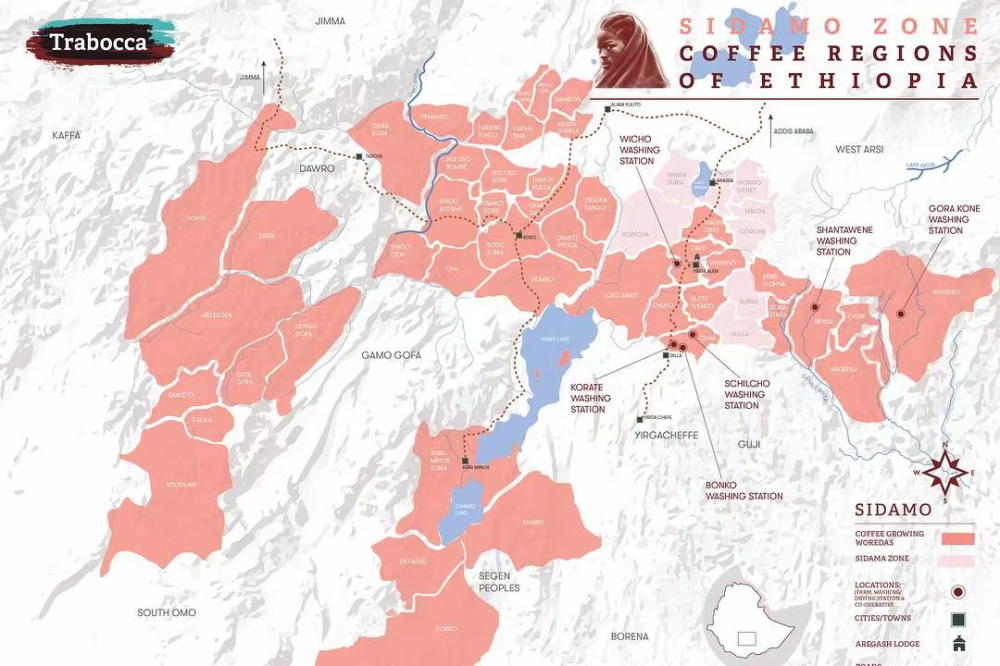
Ethiopia's coffee-growing areas are widely and rather scattered, and this time Front Street will focus on introducing two of the most famous and representative regions in the specialty coffee world: Yirgacheffe and Sidamo.
When looking up information on the Sidamo coffee origin, you may often come across two different spellings: Sidamo and Sidama. In fact, the name Sidamo comes from the local indigenous Sidama people. Like other ethnic groups in Ethiopia, the Sidama people have their own unique traditional culture and even have a New Year celebration officially recognized by UNESCO—Fiche Chambalala. Every year at this time, more than five million people gather in the capital Hawassa to celebrate together.
From the late eighteenth to the early nineteenth century, the region was invaded and annexed by outside forces. The invaders misread Sidama as Sidamo, and for the Sidama people, this name carried an insulting meaning. By the 1990s, the Ethiopian government implemented a federal system of administration, redrawing administrative regions based on the main ethnic groups' settlement areas and languages, and the Sidama took this opportunity to restore their historical original name: Sidama.
However, before the administrative division adjustment, Sidamo Coffee had already won worldwide renown for its distinctive aroma. Therefore, compared with Sidama, people are more accustomed to using the name Sidamo. In addition, when the Ethiopian government applied for trademark protection for Sidama coffee at the time, it also chose the old name Sidamo® as the official registered trademark. To this day, domestic consumers still prefer to call the coffee from here "Sidamo."
The natural method is Ethiopia's oldest traditional green bean processing method, and most areas of Sidamo still use this natural drying technique today. Compared with washed processing, natural processing has a longer fermentation period, and the reaction between microorganisms and fruit pulp is more complete. During fruit fermentation, microorganisms produce more volatile compounds, especially esters, and these components are converted into another aromatic compound during the caramelization reaction in the roasting stage. It is precisely these aromatic substances that give roasted coffee richer floral and tropical fruit fermentation aromas, such as furan compounds, making the flavor spectrum of natural coffee broader and the taste sweeter.
For a long time, Sidamo coffee has been known for its rich, full-bodied mouthfeel, with complex sweetness and aroma, refreshing and soft acidity, and a lasting sweet aftertaste. For example, Front Street Hamasho 74158 coffee beans, Front Street Natural Huakui coffee beans, and Front Street Alo Village coffee beans all come from the famous Sidamo region.
Sidamo Single-Origin Selection—Front Street Natural Huakui
Region: Sidamo, Ethiopia Altitude: 2250m~2350m Variety: Local heirloom Processing Method: Natural Grade: G1 Flavor: Cream strawberry, citrus, orange, slight fermented note
The above content is compiled by CoffeeHunters, a coffee news website.


