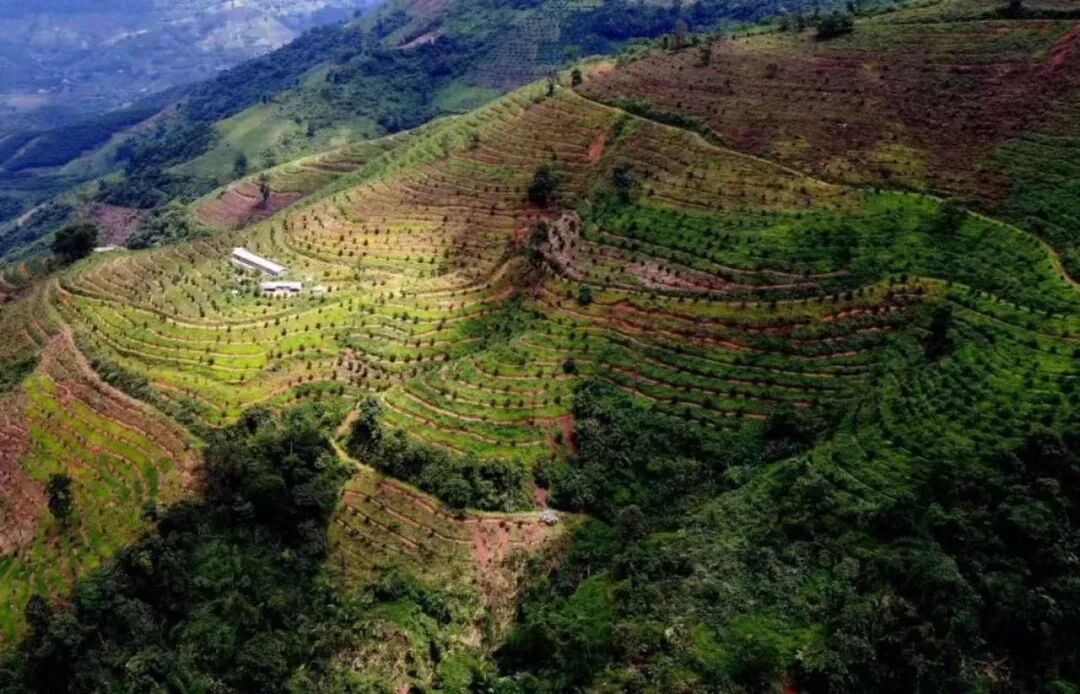
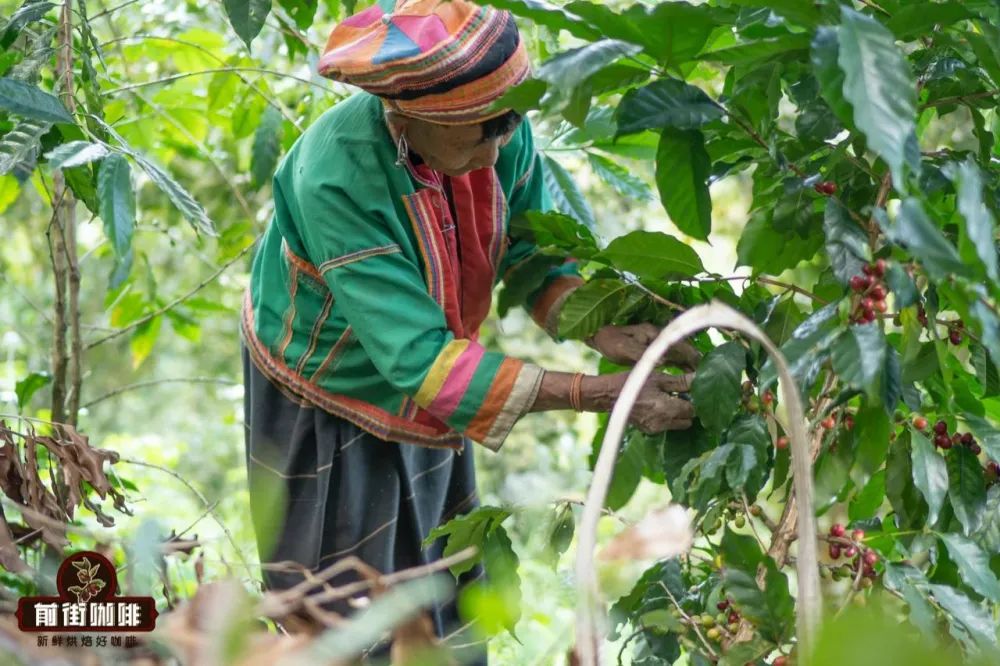
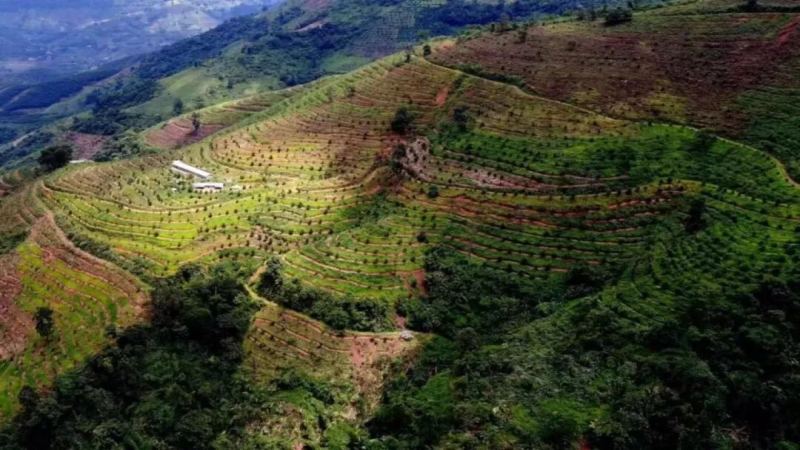
Front Street Coffee has learned that most people, when first getting into specialty coffee, start with African regions like Ethiopia's Yirgacheffe or Sidamo. But when it comes to Asian coffee, most people first think of Indonesia's Mandheling coffee beans. However, with the rise of domestic brands, Chinese Yunnan coffee has gradually entered everyone's view.What coffee bean producing regions are there in China?When it comes to China's coffee bean producing regions, there are mainly three: Fujian Province, Hainan Province, and Yunnan Province. Arabica is grown at altitudes of 900 to 2000 meters; Robusta is grown at altitudes of 200 to 800 meters. Those familiar with Chinese geography know that Fujian and Hainan are both coastal regions with an average altitude below 500 meters, which is not ideal for growing Arabica, so these two provinces mainly grow Robusta beans. Yunnan Province, located on the second topographic step, has an average altitude of 1000 to 2000 meters, which is ideal for growing Arabica. When was the first coffee tree planted in Yunnan?  The earliest place where Arabica coffee beans were grown in Yunnan is Pingchuan Town, Binchuan County, DaliZhukula Village, because in the late Qing Dynasty, a French priest named Tian Deneng had a habit of drinking coffee, so he planted a coffee tree next to the church. According to the "Binchuan County Annals": In the 30th year of the Guangxu reign of the Qing Dynasty (1904), the French Catholic missionary Tian Deneng, dispatched by the Dali diocese church, brought Frenchman Lu Hongru and Sichuan native Deng Peigen to the Binchuan area to preach...... There is also a record in the "History of Catholicism in Yunnan": Church name and address: Catholic Church, Binchuan Prefecture Pingchuan Zhukula, founding time: the 30th year of Guangxu (1904).
 These documentary records can all prove that Father Tian Deneng did indeed fund the construction of a church in Zhukula Village in 1904 for preaching. But this date is quite controversial; some say 1892, others say 1902. However, to this day, no definitive evidence has been found to prove exactly which year Yunnan's first Arabica coffee tree was planted. Coffee, as an imported product, was truly cultivated in Yunnan for commercial purposes in the 1950s. The renowned botanist Professor Qin Renchang of the Institute of Botany, Chinese Academy of Sciences, identified the red cherries found by scientific researchers in the courtyards of Dai farming households in Luxi County, Dehong Prefecture, as Typica coffee. On his recommendation, coffee seedlings were trial-planted at the Mangshi Forestry Farm and Lujiangba in Baoshan City. The latter officially went into production in 1955, thus opening a new era of coffee research and production in New China.
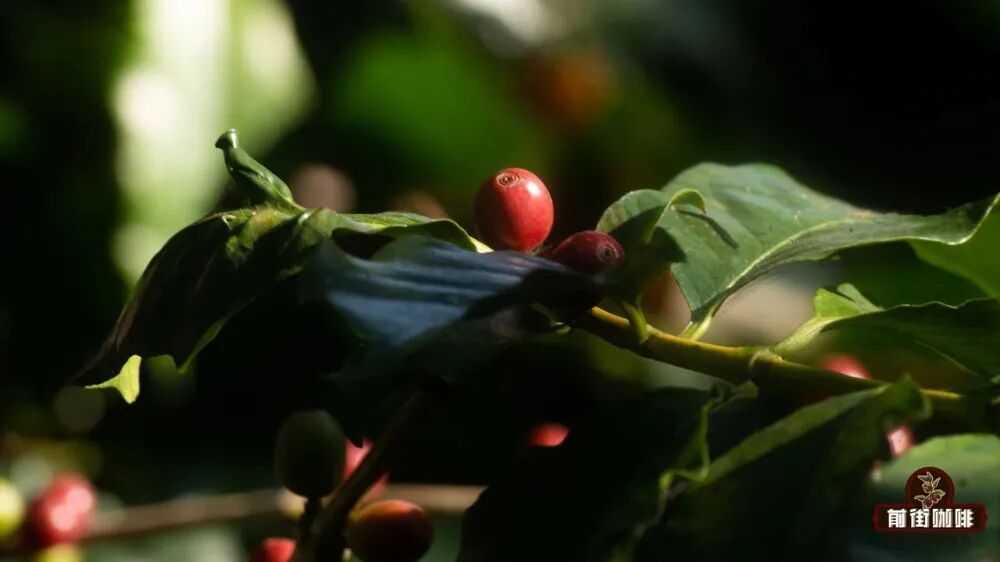
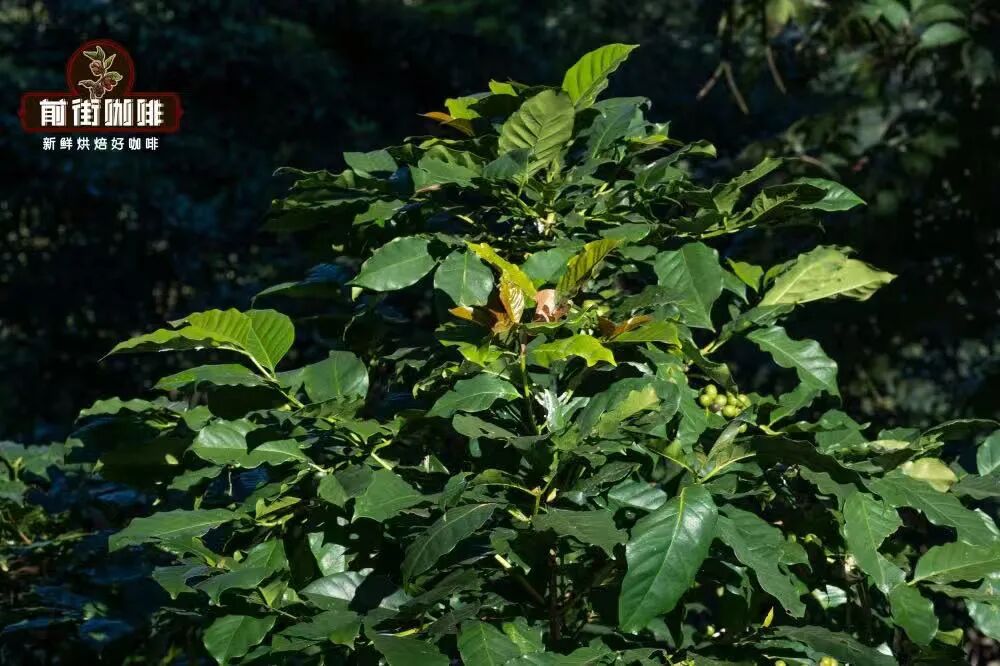
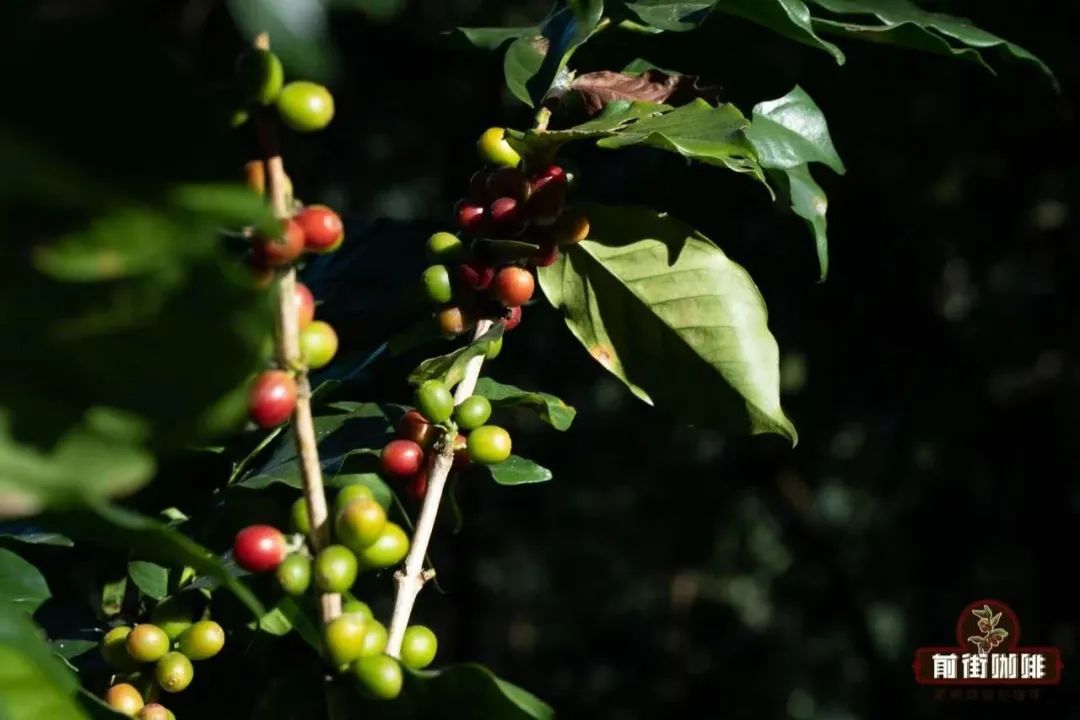
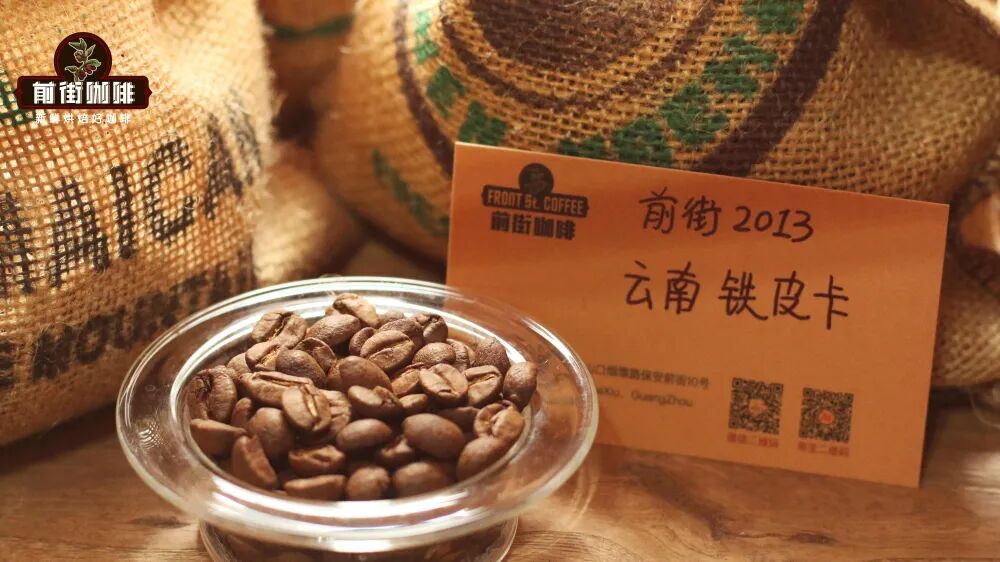
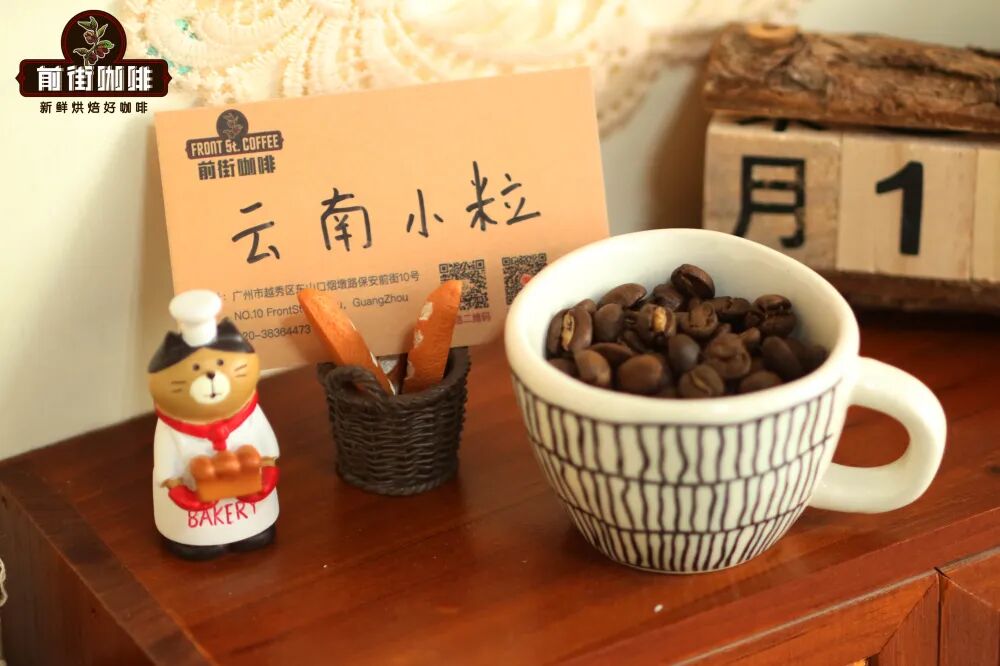
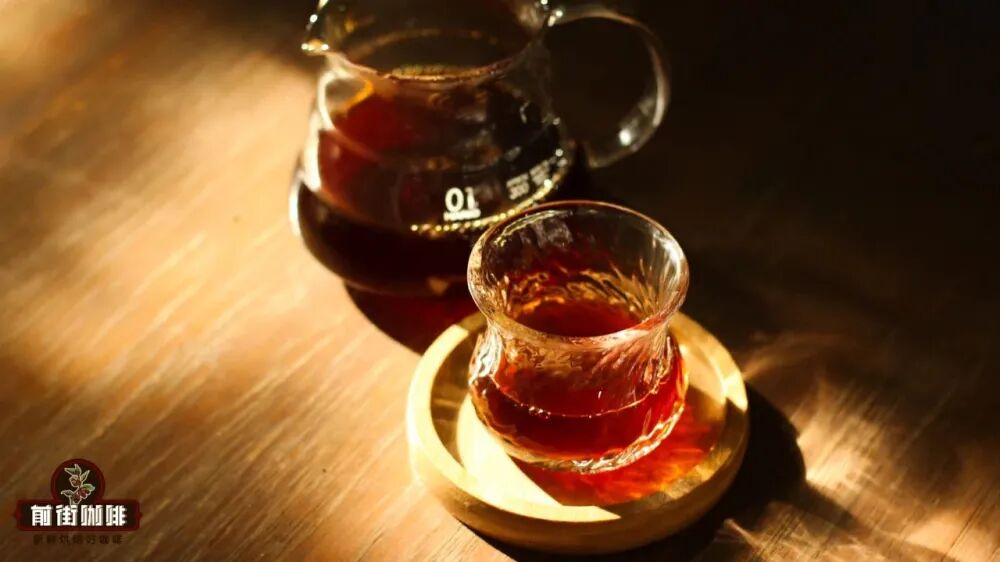
 Yunnan coffee truly entered the international market starting in 1988, when Nestlé established a branch in China. Not only did they introduce the high-yield, disease-resistant varietyCatimor(Catimor), but they also promised to purchase Yunnan coffee beans as raw material at the then-current US futures price. Subsequently, brands such as Starbucks and Maxwell also set up factories in Yunnan to purchase green beans, and these measures further expanded Yunnan's coffee planting area. Front Street reviewed relevant materials and learned that due to coffee farmers' lack of knowledge about coffee cultivation and rough production and processing methods, for a long time, most Yunnan coffee green beans were used as raw material for instant coffee, constrained by international coffee futures prices. To break free from this, industrial transformation and upgrading are inevitable, and specialty coffee production has become Yunnan coffee's new journey.Yunnan Coffee Bean Varieties The most famous Yunnan coffee bean isYunnan Typica. Yunnan Typica was originally named after Typica, because Typica is an Arabica variety. Yunnan's oldest coffee variety is Typica.Later, when Nestlé entered Yunnan, because Typica had poor disease resistance and to increase coffee bean yields, coffee farmers were told to cut down the good-flavored Typica coffee trees and plant varieties with inferior flavor but better disease resistance and higher yield. The initial introduction was the leaf rust-resistant S288, and later the higher-yielding Catimor was introduced. In other words, the coffee trees currently grown in Yunnan are mainly Catimor. leaf rust diseaseS288, and later the higher-yielding Catimor was introduced. In other words, the coffee trees currently grown in Yunnan are mainly of the Catimor variety. Typica is one of the oldest varieties of Arabica; most Arabica varieties are derived from Typica, and its derived varieties inherit its genes for superior flavor.The top leaves of the Typica coffee tree are copper-red, the opposite leaves are elongated oval with smooth surfaces, the terminal branches are long with few branches, and the beans are oval or slender-pointed;Despite its elegant flavor, it has a weak constitution and poor disease resistance, is prone to leaf rust, and has low yield. In recent years, Typica in Central and South America has gradually been replaced by Caturra and Catuai, so we see less and less of Typica. The coffee trees that Front Street Coffee mainly grows in Yunnan are precisely the Typica variety, because Typica has its unique delicate character and clean flavor, as well as balanced characteristics and high cup cleanliness, so although Typica coffee trees are not easy to grow, Front Street still wants everyone to taste Yunnan coffee at its best.Catimor itself is a hybrid cross between Robusta and Arabica. In 1959, the Portuguese brought the Arabica-lineage Bourbon variant Caturra to East Timor, where it was crossed with the local Robusta-lineage Timor. This move cultivated Catimor, which has both strong disease resistance and high productivity.Because leaf rust was prevalent in coffee-producing countries worldwide at the time, and Catimor happened to have extremely strong disease resistance, combined with high productivity, it quickly became popular in most coffee-producing countries. Now you can still find on Front Street Coffee's bean list both the sun-dried Typica and washed Catimor from the Yunnan producing region, one from Lincang and one from Baoshan, allowing everyone to taste our country's coffee while also experiencing the differences between varieties.【Front Street Yunnan 2013 Coffee Beans】Region: Yunnan Lincang Altitude: 1300m Processing Method: Sun-dried Variety: Typica【Front Street Coffee: Yunnan Typica Coffee】Region: Yunnan Baoshan Altitude: 1200m Processing Method: Washed Variety: CatimorThese two Yunnan coffees tend toward balance, without overly prominent acidity or overly intense bitterness. Therefore, our brewing method doesn't need to be too extreme. Choose 15 grams of coffee powder, recommended coffee-to-water ratio of 1:15; if you want a clearer flavor, you can choose 1:16. Use a V60 dripper, with a brewing water temperature of 90°C, aiming to make the acidity softer. Grind size: medium-fine/fine sugar size (75% passing through a No. 20 sieve).Use a three-stage extraction: bloom with 30 grams of water for 30 seconds, then after blooming, pour in a circular motion with a small stream until reaching 125 grams, then pause. When the water level drops and is about to expose the coffee bed, continue pouring until 225 grams and stop. When the water level drops and is about to expose the coffee bed, remove the dripper. (Start timing from the beginning of the bloom) Extraction time: 2'00".
 The above content is compiled by CoffeeHunters, a coffee news website.