







Why Is the Kaffa Forest Important for Arabica Coffee?
The Kaffa Forest in southwestern Ethiopia is where coffee was first discovered, and it still holds roughly 5,000 Arabica coffee varieties, making it a genetic treasury for the species. Ethiopian cultivation falls into three models: garden plots, estates, and forest growing, and only the forest model is tied to this original birthplace.
The region takes its name from the historic Kingdom of Kaffa, annexed by the Ethiopian Empire in the late 19th century. After decades of deforestation, the forest now survives as a biosphere reserve, with about 30 surrounding cooperatives producing arabica coffee. A washed lot from this area shows floral aroma, citric acidity, and notes of sweet orange and bergamot.
Ethiopia is the birthplace of coffee, and its cultivation models fall into three categories: garden, estate, and forest. Among them, the forest cultivation in the Kaffa region of the southwest is the most unique. This place is not only the hometown of coffee but also home to approximately 5,000 coffee varieties, making it a genetic treasure trove of Arabica coffee. After experiencing deforestation and conservation, the Kaffa Forest now persists in the form of a biosphere reserve, with about 30 surrounding cooperatives engaged in coffee production. Front Street Coffee has also launched a washed coffee bean from this region, presenting floral aromas, citric acidity, and sweet orange and bergamot flavors. This article will guide you through the cultivation traditions, historical changes, and coffee characteristics of the Kaffa Forest.
In Ethiopia, coffee cultivation methods can be broadly classified into three types: garden cultivation, estate cultivation, and forest cultivation. Garden cultivation refers to farmers planting coffee trees in their own yards or mixed with other crops in fields, with the harvest uniformly sent to nearby processing stations or cooperatives for processing and export. This practice is extremely common in Ethiopia, accounting for half of the country's total coffee production.
Estate cultivation is similar to the model of Gesha Village Estate, covering a large area and equipped with dedicated processing plants and laboratories. However, this form is not common in Ethiopia, with only about 10% of the country being coffee estates.
The most distinctive in Ethiopia is undoubtedly the forest cultivation model, which is mainly distributed in the Kaffa Zone in southwestern Ethiopia. This is precisely where coffee was first discovered, making it the hometown of coffee. To this day, a large number of wild Arabica coffee mother trees still grow in the Kaffa Forest and are protected accordingly.
According to historical records, the region is called Kaffa, originating from an ancient kingdom in history—the Kingdom of Kaffa. This kingdom was annexed by the Ethiopian Empire in the late 19th century and subsequently became part of Ethiopia.
In the early days before coffee was systematically cultivated, coffee trees grew naturally in the wilds of southern Ethiopia, forming a dense rainforest. However, with land development and deforestation activities, this forest was destroyed. According to statistics from the Food and Agriculture Organization (FAO) of the United Nations, between 1988 and 2008, the exploitation rate of the Kaffa Forest reached as high as 11,000 hectares per year.
To address this, the government designated the area as the Kafa Biosphere Reserve, which is also surrounded by several national parks. To its west is the Gesha National Forest Reserve, where the renowned Geisha variety in Panama actually originated.
The Kafa Biosphere Reserve covers a total area of approximately 760,144 hectares, of which forest coverage is 422,260 hectares, accounting for over 50%. In appearance, the Kaffa Forest is not much different from ordinary tropical rainforests, also featuring a pristine ecological environment, red soil, abundant rainfall, and rich vegetation and biodiversity. The difference is that the Kaffa Forest is largely composed of coffee trees, which grow at elevations ranging from 1,400 to 2,100 meters.
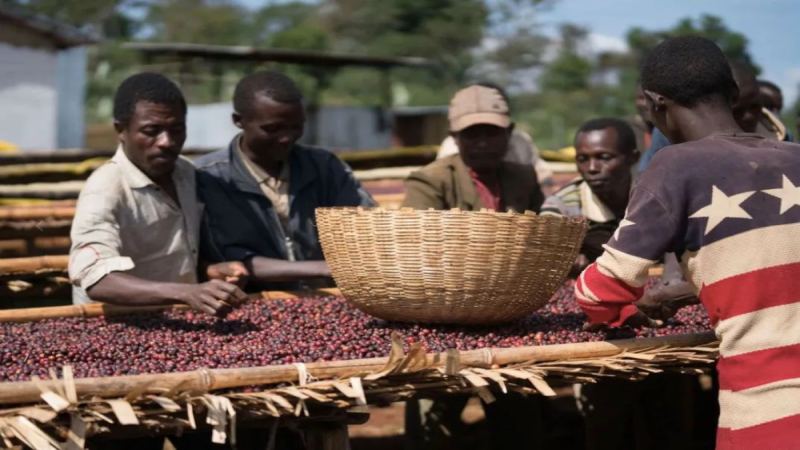
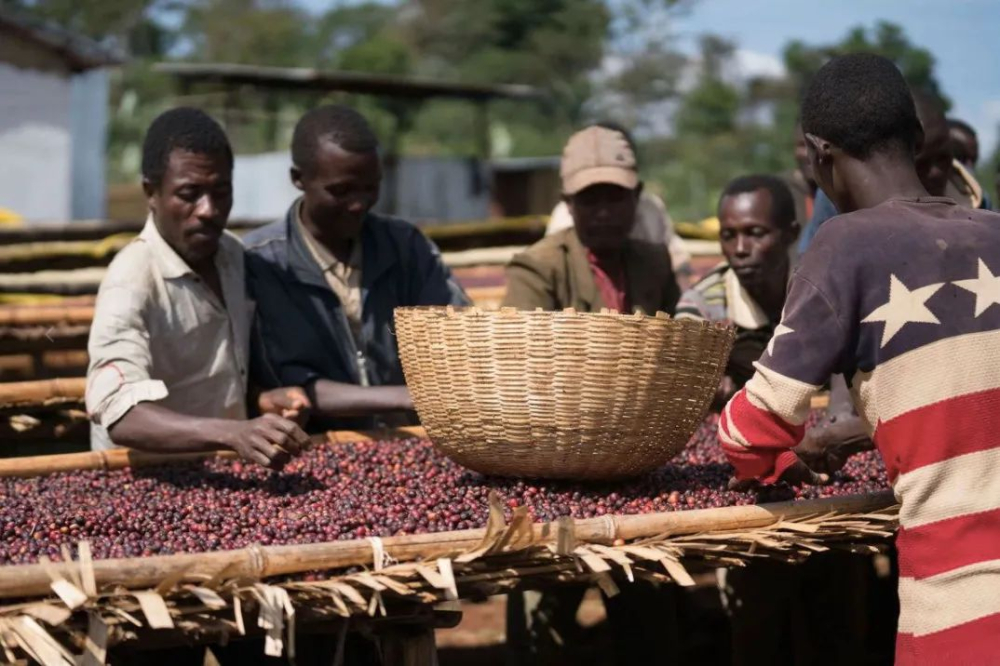
The seeds of coffee plants fall naturally or are carried by animals and birds to other parts of the forest, thereby achieving natural reproduction. Currently, the Kaffa Forest has nurtured approximately 5,000 coffee varieties, making it the richest genetic bank of Arabica coffee varieties. At present, about 30 coffee production cooperatives have been established around the Kaffa Reserve, where farmers harvest coffee berries from the forest during the coffee maturation season, process them, and sell them externally.
Front Street has also acquired a batch of Front Street Ethiopian Kaffa Forest coffee beans from the Kaffa Forest, using a washed process and a medium-light roast. After brewing, it has a subtle floral aroma, with a bright citric acidity on the palate, accompanied by sweet orange and bergamot flavors, a nutty sweetness in the aftertaste, and a mouthfeel similar to green tea.
To learn more about coffee origin information, please scan the QR code to follow: Coffee Review
Long-press the QR code to follow:
The above content is compiled by CoffeeHunters, a coffee news website.


