







Search Results for: beverages

An Introduction to Italian Milk Coffee | What Are the Differences in Flavor, Taste, and Preparation Among Latte, Cappuccino, and Flat White? How to Quickly Identify Types of Milk Coffee?
Latte, cappuccino, and flat white are almost always on the menu at coffee shops as the staple milk coffee categories. This article will help you clearly distinguish the differences between these three milk coffees. Since most people have more or less encountered these three milk coffees, here is a brief introduction to their origins. Modern latte and cappuccino [more…]
Espresso Milk Coffee Recipes | What Coffee-to-Milk Ratio Tastes Best? Latte, Cappuccino, and Flat White: Taste Characteristics and Origins
Latte, cappuccino, and flat white are three milk coffee categories that are almost always staples in coffee shops. This article will help you clearly distinguish the differences between these three milk coffees. Since most people have had some exposure to these three milk coffees, here is a brief introduction to their origins. Modern latte and cappuccino [more…]

Bean pairing ideas for a coffee shop's espresso line
An espresso line at a coffee shop typically accounts for over 70% of total drink output. The quality of core beverages like Americano, latte, cappuccino, and Dirty largely depends on whether the right beans are chosen. The mature approach to bean selection for an espresso line is a "base blend + specialty blend" combination: one stable base bean to support [more…]

Coffee Terminology | What is bypass? Why perform bypass on a prepared coffee beverage? What are the considerations when using bypass?
As in various other industries, there are quite a few professional terms in coffee as well. We can understand so-called professional terms as a condensed expression of complex concepts. They can not only improve the efficiency of our communication, but also increase the precision of communication and reduce the chance of communication barriers arising. However, because most [more…]

Starbucks Coffee Menu Full Analysis: Varieties, Cup Sizes, and Flavor Differences of Espresso and Cold Brew
As a globally renowned coffee chain brand, Starbucks' product line centers on espresso, from which classic beverages such as Americano, Latte, Cappuccino, Flat White, Mocha, and Caramel Macchiato are derived, offered in three sizes: Tall, Grande, and Venti. In recent years, the Cold Brew series has also quickly gained popularity, welcomed for its smooth mouthfeel brought by low-temperature long-time extraction. This article, compiled by Front Street Coffee, systematically sorts out the main types of Starbucks coffee, their brewing principles, and flavor characteristics, while also sharing the specific brewing parameters for Iced Americano, helping coffee enthusiasts more clearly understand the logic behind the menu and find the cup that suits their taste. [more…]
The Origin and History of Italian Espresso | How Has Italian Coffee Evolved? How Can Coffee Novices Choose Espresso Blend Coffee Beans for Home Use?
For more specialty coffee knowledge, please follow the WeChat public account: FrontStreet Coffee. Just like the passionate Italians, Italian coffee is world-famous for its rich and mellow flavor. Espresso is the most representative Italian coffee. The United States [more…]

Analysis of Coffee Tree Potted Cultivation and Growing Region Conditions: From Plant Classification to Artificial Planting Practices
Coffee, this everyday beverage, originates from the fruit of the coffee tree. This article begins with its botanical classification and systematically examines the origins, growth habits, and suitable cultivation regions of the coffee tree. The coffee tree belongs to the genus Coffea in the family Rubiaceae and is an evergreen shrub, naturally distributed across the "Coffee Belt" between the Tropic of Cancer and the Tropic of Capricorn. Beyond commercial cultivation, the coffee tree can also be grown as an ornamental potted plant, displaying its unique charm in artificial environments. The article will explain in detail the coffee tree's growth cycle, pruning management, and planting applications in coffee shops, accompanied by multiple images to aid explanation, helping coffee enthusiasts gain a more comprehensive understanding of this plant's natural and cultivated growing requirements. [more…]
Coffee Knowledge Explained: The Definition of Black Coffee, Its Scope, and How It Differs from Fancy Coffee
What exactly is black coffee? It is not a specific coffee beverage, but rather a broad umbrella term. As long as a cup of coffee is made with only coffee beans and water, without any additional ingredients such as milk or sugar, it can be classified as black coffee. Americano is certainly a typical representative, but pour-over, siphon, cold brew, French press, and other devices that produce pure coffee also belong to this family. In contrast, coffee with added milk, syrup, alcohol, and other flavorings is collectively referred to as fancy coffee. This article will systematically sort out the definition of black coffee, common categories, and its differences from fancy coffee, helping coffee lovers be clearer when ordering. [more…]
Latte Coffee | What Does Latte Coffee Mean? How to Make Latte Coffee
When it comes to today's popular drinks, the latte is perhaps the most common coffee beverage and one of the milk coffees most people are familiar with. A latte is a type of espresso drink, made with espresso as its base, to which steamed, frothed milk is added and blended in a certain proportion. Based on the definition of a latte [more…]

Flat White Production Essentials | Is Starbucks Flat White an Aussie-style white coffee? How much espresso goes into a Flat White?
For more specialty coffee knowledge, please follow: Front Street Coffee (Frontsteet Coffee). After Starbucks launched a new coffee drink, the "Flat White," in 2012, it once became a favorite among Starbucks fans. Because it has the silky mouthfeel of a latte [more…]
Espresso Coffee Beans | How Can Coffee Beginners Make Espresso at Home? A Detailed Guide to Buying and Using an Espresso Machine
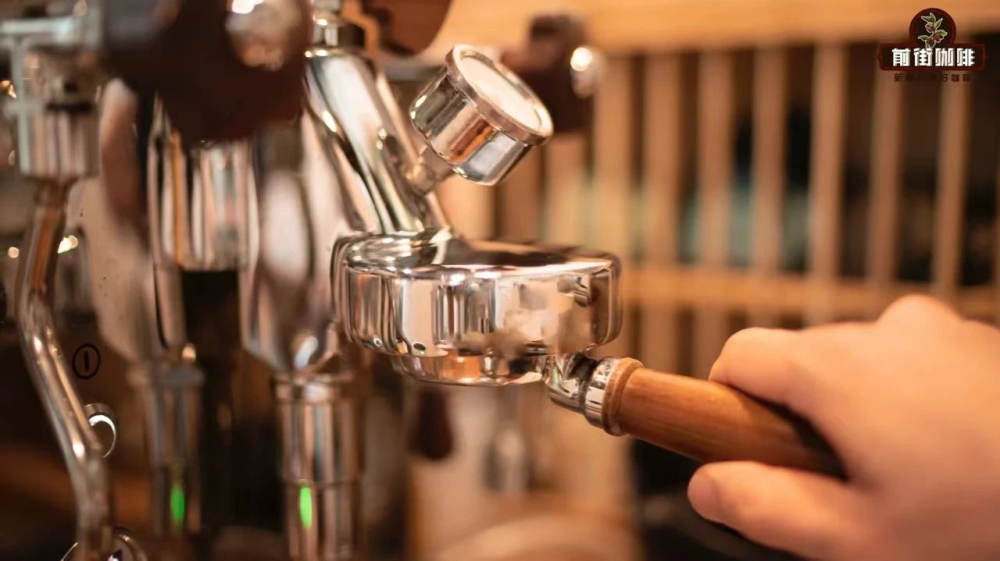
For more specialty coffee knowledge, please follow: Front Street Coffee (Frontsteet Coffee). Although most people come to Front Street for pour-over coffee, quite a few are also willing to drink espresso-based coffee. As we all know, espresso is the foundation of various Italian-style drinks—including Americano, latte, cappuccino, [more…]

KDP Announces Acquisition of Peet's Coffee for 15.7 Billion Euros
Great changes are taking place in the coffee industry. This year, the news of the potential sale of Starbucks China has caused a great stir in the industry. The list of potential bidders is long and impressive, including Carlyle, Hillhouse, Primavera [more…]
Detailed Explanation of Technical Requirements, Material Selection, and Common Forms of Coffee Packaging: From Oxidation Prevention to Vacuum Gas-Flush Packaging
As a globally popular beverage, coffee packaging must not only prevent the escape of aroma and moisture absorption, but also address oxidation, odor adsorption, and quality deterioration caused by high temperatures. This article focuses on the packaging needs of regular coffee and instant coffee, systematically outlining key technical requirements such as oxidation prevention, moisture resistance, gas barrier properties, and high-temperature protection, and introduces current mainstream vacuum packaging and gas-flushing packaging processes. In terms of material selection, bags, bag-in-box, metal cans, and glass jars each have corresponding composite structure solutions, while instant coffee mostly uses paper/aluminum foil/polyethylene flexible packaging. The article concludes with a summary of common packaging forms such as bags, cans, and boxes, suitable for reference by coffee enthusiasts and industry professionals. [more…]

Common Types of Italian Coffee | What Are the Classic Milk Coffee Recipes? What's the Difference Between a Latte, Macchiato, Cappuccino, and Dirty?
Espresso is a must-have beverage in every café. Many people's first impression of espresso is that it's unbearably bitter. In fact, espresso isn't limited to such bitter shots. If you want an espresso that isn't bitter and suits your taste, the first thing you need to understand is the different types of espresso. Front Street Cof [more…]

Types of Black Coffee | What is Japanese-style Coffee? What Are the Japanese Coffee Brewing Methods? What Are the Differences Between Japanese-style and Italian-style Coffee?
Coffee is a beloved beverage all over the world and the most popular drink globally. When it comes to dedication to coffee, Japan undoubtedly stands out, because Japan's coffee culture has a very long history, and Japanese coffee craftsmen are also highly dedicated. As another mainstream representative, [more…]
A Roundup of Today's Most Popular Coffee Categories: Flavor Characteristics and Roasting Suggestions from Blue Mountain to Iced Latte
Coffee, tea, and cocoa are together celebrated as the world's three major beverages. The coffee tree is an evergreen small tree belonging to the Rubiaceae family. The coffee we drink daily is made by extracting the beans from the fruit of the coffee tree, roasting them appropriately, and then brewing them with various devices. There are many popular coffee varieties on the market, each with its own distinctive flavor. This article will systematically cover classic single-origin coffees such as Blue Mountain, Cuba Crystal Mountain, Colombia Supremo, Brazil Santos, Mandheling, Mocha, Hawaii Kona, Java, Guatemala, and Kilimanjaro, as well as flavored preparations like milk coffee, Viennese iced coffee, and iced latte, along with their suitable roast levels and taste characteristics, making it easy for coffee lovers to choose according to their preferences. Front Street Coffee will also provide you with a stable supply of beans and roasting recommendations. [more…]

Americano Black Coffee | How to judge whether an Americano is good or bad? What are the benefits of drinking Americano? Is Americano the coffee of Americans?
As a well-known beverage in the coffee world, Americano—made with just espresso and water (or iced water)—can be found in almost every café and is a must-order star item. People love Americano for many reasons: it could be for a caffeine boost, to quench thirst, to cool down, or perhaps to satisfy [more…]

What Is Lungo Coffee? An Analysis of Its Differences from Espresso and Americano, and Its Brewing Characteristics
Many people are familiar with Americano, yet feel unfamiliar with Lungo coffee. Lungo, along with Espresso and Americano, belongs to the Italian-style black coffee family, but they differ in extraction method, concentration, volume, and caffeine content. This article will start from the Italian meaning of Lungo to clearly explain its core differences from Espresso, Americano, and Long Black, including extraction time, liquid volume, taste performance, and suitable consumers. At the same time, combined with Front Street Coffee's Italian-style blend bean products, it introduces the ideas for choosing coffee beans, blending logic, and freshness recommendations when making beverages such as Lungo and Americano, helping coffee enthusiasts gain a more complete understanding of this "stretched version of espresso." [more…]
10 Types of Espresso Drinks in Cafes | How Do Coffee Beginners Make Americano and Latte? What Are the Flavor Characteristics of Espresso Drinks?
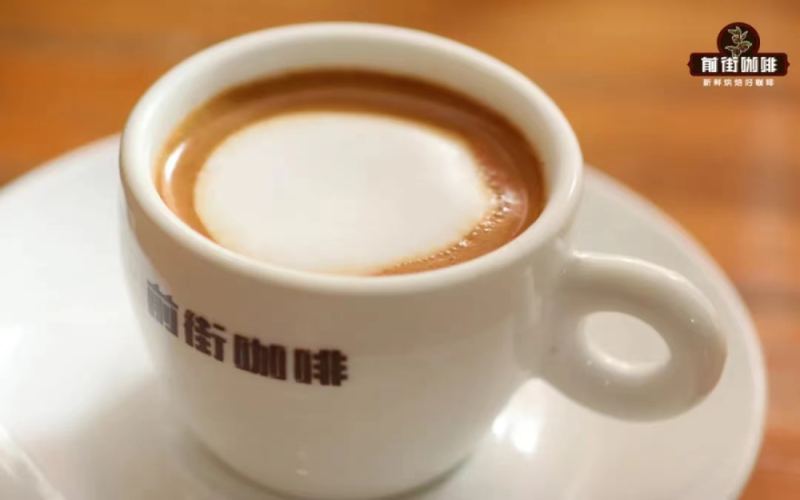
Espresso is an essential coffee beverage in almost every coffee shop. And espresso isn't just about Americano and latte. In this article, Front Street Coffee introduces 10 espresso drinks found in coffee shops, along with their preparation methods. ① Espresso [more…]
Water Buffalo Milk Latte and Dirty: Can Milk Foam Latte Art, Sweetness, and Coffee Flavor Coexist?
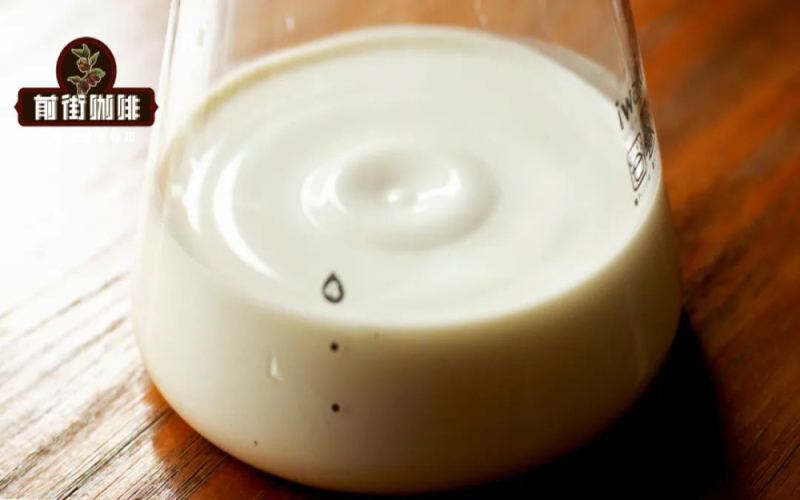
Buffalo milk has long been a specialty dairy product in the Guangdong and Guangxi regions, and in recent years it has been increasingly used by coffee enthusiasts to pair with espresso. It contains higher levels of protein, fat, and calcium than regular milk, with a lower water content, making it sweeter and silkier to drink. So, is buffalo milk actually suitable for latte art? And what does it taste like in an iced latte or a Dirty? This time, Front Street Coffee selected the refrigerated fresh buffalo milk from the local Foshan brand Baifulu, paired with Front Street Coffee's classic blend coffee beans, to make three drinks: a flat white, an iced latte, and a Dirty. From milk foam texture and latte art performance to the flavor on the palate, we tested each one to see whether the combination of buffalo milk and coffee can achieve an effect where 1+1>2. [more…]