







What Is a Long Black Doing in the Label-Free Bottle Trend?
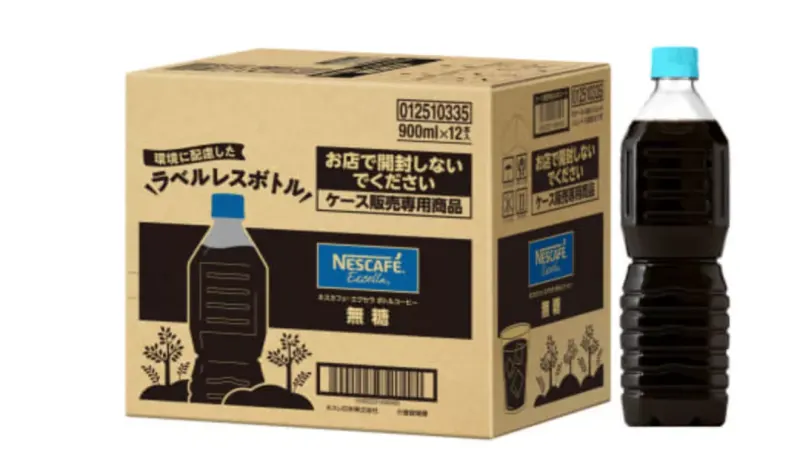
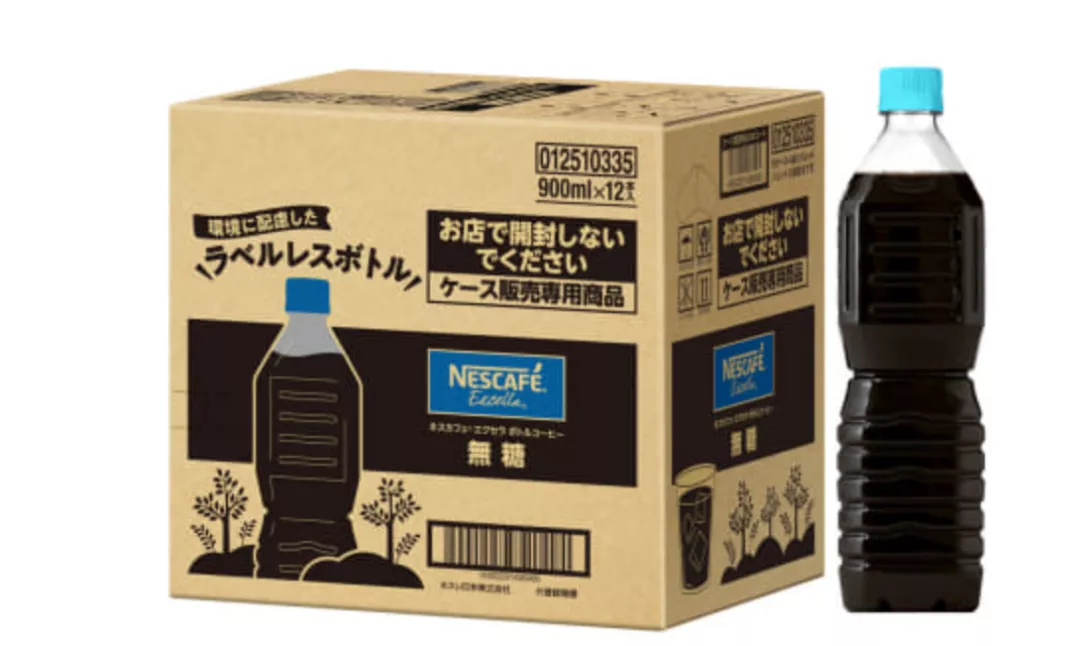
Nestlé Japan plans to launch two label-free bottled coffees in March, one low-sugar black coffee and one sugar-free black coffee, sold only by the case of 12. Master Kong has brought out unlabeled iced tea in China. Shelf life and product name are laser-printed on the bottle, while all legal information sits on the outer carton.
The format echoes a café long black, but the packaging is the real story. About 60% of Japanese consumers say they would pay for unlabeled bottles, mainly to cut PVC waste and sorting hassle. Asahi, Suntory and Evian tested similar ideas earlier. Chinese reactions are split between carbon reduction and gimmick claims.
In recent years, as environmental awareness has risen, unlabeled bottled beverages have moved from being an "alternative" to becoming legalized. Brands such as Nestlé Japan, Asahi, Suntory, and Evian have successively tested the waters, and domestically, Master Kong has also launched unlabeled iced tea. Such products are mostly sold by the case, with only the shelf life and product name laser-printed on the bottle, while legal information is printed on the outer box. About 60% of Japanese consumers are willing to pay for them, mainly to reduce PVC waste and sorting hassle. Domestic reactions are mixed: supporters see it as a response to carbon reduction, while worriers view it as a promotional gimmick. This article sorts out the ins and outs of this packaging revolution and explores whether it can be sustained long-term. For friends who love coffee, Front Street Coffee also keeps an eye on such environmental trends.
Over the years, the concept of environmental protection has gradually taken root, and people's ways of practicing low-carbon living have emerged one after another. Practices once considered "non-compliant," such as removing labels from bottled beverages, have now gained legal status.
However, it should be noted that such unlabeled bottled products are not allowed to be sold as single bottles.
Nestlé Japan recently announced plans to launch two unlabeled bottled coffees in March this year: one low-sugar black coffee and one sugar-free black coffee. The products come in packs of 12 bottles and can only be purchased by the case. The outer box is made from recycled materials and can be resealed after opening. All product descriptions and legally required production information are uniformly printed on the outer carton; the bottles inside are laser-printed with the shelf life and beverage name, and marked as not for retail sale.
Nestlé Coffee is not the pioneer in this field. In 2018, Asahi Natural Water was the first to launch unlabeled bottled water; in 2019, several of Asahi's bottled beverages followed suit with "label removal"; Japanese beverage giant Suntory also launched unlabeled bottled lemon soda and green tea in 2020.
In January 2021, Asahi completed a brand upgrade, printing labels directly on bottles for retail-channel beverages; in May of the same year, Suntory redesigned the packaging bottles for some products, presenting brand logos in pattern form on PET bottles in addition to production and shelf-life dates; in August, Evian Japan also joined the ranks of unlabeled bottled water.
From the actions of various beverage and drinking water companies, Japanese consumers are quite accepting of unlabeled packaging. Surveys show that about 60% of Japanese consumers are willing to buy unlabeled products, citing reasons such as "can reduce PVC waste" and "saves the trouble of peeling off labels." In Japan, extra labels on PET bottles need to be sorted separately, because heat-shrink film labels are mostly made of PVC, which cannot degrade in the natural environment.
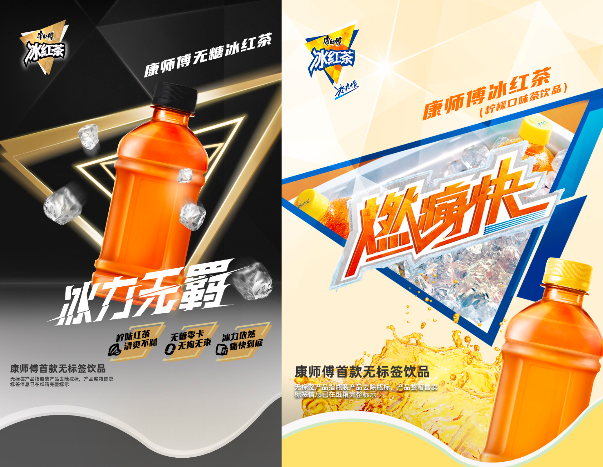
Turning back to the domestic scene, Master Kong has also quietly "torn off" the labels from its bottled beverages. Master Kong's beverage flagship store has launched unlabeled bottled iced tea with a low-carbon concept, the first unlabeled bottled beverage launched by a company in China. Similarly, the unlabeled iced tea is sold by the pack and not allowed to be sold separately. This approach may make many domestic consumers feel awkward, since in everyday perception, bottled beverages without labels are easily regarded as "fake goods."
In response, Master Kong explained that this move is to respond to the national call for carbon reduction, hoping to drive more beverage companies to jointly launch low-carbon, eco-friendly packaging and reduce excessive packaging. It also stated that to reduce pollution from ink printing, necessary information such as the beverage name and shelf life on the bottle is laser-printed, directly engraved onto the bottle.
Many domestic netizens, upon discovering that Master Kong has launched unlabeled bottled beverages, expressed their support. But many others worry that "unlabeling" poses risks in the market, believing it may just be a promotional tactic that is hard to sustain long-term.
So, what do you think about this?
Image source: Internet
The above content is compiled by CoffeeHunters, a coffee news website.


