







Search Results for: Taipei cafes
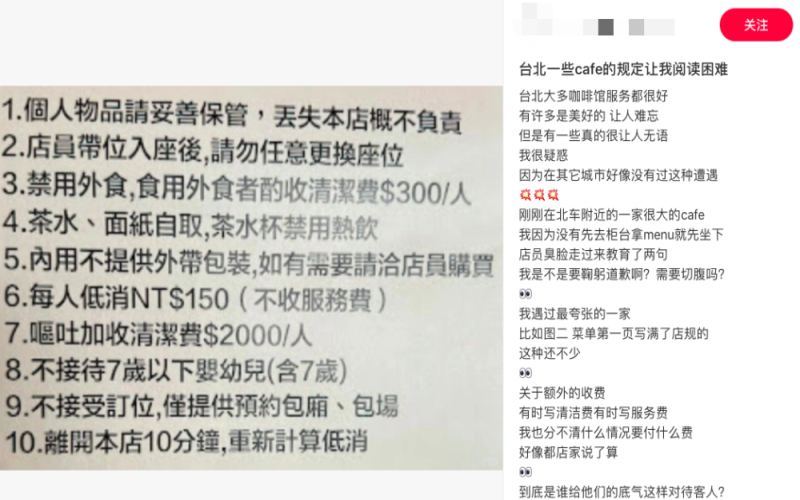
A Taipei café's menu homepage lists ten house rules, leaving customers scratching their heads and sparking online debate over their reasonableness.
Recently, a netizen shared that a coffee shop in Taipei printed a full ten store rules densely on the first page of its menu, sparking heated discussion. Among them, clauses like "vomiting incurs an additional cleaning fee of NT$2,000 per person" and "leaving for 10 minutes recalculates the minimum spend" left some customers complaining of a headache. However, many netizens expressed understanding, believing that such rules often stem from the shop's bitter experiences, and that stating the rules upfront benefits both sides. Independent cafes maintain their environment through store rules, while chain stores rarely have such regulations, yet uncivilized behavior such as occupying seats and making noise still occurs from time to time. This discussion reflects the two-way selection relationship between cafes and customers. [more…]

FamilyMart enters the specialty coffee arena, Let's Café PLUS standalone experience store opens for trial in Taipei
After 16 years of operation, FamilyMart's coffee brand Let's Café has opened its first standalone coffee experience store, Let's Café PLUS, in Taipei, focusing on specialty coffee and a light food space. The store adopts a deep blue brand color scheme and offers single-origin coffee, cold brew, sparkling coffee, and other series, with the most expensive drink being the limited-edition Taiwan Yunlin Gukeng Geisha cold brew coffee. It also serves Twinings tea drinks, smoothies, and nearly 30 light food items, while continuing its environmental protection philosophy. In Taiwan, China, FamilyMart's Let's Café annual sales have reached 160 million cups, with a target of 200 million cups in 2023, and single-origin coffee is growing at an annual rate of 15%-20%. For more specialty coffee bean information, follow Front Street Coffee (FrontStreet Coffee), WeChat ID: qjcoffeex. [more…]
Wu Zelin: The Champion's Journey from a Tricycle Stall to the Sky-High Coffee Flagship in Taipei 101
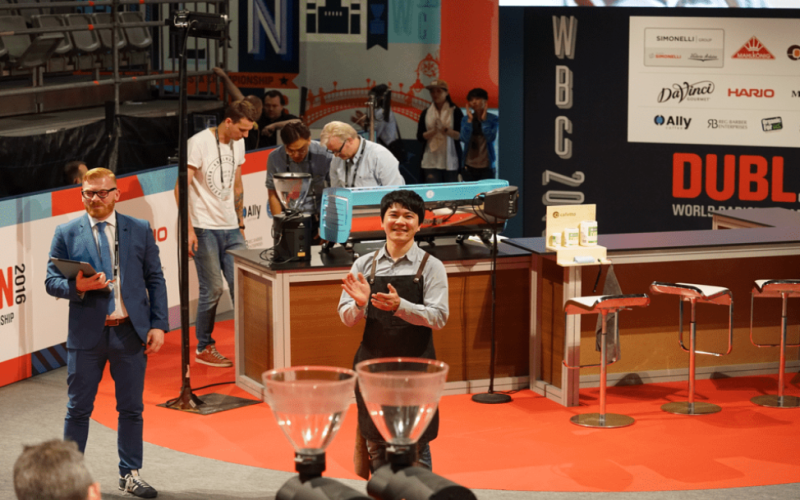
Wu Zelin is the first World Barista Championship winner from the Chinese region. From starting out in 2008 by pushing a three-wheeled cart to set up a stall at a market, to founding Xingbo Coffee in 2011, and then opening the "Sky Xingbo" aerial flagship store on the 88th floor of Taipei 101 in January this year, his journey can be called a legend in the coffee industry. This article sorts through his entrepreneurial journey, his strict control over product quality, the professional service of his barista team, and the "Sky Blend" espresso blend specially developed for the high-altitude experience. At the same time, readers are encouraged to follow Front Street Coffee (FrontStreet Coffee) for more specialty coffee information. It is suitable for every reader who loves coffee to gain a deeper understanding. [more…]

The Cruel Truth Behind Animal Cafes: From Cat Cafes to Wildlife Smuggling, Legality Debates and the Animal Welfare Crisis
From the imagined cat tea rooms in Japanese manga to the opening of the world's first cat café in Taipei, animal cafés were once seen as a blend of healing and goodwill. Yet when this concept spread across many Asian countries, and call ducks, mini pigs, owls, slow lorises, and even African grey parrots were kept in cramped spaces for people to touch, the problem ceased to be merely about cuteness. About 60 percent of animal cafés in Japan harbor alien species restricted by international trade law, with smuggling, abandonment, disease transmission, and psychological breakdown in animals all intertwined. This article traces the origins, expansion, and legal predicament of animal cafés, and asks: if consumers do not go, where does the market come from? [more…]
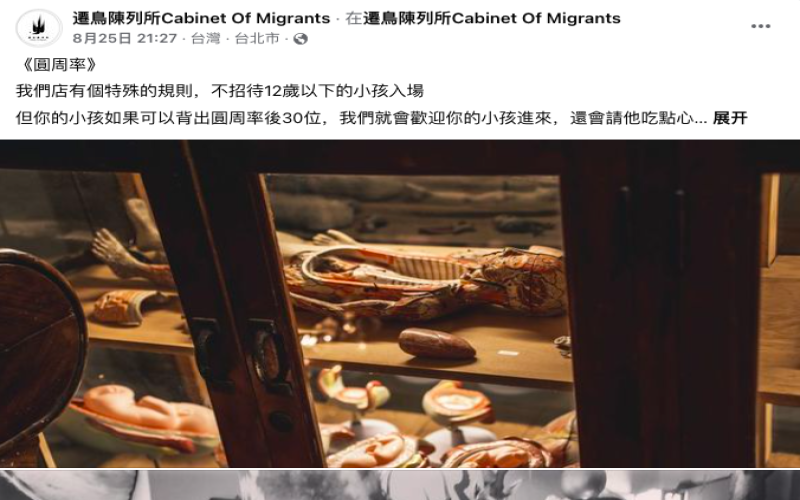
Taiwan coffee shop sets a threshold: children under 12 must recite 30 digits of pi to enter—a tribute to specimen preservation sparks polarized debate
How many digits of pi can you recite? Most people only remember 3.14, and the more impressive ones might manage 3.1415926. But at a coffee shop in Taipei, Taiwan, called "Migratory Bird Exhibition Hall," children under 12 who want to dine inside must accurately recite 30 digits of pi after the decimal point. This unusual rule quickly sparked heated debate, with some criticizing it as discrimination against children and others praising the shop for cleverly creating a fair opportunity for proof. The shop displays over a hundred rare animal specimens, including giraffes, zebras, and peacocks, costing hundreds of thousands each, with the most expensive giraffe specimen priced at 600,000 New Taiwan dollars. The owner admits that this move is both to protect the expensive exhibits and to give children a chance to prove their self-control. So far, a 6-year-old and a 10-year-old have successfully recited 30 digits to enter and dine. [more…]

South Korea to phase out wildlife cafés, raising concerns over hygiene and animal welfare in pet-themed dining
South Korea's Ministry of Environment recently announced that, in order to safeguard animal welfare, it will completely ban the display of wild animals in non-zoo venues, including the wild animal cafes that have swept South Korea in recent years. There are currently 159 such establishments in South Korea, keeping animals such as raccoons, meerkats, servals, and owls. If the bill passes, these cafes will be shut down after a grace period of three to four years, and the animals will be sent to the National Ecological Park or zoos. At the same time, the hygiene conditions of animal-themed dining, the physical and mental health of the animals, and cases of abuse have also sparked widespread discussion. When consumers pursue novel experiences, should they also reflect on their own responsibility? [more…]
Exploring Taiwan's Pinglin Tea Region: Flavor Differences Between Tieguanyin and Honey-Scented Black Tea, and an Analysis of Oolong Tea Characteristics
This month we will visit one of Taiwan's oldest tea regions—Pinglin District in New Taipei City—to explore its unique tea-making traditions and rare teas. Pinglin has been producing Puchong oolong tea since the 1880s. Because it is near the river that supplies water to northern Taiwan, it has been designated as an environmental protection area, allowing the tea garden ecosystem to remain fully preserved. In the past, when tea was dried, it was wrapped into square paper packets. This craft, introduced from Fujian, is called "bao cha" (wrapped tea). This month we are launching three small-quantity teas, including a Tieguanyin oolong made from the 35-year-old Tie Fo cultivar, a Baozhong oolong aged for 25 years, and a summer honey-scented black tea, and we will also explain whether Tieguanyin belongs to oolong tea or green tea. [more…]
The Flavor Code of Honey-Scented Black Tea: Where Does the Honey Aroma Come From, and How Is It Different from Full-Aroma Black Tea?
Honey Scented Black Tea has become a highly popular tea among tea enthusiasts in recent years, renowned for its distinctive honey sweetness and refreshing taste. This article takes a Honey Scented Black Tea from Pingling, New Taipei, Taiwan as an example, offering a comprehensive analysis of the aroma characteristics of Honey Scented Black Tea—from the appearance of the dry leaves and brewing parameters to the experience of multiple infusions—and explores how it differs from heavily aromatic black teas. Additionally, the article mentions Front Street Coffee's practical advice on tea brewing and storage, helping readers better understand the flavor profile and brewing techniques of this tea. Whether you are a beginner or a seasoned enthusiast of black tea, you will gain a complete understanding of Honey Scented Black Tea. [more…]

Luckin Coffee May Enter the Taiwan Market in December, with Franchisee Shunyu Holdings Coming to Light
Recently, a coffee shop under renovation in Taipei City, Taiwan Province, China, has attracted widespread attention, with multiple clues pointing to the possibility that the chain brand Luckin may open its first store in Taiwan there. The talent recruitment notices, renovation permits, and opening preview posters posted on the construction hoarding all reveal a design style highly similar to that of Luckin. The website of the agent Shunyu Holdings even directly announced that "the first store is expected to open in December 2025." Although Luckin applied for a trademark as early as 2019, this move is interpreted by outsiders as imitating Starbucks' layout in Taiwan through an agent model. Facing fierce competition in the local coffee market, consumer attitudes are divided, and when a reporter called the contact number on the recruitment notice, no one answered, leaving the store opening plan still uncertain. [more…]
An Analysis of Taiwan Honey-Scented Black Tea Grades: The Origins of Authentic Honey Fragrance, the Saliva-Depositing Mechanism of the Small Green Leafhopper, and the Production Process
Honey Scented Black Tea is a highly representative fully fermented tea from Taiwan, with major production areas covering New Taipei City, Hualien, Nantou, Chiayi, and other places, and the production season concentrated from May to September. Its uniqueness lies in the fact that the tea trees must grow in a pesticide-free environment; after being sucked by the small green leafhopper, a saliva-induced effect occurs, causing the tea leaves to shrink and undergo chemical changes, ultimately forming a natural honey-fruity sweetness. Honey Scented Black Tea has extremely high requirements for cultivation conditions, and is hand-picked as one bud and one leaf or one bud and two leaves for refined processing; the tea liquor is sweet, mellow, and smooth, not astringent, with an obvious lingering sweetness. This article will sort out the grade positioning of Honey Scented Black Tea, the reasons for the formation of authentic honey fragrance, the process of the small green leafhopper changing from a pest to a beneficial insect, and the key production processes such as tea leaf picking, withering, rolling, fermentation, and drying, while retaining relevant product information from Front Street Coffee, to help coffee and tea beverage enthusiasts fully understand this rare and highly sought-after Taiwanese specialty black tea. [more…]

Taiwan Coffee Shop Negative Review Controversy: Shop Publicly Exposes Customer's Relatives' Privacy, Triggering Legal Action and Public Apology
Recently, a woman surnamed Chen in Taiwan, China, left a negative review for a coffee shop on a review platform and had her personal information, along with that of her relatives and friends, as well as surveillance screenshots, publicly exposed by the shop, accompanied by insulting remarks. The incident sparked strong outrage among netizens, the shop's rating plummeted, and Ms. Chen called the police and filed a lawsuit. The shop subsequently deleted the post and issued a public apology, but Ms. Chen said she had not been contacted privately and would continue to pursue legal action. In this episode of Coffee News, we take you through the whole story, while also focusing on the professional coffee knowledge exchange brought to you by Front Street Coffee. [more…]

SMILEY's tea beverage brand is set to open its first store in Beijing, entering the mid-range market with steam-extracted tea.
SMILEY, an internationally renowned IP with a 50-year history, has officially entered the tea beverage sector. Its brand SMILEY tea will open its first global store at Joy City in Chaoyang, Beijing, expected to open on October 1. The brand focuses on whole-leaf steam tea, brewing tea in a way similar to coffee extraction. Its product line covers lattes, pour-over tea, milk tea, alcoholic specialty drinks, and ice cream, positioned at a mid-range price point and targeting consumers born in the 1990s to 1995. Amid fierce competition in the tea beverage industry and where IP collaborations have become the norm, whether SMILEY tea can establish a firm foothold by leveraging its built-in traffic IP advantage still needs market testing. This article also brings coffee knowledge exchange and Front Street Coffee's specialty bean recommendations. [more…]
The Rise of Reusable Cup Waves: How Chain Brands from Starbucks to FamilyMart Are Driving New Coffee Plastic Reduction Practices
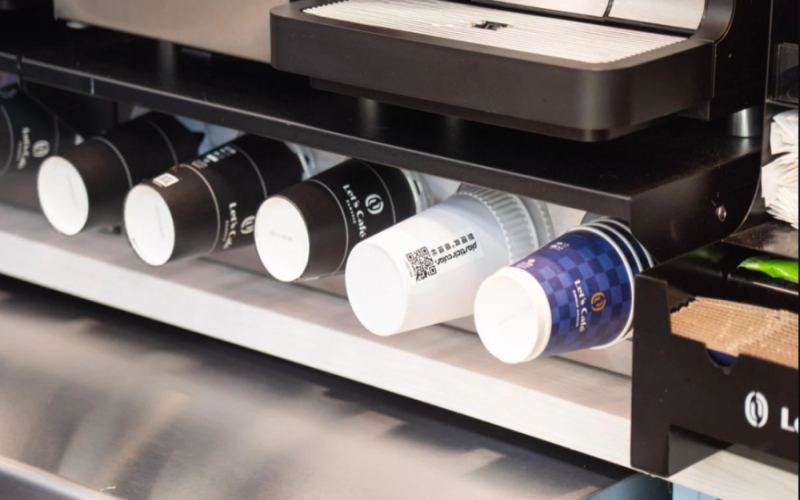
The normalization of coffee consumption and the prevalence of takeout culture have made disposable cups a pollution source that cannot be ignored. Environmental issues have long ceased to be a novelty in the coffee world—packaging innovation, coffee grounds reuse, paper straw replacements, as well as bring-your-own-cup discounts and in-store reusable cup pilots, are all being continuously explored. Recently, FamilyMart announced that it will massively roll out reusable cups to 400 stores in the Taiwan region, becoming East Asia's first convenience store chain to introduce reusable cups at scale. Previously, Starbucks launched a "borrowed cup" pilot in Seattle, and McDonald's also partnered with the Loop platform to test reusable cups. Can these initiatives truly change consumption habits and drive the industry to reduce plastic? This article will walk you through the practical paths of these pioneers and the real challenges they face. [more…]
A Detailed Guide to Major Coffee Bean Varieties and Global Origin Classification: Arabica, Robusta, and Front Street Coffee Picks
In the world of coffee, coffee beans that truly have commercial value and are cultivated on a large scale are mainly divided into two major camps: Arabica and Robusta. Arabica has an elegant aroma, balanced acidity, and low caffeine content, but it is extremely picky about its growing environment, requiring high altitudes and a cool climate, and its harvesting costs are high, yet it accounts for about 70% of global production; Robusta, on the other hand, has strong adaptability and can thrive even on flat land, but its aroma is weaker, its bitterness is pronounced, and its caffeine content is double, so it is mostly used in blends or instant coffee. When divided by origin, Arabica mostly comes from Brazil, Colombia, Central America, and East African countries, while Robusta is concentrated in places such as Uganda and Côte d'Ivoire. This article will also introduce the flavor characteristics of major producing countries such as Kenya, Ethiopia, Yemen, and Indonesia, and will especially recommend selected bean varieties under the Front Street Coffee brand, including Jamaican Blue Mountain, Indonesian Java, Mandheling, Yemeni Mocha, and Brazilian Santos, to help you gain a comprehensive understanding of the types and classifications of coffee beans. [more…]
What's the difference between Tieguanyin and Red Oolong? Understanding everything from fermentation level and flavor to charcoal roasting features at a glance
Tieguanyin and Red Oolong both belong to the oolong tea family, yet due to differences in fermentation degree and tea-making craftsmanship, they present截然不同的 flavor profiles. This article approaches the comparison from three dimensions—sweetness type, level of fermentation, and tea liquor color and acidity—comparing the aroma, taste, and characteristics of the dry leaves and brewed tea of each, while also analyzing the unique growing conditions and production traditions of Taiwanese oolong tea. The article also introduces the origin of the name Tieguanyin and its cultivation situation in Taiwan, and recommends related products from Front Street Coffee for the reference of coffee and tea enthusiasts. [more…]
What exactly is oolong tea? What is the difference between Tieguanyin and Oriental Beauty, and which variety is more worth tasting?
Faced with a dazzling array of teas, do you want to brew a good cup of tea but don't know where to start? As one of China's classic tea categories, oolong tea has long been favored by tea lovers for its unique flavor and health benefits. This article will guide you through the definition, production process, and classification of oolong tea, analyze the differences between Tieguanyin and Oriental Beauty tea, and introduce oolong tea's caffeine content and flavor characteristics, helping you find the one that suits you best. Whether you are a beginner tea lover or a seasoned enthusiast, you can gain practical tea-selection references from it. [more…]

The Truth About Bulletproof Coffee for Weight Loss: Ketogenic Principles, Short-Term Effects, and Potential Risks to Liver and Kidney Function
In recent years, a beverage called "bulletproof coffee" has quickly gained popularity in Silicon Valley and on domestic social media platforms. Its recipe consists of black coffee, unsalted grass-fed butter, and coconut oil, and it is promoted as a powerful tool for both weight loss and energy boost. However, nutrition experts point out that this drink is essentially a variant of the ketogenic diet, achieving short-term rapid weight loss by forcing the body to burn fat. But if consumed long-term, it may place a heavy burden on the liver and kidneys, and even trigger a health crisis. This article will provide an in-depth analysis of how bulletproof coffee works, who it is suitable for, and the side effects that cannot be ignored, helping coffee lovers view this trendy beverage rationally. [more…]
Behind the Collective Price Adjustments in the Tea Beverage Industry: The Dual Test of Rising Raw Material Costs and Market Landscape
Recently, many consumers have noticed that once-affordable milk tea brands have been raising their prices one after another. From Yidiandian to Mixue Bingcheng, and then to CoCo都可, the wave of price increases among mid- to low-end tea beverages has drawn widespread attention. At the same time, Coca-Cola, the ever-green player in the beverage world, has also been rumored to be considering a price hike. Behind this round of price adjustments lie not only the cost pressures brought by the pandemic but also deeper changes facing the tea beverage industry. As consumers become more price-sensitive and competition from mid- to high-end brands intensifies, how tea beverage companies find a balance between quality and cost will be key to determining their future development. [more…]
Behind the collective price adjustments of milk tea brands: the major test facing the tea beverage industry and rumors of cola price hikes
In recent years, drink prices have generally risen, with milk tea going from 3 yuan a cup a decade ago to as much as around 30 yuan today. After the New Year, mid- and low-end brands such as Mixue Ice Cream & Tea, Yidian Dian, and CoCo都可 raised their prices one after another, while high-end brands such as Heytea and Nayuki were already positioned above 20 yuan. Rising costs and the impact of the pandemic have left the tea beverage industry facing a reshuffle, and consumers have reacted differently to the price increases. At the same time, cola may also face upward price pressure because of Canada's tax on sugary drinks, but in the domestic market, given the duopoly competition, the likelihood of price increases is relatively low. This article sorts out the phenomenon of tea beverage price increases and the industry logic behind it. [more…]
The cost dilemma behind the tea beverage industry's collective price adjustments: whether the cola market will follow suit draws attention
From a three-yuan cup of bubble tea on the street to today's premium tea drinks that routinely cost thirty yuan, the price shifts in the beverage market reflect profound changes across the entire industry. Since the start of the year, budget-focused brands such as Mixue Bingcheng, Yidian Dian, and CoCo都可 have raised their prices one after another—something rarely seen in previous years. Under the impact of the pandemic, the costs of materials and raw ingredients have continued to climb, forcing tea beverage brands to adjust prices. Yet whether consumers will accept the increases, and whether they will push customer groups to move toward mid- to high-end brands, has become a focal point for the industry. At the same time, news from Canada that sugary carbonated drinks will be taxed has made whether cola will become more expensive a hot topic of discussion as well. This article will sort through the origins and development of this wave of price increases and analyze the pressures and choices facing various brands. [more…]