







Why Is South Korea Banning Wildlife Cafes?
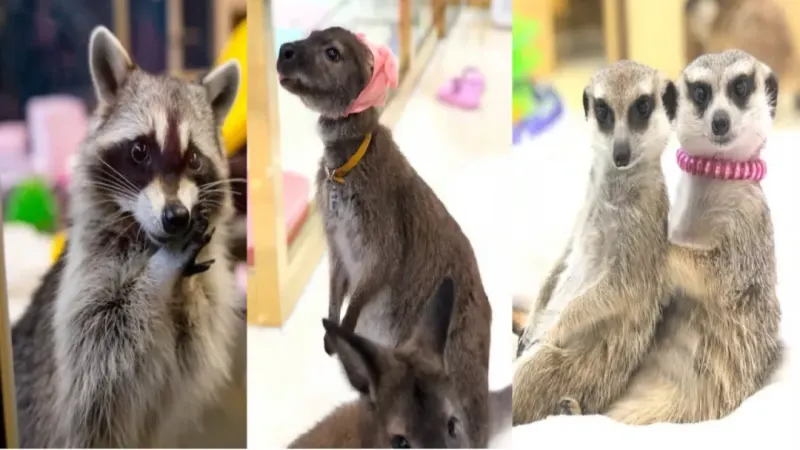
South Korea's Ministry of Environment announced on January 13 that it will ban displaying wild animals outside zoos, covering les cafes that became popular in recent years. The country has 159 such venues keeping raccoons, mongooses, servals, owls, fennec foxes, and reptiles. If the bill passes, they close after a three-to-four-year grace period.
Animals would move to the National Ecological Park or zoos. The plan follows concern over cramped indoor enclosures, hygiene at animal-themed dining spots, and reported abuse. As les cafes built on animals decline, the debate turns to consumer responsibility and whether novelty experiences justify the welfare cost. Coffee after meal venues face similar scrutiny over animal handling.
South Korea's Ministry of Environment recently announced that, in order to protect animal welfare, it will completely ban the display of wild animals in non-zoo venues, including the wild animal cafes that have become popular in South Korea in recent years. At present, there are 159 such establishments in South Korea, keeping animals such as raccoons, mongooses, servals, and owls. If the bill passes, these cafes will close after a grace period of 3 to 4 years, and the animals will be sent to the National Ecological Park or zoos. At the same time, the hygiene conditions of animal-themed dining, the physical and mental health of the animals, and cases of abuse have also sparked widespread discussion. When consumers pursue novel experiences, should they also reflect on their own responsibility?
According to South Korea's Seoul Shinmun, South Korea's Ministry of Environment stated on January 13 that, in order to ensure animal welfare (that is, upholding the principle of protecting all animals, including farm animals, laboratory animals, companion animals, working animals, entertainment animals, and wild animals), it will completely ban the display of wild animals outside zoos, including private business venues such as the wild animal cafes that have become quite popular in South Korea in recent years.
It is understood that South Korea currently has 159 wild animal cafes, housing raccoons, mongooses, servals, owls, fennec foxes, and amphibians, reptiles, and other animals. Once the relevant bill is passed, these cafes will cease operating after a transition period of 3 to 4 years, and the animals will be transferred to institutions such as South Korea's National Ecological Park and zoos for protection.
When cafes themed around everyday or domestic animals such as cats, dogs, pigs, and ducks can no longer satisfy consumers' pursuit of novelty, special animal-themed cafes or restaurants have emerged in recent years in many countries, including South Korea, Japan, China, and Thailand, with raccoons, hedgehogs, alpacas, owls, otters, and lizards all becoming "employees" of such dining establishments.
In these venues, customers can observe and touch various small animals. However, from an ecological perspective, such indoor environments cause serious negative effects on the animals themselves—living in cramped spaces for a long time, with extremely limited range of activity and no shelter whatsoever, the animals find it difficult to escape from customers who pester them. Every day they are also "worn out" by all kinds of customers, and even their sleeping time is forced into "business hours." As a result, many animals suffer severe physical and mental harm, such as being overweight, malnourished, sleep-deprived, bad-tempered, and depressed.
In addition, because customers and animals share the same room, the dining environment and the animals' living environment are mixed together, and the hygiene conditions of some venues have also been widely criticized. Many consumers who have visited reported that these shops have a strong animal odor, that food and drinks more or less get animal hair on them, and that animals even jump onto the table during meals and snatch food... Basically, after going once, you don't want to go a second time.
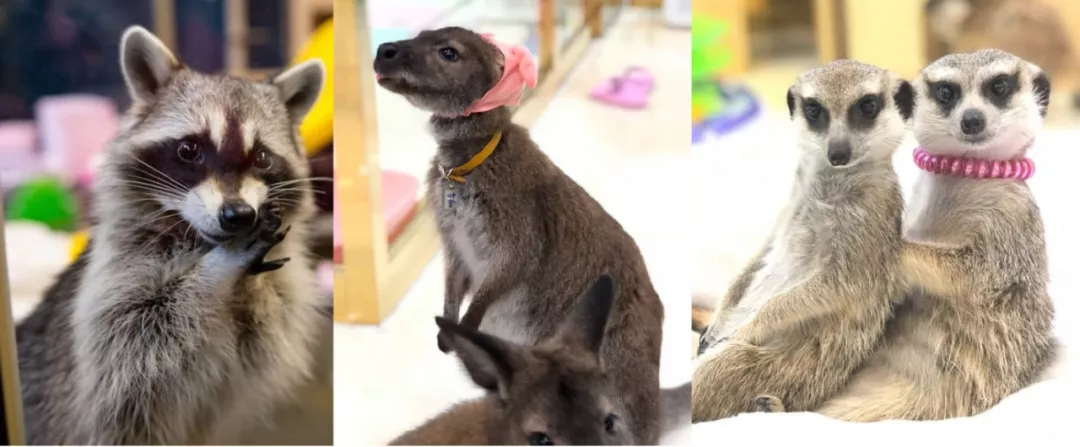
Besides hygiene problems, many people overlook the animals' own temperaments and habits because of their cute appearance, and the commercial venues also fail to clearly prohibit certain behaviors, leading to frequent incidents in animal restaurants of animals injuring or attacking people. At the same time, these animal "employees" may also suffer from neglect by their keepers, and in serious cases may even be abused by them.
Previously, Taiwanese media reported that the owner of an animal cafe in Taipei was accused of abusing a raccoon in the shop. A consumer complained to an animal protection organization that the cafe owner hit the raccoon, and later a former employee even provided a video of the owner setting a dog on the raccoon. Once the video came out, netizens exploded! The comment section was full of angry insults... Afterward, the cafe owner issued an apology statement. The abused raccoon had already been taken in and cared for by the Taipei Animal Protection Office, and regarding the accusation of animal abuse, the owner explained it this way: it was a misunderstanding caused by having no experience raising raccoons and being unfamiliar with raccoon habits... (????????), and said that he would not raise raccoons again in the future.
In addition to these exposed abuses, simply keeping animals that survive in the wild in unnatural spaces is itself a kind of harm to them. After all, no matter how hard an ordinary residence or shop environment is modified, it is still not comparable to a zoo, let alone their wild habitat.
Besides problems with the operators themselves, should consumers also reflect on themselves? If no one went, how could there be a market?
Image source: Internet
Professional coffee knowledge exchange. For more coffee bean information, please follow Coffee Workshop (WeChat public account: cafe_style).
For more specialty coffee beans, please add the private WeChat of Front Street Coffee (FrontStreet Coffee), WeChat ID: kaixinguoguo0925.
The above content is compiled by CoffeeHunters, a coffee news website.


