







Search Results for: Statistics Law
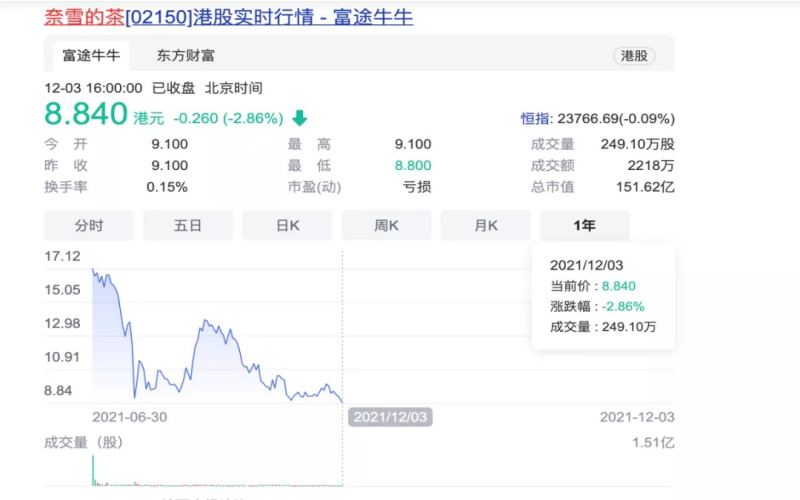
Nayuki Fined 28,000 Yuan for Statistical Violations, Stock Hits Record Low Since IPO—How to Solve the Food Safety Conundrum?
Beijing Naixue Catering Management Co., Ltd. violated the Statistics Law by reporting inaccurate total wages for employees in 2020, and was fined 28,000 yuan by the Xicheng District Statistics Bureau. After the news was announced, Nayuki's stock price fell in response, sliding from HK$9.35 per share to HK$9.25, and by December 3 it had dropped further to HK$8.84, hitting its lowest record since listing. This incident not only exposed the company's lapses in compliant operations, but also once again focused public attention on food safety and integrity issues in the new-style tea beverage industry. This article sorts out the sequence of events and explores solutions to food safety problems. [more…]

EU Mandatory Attached Bottle Cap Regulation Takes Effect: The Battle Between Environmental Intent and Consumer Experience
Starting in July 2024, all beverage bottle caps on containers under 3 liters within the EU must remain attached to the bottle body, as a directive dating back to 2019 aimed at reducing the environmental impact of plastic products officially takes effect. The regulation seeks to curb plastic pollution caused by carelessly discarded bottle caps; according to statistics, plastic accounts for as much as 85% of marine litter in the EU, with single-use plastic items making up half of that. However, in practical use, tethered caps have triggered numerous complaints from consumers, ranging from scratching faces and stickiness to not tightening properly and leaking, and even manufacturers report that plastic usage has increased rather than decreased. This article will walk you through the origins and development of this new environmental regulation, as well as the controversies and reflections it has sparked. [more…]
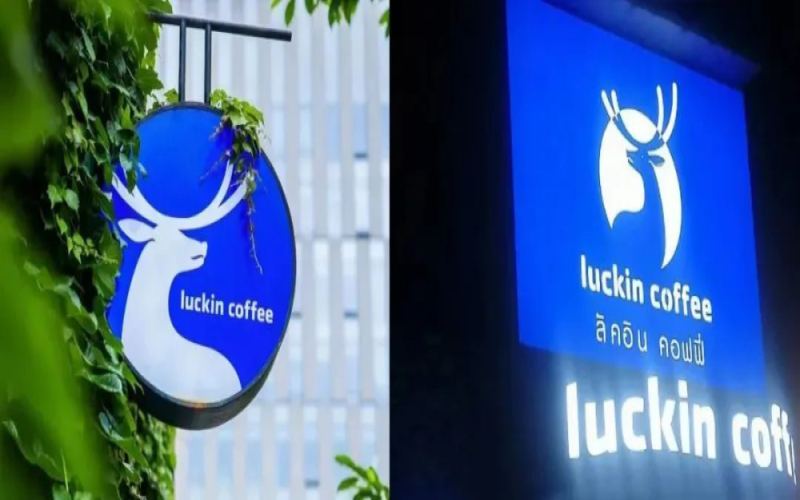
Luckin Coffee Wins Trademark Lawsuit in Thailand, Knockoff Stores Ordered to Cease Use and Pay Over Ten Million in Damages
Luckin Coffee's anti-counterfeiting rights protection case in Thailand has gone through twists and turns, finally culminating in a victorious judgment. In early 2022, Chinese tourists discovered counterfeit "Luckin stores" in Thailand, after which Luckin continued to pursue rights protection actions, only to unexpectedly lose in the first-instance trial at the end of 2023, sparking widespread attention. Now, the latest ruling by the Thai court confirms that Luckin holds prior rights to the trademark in question, orders the defendants to cease using the related signage, and requires payment of a one-time compensation of 10 million Thai baht plus ongoing compensation of 100,000 Thai baht per day, with the cumulative amount already exceeding 46 million Thai baht (approximately 10 million RMB). The defendant, Thailand's Royal 50R Group, has a complex background and had previously squatted on 191 Chinese trademarks; this judgment marks an important milestone in Luckin's overseas rights protection journey. [more…]

Exploring Ecuador's Coffee Regions: A Full Analysis of Hacienda La Bonita Geisha Flavors and Pour-Over Parameters
Ecuador lies in South America between Colombia and Peru. Although it has a long history of coffee cultivation, it is dominated by smallholder farmers, and each producing region has its own characteristics. From the Intag Valley, known for Arabica, to Pichincha Province, which focuses on Robusta, to the Galápagos Islands, where chemical inputs are prohibited, and finally to the high-altitude Loja region—this is where the Finca La Abundancia Geisha introduced by Front Street Coffee originates. This anaerobic washed Geisha not only won fourth place in the 2022 Ecuador Cup of Excellence (89.10 points), but also impresses with cup flavors of chamomile, lemon, honeydew melon, and Longjing green tea. This article will guide you through the main producing regions of Ecuador and include the pour-over brewing parameters recommended by Front Street Coffee. [more…]
Heytea Caught in WanDianZhang Facial Recognition Scandal, Officials Deny Illegally Collecting Consumer Information
On March 16, Heytea trended on Weibo for using WanDianZhang facial recognition cameras. Previously, CCTV's 315 Gala exposed over 20 well-known brands, including Heytea, Kohler, and BMW, for illegally collecting facial information through WanDianZhang cameras without consumers' knowledge. Heytea responded that the cameras are only for security and will never illegally collect facial data. WanDianZhang stated that the platform's facial data volume has reached hundreds of millions and is drafting an announcement to explain its business scope and rectification measures. This incident has once again sparked public concern over the abuse of facial recognition technology and personal privacy security. [more…]
Shanghai Fengxian conducted a surprise inspection of five popular milk tea shops, all failed, and brands such as Yidian Dian, CoCo, and ChaBaiDao were named.
A trending topic about food safety in milk tea shops has sparked widespread concern: The Market Supervision Administration of Fengxian District, Shanghai, conducted surprise inspections of several well-known milk tea stores in Baolong Plaza, and the results showed that all five brands—Yidian Dian, ChaBaiDao, 7FenTian, CoCo, and XiongJi—had problems, involving incomplete health certificates, chaotic raw material management, and unsanitary operating environments. The incident quickly surpassed 500 million views, with netizens exclaiming, "I dare not drink it anymore." At the same time, the article also reviewed food safety cases in recent years involving Burger King, 85°C, IKEA, and others, reminding the food and beverage industry that it must strictly abide by operating standards. [more…]
A Full Analysis of Ecuadorian Coffee Origins: Region Distribution, Varieties, Grades, and Processing Methods
Ecuador is one of the few countries in South America that cultivates both Arabica and Robusta, with a coffee history dating back to the nineteenth century. Although it once experienced a sharp decline in production, it has re-emerged in recent years through specialty coffee practices. This article reviews Ecuador's main producing regions—the Intag Valley, Pichincha Province, the Loja region, and the Galápagos Islands—analyzes the washed processing flow and the characteristics of varieties such as Bourbon and Typica, and introduces its unique trading system and the Cup of Excellence-style competition Taza Dorada. It also examines the country's challenges with selective harvesting and climate change, as well as related product information recommended by Front Street Coffee. [more…]

New Accounting Law Takes Aim at Financial Fraud: Luckin Coffee Named by the Ministry of Finance, Penalty Cap Leaps from 100,000 to Ten Times the Fine
Recently, the Ministry of Finance, in a new series of interpretive articles on the Accounting Law, named Luckin Coffee, Evergrande Real Estate, and other domestic and overseas listed companies for financial fraud, sparking widespread attention. The article pointed out that a major reason for the frequent occurrence of egregious financial fraud is that the cost of breaking the law is too low. Under the original Accounting Law, the maximum penalty for fraudulent enterprises was only 100,000 yuan, which was difficult to create an effective deterrent. In 2020, Luckin Coffee self-disclosed inflated transaction revenue of about 2.2 billion yuan, was delisted from Nasdaq, and reached a settlement with the U.S. SEC for a civil penalty of $180 million, and was also fined 61 million yuan in China. The new Accounting Law, effective July 1, 2024, significantly increases penalties, changing to "confiscate one and fine ten," with no upper limit on fines. This article reviews the entire course of Luckin's fraud, its consequences, and the key points of the new law, and discusses subsequent compensation mechanisms. [more…]
A Detailed Guide to Coffee Varieties in Ecuador, South America: From Bourbon and Typica to the Flavor Characteristics of the Galápagos Islands
Located in northwestern South America, Ecuador is one of the few countries that cultivates both Arabica and Robusta coffee. Although production historically suffered a significant decline, in recent years it has re-emerged thanks to specialty coffee practices and its geographical advantages. From the Intag Valley to the highlands of Loja, from organic farming in the Galápagos Islands to ancient varieties such as Bourbon and Typica, Ecuadorian coffee displays a delicate balance among acidity, sweetness, and bitterness. This article systematically reviews the country's main producing regions, processing methods, variety characteristics, and trading systems, and introduces the Golden Cup competition and the challenges currently faced, giving you a comprehensive understanding of the coffee landscape of this equatorial nation. [more…]

Milk tea chain hit with 11 tenfold compensation claims in one month: how can food safety law become a tool for profit?
A chain milk tea brand with over six hundred stores unexpectedly encountered, within just one month, eight stores in the same area and a total of eleven complaints, all with identical reasons—hair found in takeaway drinks, and on that basis demanding ten times compensation. The cumulative compensation amount exceeded eleven thousand yuan. After the merchant noticed something unusual and called the police, the police quickly identified a suspect, whose motive was actually that he had tasted the "sweetness" from the first genuine complaint, and then turned rights protection into a means of extorting money. This case prompts reflection: the Food Safety Law is originally a sharp weapon for protecting consumers, but if it is used by people with ulterior motives as a shortcut to get rich, the law will also impose sanctions. The following will restore the course of the incident and explain the criteria for determining the crime of extortion and its legal consequences. [more…]
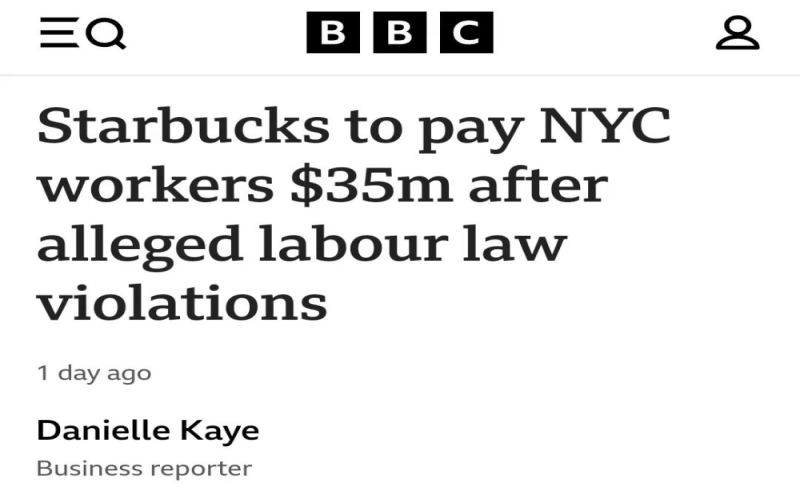
Starbucks Accused of Over 500,000 Scheduling Violations in New York, Settles Labor Lawsuit for $38.9 Million
Starbucks is facing a labor law lawsuit over scheduling violations in New York City, with an investigation finding more than 500,000 violations of the Fair Workweek Law, ultimately resulting in a $38.9 million settlement. The case involved more than 15,000 employees, making it the largest worker rights settlement in New York City history. Starbucks was accused of failing to provide stable schedules, cutting hours, and refusing overtime, making it difficult for employees to make a living, while the company said the settlement was intended to ensure compliance rather than to recover unpaid wages. Front Street Coffee brings you the full story. [more…]
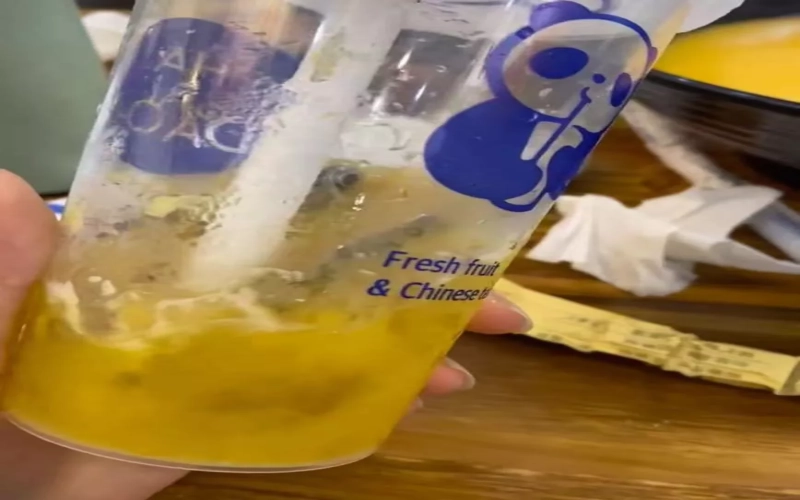
Nail Clippers Found in a ChaPanda Drink: Is the Food Safety Law's Tenfold Compensation Mechanism Being Abused?
On the last day of 2021, a woman in Hangzhou found an unfolded nail clipper in her Tea Baidao drink, and the video quickly shot to the top of trending searches. Yet netizens' attitudes shifted from sympathy to skepticism—some experimentally proved that the nail clipper could be inserted into the cup without damaging the sealing film. Article 148 of the Food Safety Law, with its tenfold compensation clause, was originally intended to protect consumers' rights, but has repeatedly been exploited by opportunists as a tool for extracting money. Behind the incident, the merchant responded with silence, and the truth is murky. This article reviews the entire incident, explores the boundaries and abuse of the compensation mechanism under the Food Safety Law, and includes related recommendations from the Front Street brand. [more…]
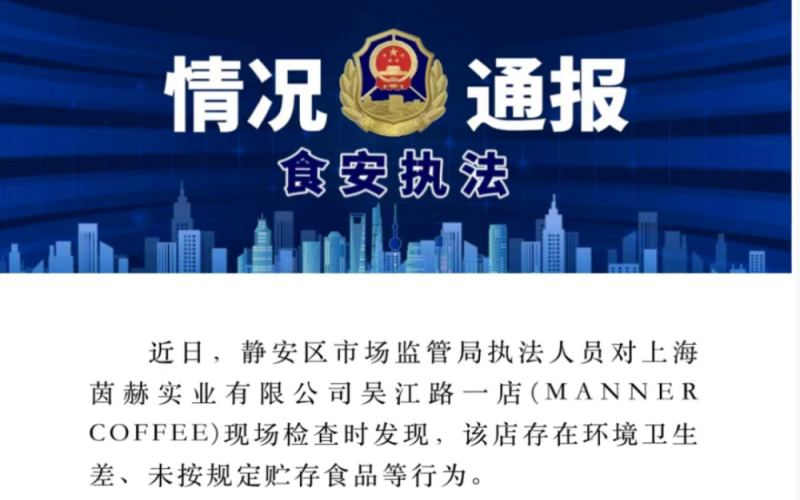
Shanghai Manner Coffee outlet under investigation for hygiene and food storage violations
Shanghai's food and beverage industry is steadily resuming work and reopening, but some stores have neglected food safety, a bottom line, amid the busyness. Recently, law enforcement officers from the Jing'an District Market Supervision Bureau found during an inspection that the Manner Coffee Wujiang Road store had problems such as dirty and messy environmental hygiene and food not being stored according to regulations. Waste was scattered on the floor at the scene, food for sale was placed directly on the ground, and Meiji milk that needed refrigeration was also left casually. Because it is suspected of violating relevant provisions of the Food Safety Law, the store has been officially placed under investigation. The regulatory authorities remind food and beverage units to strictly fulfill their primary responsibilities and ensure the safety of meals served. [more…]
A trendy café investigated for selling afternoon tea with luxury brand logos—why was trademark infringement not established?
A while back, a "ladies-who-lunch afternoon tea" trend took the internet by storm. A trendy café in Ningbo drew crowds of customers checking in after it printed "LV" and "CHANEL" logos on its coffee and cakes, but it also caught the attention of market regulators. After investigation, law enforcement determined that the shop's actions did not constitute trademark infringement, but were suspected of violating the Anti-Unfair Competition Law, and it was ultimately fined and had its printing molds confiscated. Behind this case lies the delicate game between creative marketing and legal boundaries. Today, Front Street Coffee will walk everyone through what happened and talk about the bottom line and limits of brand marketing. [more…]

ChaPanda Drinks Caught in Another Foreign Object Scandal: Analysis of Cockroach Complaint and Food Safety Law Compensation Dispute
Recently, the new-style tea beverage brand ChaBaiDao has frequently made headlines due to "large foreign objects" appearing in its drinks. From "real spider milk tea" to nail clippers, and now the latest cockroach incident, consumer complaints have been continuous. These incidents coincide with ChaBaiDao's plan to go public in Hong Kong, sparking discussions about its food safety management and whether there are malicious claims. This article reviews the detailed process of the ChaBaiDao cockroach complaint, analyzes the disagreement between the consumer's claim of 1,000 yuan and the merchant's offer of only 200 yuan, and explores the potential issues of insufficient employee training and "loophole attacks" under the Food Safety Law amid the rapid expansion of chain brands. At the same time, we will also focus on the current state of food safety in the industry and provide professional information for coffee enthusiasts. [more…]
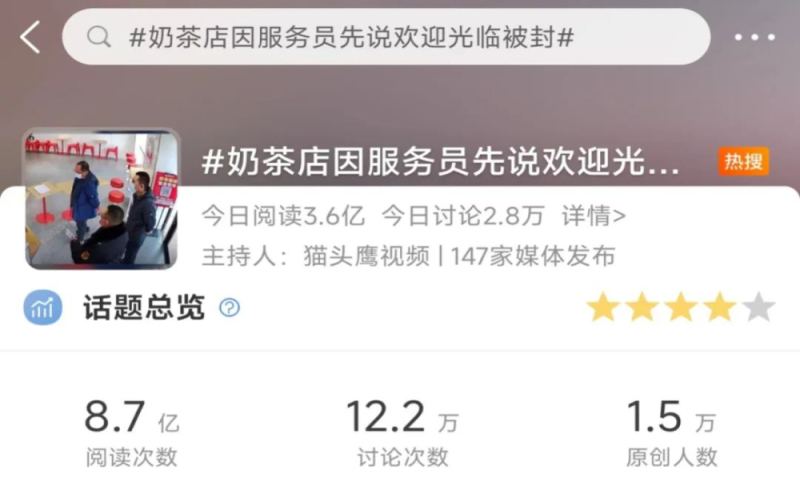
A simple "Welcome" led to the shutdown of a milk tea shop; official notice confirms abuse of power and holds those responsible accountable.
A milk tea shop was sealed and ordered to close on the spot by market supervision officials in under a minute—all because the staff said "Welcome" before asking customers to scan the QR code. The incident sparked widespread attention after it was exposed. An official statement later concluded that the law enforcement officers had abused their power and deliberately made things difficult; those involved have apologized and been disciplined. In this issue of coffee news, while we follow this incident, we also remind coffee professionals to be mindful of the boundaries of law enforcement in epidemic prevention and control, and we continue to bring coffee enthusiasts professional coffee knowledge and Front Street Coffee product recommendations. [more…]

Luo Xiang Endorses Luckin Sauce-Flavor Latte Red Cup: Law Professor's Crossover Q&A on Drunk Driving Concerns Sparks Heated Discussion
On November 6th, Luckin Coffee launched an exclusive red cup for its sauce-flavored latte and invited Luo Xiang, a well-known law professor from Bilibili, to serve as its spokesperson, quickly sparking heated discussions online. Using classic cases like "outlaw Zhang San," Luo Xiang addressed consumers' concerns about driving safety after drinking coffee containing alcohol. This marks Luckin's first collaboration with an "internet celebrity" scholar, following previous spokespeople such as Tang Wei, Xiao Zhan, and Eileen Gu. However, after the endorsement news emerged, netizen reactions were polarized—some praised the keen insight, while others expressed dissatisfaction. This article will review the sequence of events, Luo Xiang's background, and reactions from all sides, and explore the considerations and challenges behind Luckin's marketing move. [more…]

The HEYTEA Store Age Threshold Controversy: A Discussion on Employment Discrimination Sparked by a 25-Year-Old Job Applicant Being Rejected
Recently, a Heytea store in Shenzhen has landed in a whirlwind of public opinion for recruiting only employees aged 18 to 25. After a job seeker over 25 was rejected, it sparked heated discussion among netizens. Some criticized it as blatant age discrimination, while others believed that because work at milk tea shops is intense, companies have the right to choose freely. Behind the incident, it reflects the widespread preference for the "youth dividend" in the current job market, as well as the difficulties faced by middle-aged job seekers. Legal professionals pointed out that such a practice is suspected of violating the Labor Law and the Employment Promotion Law, and the Shenzhen Federation of Trade Unions also spoke out in criticism. Heytea responded that it was a communication deviation at a single store. Who is right and who is wrong in this controversy? Will young people over 25 still continue to drink Heytea? [more…]

Applying for a summer job at a coffee shop requires a deposit first? 14 students in Meizhou were charged before even starting work, and law enforcement stepped in.
Summer jobs are supposed to be a way for students to earn pocket money and gain social experience, yet 14 students in Meicheng, Meizhou, encountered an absurd situation when applying for summer work at a coffee shop: before even starting the job, they were charged deposits ranging from several hundred to over a thousand yuan by the shop owner. What's even more frustrating is that most of them never worked a single day, yet getting their deposits back proved extremely difficult. This incident not only exposes the risks of recruitment information on social platforms, but also serves as another reminder to job seekers: it is illegal for employers to charge work deposits. [more…]

Schultz's Post-Return Benefits Strategy at Starbucks: Why Unionized Stores Are Excluded
After Howard Schultz returned to Starbucks as interim CEO, he immediately suspended billions of dollars in stock buybacks and redirected the funds toward employee benefits and store operations. Some U.S. Starbucks employees saw this move as a victory for union efforts, but Schultz later made clear that the new benefits could not legally cover unionized stores and partners, because federal law requires separate negotiations for the pay and benefits of union members. Labor law experts pointed out that companies have the right to explain differences in benefits, but suggestive maneuvering could constitute an unfair labor practice. This tug-of-war between benefits and unions showcased the shift in Schultz's management style from tough to tender. [more…]