







What does cafe fair coffee mean for unionized Starbucks stores?
Howard Schultz suspended a multi-billion-dollar stock buyback plan on his first day back as Starbucks interim CEO on April 5 and redirected the money toward employee benefits and store operations. Starbucks later said the new benefits legally cannot extend to unionized stores, because federal law requires separate negotiations over compensation and benefits for union members.
The timing matters. Employees who had just formed a union saw the buyback suspension as a victory and voted to join in larger numbers within days. Labor law experts note companies may explain benefit differences, but suggestive conduct can still count as an unfair labor practice, so the cafe fair coffee question now sits with regulators.
After Howard Schultz returned to Starbucks as interim CEO, he immediately suspended billions of dollars in stock buybacks and redirected the funds toward employee benefits and store operations. This move was seen by some U.S. Starbucks employees as a victory for union efforts, but Schultz later made it clear that the new benefits legally cannot cover unionized stores and partners, because federal law requires separate negotiations for compensation and benefits involving union members. Labor law experts point out that companies have the right to explain benefit differences, but suggestive actions may constitute unfair labor practices. This tug-of-war between benefits and unions shows the shift in Schultz's management style from tough to soft.
On April 5, Starbucks interim CEO Howard Schultz announced on his first day back that he had suspended a multi-billion-dollar stock buyback plan, claiming this decision would give the company more resources to invest in employees and stores. In plain terms, Schultz plans to redirect the funds originally used for stock buybacks toward improving benefits for current employees and upgrading store operating capital.
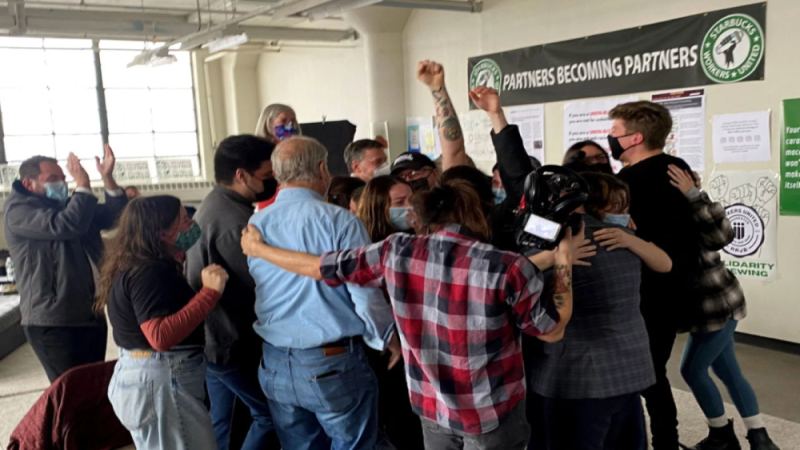
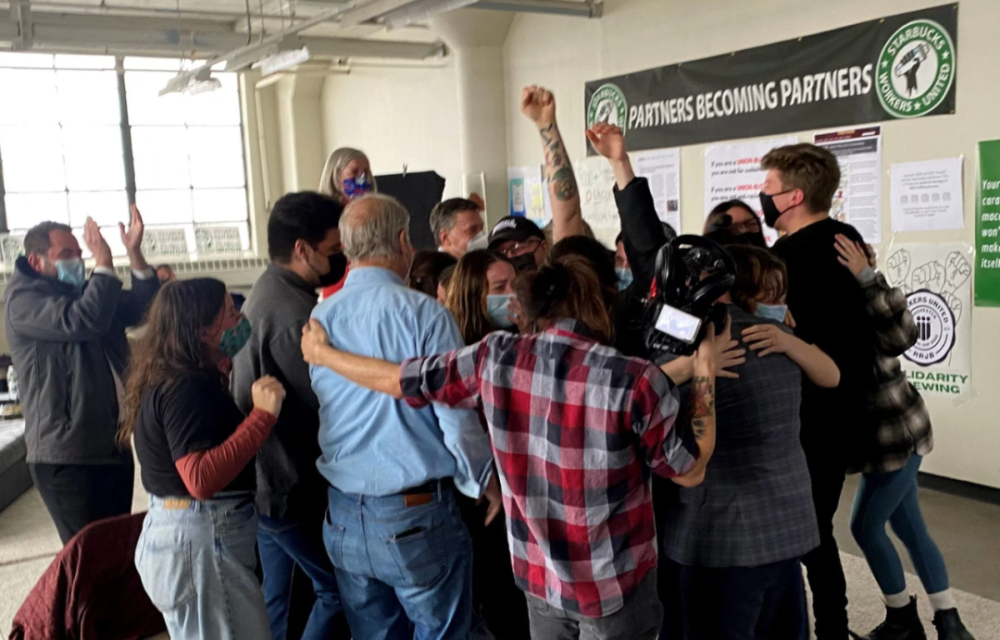
After the news spread, employees who had recently successfully formed a Starbucks union in the U.S. seemed to see a glimmer of hope. They believed it was precisely the union they had pushed to establish that indirectly "forced" Starbucks to make this decision. As a result, within just a few days after the announcement, more and more U.S. Starbucks employees voted to join the existing union.
In fact, before Schultz returned, he had spoken with the head of the first Starbucks store to form a union. At the time, Schultz admitted to a New York Times reporter that the company had failed to help stores solve operational problems, disappointing employees. These words made union members even more convinced that Schultz's 2022 Starbucks blueprint would increase their benefits and alleviate understaffing.
Indeed, Schultz does intend to improve employee benefits, but it should be noted that partners who have already joined a union may not be able to enjoy these new benefits. The reason is that, legally speaking, the new policies cannot extend to stores with unions or employees who have joined a union.
On April 13, during an online meeting with U.S. store managers, Schultz revealed that he was evaluating Starbucks' benefits system to expand employee benefit plans. This benefit expansion initiative would help reduce employee turnover while giving stores an advantage in recruiting and retaining baristas.
However, under federal law, these new benefits cannot be provided to stores that voted to form a union or partners who have already joined a union. This is because Starbucks cannot unilaterally change the compensation and benefits of union members or the operating funds of unionized stores; the company must negotiate separately with union representatives before making a decision.
Regarding Schultz's remarks, a U.S. labor law expert analyzed that Starbucks has the right to discuss the differences in benefits received by unionized versus non-unionized partners, but must not make related implications. Once it implies that there is a difference in benefits, it amounts to attempting to give union partners worse treatment than non-union partners. Such implications could become evidence of bad-faith bargaining and thus be considered an unfair labor practice. However, Schultz's remarks this time were merely stating legal requirements, and it is difficult to determine whether he carried such implications.
Although this meeting only briefly explained the legal requirements and indicated that the company would formulate two new benefit policies in accordance with the law, compared with the tough blocking tactics Starbucks used when dealing with union issues before Schultz returned, this approach is clearly much softer...
Since the hard approach doesn't work, switch to a soft one.
Image source: Internet
For coffee industry knowledge exchange and more coffee bean information, please follow Coffee Workshop (WeChat public account: cafe_style)
For more specialty coffee beans, please add private WeChat Front Street Coffee (FrontStreet Coffee), WeChat ID: kaixinguoguo0925
The above content is compiled by CoffeeHunters, a coffee news website.


