







Search Results for: Robot Cafe
San Francisco's Cafe X Coffee Robot Gordon: The Balanced Practice of Robotic Arm Brewing and Efficiency & Quality
When a barista becomes a robotic arm, a latte can be completed in just a few seconds—this is not a sci-fi movie, but the real scene at Cafe X in San Francisco. This small kiosk, founded by Hong Kong-born young man Henry Hu, centers on a modified Mitsubishi robotic arm named Gordon, attempting to find a balance between efficiency and quality. Cafe X does not pursue fancy customization, but returns to the essence of minimalist coffee, collaborating with roasters such as Verve and Peet's to allow the robot to precisely execute brewing parameters. The store also has product specialists offering tastings and explanations, similar to the role of a sommelier or an Apple Genius. Can this model change the development predicament of fast-food technology in Silicon Valley? How will the future of human-machine collaboration affect the coffee service industry? [more…]

Supermodel Robot Café Coming Soon to Dubai: Will Fully Automated Unmanned Service Replace Baristas?
What happens when barista craftsmanship meets supermodel robots? According to British media reports, the world's first supermodel robot café, Donna Cyber Café, is planned to open in Dubai in 2023. The robot waitstaff are modeled after Eastern European model Diana Gabdullina, featuring silicone skin and lifelike eyes, and can even recognize customers' emotions. The store will operate 24 hours a day, with everything from making coffee to serving ice cream done entirely by robotic arms. Meanwhile, domestically, unmanned coffee kiosks represented by COFE+ are also expanding rapidly and have already been exported to multiple countries. Will robots steal baristas' jobs, or drive the industry's upgrading? This article takes you to find out. [more…]
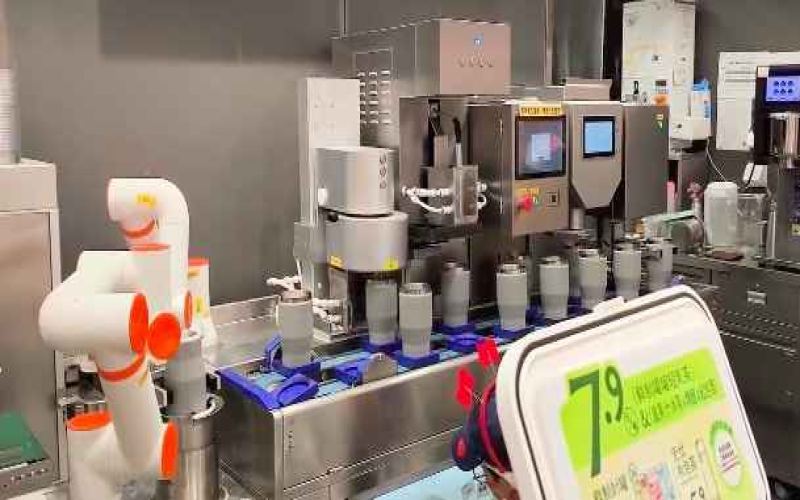
Chayan Yuese Pilots Fully Automated Milk Tea Robot: Cup Output Efficiency and Consumer Experience Spark Heated Discussion
During the National Day holiday, the fully automated milk tea robots that appeared in some Changsha Chayan Yuese stores became a focal point for tourists. Customers noticed that staff only needed to place a labeled cup in the designated position, and the robotic arm could complete most of the preparation process, with only the cream top needing to be added before handover at pickup. This experiment sparked polarized discussion online: supporters believe standardized operations help ensure consistent output and reduce the burden on employees; opponents point out that during peak customer flow, the robot's cup output speed is actually slower than manual work, resulting in longer waits, and equipment cleaning and customization needs still depend on staff handling. Whether automated tea-making can truly integrate into the freshly made tea beverage scenario has become a new topic of discussion in the industry. [more…]

North China Pharmaceutical Crosses into the Tea Beverage Sector: Herbal Formulas Plus Free Health Checkups, Franchise Model Hides a Distribution Trick
What kind of sparks fly when a well-known domestic pharmaceutical company starts selling milk tea? In mid-August this year, North China Pharmaceutical's tea beverage brand opened its first store in Shijiazhuang, marketed with "healthy water," "Five Elements secret formula," and "pure natural, zero additives," with basic drinks priced at only 7 yuan. Even more surprising, during the soft opening, customers could enjoy a comprehensive smart health checkup, with a robot testing 70 indicators across ten major systems and recommending corresponding drinks based on the results. First-day revenue was nearly 8,000 yuan, and business has remained so booming since then that takeout has been shut down. The brand has already begun preparing franchise materials and plans to officially open franchising next year, while franchise stores will also take on the distribution function for Huawei Health functional foods. So how exactly does this move work? Let's take a closer look. [more…]

Are Chain Coffee Baristas Really Reduced to Robots? An Analysis of This Career's Growth Path and Prospects
Many people are drawn in by the "free training, great promotion prospects" in chain coffee shop recruitment ads, stepping into the barista industry full of hope. Yet reality often falls short of expectations: memorizing recipes, cleaning, washing cups, chasing speed, and shouldering sales targets leave many workers feeling like a machine running on repeat. But is there really no future in chain coffee shops? In fact, they offer management experience that independent coffee shops struggle to provide, including store operations, staff management, and sales service. Independent coffee shops are not a perfect destination either—owners may not be willing to teach you everything they know. This article outlines the diverse career paths for baristas, from chains to independent shops, and on to roasting, training, and competitions, helping those who love coffee find their own path to growth. Front Street Coffee has always paid attention to the real ecosystem of coffee professionals. [more…]

Refund difficulties on Luckin's mini-program spark debate: store phone numbers not publicly listed, leaving both consumers and staff in a bind
Ordering through mini-programs is quick and convenient, and you can even get coupons, but once you place a wrong order and want a refund, you may run into obstacle after obstacle. Recently, a blogger mistakenly ordered 17 cups of coffee through the Luckin mini-program. Within one minute, they tried to cancel, only to find that the mini-program did not display the store’s phone number, while the headquarters customer service kept passing them back and forth through an intelligent robot. In the end, they had no choice but to bear the loss themselves. This incident struck a chord with many netizens, and quite a few shared similar experiences. Consumers are calling for store contact information to be made public or for the self-service refund function to be improved, while Luckin staff also said that stores cannot directly process refunds and that the procedure is cumbersome, expressing hope that the system can be optimized. When convenience and after-sales service become disconnected, how should brands balance efficiency and consumer rights? [more…]

When ChatGPT Meets Coffee Robots: The New Career Challenge for Baristas in the Wave of Pour-Over and Latte Art Automation
Artificial intelligence and automated equipment are rapidly penetrating the coffee industry. Large language models such as ChatGPT are beginning to participate in coffee consultation and recipe design, and pour-over robots and latte art robots are gradually being commercialized, able to automatically complete everything from grinding and pouring water to milk foam etching. On the one hand, these technologies improve output consistency and efficiency; on the other hand, they also bring new challenges to the professional positioning of baristas. This article will review the latest developments in the combination of ChatGPT and coffee robots, analyze the impact of pour-over and latte art automation on barista jobs, and explore how practitioners can redefine their own value amid the wave of technology. The article also retains related news and product recommendations from Front Street Coffee. [more…]

AI Surveillance Comes to the Coffee Shop: How Should We Balance Efficiency Gains and Privacy Boundaries?
Artificial intelligence is permeating every industry, and the coffee retail sector is no exception. Some coffee shops have introduced AI monitoring systems, allowing managers to track employee productivity and customer dwell time through surveillance footage and real-time data, thereby optimizing operational decisions. However, this practice has sparked sharply divided opinions: supporters argue that transparent management helps ensure fair treatment of employees, while opponents worry about privacy exposure and a tense atmosphere. The clash between technology and humanity is particularly thought-provoking in the cafe, a space that is supposed to be relaxed. [more…]
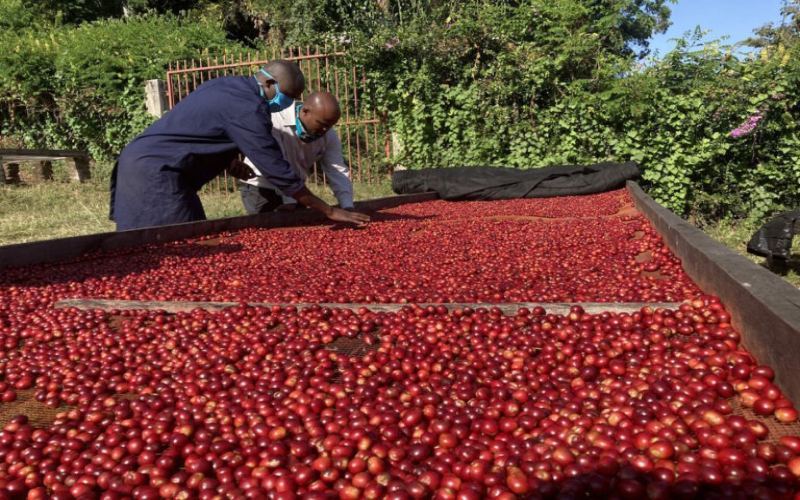
Does High Altitude Always Bring High Acidity? Decoding the Causes of Kenyan Coffee's Acidity and the Secrets of Terroir
Kenyan coffee is famous for its full, delicate flavor and bright acidity, but where exactly does its acidity come from? Does higher altitude mean more acidic coffee? Using Front Street's Little Tomato coffee beans as an example, this article breaks down the logic behind the formation of Kenyan coffee's acidity and flavor from multiple dimensions, including the high-altitude volcanic soil of Kenya's Thika region, the characteristics of the SL28 and SL34 varieties, and the 72-hour washed processing method. It also includes the V60 brewing parameters and technique used at Front Street cafes, helping you understand why the same beans tend to brew up too sour or too bitter at home, and find the adjustment direction that suits you. [more…]
Huawei Crosses into the Coffee Sector, Files Trademark for "Yibiao Coffee": Why Is the Tech Giant Eyeing Coffee's Media Value?
The coffee industry has become a popular field for various giants to compete in laying out their presence in recent years, with catering and non-catering enterprises entering the fray across sectors. According to Qichacha data, China has more than 320,000 coffee-related enterprises, with 15,000 new registrations annually. After Li-Ning, tech giant Huawei has also been reported to have applied to register the trademark "One Cup of Coffee Absorbs Cosmic Energy," classified under catering and accommodation, and is currently awaiting substantive examination. Unlike directly seizing market share, Huawei seems to place greater emphasis on coffee's connective function as a global medium, hoping to use it to attract younger groups. Ren Zhengfei once interpreted Huawei's spirit of openness with "a cup of coffee absorbs cosmic energy," and this trademark application continues that philosophy. Whether Huawei's advantages in the digital field can help it create new miracles in the coffee track is worth watching. [more…]

Starbucks Barista Fired for Complaining About a Super-Complex Order: The Controversy and Settlement Behind the Secret Menu
The Starbucks secret menu once led baristas to learn how to make over 170,000 customized drinks, but the extremes of personalized orders are sparking controversy. An American barista was fired for exposing a customer's 13-request order on social media, then apologized in person and settled the matter. The incident reflects the complex ordering trend fueled by TikTok, where customers pay extra fees but turn baristas into "drink-making robots," and during peak hours, it slows down service even more. This article will walk you through the full story of this uproar and focus on the issues of privacy and respect between baristas and customers. [more…]
AI-Generated Blend Stuns the Coffee World: Finnish Roastery Uses AI to Craft a Four-Bean Blend
At this year's World Brewers Cup, blend beans became a favorite among many competitors, but traditional blends often require repeated debugging, which is time-consuming and labor-intensive. A Finnish roastery named Kaffa took a different approach, partnering with an AI company called Elev. After inputting flavor information for all the coffee beans in the roastery into a model similar to ChatGPT, they had the AI directly design a blend formula aimed at mass-market tastes. Surprisingly, the formula the AI provided differed considerably from the usual thinking of baristas, yet it won unanimous approval in blind tastings and even thoughtfully generated a packaging label. The integration of AI into the coffee industry is nothing new, but this time, can the blending answer it delivered shake the professional status of baristas? This article takes you through this interesting experiment, along with related observations from Front Street Coffee. [more…]

Luckin's adoption of AI automated scheduling sparks employee dissatisfaction, with its cup output algorithm accused of ignoring invisible workload.
Luckin Coffee recently launched an internal AI-based store scheduling system that collects historical business data to predict the daily staffing and working hours needed at each store, attempting to allocate existing manpower more efficiently. However, this seemingly scientific automatic scheduling has drawn widespread complaints from many Luckin employees. They point out that the system uses hourly cup output as its core reference only, completely ignoring a large amount of invisible work such as cleaning, ingredient preparation, and expiration checks, leaving baristas working alone exhausted and even forced to work unpaid overtime just to finish up. Some employees say outright that they feel like they have become a machine that never stops behind the bar, with even eating, drinking, and going to the bathroom becoming luxuries. This efficiency reform driven by algorithms is pushing frontline baristas to the brink of physical and mental exhaustion. [more…]

Luckin's New Staffing Reduction Rules Spark Heated Debate: Shift Limits, Solo Store Openings and Closings Leave Employees Saying They Can't Keep Up
The February that just passed put many office workers through a chaotic whirlwind—rushing to finish work before the Spring Festival, relaxing fully during the holiday, and then facing the return-to-work wave, pulled back and forth by piled-up tasks and post-holiday burnout. However, for frontline employees at Luckin Coffee stores, March brings not a breather but an even harsher round of adjustments. Controlling effective working hours, implementing a single person to open early and close the store, freezing full-time hiring and restricting promotion channels—a series of measures to cut labor costs have led employees to mock themselves as not even "Luckin slaves," but more like tireless "Luckin robots." At the same time, after the 9.9 promotion shrank, store sales clearly declined, and March happens to be the off-season, putting both sales and profits under pressure. With revenue growth blocked, the company can only push on the cost-cutting side. Employees are full of complaints, the user experience is being tested, and whether brand influence will be weakened as a result has become a focus of outside attention. [more…]
The Acidic Charm of Kenyan Coffee: Causes of the Cherry Tomato Flavor and Analysis of the SL Series Varieties
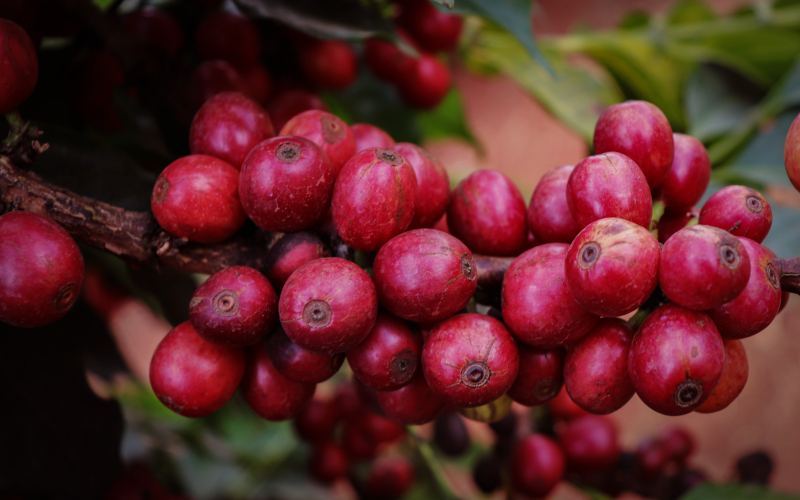
Kenyan coffee has long been renowned for its vivid fruit acidity and complex layers, making it one of the most distinctive origins in specialty coffee. This article focuses on Front Street Coffee's Little Tomato coffee beans, outlining their producing region, processing method, variety, and flavor characteristics, and analyzing the possible reasons behind the little tomato tonal quality. At the same time, from the two perspectives of high-altitude cultivation and volcanic soil, it explains the source of Kenyan coffee's bright acidity and full sweetness, and introduces the background and characteristics of the SL28 and SL34 varieties. Finally, it includes the pour-over parameters and brewing steps for Front Street Kenya Little Tomato, helping coffee lovers reproduce at home a clean, well-balanced Kenyan coffee with balanced acidity and sweetness. [more…]
Kenya Coffee Beans Pour-Over Guide: Front Street Cherry Tomato Water Temperature, Grind Parameters, and Flavor Formation Analysis
Kenyan coffee has always been a polarizing bean in the specialty coffee world—those who love it are captivated by its bright acidity and complex layers, while those who aren't used to it find it overly sharp. Front Street currently offers only one Kenyan bean, "Front Street Cherry Tomato," from the Asali washing station in the Thika region, using a 72-hour washed process, with varieties SL28 and SL34. This article will start with the specific details of this bean, trace where Kenyan coffee's high acidity comes from, analyze how altitude and volcanic soil shape its flavor, introduce the history and characteristics of the SL series varieties, and provide Front Street's standard pour-over brewing recipe, including water temperature, dose, grind size, and pouring rhythm, to help you recreate a clean-tasting cup of Kenyan coffee at home. [more…]
Kenyan Pour-Over Coffee Flavor Analysis: Characteristics of SL28 and SL34 Varieties and the Influence of Terroir
Kenyan coffee occupies a unique position in the global specialty coffee landscape, and its full, delicate flavors draw enthusiasts in droves. This article starts from the Kenya Asali AA Top Little Tomato coffee beans currently sold by Front Street Coffee, and takes a deep dive into the growing conditions, variety characteristics, and brewing key points of Kenyan coffee. The article focuses on how high altitude and volcanic soil shape the high acidity and complex sweetness of Kenyan coffee, and provides a detailed explanation of the origins, agronomic traits, and flavor performance of the two classic varieties SL28 and SL34. It also includes the standard pour-over parameters used at Front Street Coffee stores, helping readers reliably reproduce a delicious cup of Kenyan coffee at home. [more…]
Why Does Kenyan Coffee Have Fruity Acidity? A Detailed Guide to the Causes of Cherry Tomato Flavor and Pour-Over Water Temperature and Grind Parameters
Kenyan coffee is known for its bright acidity and complex flavors—some people are captivated by it, while others find it hard to accept. What exactly creates this polarizing taste experience? This article starts with Front Street's Little Tomato coffee beans to analyze the causes of Kenyan coffee's high acidity—how high-altitude cultivation and volcanic soil affect the ripening rhythm and sugar accumulation of coffee cherries—and introduces the characteristics of the two classic varieties, SL28 and SL34. It also includes Front Street Kenya Little Tomato's pour-over brewing standards, including a V60 dripper, 91°C water temperature, a 1:15 coffee-to-water ratio, 15 grams of coffee, and specific pouring techniques, to help you recreate a clean and bright cup of Kenyan coffee at home. [more…]
Is Kenyan coffee's acidity a strength or a weakness? An analysis of the fruity notes brought by washed processing
Kenyan coffee occupies a very special place in the global specialty coffee landscape—some are captivated by it, while others find it hard to accept. Its distinct and complex acidity, paired with a full body and layered depth, draws countless coffee enthusiasts to it. This article starts from Front Street Coffee's currently available Kenya Asali AA Top Little Tomato coffee beans to take a deep dive into the sources of Kenyan coffee's flavor—the high-altitude growing environment, the mineral nourishment of volcanic soil, and the characteristics of the two classic varieties SL28 and SL34. At the same time, Front Street Coffee will also share the standard brewing parameters and techniques for these beans, helping you consistently recreate that cup of distinctly layered, sweet-and-tart Kenyan flavor at home. [more…]

Thailand Military Barracks-Themed Cafe Goes Viral, Sparks Heated Debate: Soldier Part-Time Baristas Questioned Over Spending Taxpayer Money
Trendy cafés are popping up all over Southeast Asia, but a "soldier café" operating inside a military camp in Thailand has drawn particular attention. Run by the Thai Army's 4th Battalion, the café uses uniformed soldiers as models and staff, and promotional photos featuring a lotus pond and pedal boats quickly went viral on social media. The café is open daily from 8 a.m. to 7 p.m., and its customers are mainly soldiers from the nearby camp, though civilians also come to check it out. However, as its popularity has grown, so have questions: some Thai netizens worry that the shop was built with taxpayers' money, and others ask—is a soldier's primary duty to serve in the military or to be a barista? Behind the warm image of soldiers and civilians enjoying themselves together, controversy continues to simmer. [more…]