







Can AI Take Over Coffee Bean Blending?
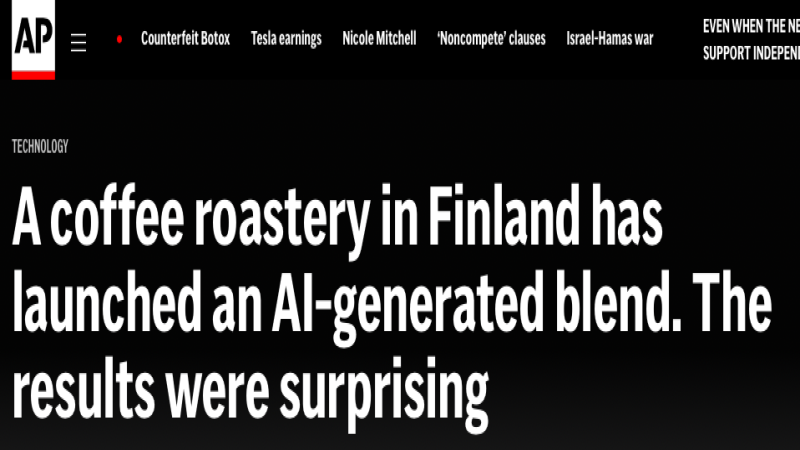
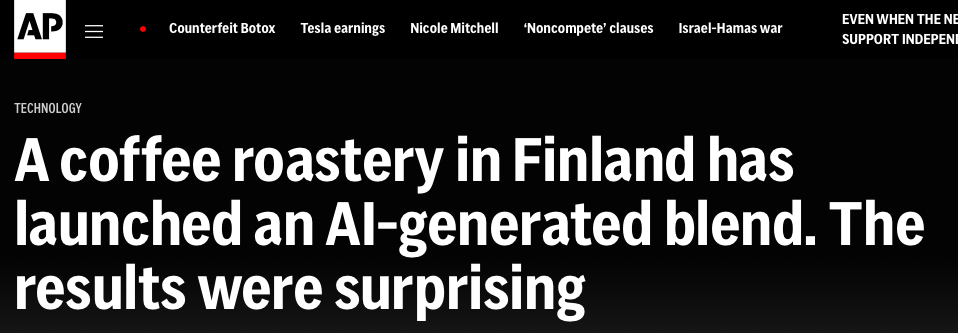
Finnish coffee roaster Kaffa partnered with AI consultancy Elev, feeding the flavor data of its whole bean inventory into a ChatGPT-style model and asking it to design a blend for mass tastes. The result used four coffees: 40% Brazil Fazenda Pinhai, 25% Guatemala La Bolsa, 25% Colombia San Lorenzo, and 10% Ethiopia Gerke. Blind tests approved it, and the AI even wrote the packaging labels.
The formula differed from the blending logic baristas usually apply, and Kaffa's founder called it odd at first. Coffee bean blending normally means repeated, costly trials, since a failed mix wastes expensive lots. This experiment suggests AI can propose workable ratios quickly, but it does not remove the need for a coffee roaster to taste, adjust, and judge the final cup.
At this year's World Coffee Brewing Championship, blended beans became a favorite among many competitors, but traditional blends often require repeated adjustments, which is time-consuming and labor-intensive. A Finnish roastery called Kaffa took a different approach, partnering with AI company Elev. After inputting the flavor information of all the coffee beans in the roastery into a model similar to ChatGPT, they had the AI directly design a blend aimed at mass-market tastes. Unexpectedly, the formula given by the AI differed considerably from the usual thinking of baristas, yet it received unanimous approval in blind tests, and the AI even thoughtfully generated packaging labels. The integration of AI into the coffee industry is nothing new, but this time, can the blending answer it submitted shake the professional status of baristas? This article takes you through this interesting experiment, along with relevant observations from Front Street Coffee.
▲
Click to follow | Daily specialty coffee culture magazine Coffee Workshop
On the stage of this year's World Brewers Cup (WBC), a "retro trend" quietly emerged — many competitors used blended beans in the optional brewing round, with all kinds of combinations that were dazzling to the eye. However, these competition blends often rely on baristas making repeated adjustments, and it is very difficult to get them right in one go.
In other words, to obtain a satisfactory blend, baristas not only have to invest a great deal of time and energy, but also bear no small cost. After all, some beans are expensive, and once a blend fails and the flavor is poor, those beans are simply wasted.
In order to obtain an outstanding blend with low loss, according to the Associated Press, a Finnish coffee roastery called Kaffa partnered with the local AI consulting company Elev, using an AI model similar to ChatGPT. They described to it the types and flavor characteristics of all the coffee beans in the roastery and asked it to design a blend that would suit mass tastes.
Unexpectedly, the blending formula given by the AI model was very different from the blending logic commonly used by baristas. The formula used four coffees in total: 40% Brazil Fazenda Pinhai, 25% Guatemala La Bolsa, 25% Colombia San Lorenzo, and 10% Ethiopia Gerke.
Kaffa's founder admitted that when he first received the formula, he found it "a bit odd," but after completing the first roasting test and blind test, Kaffa's baristas were surprised to find that the formula actually needed no further human adjustment at all. Even more thoughtfully, the clever AI also designed the packaging and label for this coffee, with the flavor description given by the AI printed on the label: "a balanced blend of sweetness and ripe fruit."
It has long been unsurprising for AI technology to enter the coffee industry. From coffee cultivation to production and processing, AI may already be assisting behind the scenes. And in recent years, the rise of AI has also upgraded the originally rigid robot baristas, enabling them to learn through online information and make coffee with stable quality for customers.
In the eyes of Kaffa's founder, this AI-conic blend launched this time is an interesting exploration. AI can bring a completely new perspective to experienced coffee professionals and offer a possibility that baristas had not previously thought of. At the same time, AI can not only help baristas create blends that meet consumer needs, but also reduce losses in the production process, improve efficiency, and ensure product quality.
It must be said that in terms of work efficiency and product stability, tireless AI robots have obvious advantages over baristas. On the premise of stable quality control, they can continuously make delicious coffee for consumers, and some can even make latte art to please customers.
And now, AI is already able to generate ideal blends that cater to the consumer market based on the origin flavors of various coffee beans and the experience of professionals. In the eyes of some people, perhaps the day when AI replaces baristas is no longer far away.
Image source: Internet
Disclaimer: Some images in this article are from the Internet, and for some content on the website, such as images, we will respect the original author's copyright and indicate the source. However, due to the large quantity, there will be individual images and texts that have not yet been credited in time. Please understand. If the original author has any dispute, they may contact the website for handling. Once verified, we will correct it immediately. Compiled and edited by "Coffee Workshop." Please indicate the source when reprinting. If there is infringement, please inform us for deletion. Thank you~!
The above content is compiled by CoffeeHunters, a coffee news website.


