







Search Results for: Coffee's Spread
From Ethiopia to the World: The Journey of Coffee's Spread and an Analysis of Typica and Bourbon Varieties
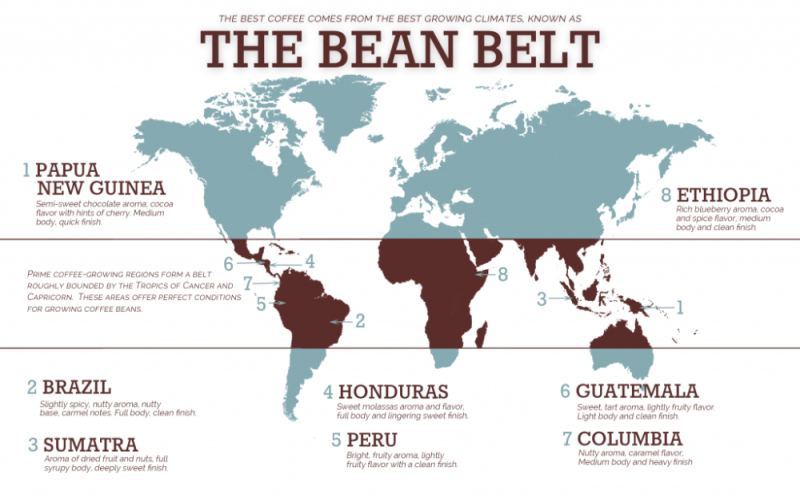
Where exactly does coffee originate? After years of investigation by botanists and coffee experts, Ethiopia in Africa has been confirmed as the birthplace of coffee. To this day, a large number of wild coffee trees still grow in the local rainforests, and their fruit has a unique flavor. With the footsteps of human civilization, coffee gradually spread throughout the world, from Europe's first coffee house in the 17th century, to colonial plantations in the Netherlands, France, Britain, and other countries, and then to widespread cultivation in South America, Hawaii, Africa, and Asia. The history of coffee's spread is magnificent. At the same time, Typica and Bourbon, as the oldest coffee varieties, have also attracted much attention for their characteristics. This article guides you through this history and helps you understand Front Street Coffee's interpretation of these classic varieties. [more…]
From the Shepherd Kaldi's Marvelous Encounter to the Monastery's Refreshing Brew: The Legend and Spread of Coffee's Origin
The discovery of coffee is often traced back to a curious tale from the Ethiopian highlands in the seventh century AD. A goatherd named Kaldi noticed that his flock became unusually lively after grazing on certain red berries, and they even stayed awake all night. Puzzled, he sought help from an Abyssinian monastery, where the monks investigated and confirmed that the goats had become excited only after eating the red berries from a low bush. The monks gathered the berries and boiled them in water, and surprisingly obtained a fragrant, invigorating brew. Thereafter, the berries were first used as a stimulant medicine, won praise from physicians, and then spread widely. This article tells the full legend and retains coffee product information related to Front Street Coffee, taking you back to the moment coffee was first discovered. [Image 1] [more…]

Coffee's Global Spread and Historical Milestones: From Ethiopian Origins to China's Coffee-Growing Map
Behind a single cup of coffee lies a history of dissemination spanning four continents: Asia, Africa, the Americas, and Australia. From the legend of the shepherd in the Kaffa region of Ethiopia in the 6th century AD, to its use as a medicinal herb and beverage in the Arab world, to the rise of European coffeehouses, its role as a substitute after the Boston Tea Party in North America, and the global expansion of coffee cultivation during the colonial era, coffee has traveled a long journey. Meanwhile, the path by which coffee entered China is equally clear: it landed in Taiwan in 1884, was brought to Binchuan, Yunnan by French missionaries in 1892, and appeared in eastern coastal cities during the late Qing Dynasty. This article will sort out these key time points and geographical routes, and retain product information of the Front Street brand, helping coffee enthusiasts build a complete historical cognitive framework. [more…]

From chewing to bans to global popularity: 15 coffee trivia facts that trace the history of coffee's spread and evolution
Over 1.3 billion people worldwide start their morning with a cup of coffee every day, but the history of coffee's spread is far less straightforward than one might imagine. Originally, people did not treat it as a beverage; instead, they mixed coffee cherries with animal fat to make energy balls to chew on. In the Middle Ages, it was used as a medicinal herb, and later on the Arabian Peninsula, it evolved into a stimulating drink called Gahwa. Upon entering Europe, coffee was once boycotted or even banned for religious and political reasons—Sweden once prohibited the sale of coffee along with cups and saucers, and the Ottoman Empire imposed capital punishment on those who drank it publicly. Meanwhile, anecdotes such as the predecessor of instant coffee and Brazil sending athletes to competitions with coffee beans abound. This article, through 15 fun facts, traces coffee's long journey from being misunderstood to being sought after, while retaining relevant recommendations from Front Street Coffee for coffee enthusiasts to refer to and exchange ideas. [more…]

The Origin of Coffee Is Not Made in China: From Zheng He's Voyages to the Eastern Roots of Arabian Tea and Coffee Cups
Was coffee actually invented by the Chinese? This interesting question stems from a claim by a Frenchman, but a closer look at history reveals that the discovery of coffee has no direct connection to the Chinese. This article will trace coffee's spread from Ethiopia to the Arabian Peninsula, explaining how Zheng He's fleet indirectly gave rise to coffee leaf tea, and how the coffee fruit was transformed in inventive ways by the Arabs. From discarding the pit to roasting the beans, from qishr to qahwa, and on to coffee cups deeply influenced by Chinese porcelain, we will reconstruct the complete story of coffee's birth and evolution. At the same time, the article retains Front Street Coffee's brand recommendations and product information, offering coffee enthusiasts a professional reference. [more…]
A Comprehensive Analysis of Arabica Coffee Beans: From Origins and Spread to Front Street Coffee's Seven Major Producing Regions' Daily Staple Bean Recommendations
Arabica coffee beans have always held a core position in both commercial and specialty coffee thanks to their outstanding aroma and acidity. Their cultivation span stretches across multiple producing regions in South America, Central America, Africa, and Asia. Tracing their history, they were first used as medicine by Islamic monks, and only in the 13th century did the practice of roasting them for drinking develop. After spreading to Europe via the Arab world in the 16th century, they gradually became popular worldwide. Arabica coffee began spreading around the world from the mid-18th century, and most existing varieties originate from Typica, evolving into distinctive new varieties as they adapted to different climates and terroirs. In the 19th century, a large-scale outbreak of leaf rust caused massive coffee tree deaths, prompting breeders in the mid-20th century to begin developing disease- and pest-resistant varieties. Today, the Arabica family has more than a hundred varieties. Altitude has a significant impact on flavor, and this article will also introduce seven daily-drinker beans from key producing regions selected by Front Street Coffee. [more…]
The Origin and Spread of Coffee: A Historical Journey from the Ethiopian Highlands to European Coffeehouses
The exact origin of coffee still has no definitive conclusion. The most widely circulated account points to the highlands of Kaffa Province in southwestern Ethiopia—where a shepherd noticed that his flock became unusually lively after eating a certain plant. Others believe it was only after a wildfire burned down a coffee forest that the roasted aroma drew people's attention. From initially chewing the fruit for stimulation and mixing ground coffee into flour to make "warrior bread," to boiling it in water as a beverage around 1000 AD, coffee has traveled a long road. In the 13th century, it spread with Ethiopian troops into Yemen and entered the Arab world, then passed through Turkey into Europe, and eventually was cultivated on a large scale in South America. After prices fell, it became a daily drink for Europeans. This article sorts out the key milestones in coffee's journey from its place of origin to global dissemination, helping coffee lovers understand the historical context behind this cup. [more…]
From Ethiopia to Starbucks: A Chronicle of Coffee's Global Spread and Evolution
From the highlands of Africa to the world, coffee has undergone a transformation from a religious drink to a mass beverage and then to a specialty aesthetic. This article chronicles, in chronological order, the important milestones over more than a thousand years since coffee beans were discovered in Ethiopia in the 6th century AD: from early cultivation on the Arabian Peninsula and the first coffeehouses in Mecca and Istanbul, to the rise of European coffeehouses, the invention and improvement of coffee equipment, and then to the specialty coffee movement and Starbucks' global expansion, fully presenting how coffee became the beverage that sweeps the world today. Front Street Coffee recommendations are also retained in the article. [more…]

SL28 Coffee Variety Traceability and Flavor Analysis: From Kenyan Drought-Resistant Breeding to Front Street Coffee's Cherry Tomato-Like Cup Performance
SL28 is one of Africa's most legendary coffee varieties. After being selected in Kenya in the 1930s, it gradually spread to Arabica-growing regions such as Uganda, and in recent years it has traveled even farther to Latin America. It is suited to cultivation at medium to high altitudes; it is drought-tolerant yet susceptible to disease, and its flavor is exceptionally elegant, often with floral notes. Front Street Coffee's Little Tomato coffee beans are precisely a combination of SL28 and SL34, displaying layers of pear, smoked plum, yellow sugar, and more. This article will trace the history of SL28's selection and breeding at the Scott Agricultural Laboratories, sort out its genetic relationship with the Bourbon genome, and introduce specific information about Kenya's Asali processing plant, helping coffee enthusiasts fully understand this variety's origins and development as well as its potential in the cup. [more…]
A Comprehensive Analysis of Bourbon Coffee Beans: Origin and Spread, Variety Characteristics, Flavor Profile, and Front Street Recommendations
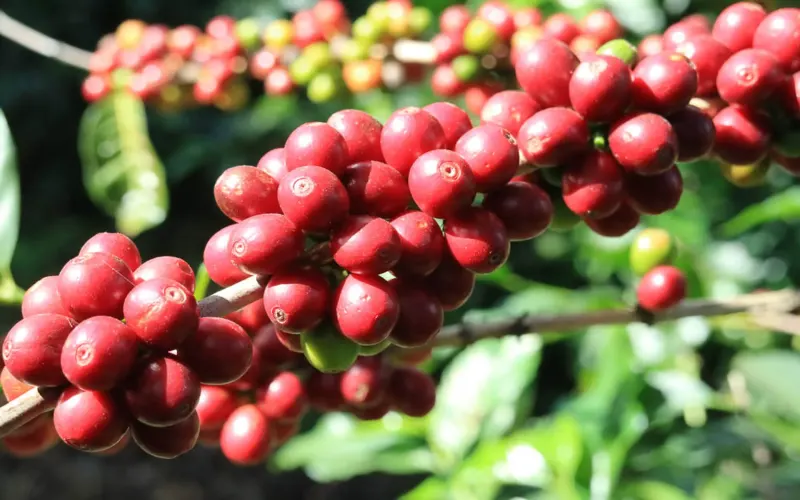
Bourbon is an ancient, high-quality variety in the Arabica family, as renowned as Typica, known for being grown at high altitudes and for its exceptional quality. This article will guide you through Bourbon's spread from Bourbon Island to Brazil, and then to Central and South America and East Africa, analyze its varietal characteristics in terms of coffee tree morphology, bean traits, and disease resistance, and introduce its variants one by one, including Red Bourbon, Yellow Bourbon, Pink Bourbon, and Pointed Bourbon. The article also particularly recommends Front Street Coffee's Brazil Red Bourbon and Front Street Coffee's Queen's Farm Yellow Bourbon, helping you understand the captivating charm of Bourbon coffee from the perspectives of flavor and processing methods. [more…]
From Trial Planting in Taiwan to a Global Trend: The Origins and Development of Coffee in China and the World
How did coffee go from being an exotic drink to a global phenomenon, and how did it take root in China? This article traces the history of coffee's development in China—from Taiwan's first successful trial cultivation in 1884, to French missionaries bringing coffee seedlings to Binchuan, Yunnan in the early twentieth century, and on to the rise of coffee cultivation and consumption in China in recent years. It also traces coffee's spread through the Americas and Europe, from Venetian merchants bringing coffee to Europe in 1615, to the Boston Tea Party being planned in a coffeehouse, and on to Brazil becoming the world's largest coffee producer. Front Street Coffee takes you through coffee's origin story and cultural characteristics, as well as how international brands have driven the development of China's coffee market. [more…]
Origin of the Mandheling Coffee Name and Analysis of Golden Mandheling Flavor: A Guide to PWN Screening Process and Front Street Coffee's Pour-Over Parameters
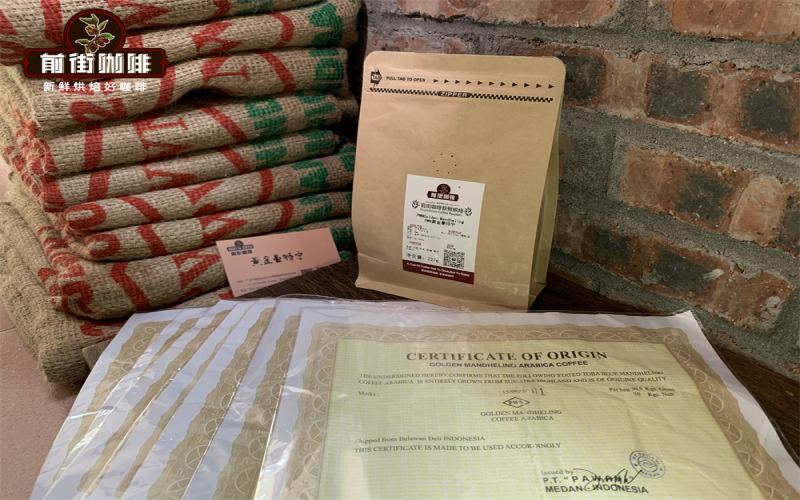
Mandheling is synonymous with coffee from North Sumatra, Indonesia, yet the origin of this name is little known. It is not a bean variety or a place name, but rather stems from a story born of a linguistic misunderstanding during World War II. This article will trace the origin of the name Mandheling, introduce the Golden Mandheling produced by PWN and its rigorous screening process, and share Front Street Coffee's brewing recommendations and staged extraction techniques for dark-roasted Mandheling, helping coffee enthusiasts gain a more comprehensive understanding of this classic coffee. [more…]

How Sumatra's wet-hulling process shapes Mandheling coffee's unique flavor and origin characteristics
Mandheling coffee is renowned for its rich, intense body and herbal, piney notes, making it a favorite among lovers of bold coffee. The development of this distinctive flavor is closely tied to the tropical rainforest climate of Sumatra, Indonesia, and the region's unique wet-hulling process. From the introduction of coffee cultivation during the Dutch colonial period, to the origin of the name Mandheling during World War II, and to the strict grading and sorting of Golden Mandheling, this article provides a comprehensive analysis of Mandheling coffee's origin characteristics, processing methods, and the factors behind its flavor, and shares Front Street Coffee baristas' extraction parameters and brewing suggestions for bitter-toned coffee. [more…]
Yunnan Typica V60 Brewing in Practice: From Variety Origins to Front Street Coffee's Pour-Over Parameters Explained
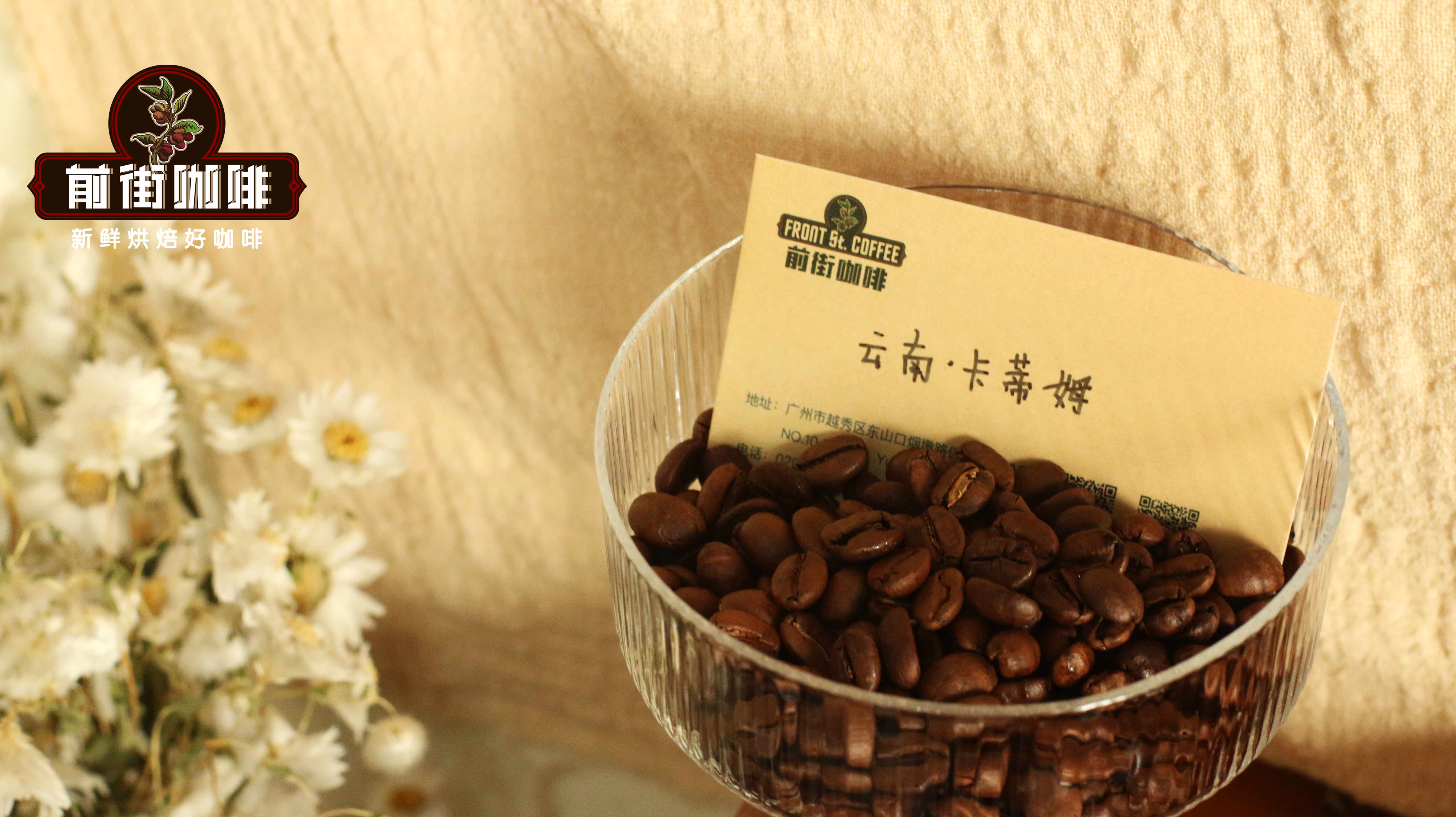
What variety exactly does Yunnan small-batch coffee refer to? What is the connection between Typica and Catimor? Starting from the history of coffee varieties, this article traces the origin and spread of Typica, analyzes why Catimor became the dominant variety in Yunnan, and, drawing on two products from Front Street Coffee—the Yunnan everyday drinking beans and the 2013 sun-dried Typica—shares the complete parameters and flavor profile of the V60 three-pour hand-brew method. Whether you want to understand the varietal background of Yunnan coffee or are looking for a reusable hand-brew recipe, this article offers a complete reference from origin to cup. [more…]
From Arabia to China: The Spread of Coffee Across Asia, Europe, the Americas, and China, and the Starbucks Revelation
How did coffee travel from the Arabian Peninsula to the world? Why were the Dutch able to break the Arab monopoly and bring coffee to Asia? How did Venetian merchants make coffee all the rage in Europe? From the Boston Tea Party to Wall Street's financial district, how did coffeehouses shape American history? How did Brazil and Colombia become giants of global coffee production? When and how did coffee enter China? This article traces the timeline of coffee's spread across Asia, Europe, the Americas, and China, and reveals how brands like Starbucks use Latin American coffee beans to influence the global market. At the same time, the many beans recommended by Front Street Coffee also reflect this historical thread. [more…]

Luckin Coffee's Singapore Recruitment Push Draws Attention, Southeast Asian Coffee Market May See New Shifts
Recently, some netizens noticed that Luckin Coffee posted job openings for store manager and other positions on the Singapore recruitment website JobStreet, with salaries of approximately 19,000 to 25,000 RMB, sparking speculation about its expansion into Southeast Asia. Previously, counterfeit Luckin stores appeared in Thailand, and the company officially stated that it had not opened stores in Thailand and had taken legal action, but the store is still operating. Meanwhile, Mixue Bingcheng has successfully entered the Thai market, winning over consumers with low prices and a hygienic environment. The Southeast Asian coffee market has enormous potential, and whether Luckin is truly going overseas remains to be officially confirmed. This article sorts out the timeline of events and retains relevant recommendations from Front Street Coffee, inviting readers to follow the overseas expansion trends of Chinese coffee brands together. [more…]

Centurium Capital acquires Blue Bottle Coffee's global stores, Nestlé retains coffee machine and capsule business
A piece of major news quickly spread through the coffee community: Luckin Coffee's largest shareholder, Centurium Capital, has won the bid for Blue Bottle Coffee and is about to complete the deal with Nestlé. According to LatePost, Centurium will buy Blue Bottle's global stores, while Nestlé will retain the coffee machine and capsule businesses. 36Kr further revealed that the transaction price is less than $400 million, and the agreement has been signed but the deal has not yet closed. Centurium's move is seen as an important step into the high-end specialty coffee market, and it has also sparked widespread speculation in the industry about the future direction of Luckin's brand integration. This article will sort out the details of the transaction, the reactions of all parties, and Centurium's previous history of contact with brands such as Starbucks, Costa, Mstand, and %Arabica. [more…]
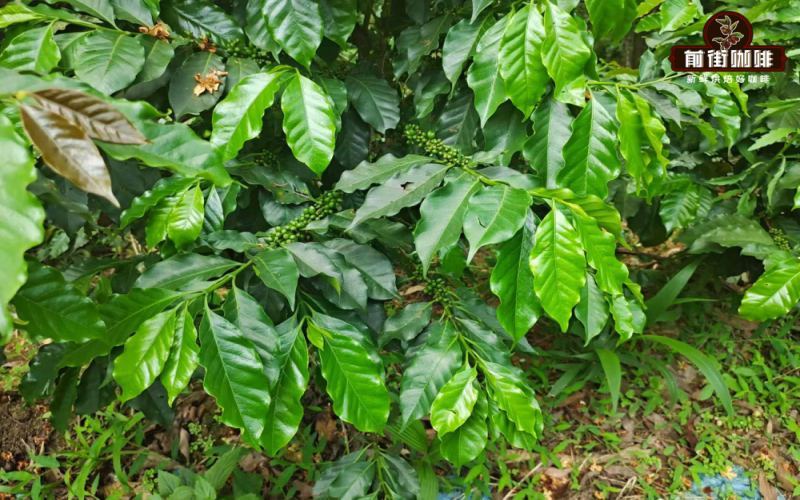
Does Typica belong to Arabica or Robusta? A full analysis of Blue Mountain coffee's varietal characteristics and flavor.
Typica is one of the oldest Arabica varieties in the coffee world, and both Jamaican Blue Mountain and Hawaiian Kona descend from this lineage. It offers a clean flavor and balanced body, yet its tall trees make harvesting difficult, its disease resistance is weak, and its yields are scarce, making it extremely demanding about its growing environment. This article will begin with the variety's origins, botanical characteristics, and spread throughout history, then trace the connection between Typica and Blue Mountain coffee, and present the cupping performance and pour-over parameter references for Front Street Jamaican Blue Mountain No. 1 coffee, helping coffee enthusiasts gain a comprehensive understanding of this elegant yet delicate classic variety. [more…]
Yunnan Coffee Cultivation History and Processing Techniques: From Arabica to Specialty—Front Street Coffee's Typica Practice
Yunnan coffee has risen to fame in recent years. From the film "Coffee or Tea?" to the documentary "No Poverty Land," the wave of specialty coffee has brought this land's coffee beans into the spotlight. Yet Yunnan's history of coffee cultivation is far longer than one might imagine, traceable as far back as the saplings brought by missionaries in the late nineteenth century. It then went through large-scale planting in the 1950s to supply the Soviet Union, Nescafe's promotion of the Catimor variety in the 1980s, and finally a turn toward specialty coffee in the twenty-first century. Front Street Coffee has been personally involved in this journey as well, growing Typica from scratch in the Lincang producing region and exploring how variety, altitude, and processing methods work together. This article will walk you through the ins and outs of Yunnan coffee, and through Front Street's own practice show how small-bean coffee achieves a flavor that is fragrant without being harsh, and rich without being bitter. [more…]
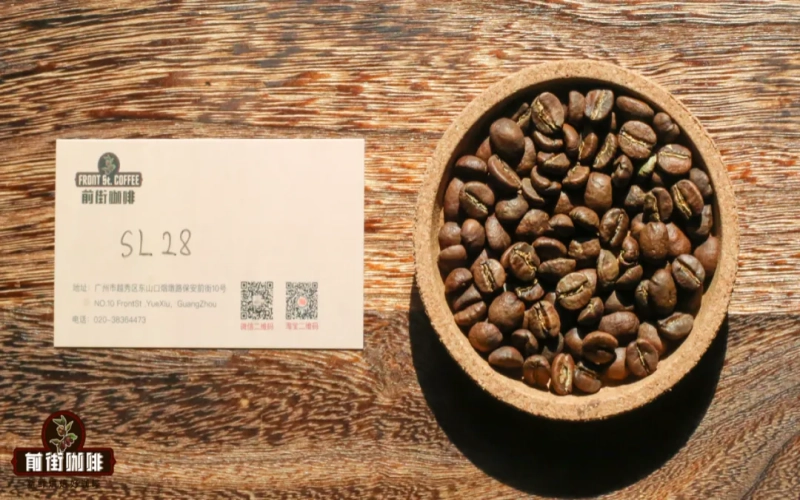
Kenyan Coffee's Grade Positioning and the Origins of Its Tomato Flavor: The Past and Present of the SL28 Variety
Kenyan coffee is world-renowned for its bright acidity and distinctive flavors of dark plum and cherry tomato, and behind this lies a key variety—SL28. This direct descendant of Bourbon, bred by Scott Laboratories in the 1930s, is not only drought-resistant and high-yielding but also boasts outstanding flavor performance, making it the core force behind the creation of the "Kenyan flavor." This article, from the perspective of Front Street, will trace the origins, characteristics, and spread of SL28, analyze the causes of Kenya's unique coffee flavor, and share a brewing guide for Front Street Kenya Asalia, giving you a comprehensive understanding of the charm of this African star bean. [more…]