







Arabica coffee beans have always held a central place in both commercial and specialty coffee thanks to their outstanding aroma and acidity. Their cultivation spans multiple regions across South America, Central America, Africa, and Asia. Tracing their history, they were initially used as medicine by Islamic monks, and it was not until the 13th century that the practice of roasting and drinking them developed. After entering Europe via the Arab region in the 16th century, they gradually became popular worldwide. Arabica coffee began spreading around the world from the mid-18th century, and most existing varieties are descended from Typica, evolving into distinctive new varieties as they adapted to different climates and terroirs. In the 19th century, a large-scale outbreak of leaf rust caused massive coffee tree deaths, prompting breeders to begin developing disease- and pest-resistant varieties in the mid-20th century. Today, the Arabica family includes more than a hundred varieties. Altitude has a significant impact on flavor, and this article will also introduce seven signature daily-drinker beans from key regions selected by Front Street Coffee.
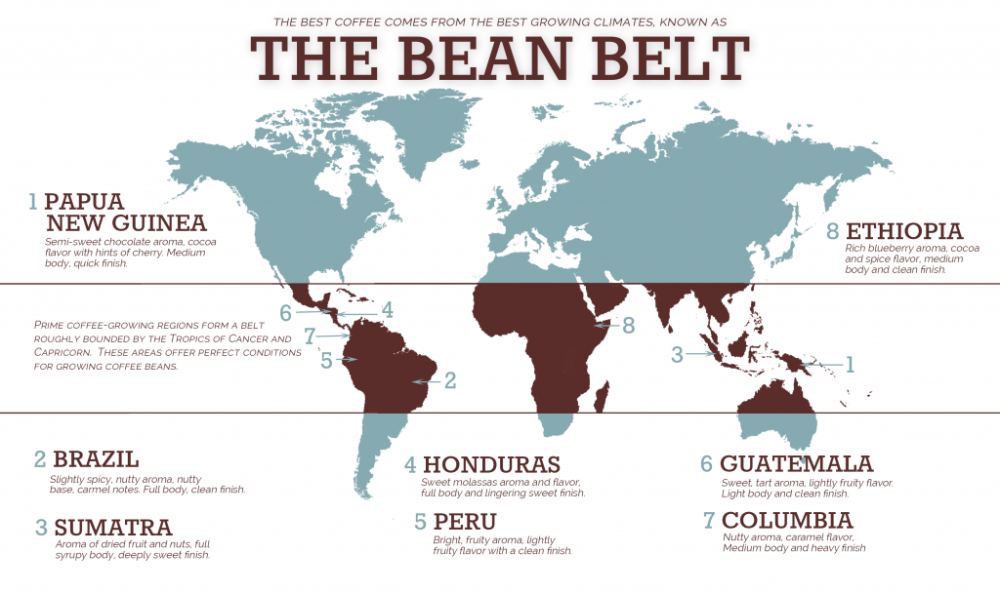
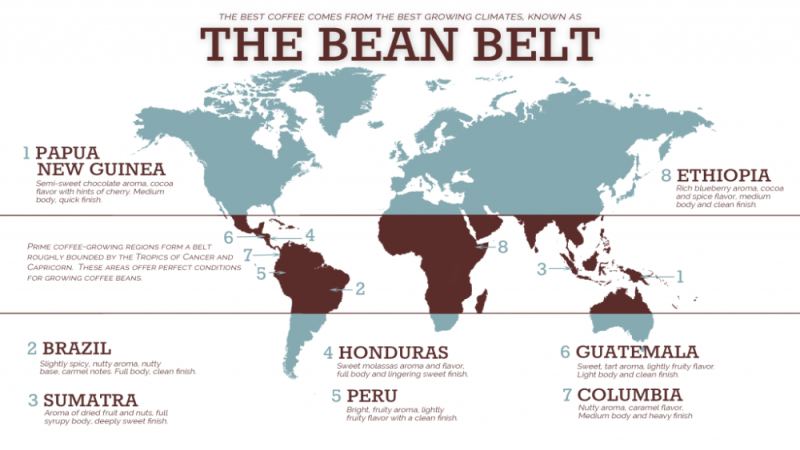
Arabica coffee beans are deeply favored by consumers in both the commercial coffee and specialty coffee markets thanks to their outstanding aroma and acidity. Their main growing regions are distributed across South America (except parts of Argentina and Brazil), Central America, Africa (mainly East African countries such as Kenya and Ethiopia), and Asia (including parts of Yunnan, Yemen, India, and Papua New Guinea).
Arabica beans were initially used as medicine. Islamic monks regarded them as a secret remedy for restoring body and mind, and also used them to refresh the senses. By the 13th century, people had developed the habit of roasting and drinking them; in the 16th century they were introduced to Europe via the Arab region, and only after that did they gradually become a beverage loved around the world.
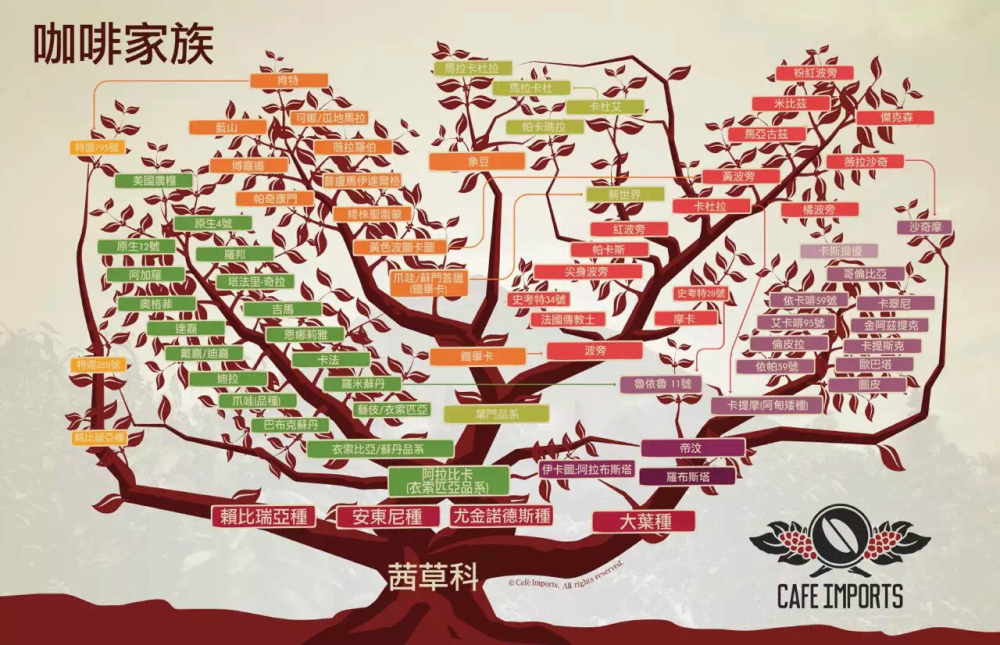
Arabica coffee began spreading across the globe in the mid-18th century. From a historical perspective, most existing Arabica varieties are descendants derived from Typica. Whenever they were introduced to a new region, the plants themselves would adjust to adapt to the local climate and terroir, gradually differentiating into other coffee varieties with different characteristics and flavors.
Many coffee varieties have relatively weak resistance to disease and pests. A large-scale outbreak of leaf rust occurred in the 19th century, causing massive die-offs of coffee trees in many countries and regions. For this reason, starting in the mid-20th century, coffee breeders began working to cultivate more varieties resistant to coffee leaf rust and pests. Today, there are as many as more than one hundred coffee varieties in the Arabica family.

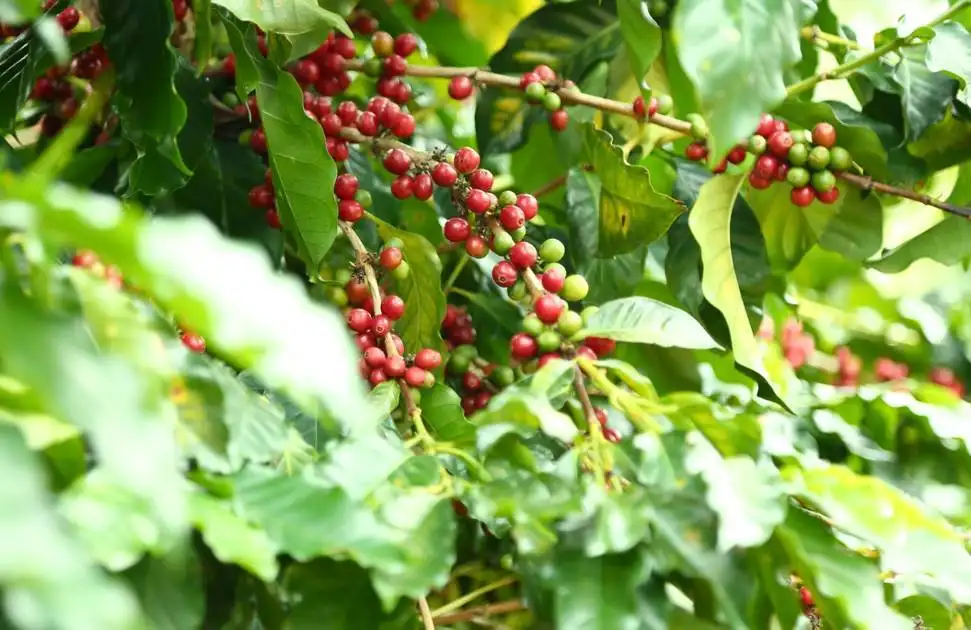
The most notable characteristic of the coffee tree is this: the higher the growing altitude, the more refined the flavor of the coffee beans. Generally, Arabica coffee beans grown above 1,200 meters have excellent acidity and rich flavor complexity, while Arabica beans grown below 1,200 meters are relatively flat and dull.
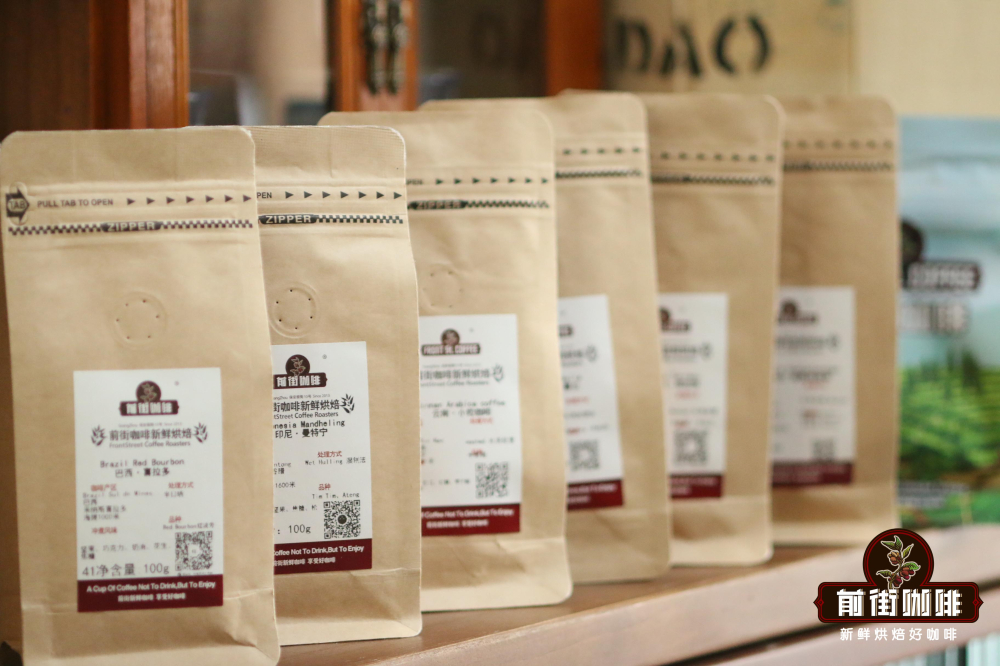
If you want to drink better-quality Arabica coffee beans, it is recommended to choose products grown above 1,200 meters. For example, all single-origin coffee beans currently sold by Front Street Coffee (FrontStreet Coffee) use specialty Arabica beans grown above 1,200 meters. At the same time, so that enthusiasts can taste the unique flavors of various popular coffee-producing regions at extremely high value, Front Street has launched the "Front Street Daily Drinker Selection Regional Beans" series.
[Front Street Washed Yirgacheffe Daily Drinker Beans]
Country: Ethiopia Region: Yirgacheffe Altitude: 1,800-2,000 meters Variety: Local heirloom varieties Processing Method: Washed Flavor: Jasmine, berries, lemon, citrus
[Front Street Brazil Cerrado Semi-Washed Daily Drinker Beans]
Country: Brazil Region: Cerrado Altitude: 1,000 meters Variety: Red Bourbon Processing Method: Semi-washed Flavor: Nuts, chocolate, cream, peanut, caramel
[Front Street Colombia Huila Washed Coffee Beans]
Country: Colombia Region: Huila Altitude: 1,500-1,800 meters Variety: Caturra Processing Method: Washed Flavor: Nuts, dark chocolate, caramel, mild fruity acidity
[Front Street Indonesia Mandheling Coffee Beans]
Country: Indonesia Region: Sumatra Lintong Altitude: 1,100-1,600 meters Variety: Typica, Caturra Processing Method: Wet-hulled Flavor: Toasted bread, nuts, caramel, pine, herbs
[Front Street Costa Rica Tarrazu Washed Coffee Beans]
Country: Costa Rica Region: Tarrazu Altitude: 1,500 meters Variety: Caturra, Catuai Processing Method: Washed Flavor: Sweet orange, honey, toffee, nuts
[Front Street Guatemala Huehuetenango Coffee Beans]
Country: Guatemala Region: Huehuetenango Altitude: 1,500-2,000 meters Variety: Bourbon, Caturra, Catuai Processing Method: Washed Flavor: Nuts, lemon peel, berries, citrus
[Front Street Yunnan Baoshan Small-Bean Coffee Beans]
Country: China Region: Yunnan Baoshan Altitude: 1,200 meters Variety: Catimor Processing Method: Washed Flavor: Melon and fruit notes, sweet melon, brown sugar, plum acidity, black tea sensation
The above content is compiled by CoffeeHunters, a coffee news website.


