







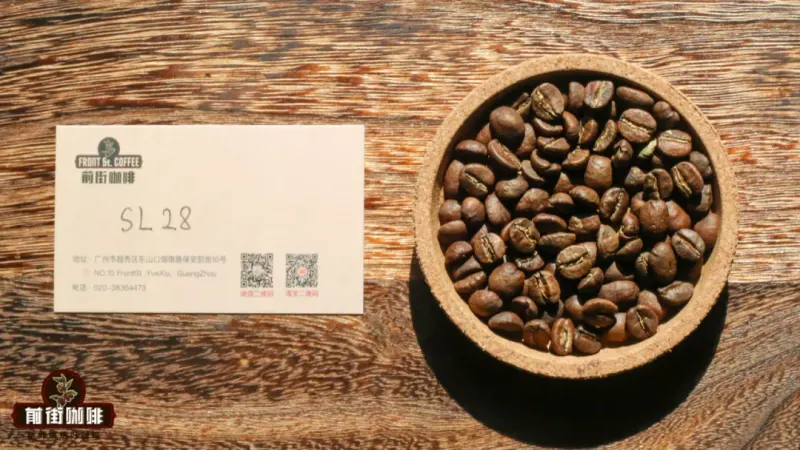
How does SL28 shape Kenya coffee beans taste?
Kenya coffee is known for bright acidity and notes of smoked plum and cherry tomato, and the SL28 variety is central to that profile. Bred by Scott Laboratories in the 1930s, SL28 is a direct descendant of Bourbon, selected for drought resistance, high yield and strong flavor. The name comes from the lab's initials and the variety's experimental number, and it remains a foundation of Kenyan coffee today.
Between 1935 and 1939, Scott Laboratories collected 42 varieties and tested yield, quality, drought resistance and disease resistance. A drought-tolerant plant found in 1931 in Monduli, in what is now Tanzania, was brought back to Kenya and entered breeding in 1935 as SL28. Alongside SL34, it forms the backbone of the Kenyan flavor profile, which is why Kenya coffee beans taste so distinctive in the cup.
Kenyan coffee is renowned worldwide for its bright acidity and distinctive flavors of smoked plum and cherry tomato, and behind this lies a key variety—SL28. This direct descendant of Bourbon, bred by Scott Laboratories in the 1930s, is not only drought-resistant and high-yielding but also boasts excellent flavor performance, making it a core force in creating the "Kenyan flavor." This article, from the perspective of Front Street, will trace the origins, characteristics, and spread of SL28, analyze the causes of Kenya's unique coffee flavor, and share a brewing session of Front Street Kenya Asalia, giving you a comprehensive understanding of the charm of this African star bean.
Today, Front Street is going to talk about a star variety with equally outstanding flavor performance—SL28, which originated in Kenya. Kenya coffee's signature smoked plum note and bright acidity owe much to its contribution.
SL28 SL28 is one of Kenya's most representative varieties, a direct descendant of the Bourbon family, selected and bred in Kenya in the early 20th century. The institution leading this work was Scott Laboratories, with "SL" being the abbreviation for Scott Laboratories, and "28" representing the variety's experimental number at the time.
In the 1930s, the Kenyan government assigned the task of coffee breeding research to Scott Laboratories, aiming to find varieties that could adapt to the local terroir, be suitable for large-scale cultivation, and possess commercial potential. Between 1935 and 1939, the laboratory collected 42 varieties from different origins and conducted systematic research on yield, quality, drought resistance, and disease resistance, with several varieties ultimately performing outstandingly. Among them, SL28 and SL34 are the most famous, and they are the two cornerstones of today's "Kenyan flavor."
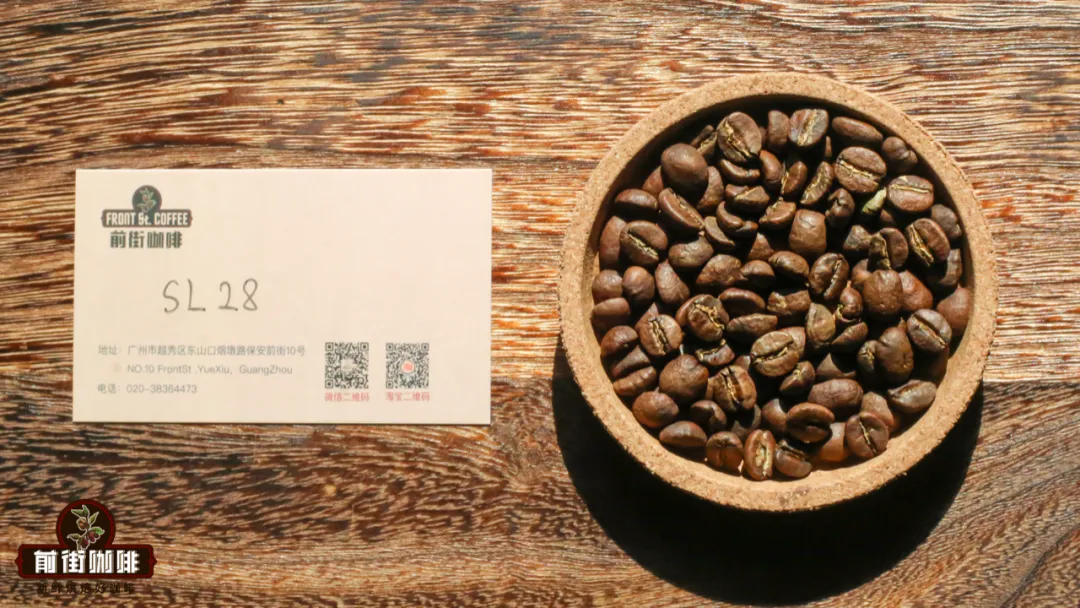
According to information reviewed by Front Street, in 1931, a senior official from Scott Laboratories discovered a coffee variety in Monduli, in northeastern Tanganyika (now Tanzania), that appeared to tolerate drought, disease, and pests, and immediately brought it back to Kenya for research, where its drought resistance was later confirmed. In 1935, this variety officially entered the breeding stage, and it was SL28.
In addition to drought resistance, SL28 also combines high yield, excellent flavor, and bright acidity. Because of this, after Kenyan authorities released it, it quickly became a highly sought-after rising star. Uganda was the first to introduce it, and later even various Central American producing countries joined the cultivation ranks, demonstrating its popularity. However, SL28 also has shortcomings; like SL34, it lacks disease resistance and is susceptible to various coffee diseases.
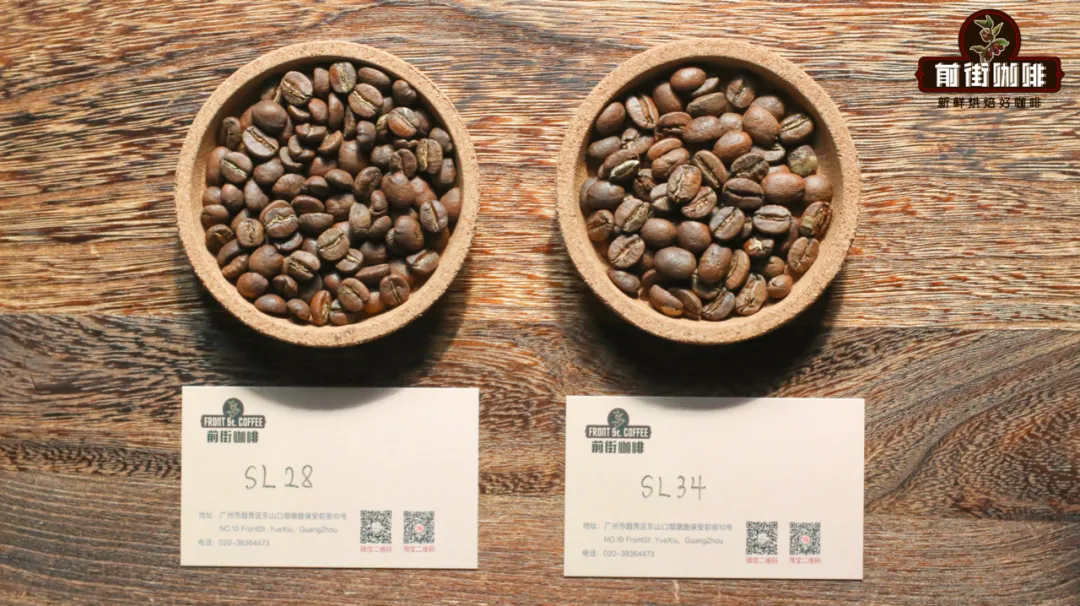
Research also shows that SL28 belongs to the Bourbon genetic group, meaning it evolved from Bourbon, so its beans are as round and short as Bourbon, making it highly recognizable. Today, most Kenyan coffee is produced as a mix of SL28 and SL34. Since the two have noticeably different bean appearances (SL34 is a Typica variant, slender and oval-shaped), we can easily distinguish them in a Kenyan coffee.
So far, Front Street has tasted SL28 from multiple producing countries, such as SL28 from El Salvador and Costa Rica, which both carry a distinct blackberry acidity and bright acidity. But compared with SL28 grown locally in Kenya, their body is not thick enough. This brings us to Kenya's unique growing environment and processing methods, which, like the variety itself, are indispensable elements in shaping Kenyan flavor.
Speaking of which, Front Street of course has to brew a pot to taste! This time, the choice is Front Street Kenya Asalia from the Front Street bean list. It comes from the Asalia processing plant in the Thika region, is a single-origin bean produced from a mix of SL28 and SL34, and uses the classic Kenyan washed process.
Front Street Coffee: Kenya Asalia
Region: Thika
Processing Plant: Asalia Processing Plant
Altitude: 1550–1750 meters
Variety: SL28, SL34
Processing Method: Washed
Flavor: Smoked plum, cherry tomato, yellow sugar, black plum
When grinding this bean, you can already smell the clear acidity of smoked plum and cherry tomato. After hot water is poured in, the coffee begins to release a yellow sugar-like sweetness. When tasted after brewing, the entry is quite a thick acidity, with flavors dominated by smoked plum, cherry tomato, and plum, accompanied by obvious yellow sugar sweetness and a slight oolong tea finish. The mouthfeel is round and full, making it comfortable and pleasant to drink~
- END -
The above content is compiled by CoffeeHunters, a coffee news website.


