







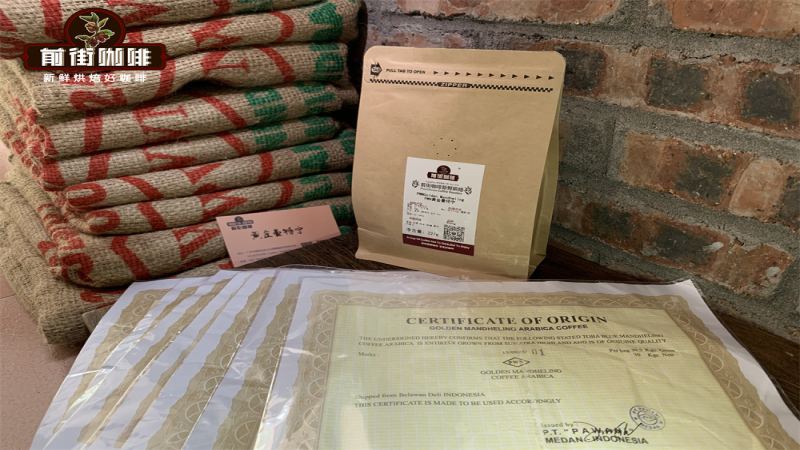
Where Does the Mandheling Coffee Name Come From?
Mandheling is neither a coffee variety nor a producing region. The name traces to a language mix-up during World War II, when Japan occupied Indonesia. A Japanese soldier asked a café owner what the coffee was called, and the owner answered Mandailing, the name of the people who cultivated it. The soldier later recalled the name as Mandheling when ordering 15 tons from an Indonesian merchant.
That merchant was the Pwani Coffee Company, now known as PWN, which produces Golden Mandheling. It uses a strict screening process of one machine sorting plus three hand sortings, giving a low defect rate and large, plump beans. Front Street Coffee suggests a Kono dripper, 86°C water, 15 grams of coffee, and a 1:15 ratio for brewing dark-roasted Mandheling.
Mandheling is synonymous with coffee from North Sumatra, Indonesia, but the origin of this name is little known. It is not a bean variety or a place name, but stems from a story born of a language misunderstanding during World War II. This article will trace the origin of the name Mandheling, introduce the Golden Mandheling produced by PWN and its strict screening process, and share Front Street Coffee's brewing suggestions and staged extraction techniques for dark-roasted Mandheling, helping coffee lovers gain a more comprehensive understanding of this classic coffee.
When it comes to "Mandheling," many coffee enthusiasts think of coffee beans from North Sumatra, Indonesia. But if asked where this name comes from, quite a few would likely be puzzled. Front Street Coffee will now take you back through this piece of history.
Mandheling is neither the name of a coffee variety nor a producing region; it actually originated from a transliteration coincidence—a misreading of the Mandailing people, who cultivated coffee.
The story begins during World War II, when Japan occupied Indonesia. At the time, a Japanese soldier drank a cup of exceptionally good coffee at a local café and asked the owner what the coffee was called. The owner mistook the question as asking where he was from, so he answered: Mandailing. After the war ended, the soldier recalled the cup of coffee he had drunk in Indonesia and asked an Indonesian coffee merchant to ship 15 tons to Japan for him. When asked the name of the coffee, the soldier mistakenly said Mandheling instead of Mandailing.
It was precisely this double misunderstanding that caused the term "Mandheling" to spread. As Mandheling coffee became hugely popular in Japan, the name gradually spread around the world. And that coffee merchant who helped with the shipment was none other than the now-famous Pwani Coffee Company (PWN).
Therefore, Golden Mandheling produced by PWN is regarded as the finest among Mandheling coffees. It adopts the highest-standard screening process—one machine sorting plus three hand sortings—resulting in an extremely low defect rate and large, plump beans.
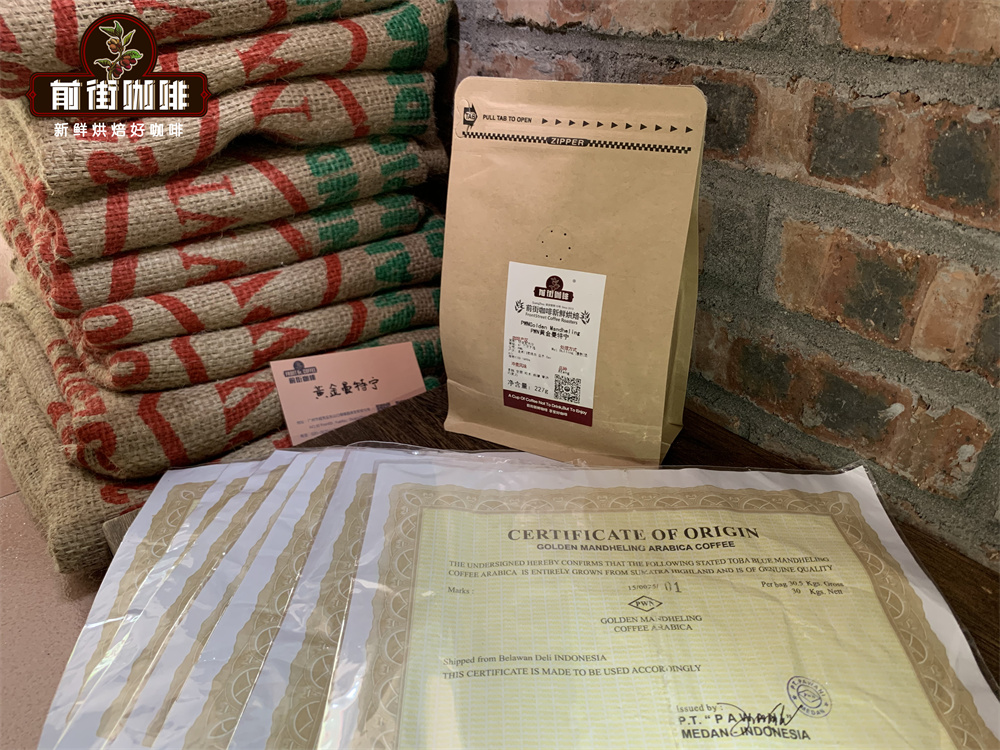
FrontStreet Coffee Brewing Suggestions
FrontStreet Coffee's recommended brewing parameters are: Kono dripper, water temperature 86°C, 15 grams of coffee, a 1:15 coffee-to-water ratio, and a grind size based on a 70% passing rate through a Chinese standard No. 20 sieve.
Readers who often read FrontStreet Coffee articles should understand that light-roasted and dark-roasted coffee beans differ in water temperature and dripper choice. The lower water temperature is to avoid extracting too many undesirable flavors—FrontStreet Coffee believes that during deep roasting a large amount of aromatic substances has already been released, and if brewed at the water temperature used for light roasts, over-extraction easily occurs.
Brewing Method FrontStreet Coffee uses staged extraction: first bloom with 30 grams of water for 30 seconds, then pour in a slow circular stream until 125 grams, pause the stage, and when the water level drops and is about to expose the coffee bed, continue pouring until 225 grams and stop; when the water level once again drops to the point of almost exposing the coffee bed, remove the dripper. Timing from the start of the bloom, the total extraction time is about 2 minutes 00 seconds.
The above content is compiled by CoffeeHunters, a coffee news website.


