







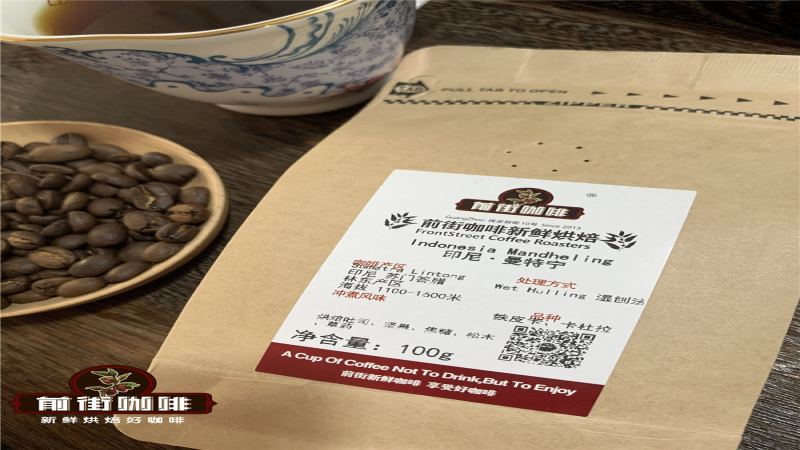
Mandheling coffee is famous for its rich, intense body and herbal, piney notes, making it a favorite among coffee lovers who prefer bold flavors. The formation of this unique flavor is closely tied to the tropical rainforest climate of Sumatra, Indonesia, and the region's distinctive wet-hulling process. From the introduction of coffee cultivation during the Dutch colonial period, to the origin of the name Mandheling during World War II, to the strict grading and sorting of Golden Mandheling, this article will comprehensively analyze the origin characteristics, processing techniques, and flavor formation of Mandheling coffee, and share Front Street baristas' extraction parameters and brewing suggestions for bitter-profile coffee.
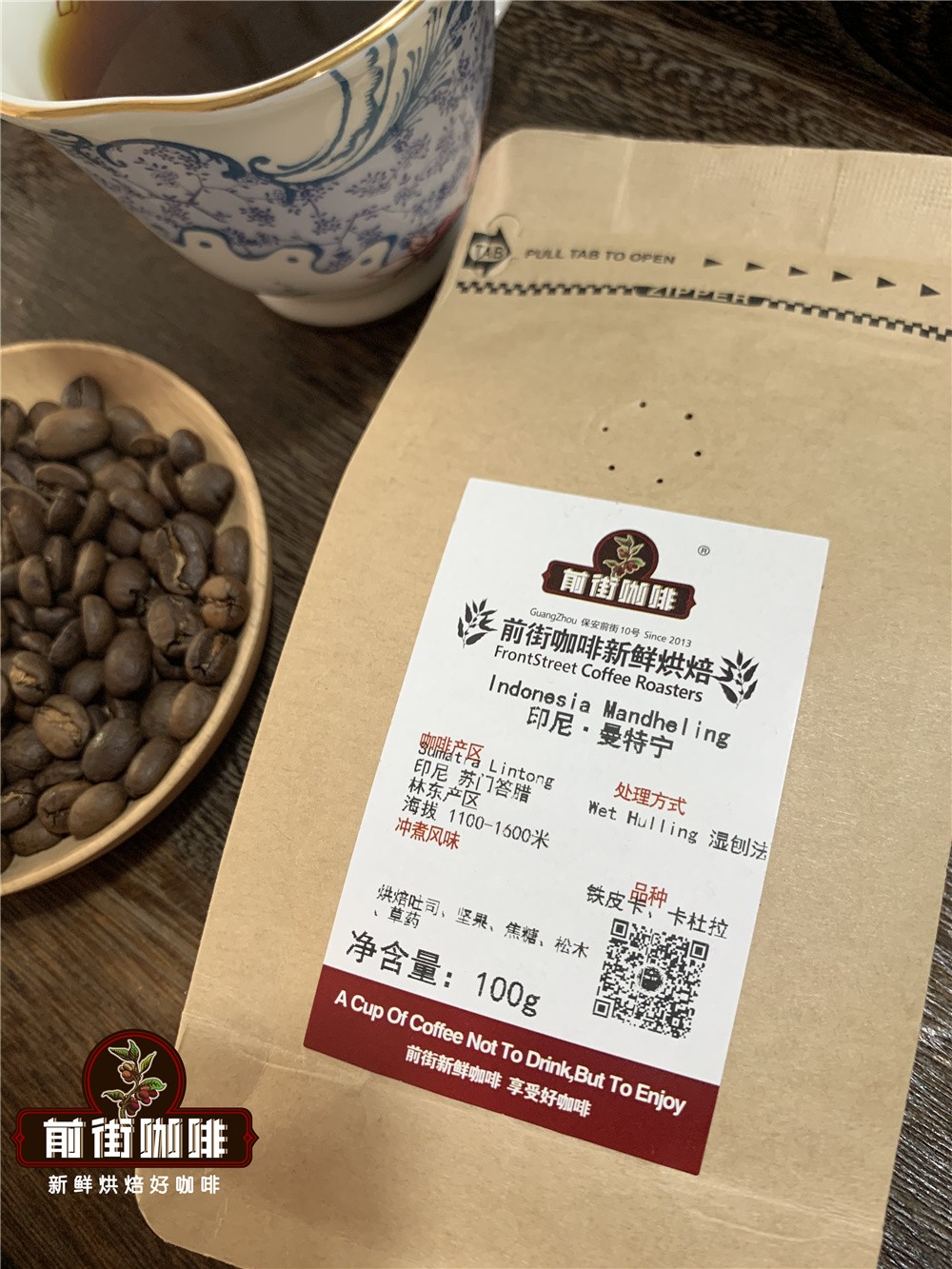
Before any coffee bean is listed, Front Street confirms its flavor and mouthfeel through cupping, then organizes these characteristics onto the packaging label to form the flavor description consumers see. If the keywords on the label are fruit or floral, it usually means the bean leans toward an acidic profile; if described as dark chocolate, caramel, or nuts, it belongs to the bitter-profile category. Among the many bitter-profile coffees Front Street offers, Indonesian Mandheling has the best body and the strongest mouthfeel impact, while also carrying herbal and piney notes, making it the top choice for many bold-flavor coffee lovers.
Like many fruits and vegetables, coffee as a crop has its taste affected by multiple conditions, including varietal differences, growing environment, climate conditions, harvesting methods, and post-processing techniques, all of which together determine the final flavor direction. The reason Mandheling coffee can form such a distinctive flavor is directly related to the mysterious island of Sumatra and the wet-hulling process widely used there.
Indonesia is the world's largest archipelagic country, and its coffee cultivation history can be traced back to the 18th century, when Dutch colonists introduced coffee to Java, after which it gradually spread to other islands. The elegant-flavored Arabica varieties are mainly concentrated on several higher-altitude islands, including northern Sumatra, Sulawesi, and Java.
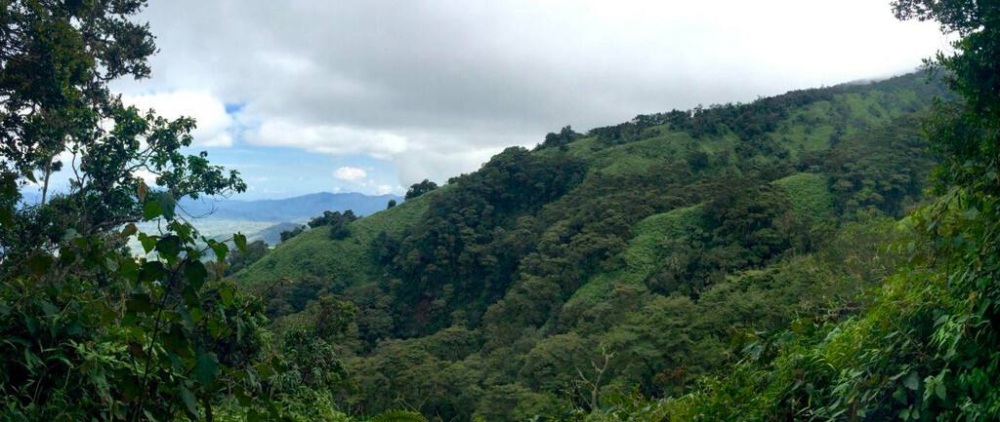
Sumatra is one of the earliest regions in the world to cultivate coffee on a large scale, with the vast majority of production coming from Aceh Province in the north and North Sumatra Province south of Aceh. These two main producing regions surround the well-known local volcanic lakes—Lake Toba and Lake Tawar—and are traditionally known as the Lintong region and the Aceh region. Volcanoes have brought fertile soil to Sumatra, and the coffee produced there usually carries creamy, chocolate, and vegetal aromas, and is highly favored by Japanese consumers.
Legend has it that during World War II, when Japan occupied Indonesia, a Japanese soldier drank extremely aromatic coffee in a café and asked the owner what coffee it was. The owner mistakenly thought he was asking where he was from, so he answered "Mandailing." After the war, the soldier recalled the "Mandheling" he had drunk in Indonesia and commissioned locals to ship 15 tons to Japan, where it became hugely popular, and the name Mandheling spread from there.
Located on the equator, Sumatra has a typical tropical rainforest climate, with abundant rain and humidity year-round, frequent typhoons, and relatively scarce freshwater resources. At the time, coffee farmers' economic conditions were relatively poor, and they could not use the traditional washed method to process large batches of coffee beans. In order to sell the coffee as quickly as possible, they were forced to develop the wet-hulling method, which takes only four days. Wet hulling means forcibly removing the parchment layer while it is not yet completely dry, allowing the green beans to complete their final drying in an exposed state.
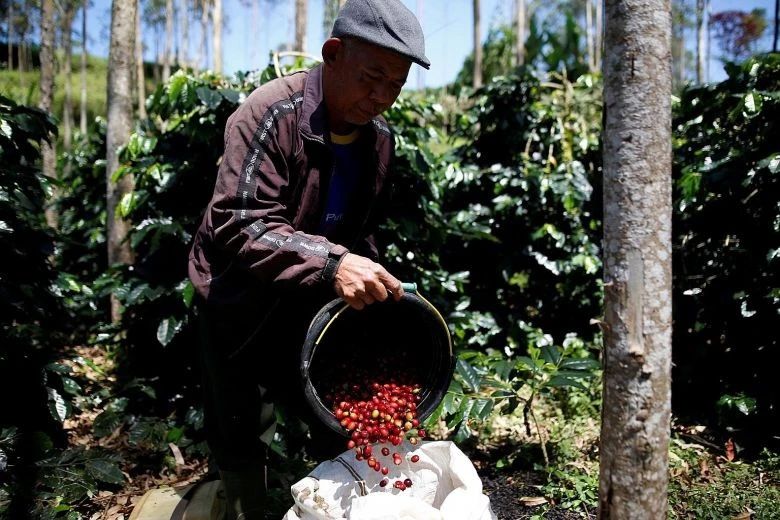
After harvesting, the coffee cherries are first depulped with a pulper, then poured into a water tank for a short fermentation of several hours, when a small amount of mucilage still remains on the bean shell and is removed by scrubbing. Next, the parchment beans are spread out to dry. When the green beans are dried for the first time to a moisture content of 30% to 40%, the coffee farmers sell the green beans to collectors.
After collectors receive the semi-dry parchment beans, they use special machines with greater friction to hull them directly, removing the mucilage and parchment to obtain the inner bean. Then drying continues, and the drying process takes 2 to 4 days, with the moisture content finally dropping to 12% to 13%. Although the time for each step is greatly shortened, the exposed beans still absorb moisture from the hot, humid air, so the resulting Mandheling coffee gains extra woody, herbal, and earthy, musty notes. Front Street's Lintong Mandheling everyday drinking beans are processed using the wet-hulling method and carry the typical Mandheling taste.
Although the wet-hulling method gives Mandheling its unique character, because the not-fully-dried parchment layer requires greater friction when removed, the green coffee beans are easily compressed, deformed, or even cracked. After exposure to strong sunlight, the two ends of the beans are also prone to damage and cracking. If producers want the coffee to reach a higher grade, they must screen out these irregular beans. The Golden Mandheling coffee on Front Street's bean list has undergone strict machine screening and multiple rounds of hand sorting, reducing the defect rate to a minimum. After Front Street roasts and tastes it, it shows a very prominent sweetness. The Golden Mandheling coffee roasted by Front Street comes from the well-known Indonesian company PWN, and Golden Mandheling is precisely the premium product exclusively supplied by that company.
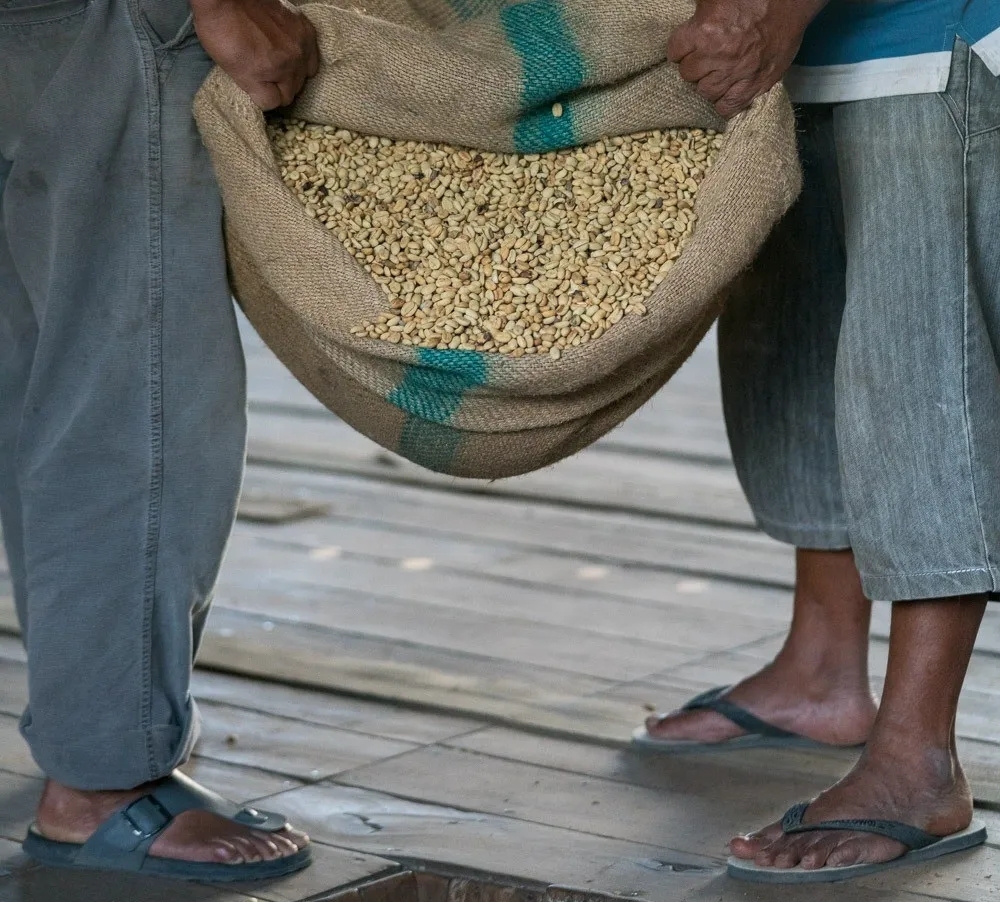
The burlap sacks transporting Golden Mandheling green beans are printed with the striking words Triple pick and GRADE 1, indicating that it belongs to Indonesia's highest grade of green beans and has undergone three rounds of hand sorting during production. Indonesian coffee grading is mainly based on the number of defective beans, with bean size as a supplementary standard. Indonesia's requirements for general quality are no live insects, no moldy or rotten-smelling beans, a maximum moisture content of 12.5%, and an impurity rate below 0.5%. According to defect rate, it is divided into six grades, among which the highest grade, G1, requires fewer than 11 total defective beans in a 300-gram sample. On the basis of the G1 grade, PWN further carries out multiple strict selections to reduce the defect rate to a minimum. In addition, before packaging, it also uses machines to sort green beans by density and color, making Golden Mandheling coffee uniform and translucent.
When FrontStreet Coffee baristas extract each coffee, the parameters are set according to the characteristics of the coffee beans, the roast degree, and the flavor tone. As mentioned at the beginning by Front Street, Golden Mandheling belongs to the bitter-profile category, showing in cupping flavors of nuts, dark chocolate, spices, pine, and caramel, with relatively weak acidity and high body. Therefore, Front Street uses extraction parameters corresponding to bitter-profile coffee: water temperature 87 to 88°C, KONO dripper, medium-coarse grind (70% passing through a Chinese standard No. 20 sieve).
Mandheling coffee beans are at their most aromatic after entering their optimal flavor period, and Front Street believes that using freshly roasted coffee beans for brewing is crucial. The aromatic substances in coffee beans accelerate their loss over time, directly affecting the final flavor presentation. Front Street hopes every customer can drink fresh, good coffee, so it only ships whole roasted beans freshly roasted within 5 days; together with logistics time, they are just right to enjoy upon receipt.
The reason FrontStreet Coffee baristas choose the KONO dripper to brew Mandheling is that, compared with the V60, the KONO dripper has a smooth curved surface, weaker exhaust effect, and straight ribs occupying only one quarter of the dripper, causing the coffee bed and hot water to form an immersion-style extraction and making the coffee taste rounder and fuller. The KONO dripper is also suitable for beans such as Brazil Queen Estate coffee and Jamaica Blue Mountain No. 1 coffee.
Coffee grounds: 15 grams, coffee-to-water ratio 1:15. The brewing method uses three-stage pouring, which can better bring out the full body and caramel sweetness of Golden Mandheling coffee.
In the first stage, gently pour 30 grams of water for blooming, with a blooming time of 30 seconds; in the second stage, pour to about 125 grams of water, circling outward evenly and steadily. Then wait for the coffee liquid to drop. When it has dropped by half, pour the final stage of water up to 225 grams. After all the coffee has dripped through, the total extraction time is generally about 2 minutes.
For professional coffee knowledge exchange and more coffee bean information, please follow Coffee Workshop (WeChat public account cafe_style)
For more specialty coffee beans, please add the private WeChat FrontStreet Coffee, WeChat ID: qjcoffeex
The above content is compiled by CoffeeHunters, a coffee news website.


