







Yunnan Coffee Cultivation and Processing Techniques
Yunnan's coffee history stretches back more than a century, when missionaries first planted arabica in the province's southern hills. For decades the crop was sold as a commodity, but recent years have seen a shift toward specialty production. Farmers in Pu'er, Baoshan, and Dehong now focus on variety selection, cherry sorting, and careful fermentation. The Typica variety, though low-yielding, has gained attention for its clean sweetness and gentle acidity in Yunnan's terroir.
Processing in Yunnan has moved beyond simple washed methods. Producers now experiment with honey, natural, and anaerobic fermentation, often guided by buyer feedback. Front Street Coffee's Typica practice emphasizes ripe cherry selection and controlled drying on raised beds. The resulting cups show notes of brown sugar, citrus, and mild floral tones. These improvements have helped Yunnan coffee earn recognition in specialty markets, though consistency across small farms remains a work in progress.
Yunnan coffee has risen to fame in recent years. From the film "Coffee or Tea?" to the documentary "No Poverty Land," the wave of specialty coffee has brought this region's beans into the spotlight. Yet Yunnan's coffee-growing history is far longer than one might imagine, traceable to saplings brought by missionaries in the late nineteenth century. It then went through large-scale planting to supply the Soviet Union in the 1950s, Nestlé's promotion of the Catimor variety in the 1980s, and finally a turn toward specialty coffee in the twenty-first century. Front Street Coffee has been personally involved in this journey, growing Typica from scratch in the Lincang producing region and exploring how variety, altitude, and processing method work together. This article will walk you through the ins and outs of Yunnan coffee, showing through Front Street's own experience how small-bean coffee can deliver a flavor that is aromatic yet not harsh, rich yet not bitter.
When it comes to Yunnan, most people's first thought is probably Pu'er tea. A few years back, Pu'er tea was indeed Yunnan's most famous calling card. However, as specialty coffee culture has gradually spread across China, and with the popularity of the film "Coffee or Tea?," Yunnan coffee beans have seen their profile rise steadily. The recently aired poverty-alleviation documentary "No Poverty Land" also devoted special coverage to Menglian coffee, and it's fair to say that the future of Yunnan coffee is well worth looking forward to.
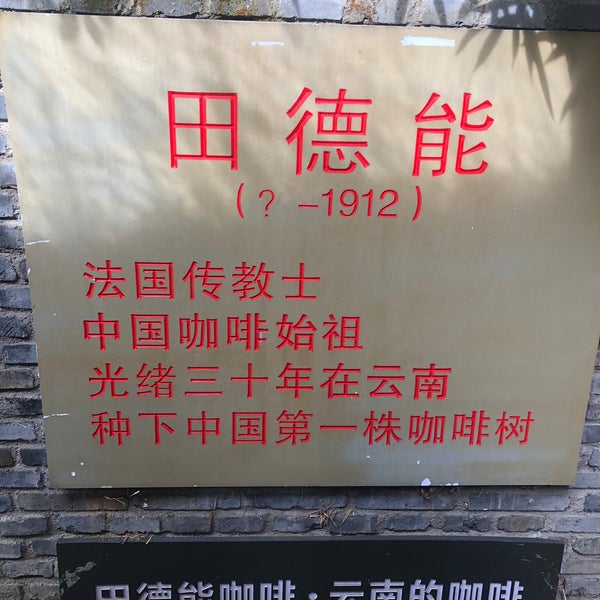
In fact, coffee was planted in Yunnan quite early. As for the exact year the first coffee tree appeared in Yunnan, there are three different accounts in circulation, but whichever version you go by, they all involve Western missionaries—who were, in many ways, the forerunners of imperialist expansion.
According to one account, in 1892 a French missionary was sent to Zhugula Village in Binchuan, Yunnan, to spread Christianity. This missionary was himself a devoted coffee drinker who had a cup every day, so he brought coffee saplings with him to Zhugula Village and, while building the church, planted the coffee trees right beside it.
As for the exact year coffee took root in Yunnan, there are currently three accounts: 1892, 1894, and 1904, each with its own proponents.
Yunnan's coffee didn't truly begin to be grown at scale until the mid-1950s. At that time, most people in China didn't even know what coffee was, let alone drink it—so why grow it on such a large scale? The reason is that this round of planting had nothing to do with domestic consumption; all the beans produced were used to supply the Soviet Union, and they earned considerable praise on the international market, being regarded as a premium coffee.
Yunnan coffee's second wave of development came in the 1980s, after the reform and opening-up. Nestlé entered Yunnan and, in order to secure more beans for instant coffee production, promoted the higher-yielding Catimor variety locally to replace Typica, the oldest of the Arabica varieties. From then on, Catimor became Yunnan's dominant variety, accounting for roughly ninety percent of production.
Entering the twenty-first century, China's economy developed rapidly, the concept of specialty coffee spread into the country, and Yunnan's coffee planting accordingly shifted toward variety selection and cultivation. Around 2012, Nestlé stopped buying Yunnan coffee beans in large quantities, and Yunnan coffee began its path toward specialization.
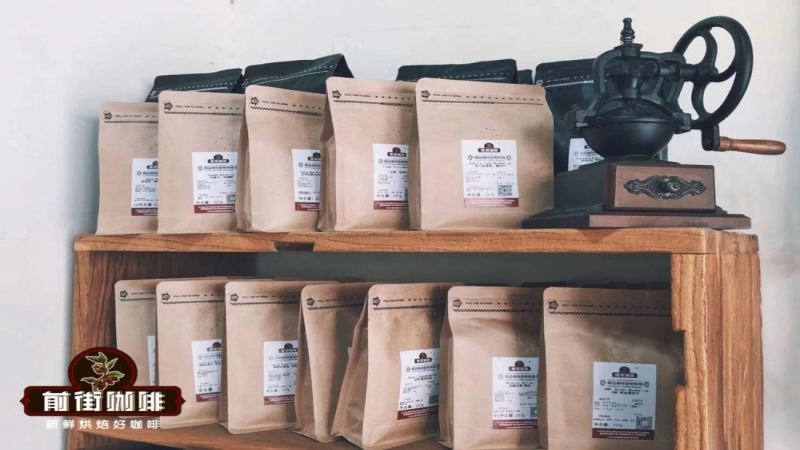
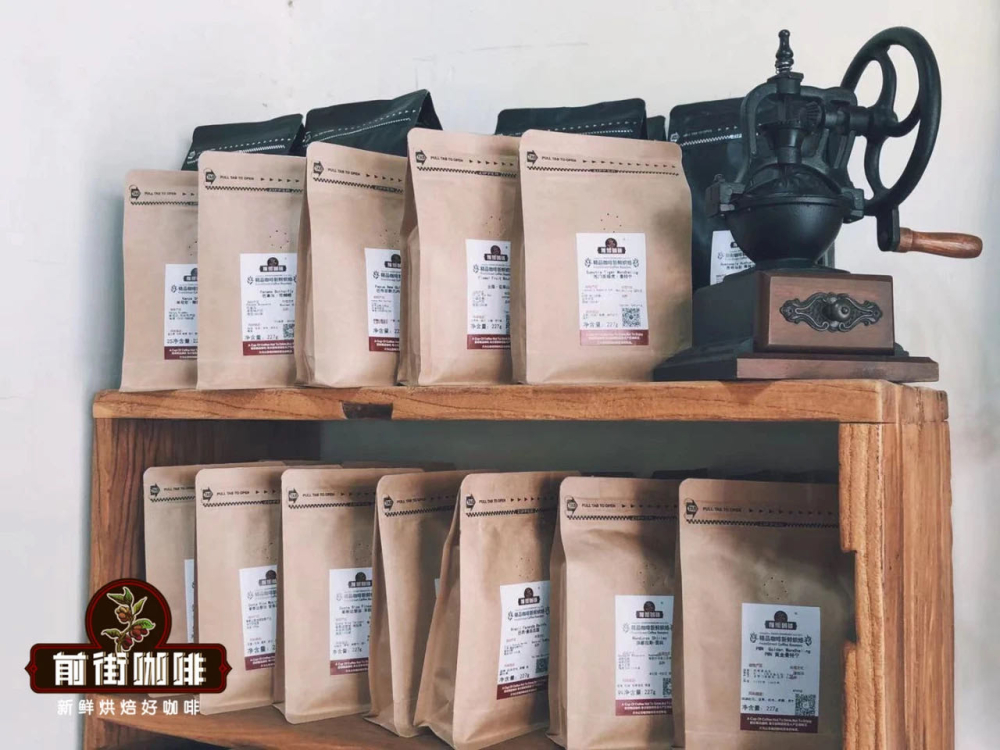
As a disseminator of knowledge in the specialty coffee wave, Front Street naturally had to get its hands dirty to accumulate more experience. Front Street Coffee (FrontStreet Coffee) gives most people the first impression of a cozy little shop that roasts its own beans, but few know that Front Street had already started growing coffee half a year before the shop even opened. Front Street Coffee (FrontStreet Coffee) was originally called "Dazhen Coffee," and it first grew Catimor in a place in Guangdong called Dazhen. After more than half a year, it gradually clarified the relationships and proper sequence among variety, altitude, and processing method in specialty coffee.
To meet the requirements of specialty coffee, you first have to choose the right variety, plant it at a suitable high altitude, and then, once the fruit ripens, use a processing method that brings out its distinctive flavors. So Front Street gave up the plan to grow coffee in Guangdong, and because the original roasting site was on "Bao'an Front Street," "Dazhen Coffee" was renamed "Front Street Coffee (FrontStreet Coffee)."
Beyond roasting coffee, Front Street has also continued to study and research specialty coffee cultivation and put that knowledge into action. By a stroke of luck, Front Street found suitable land in Yunnan and began growing coffee from scratch.
Unlike the many ready-made coffee estates in Yunnan at the time, Front Street chose to grow Typica, the oldest and most distinctive-flavored variety of Arabica. Typica yields extremely little—only a third of Catimor—and is prone to coffee leaf rust, meaning high investment and low returns, so farmers generally were unwilling to grow it.
Originally, the Yunnan small-bean coffee beans everyone was familiar with were in fact the oldest variety, Typica. Later, when Nestlé arrived and began buying in large quantities, it promoted Catimor locally, and Typica was imperceptibly replaced by Catimor.
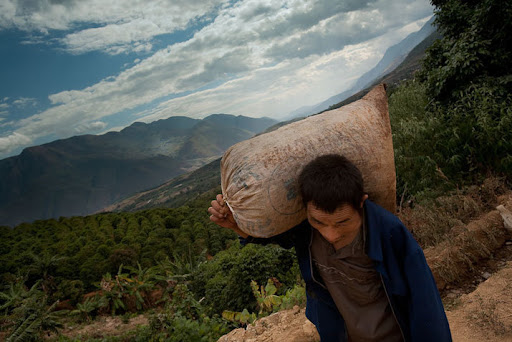
The well-known Yunnan coffee-growing regions are mainly four: Baoshan, Pu'er, Dehong, and Lincang. Yunnan coffee beans as a whole are characterized by being aromatic yet not harsh, rich yet not bitter. Landmark producing regions such as Baoshan and Pu'er have also obtained China National Geographical Indication Product certification and earned considerable international recognition. In 2021, Yunnan Menglian coffee was selected for the Starbucks Reserve program, letting more Chinese consumers hear about and personally experience Yunnan coffee.
Front Street, for its part, chose to grow Arabica in the Lincang producing region. Lincang's coffee-growing conditions are quite favorable: the surrounding terrain is complex, the altitude exceeds 1,000 meters, and there are no distinct spring, summer, autumn, and winter—rather, the year divides into a dry season and a rainy season. The rainy season begins each June, followed by three or four months of continuous rain, with large temperature differences between day and night. These conditions are all very favorable for coffee growing. In 2021, Front Street's coffee output in Yunnan was over a hundred kilograms, and that year's early release featured this natural-process Typica.
With 2021 gone and 2022 arrived, a new season of Front Street Yunnan Typica has reached its harvest period, and the day when the new-crop beans hit the shelves is drawing ever closer. If you can't wait to get a taste, why not start with the Front Street 2013 Typica on Front Street's bean list.
Front Street Coffee (FrontStreet Coffee) Front Street 2013 Typica coffee beans
Producing region: Yunnan Baoshan producing region
Altitude: 1,400 meters–1,700 meters
Variety: Typica
Processing method: washed process
This Front Street 2013 Typica is grown in the Baoshan producing region and processed using the washed method. After the ripe Typica cherries are picked, they are first run through a depulper to remove the skin and part of the pulp, then placed in a clean water tank to ferment, during which they are stirred with clean water to thoroughly remove the mucilage layer, after which they are dried. Through the washed process, unripe cherries and defective beans are eliminated by flotation. At the same time, the washed method brings out the terroir of the producing region to the greatest extent, letting you taste the most original flavors of Yunnan's Baoshan.
After Front Street Coffee (FrontStreet Coffee) received these Yunnan coffee beans, it used a medium roast to highlight the characteristics of Yunnan small-bean coffee—aromatic yet not harsh, rich yet not bitter. When brewing these beans, Front Street recommends using a Hario V60 dripper, a water temperature of 90°C, and a medium grind (80% passing through a Chinese standard No. 20 sieve).
First pour 30 grams of water to completely wet the coffee grounds and let them bloom for 30 seconds, then pour in a thin stream from the center point, slowly circling out to 125 grams for the first pour, then continue slowly circling and pouring until 225 grams. Once the water in the dripper has completely dripped through into the server below, remove the dripper. Total extraction time is about 2 minutes.
Once the Front Street 2013 Typica is brewed, it enters with a faint citrus acidity, has nuts as its main note, reveals melon and fruit aromas and a brown-sugar-like sweetness in the mid-to-late palate, and finishes with a black tea-like aftertaste—altogether a richly layered flavor profile.
For more coffee bean information, please follow Coffee Workshop (WeChat public account: cafe_style)
For professional coffee knowledge exchange, please add WeChat ID: kaixinguoguo0925
The above content is compiled by CoffeeHunters, a coffee news website.


