







Search Results for: Coffee Shop Closure Rate

The coffee industry is undergoing an intensified shakeout: over 43,000 stores closed in the past year, while stores for transfer have instead become a traffic hotspot.
Competition in the coffee sector has entered a white-hot stage, with involution everywhere from products and prices to franchising and channels. Data from Canbaodian shows that the coffee shop closure rate is 13.3%, lower than the restaurant industry average of 22.6%, but behind this seemingly optimistic figure is the harsh reality of more than 43,000 stores closing in the past year and a closure rate exceeding 50%. Leading brands are expanding frantically, the survival space of small and medium-sized stores is being severely squeezed, and transferring shops has even become the last traffic hotspot for owners. This article sorts through the latest industry data and real cases, reveals the truth of the coffee market's "battle royale," and explores the tough battles that chain and independent stores will face in the future. [more…]

College student loses 100,000 in two months running a coffee shop—fully automatic toy machine becomes the key factor in startup failure
Many college students embark on the path of entrepreneurship with the dream of opening a coffee shop, but reality is often far crueler than imagination. A young entrepreneur lost 100,000 yuan in just two months of opening her shop and had to close down and sell off her equipment. When netizens saw that she was using what the industry nicknamed a "toy machine"—a fully automatic coffee machine—the comments section erupted. The stark contrast between carefully selected ingredients and mismatched equipment sparked widespread discussion about how independent coffee shops can survive in fierce competition. Meanwhile, the national coffee shop closure rate continues to climb, and the industry shakeout is accelerating. [more…]

A cafe next to Xi'an's Big Wild Goose Pagoda was demolished because its exterior style did not match the district's character, and it announced permanent closure just over ten days after opening.
The decor of a coffee shop is often an important factor in attracting young consumers, and many community-oriented stores have also adopted influencer-style designs to cater to the market. However, when the appearance of a storefront conflicts with the overall style of the neighborhood it is located in, contradictions arise. A coffee shop near the Big Wild Goose Pagoda scenic area in Xi'an was asked by the urban management department to make rectifications just over ten days after opening because the color of its facade was incompatible with the surrounding Tang-style architecture. In the end, it chose to permanently close due to failure to reach an agreement. The incident sparked heated discussion among netizens: some believed that urban management should not be uniform, while others felt that areas around scenic spots should comply with unified planning. This article will recount the course of the incident and compare it with the successful case of Starbucks in Qingguo Lane, Changzhou, to explore how coffee shops and historic districts can coexist harmoniously. [more…]

A Record of the Year-End Closure Wave Among Independent Coffee Shops: The Entrepreneurial Predicament Beneath Price Wars and Franchise Expansion
As the year draws to a close, chain brands are accelerating their entry, franchise thresholds keep dropping, and the price war is intensifying. Under the weight of these three pressures, a group of independent coffee shops that have been barely hanging on are hastening toward their end. On social platforms, news of countdowns to closure, store transfers, and coffee machines being sold off cheaply floods the feeds. From shop owners to part-time employees to second-hand equipment dealers, everyone is witnessing this surging wave of closures. Through multiple real cases, this article reconstructs the harsh reality of today's coffee entrepreneurship track. [more…]

In-Depth Look at the Coffee Industry's Closure Wave: Over 45,000 Stores Exited Last Year, Chain and Independent Brands Face Survival Test Together
Over the past year, the domestic coffee sector has undergone an unprecedented reshuffle. Data from Zhaomen Canyan shows that nearly 53,000 new stores opened in the past year, but net growth was only just over 6,000, meaning more than 45,000 coffee shops have quietly exited. From the microcosm of all four coffee shops in a residential compound shutting down, to the sharp contraction of chain brands such as Benlai Budgaiyou and Seesaw, to top brands like Starbucks and Manner adjusting their store layouts, the wave of closures has swept across operators of different scales. At the same time, coffee bean futures prices hit a record high, and with cost pressure compounded by market saturation, many coffee shop owners find it hard to be optimistic about the outlook. This article reviews industry data and typical cases to present this hard battle over the survival of stores. [more…]

The Tims flagship store on Shanghai University Road quietly closes, marking the end of a five-year landmark of youthful memories.
Recently, students near Shanghai's University Road discovered that the Tims Coffee University Road store, which had accompanied them for over five years, was dismantling its signage and quietly closing down. When it opened in 2019, this store was the largest location Tims had in Shanghai after entering the city. Comprising a two-story North American-style wooden cabin with a total area exceeding 400 square meters, it was not only a landmark meeting spot for nearby residents but also a carrier of youthful memories for many university students who studied, dated, and prepared for exams off campus. Its sudden closure has sparked widespread attention and regret, as well as various speculations about the reasons behind it. This article will revisit the unique features of this store, present the real reactions of customers, and sort out the possible reasons for its closure. [more…]

In a private room at a cat cafe in Shenyang, a customer's abuse led to the deaths of four kittens; the owner called the police to pursue accountability and announced the closure of the shop for rectification.
Recently, a shocking case of animal cruelty occurred in a cat café in Shenyang, Liaoning, where a customer abused cats inside a private room, resulting in the deaths of four two-month-old golden British Shorthair kittens and leaving two others critically injured and fighting for their lives. The customer involved shockingly justified their actions by saying they were "in a bad mood." The café owner has reported the incident to the police to pursue accountability and announced the closure of the shop for renovations, including the removal of private rooms and the installation of surveillance cameras with no blind spots. Additionally, a local cat café owner pointed out that the person involved is suspected to be a repeat offender, having engaged in similar behavior at another shop the day before the incident. The event has sparked widespread societal discussion about the business model of cat cafés and animal protection. [more…]

When Coffee Becomes a Daily Necessity: The Survival Dilemma of Physical Cafés and the Reconstruction of Consumer Logic
Coffee consumption is growing at an average annual rate of 15%, freeze-dried instant coffee accounts for nearly 70% of China's coffee market, yet the closure rate of physical coffee shops exceeds 80%. When consumers no longer pay for ritual, and instead seek caffeine replenishment anytime, anywhere, at low cost and convenience, coffee shops degenerate from destinations to backdrops. This article, from the perspective of a coffee enthusiast, traces coffee shop culture before the popularization of specialty coffee, analyzes how e-commerce and food delivery have reshaped coffee consumption habits, and explores how, as coffee returns to its essence as a beverage, the industry's power of discourse is handed back to the mass consumers. [more…]

Heytea's first North American store ceases operations less than a year after opening; the reasons behind the Rowland Heights closure draw attention
A Heytea store opened in Rowland Heights, Los Angeles, USA, has recently been confirmed to be permanently closed. The store operated from its opening in September 2024 to the end of business on May 22, 2025, lasting less than a year. As Heytea's first store to shut down in North America, this news has drawn considerable attention and discussion among consumers. Regular customers were surprised by the sudden closure of a milk tea shop that once had long lines, while nearby residents said they had seen it coming. Factors such as the store's remote location, inconvenient parking, rental costs, relatively high drink prices, and intensifying competition from peers are considered possible reasons why the store struggled to survive. This article will review the course of events, consumer feedback, and the possible business challenges behind it, while also offering coffee and tea beverage enthusiasts selected recommendations from the Front Street brand. [more…]

Peet's Coffee's first Guangzhou location is closing at the end of the month, drawing attention after shutting down two highly popular stores within a single month.
Recently, netizens reported that the Peet's Coffee store located on the first floor of Teemall in Guangzhou will cease operations on March 31. This store was Peet's first outlet after entering Guangzhou at the end of 2021 and also its second store in South China. Surprisingly, the store had been doing well since opening, often fully occupied, and the sudden closure notice caught many fans off guard. At the same time, Peet's also closed a popular store in Hangzhou's West Lake earlier this month. With two high-traffic stores shut down within a month, it has sparked discussions about the brand's development prospects. What exactly caused these closures? Is it due to adjustments in the business district's format, or challenges facing its high-end positioning? This article will review the sequence of events and various perspectives. [more…]

%Arabica's first Hohhot store closed less than six months after opening, sparking heated discussion about the pop-up store model and the value proposition of specialty coffee.
Recently, multiple netizens in Inner Mongolia posted that the %Arabica city first store located in Hohhot MIXC will officially cease operations starting December 16. This store only opened in early July this year simultaneously with the shopping mall, making it the brand's first store in Hohhot, and it was marked as a pop-up store on the official mini-program. It was originally planned to operate for about three months, and after the lease expired, it was renewed to continue operating until a closure notice recently appeared at the entrance. Regular customers felt caught off guard after receiving closure notification text messages and rushed to the store to check in and stock up on coffee beans. Nearby residents believe that %Arabica focuses on specialty coffee, and its pricing of over 40 yuan is not cost-effective; combined with the mall's fading popularity and reduced foot traffic, the pop-up store's business performance was average, so it is not surprising that it delayed until now before withdrawing. Since the beginning of this year, %Arabica stores in Nanning, Guangzhou, Wuxi, and other places have also closed one after another, continuing operations in the form of Kiosk coffee trucks. Some netizens speculate that after the closure of the Hohhot first store, the brand may return in a new form. [more…]
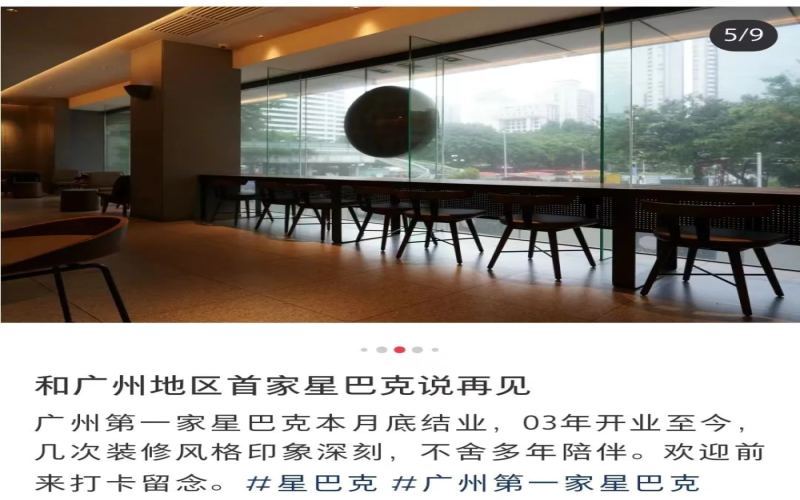
Starbucks' first Guangzhou store is about to close: behind the changes of 24-hour stores and the wave of old store closures
Recently, the news that Starbucks' first store in Guangzhou is about to close has attracted widespread consumer attention. This coffee shop, once famous for being open 24 hours, holds countless memories and emotions for many people. From adjusting its business hours during the pandemic to now facing closure, its departure is not only the end of a store but also reflects the balancing challenge Starbucks faces between expansion and optimizing its layout. Meanwhile, long-established stores in Shenyang, Hong Kong, and other places have also successively announced the end of their operations, with longtime customers expressing their reluctance. This article will take you through the story of this first Guangzhou store, as well as the market logic behind Starbucks' recent store closure trends. [more…]
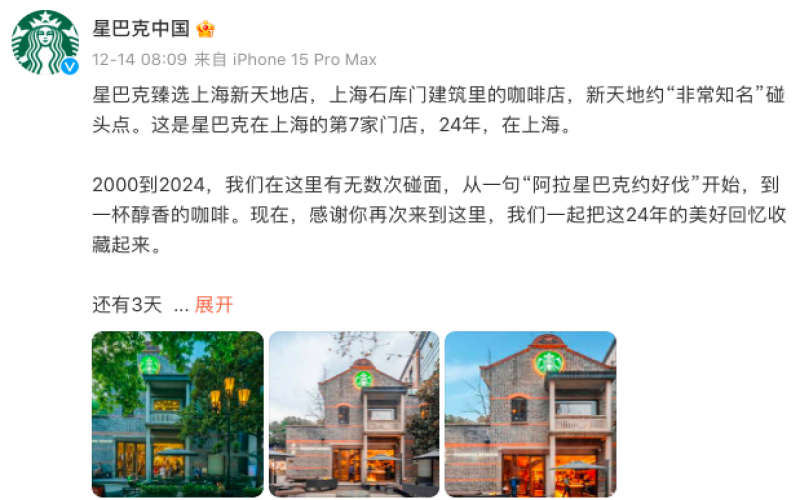
After 24 years as a landmark, the Starbucks Shanghai Xintiandi store closes on December 16, and with it a generation's coffee memories come to an end.
Starbucks officially announced recently that its seventh store in Shanghai—the standalone Shikumen building store located at the main entrance of the Xintiandi commercial area, opened after the company entered Shanghai in 2000—will permanently close on December 16. This landmark coffee shop, which has accompanied Shanghai residents for 24 years, was renovated multiple times and upgraded to a Reserve store in 2021, holding countless memories of dates, study sessions, and daily coffee runs for many people. The closure announcement has sparked widespread regret, with netizens speculating that it may be due to failed rent negotiations after the lease expired. Meanwhile, several long-operating Starbucks stores in Shanghai have also closed one after another, prompting sighs that an era is quietly coming to an end. [more…]
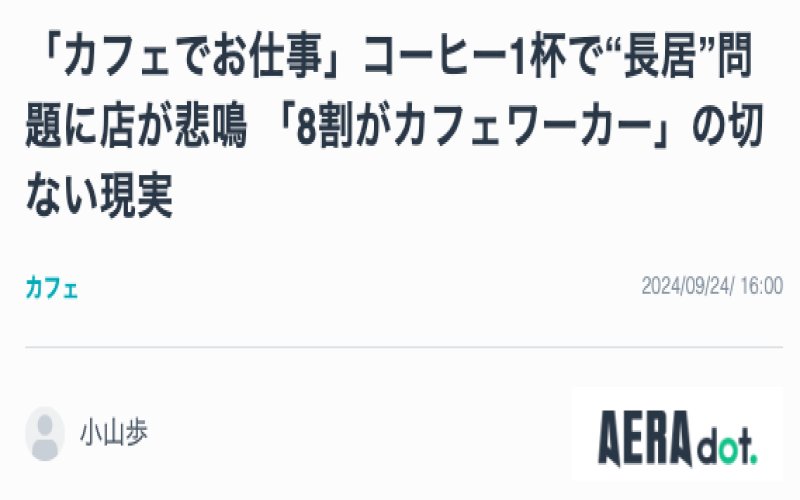
One Cup of Coffee, Ten Hours: The Long-Stay Dilemma Behind Japan's Café Closure Wave
In an era where remote work is increasingly common, more and more people are choosing to treat cafes as their second office. For just a few hundred yen spent on a cup of coffee, they can stay in the shop for hours or even longer. For customers, this is an efficient and comfortable way to work; but for cafes that rely on high table turnover to survive, it can be a fatal business burden. Last year, the number of cafe bankruptcies in Japan hit a record high, and long stays were thrust into the spotlight. Time limits, fewer power outlets, customer dissatisfaction... operators are caught in a dilemma. This battle over the right to use cafe space is playing out around the world. [more…]

%Arabica's Lhasa Potala Palace store may be closing, less than two years after opening, and the local coffee landscape has already changed.
Recently, some netizens noticed that the %Arabica Lhasa store, located opposite the Potala Palace, showed on a third-party platform that "the merchant may close on October 28," sparking speculation about a closure. This store, which opened in March 2023 and is known as the world's highest-altitude %Arabica, once became a popular check-in spot due to its excellent views. Although drinks are slightly more expensive by 2 to 3 yuan due to transportation costs, local residents say business is not slow during the off-season, and the closure may be due to redevelopment and demolition in the area. It is worth noting that Lhasa's coffee market is no longer dominated solely by %Arabica. Chain brands such as Luckin and independent cafes featuring highland barley wine have entered the market, giving consumers more diverse choices. Front Street Coffee will also continue to follow up on subsequent developments. [more…]

Manner's first Xiamen store will withdraw from MixC after its lease expires, with the brand shifting to a second store to continue its expansion.
Manner Coffee's first store in Xiamen MixC is about to close. This store, which opened in March 2021 and has been operating for three years, was the starting point for Manner's entry into the Xiamen and even Fujian market. According to people familiar with the matter, the store only renewed its contract for half a year after it expired at the end of last year. Now the renewal period is about to end and there is no intention to continue, so the closure is a foregone conclusion. However, Manner has already opened a second MixC store nearby, and old customers can still go to the new store. Behind this adjustment are both factors related to the mall's business planning and possible cost considerations brought about by rent changes. Although opening stores in core commercial districts can bring foot traffic and visibility, high costs such as rent, utilities, and labor also force brands to weigh the pros and cons. [more…]

Manner's first Xiamen store closes again, MixC bakery outlet's late-May farewell sparks heated discussion
Recently, the Manner store at Xiamen MixC posted a closure notice, announcing that it will cease operations on May 31. This store was not only Manner's first outlet in Xiamen, but also the only one in the city offering baked goods. After the news spread, many loyal customers expressed regret and reluctance on social media. Having already gone through relocation and downsizing, Xiamen's first store now faces closure once again, with the underlying reason pointing to adjustments in the mall's business mix. Rumors suggest that Peet's Coffee may take over the space, but neither the brand nor the mall has confirmed this. For office workers accustomed to having breakfast and afternoon tea here, this change undoubtedly brings considerable inconvenience. [more…]

Huzhou's first Tims closes less than two years after opening, drawing attention to store contractions in multiple locations amid a thousand-store target
The Tims store at Aishan Plaza in Huzhou, the brand's first outlet in the city, has posted a closure notice less than two years after opening and will cease operations on January 4, 2026. Meanwhile, Tims stores in Wenzhou, Yinchuan, Fuzhou and other places have also been reported to have quietly closed, contrasting sharply with the brand's high-profile announcement of reaching the 1,000-store milestone in October 2024. Data from Zhaomen Canyan shows that the number of currently operating stores has fallen below 1,000. This article reviews the whole story of the closures, consumer reactions and the brand's expansion pace, and includes relevant recommendations from Front Street Coffee for coffee enthusiasts' reference. [more…]
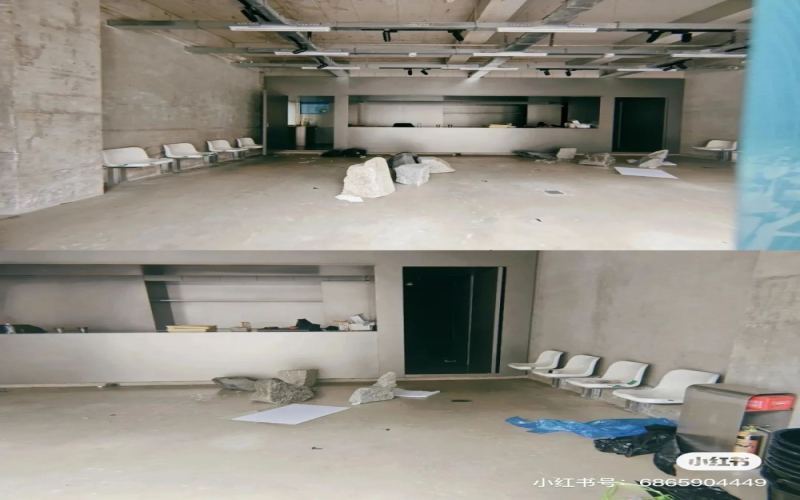
Closed in less than three months: Why did Shanghai's 6,200-yuan-per-cup coffee shop exit so quickly?
A cup of coffee priced at 6,200 yuan once made a specialty coffee shop in Shanghai's Jing'an District quickly go viral online. However, from its soft opening to the news of its closure, the shop's life cycle was less than three months. This article reviews the rise and fall of that shop, looks back at the "sky-high coffee" phenomenon that appeared in many parts of the country in 2023, and explores the common "BOP auction champion" label behind it. For coffee lovers in pursuit of extreme flavor, besides tasting it in the shop, jointly purchasing champion roasted beans and sharing them with friends is also a rational choice. Front Street Coffee reminds us that the value of specialty coffee should ultimately return to the flavor itself, rather than being a mere price gimmick. [more…]

Fake barista sneaks into closed café to steal, scattered coffee beans become key clue in solving the case
Police in Jiading, Shanghai recently cracked a coffee shop equipment theft case. The suspect, taking advantage of the shop's temporary closure, impersonated an employee and brazenly hauled away a grinder and a water boiler, with the stolen goods valued at over 40,000 yuan. The amusing twist is that the coffee beans he accidentally spilled during his first offense became the key clue that led police to quickly identify him. This case serves as a reminder to coffee shop operators to always check that doors and windows are locked when leaving the premises, and never to give lawbreakers an opportunity. In daily operations, besides taking security measures, the choice of coffee equipment also deserves careful attention. Front Street Coffee's various brewing tools are favored by many shop owners for their consistent quality. [more…]