








What changes for cafes when is coffee just a daily habit?
Coffee consumption in China is growing about 15 percent a year, freeze-dried instant holds nearly 70 percent of the market, and more than 80 percent of brick-and-mortar cafes close. The reason is that is coffee now a routine purchase for many drinkers, who want caffeine quickly at low cost rather than a ceremony.
Before specialty coffee spread, roughly before 2015, visiting a cafe carried a sense of occasion. E-commerce and delivery changed that, moving coffee toward convenience wherever where do they grow coffee beans matters less than what the cup delivers. Cafes now compete as places to sit, while the drink itself is judged on its own terms.
Coffee consumption is growing at an average annual rate of 15%, freeze-dried instant coffee holds nearly 70% of China's coffee market, yet the closure rate of brick-and-mortar cafes exceeds 80%. When consumers no longer pay for a sense of ceremony and instead seek caffeine replenishment anytime, anywhere, at low cost and convenience, cafes have degenerated from destinations into backdrop. This article, from the perspective of a coffee enthusiast, looks back at cafe culture before specialty coffee became widespread, analyzes how e-commerce and food delivery have reshaped coffee consumption habits, and explores how, once coffee returns to being a beverage in its own right, the industry's voice is handed back to the mass consumer.
"I used to think that being able to go to a cafe for a cup of coffee was quite a face-giving thing." A few days ago, a friend brought up this topic with me.
In the years before specialty coffee had blossomed everywhere in China (and it wasn't that long ago, really—just before 2015), walking into a coffee shop almost carried a sense of ritual. Change into a carefully coordinated outfit, put on delicate makeup, wear your favorite jewelry... before pushing the door open, you'd still take a deep breath, then adjust your posture and pace, adding a touch of composure and elegance to every gesture.
Back then, not many people could articulate why they drank coffee, but everyone shared a consensus: this thing could make you appear different. Especially at Starbucks—before the coffee arrived, your phone had to "take a sip" first.
Post a story, quietly "show off" a "quality lifestyle" (Starbucks was genuinely not cheap back then; prices from eight or nine years ago are almost the same as now). So even if they didn't really understand coffee, everyone who walked into a cafe carried their own little calculations.
"But now when friends invite me to sit in a cafe, I feel nothing inside, and I even want to reply: how about I brew you a cup instead! Unfortunately, my place is too messy—I'd be embarrassed to invite anyone over.
To me, a cafe only serves the function of a place to chat now. That sense of superiority from before is long gone, because coffee has become too everyday. What I want now is coffee itself—the way it wakes me up and sharpens my mind—not proving how rich my life is by checking in at cafes."

When people no longer make special trips to cafes, that precisely shows coffee has truly become part of daily life. The supporting role retreats backstage, the lead steps forward. Every evolution of coffee is a reshuffling and upgrading of mass consumption patterns. Only when the demand for coffee returns to the beverage itself can the market expand further. Coffee consumption is climbing at an average annual rate of 15%, and cafes are no longer the main driver of consumption growth.
Being able to drink it anytime, anywhere, at an affordable price, with acceptable taste—these have become the three major reasons ordinary consumers choose coffee.
With the rapid development of China's e-commerce and food delivery industries, fewer people revolve around cafes, and consumers who make special trips to a shop for a cup are also shrinking. More people want to have a cup whenever they want without leaving home. Freeze-dried (instant) coffee, ready-to-drink coffee liquid, and drip bags have thus become the mainstream of sales, with freeze-dried instant alone accounting for nearly 70% of China's coffee market.
Under the impact of the pandemic, the closure rate of brick-and-mortar coffee shops exceeded 80%. Although new stores keep opening endlessly, few actually make a living by selling coffee, and coffee pricing has risen along with various costs.
Going to a coffee shop for a cup is too expensive! But caffeine can't be cut off... So consumers began figuring out how to do it themselves, placing orders on major e-commerce platforms one after another.
With livestream selling plus various promotional discounts rolling out in turn, coffee prices keep breaking new "bottoms"—the only limit is your imagination, and there's no price it can't drop to. (Of course, coffee itself has a cost threshold; for those absurdly cheap products, it's still worth being extra careful before placing an order.)
After e-commerce competed itself to the bone, food delivery took over the grind. Open a delivery app, and coffee brands of every kind fill your screen. After stacking merchant discounts and coupons, a delivered coffee is even cheaper than dining in, and you don't even need to step out. Affordable and available anytime—for office workers, it's practically a "gospel."
(Continuing the friend's chat) "Now that I think about it, spending dozens of yuan for a cup at a coffee shop used to make me feel quite lavish. At the time I thought it made me look like a 'rich person,' and honestly, that doesn't seem wrong hahaha.
But now? Even though my financial situation is better, I still don't often think about going to a cafe for a cup. First, I feel it's not worth it—the quality is inconsistent; second, my demand is just to spend around ten yuan and have a cup anytime, anywhere, so I simply buy my own equipment and brew.
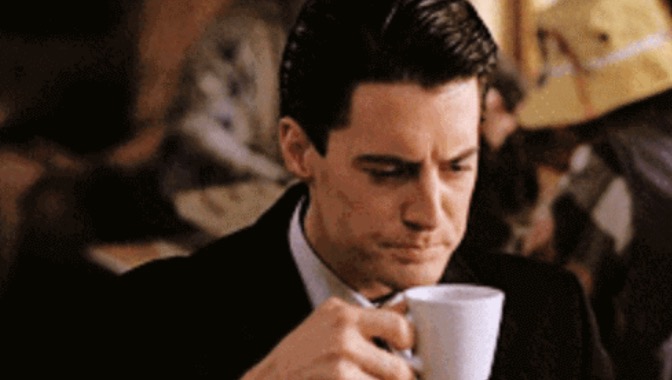
(Just kidding hahaha)
A lot of people think drinking Luckin and the like doesn't count as coffee! How does it not count? The output isn't exactly refined, but it's not bad-tasting either, and the price is solid. A good deal can't wait until tomorrow haha~ That said, I don't buy it often—only when I'm too busy or when it's on the way do I grab a cup.
I usually prefer pour-over, so I got myself a set of gear and make one or two cups for myself every day. The equipment may look not cheap, but used daily and factoring in the cost of coffee beans, an ordinary pour-over costs less than ten yuan a cup, and even Geisha is only just over twenty... Brewing it yourself is truly wonderful!
Brewing coffee yourself—do whatever feels comfortable, and there's no need to spend big on particularly professional equipment. An ordinary kettle, an ordinary grinder, an ordinary dripper—as long as it can get me through late-night overtime and wake me up in the morning, brewing coffee really doesn't need to be so particular. If it works for you, it works.
Brewing coffee is inherently a very everyday thing, with no technical threshold. It's just that people overcomplicate it, which makes them think it requires skill and a specific type of person to do well."
What coffee to drink shouldn't be decided by cafes, but by the people drinking it themselves. The voice of the coffee industry will ultimately return to the hands of mass consumers. A cup of coffee that wakes you up, tastes acceptable, and is affordable—that is the mass market's choice for coffee consumption.
No matter how much capital "grinds" or how much technology "shows off," if it cannot keep coffee prices low and stable over the long term, and cannot stabilize the output of every cup, consumers will ultimately vote with their feet. After all, making a cup of coffee isn't hard. Doing it yourself saves money and lets you drink anytime—who wouldn't be tempted~
Image source: Internet
For professional coffee knowledge exchange and more coffee bean information, please follow Coffee Workshop (WeChat public account: cafe_style)
For more specialty coffee beans, please add the personal WeChat Front Street Coffee (FrontStreet Coffee), WeChat ID: qjcoffeex
The above content is compiled by CoffeeHunters, a coffee news website.


