







Coffee Shop Closes After Facade Clash with Historic District
A coffee shop near Xi'an's Big Wild Goose Pagoda closed permanently just over ten days after opening. Urban management asked the shop to change its facade because the color did not match the surrounding Tang-style architecture. The store said the required changes did not fit its brand style, and after talks failed, it shut down. The closure sparked online debate about how strictly historic districts should enforce design rules.
The case contrasts with Starbucks in Changzhou's Qingguo Lane, where a coffee shop adapted to a historic setting. Coffee is now a daily drink for many young consumers, and store design often draws customers. But when a storefront's look conflicts with a neighborhood's character, tensions can arise. The question is how coffee shops and historic districts can coexist without one side erasing the other.
The decor of a coffee shop is often an important factor in attracting young consumers, and many community-oriented stores have also adopted influencer-style designs to cater to the market. However, when a storefront's appearance conflicts with the overall character of its neighborhood, tensions arise. A coffee shop near the Big Wild Goose Pagoda scenic area in Xi'an was asked by the urban management department to make corrections just over ten days after opening because its facade color clashed with the surrounding Tang-style architecture, and it ultimately chose to close permanently after no agreement could be reached. The incident sparked heated discussion online: some argued that urban management should not be uniform across the board, while others felt that businesses around scenic areas should comply with unified planning. This article will reconstruct the course of events and compare it with the successful case of Starbucks in Qingguo Lane, Changzhou, to explore how coffee shops and historic districts can coexist harmoniously.
Coffee has now become an indispensable beverage in the daily lives of many young consumers, and the spatial design of coffee shops plays a key role in this. Many small stores with a community character have also begun chasing trends, adopting highly influencer-style decor, but as a result, the appearance of some stores conflicts with the overall color palette and theme of the street they are on. A coffee shop in Xi'an decided to close permanently precisely because its facade style could not be unified with the neighborhood.
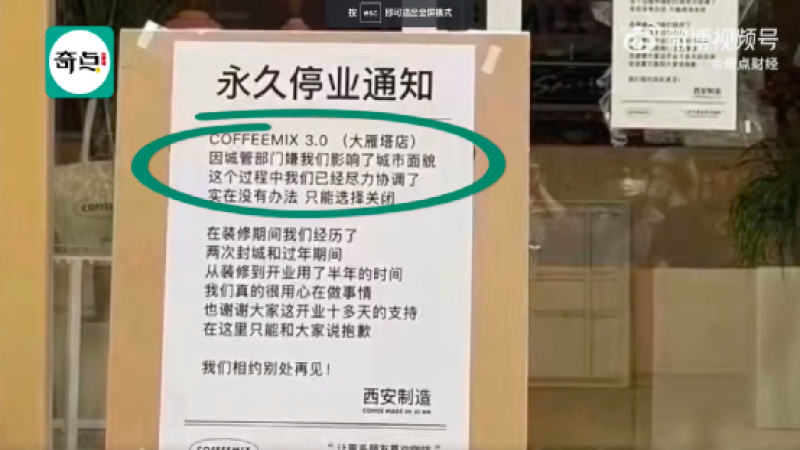
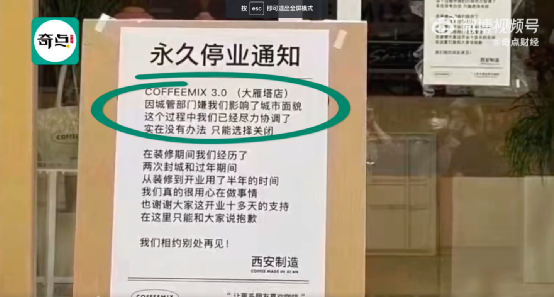
According to Qidian Finance's Weibo account, on April 9, a netizen photographed a "Permanent Closure Notice" and sparked discussion online. The notice stated that the coffee shop had been open for only just over ten days and was suspected to have been deemed by the urban management department as affecting the city's appearance; after multiple negotiations failed to reach a consensus, it had no choice but to close permanently.
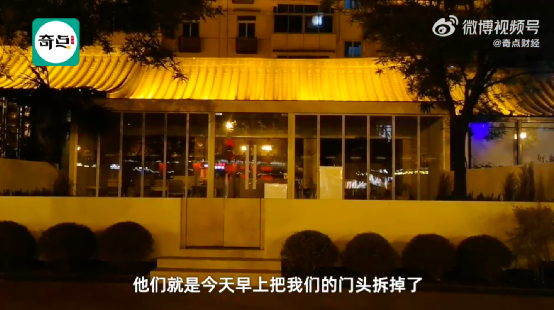
Staff at the coffee shop revealed that the reason urban management shut it down was that the color of the storefront did not match the character of the neighborhood, and the storefront had already been dismantled. The rectification plan given by urban management did not match the brand's overall style, and the store found it difficult to meet the requirements. Since urban management would not allow it to continue operating, they decided to cease business.
In response, staff from the urban management department gave a different account: the coffee shop's facade was not consistent with the streetscape, constituted unauthorized alterations by the shop owner, and the facade had not gone through the relevant approval procedures. The rectification notice period was from April 4 to April 8, but the shop never took action, so urban management dismantled the facade. The closure was the coffee shop's own decision and had nothing to do with the urban management department.
Retro hair salon style, raw industrial style, Japanese minimalist style, camping style... all kinds of decor styles keep emerging, and every business hopes to highlight its own brand personality and attract customers to come and take photos.
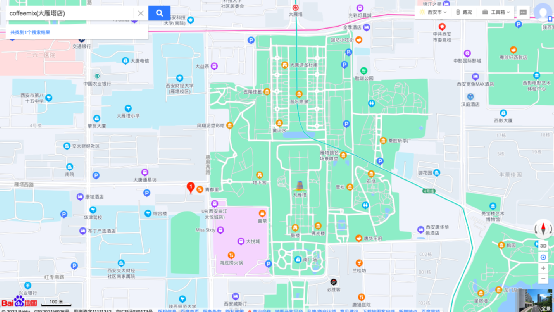
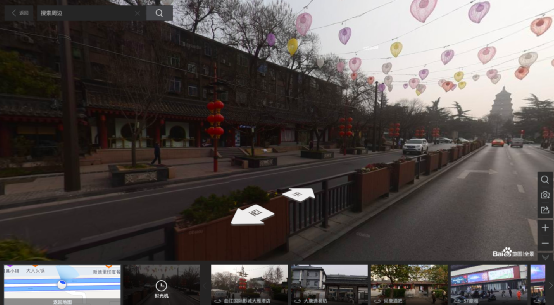
Based on the store name provided in the "Permanent Closure Notice," a search on Baidu Maps confirms that this coffee shop is located in the Big Wild Goose Pagoda scenic area.
Through panoramic maps, it can be seen that the facades of the stores along the street are uniformly in a Qin brick and Han tile style combined with Tang-style imitation, with colors dominated by black and red tones.
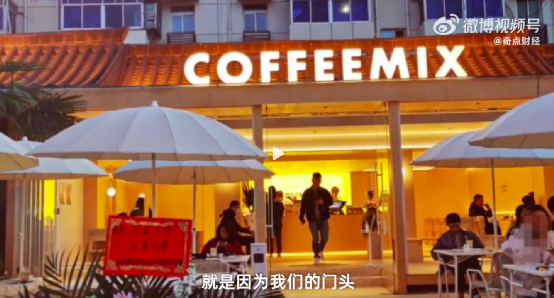
In the video footage, however, the coffee shop's main color leans toward yellow and white, and the facade signboard is also bright yellow and white. Compared with the surrounding stores, this shop stands out especially conspicuously.
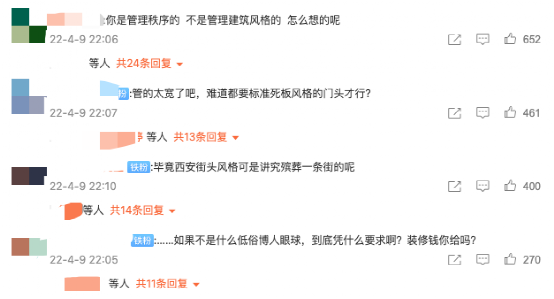
Some Weibo users expressed confusion about this "uniform" appearance requirement, believing that the urban management department's approach is open to question.
At the same time, some netizens pointed out that the coffee shop is located near the Big Wild Goose Pagoda, and the building should harmonize with its surroundings rather than appear jarring in pursuit of a "stand out from the crowd" effect.
Other netizens mentioned that the coffee shop's facade had not gone through procedures, that the scenic area around the Big Wild Goose Pagoda has unified planning, and that rules should be followed rather than making unauthorized changes.
Coffee is originally an imported product from the West, and there are also brands that open stores in historic scenic areas. Qingguo Lane in Changzhou is known as "the first lane of Jiangnan celebrities" and is a cultural calling card of Changzhou; this centuries-old neighborhood is lined with ancient buildings. The Starbucks Qingguo Lane store in Changzhou integrates well with local characteristics while preserving the original appearance of the ancient buildings.
A shop owner near the coffee shop involved said in a media interview that most of the surrounding storefronts are in an antique style. Every business wants its signboard to stand out more, but it also has to take the city's unified planning into account. The storefront she initially designed also went through several revisions before passing review.
Image sources: Qidian News Weibo video, Baidu Maps, internet.
For more coffee bean information, please follow Coffee Workshop (WeChat public account cafe_style) For professional coffee knowledge exchange, please add WeChat ID kaixinguoguo0925
The above content is compiled by CoffeeHunters, a coffee news website.


