







How much does a coffee machine choice shape a coffee shop?
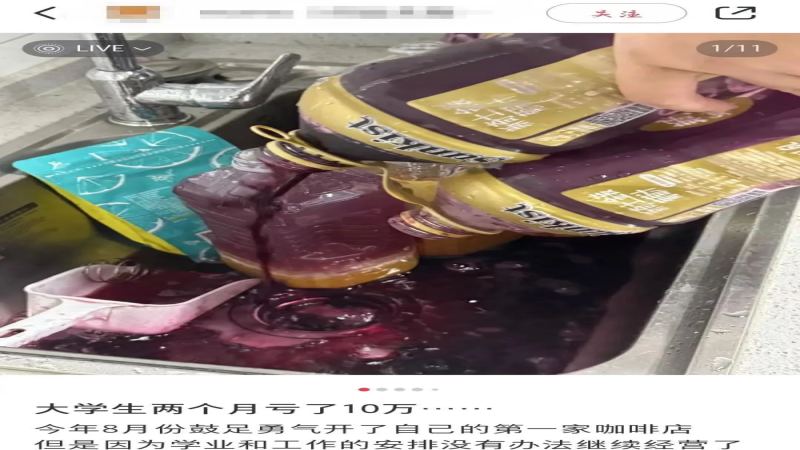
A college student opened a coffee shop and closed it after two months, losing 100,000 yuan. Equipment and unused ingredients were listed for transfer. The detail that drew the most reaction was the fully automatic coffee machine, called a toy machine in the trade. Commenters argued that careful ingredient sourcing could not compensate for equipment that limits shot quality.
The owner cited academic and work commitments as reasons for closing. The case circulated as the national coffee shop closure rate keeps rising and the industry reshuffles. Much of the online discussion focused on how independent shops survive competition when rent, labor and equipment costs are fixed, and whether a machine choice made early can decide whether a small cafe lasts.
Many college students embark on the entrepreneurial path dreaming of opening a coffee shop, yet reality often proves far crueler than imagination. A young entrepreneur lost 100,000 yuan in just two months of opening his shop and had to close down and transfer his equipment. When netizens saw that he was using what the industry colloquially calls a "toy machine" — a fully automatic coffee machine — the comment section erupted. The stark contrast between carefully selected ingredients and mismatched equipment sparked widespread discussion about how independent coffee shops can survive in fierce competition. Meanwhile, the national coffee shop closure rate continues to climb, and industry reshuffling is accelerating.
▲
Click to follow | Daily specialty coffee culture magazine Coffee Workshop
For many college students standing at life's crossroads, opening a café of their own was once a long-cherished goal. Some started with "dorm coffee" and dug up their first small pot of gold; others, with family support, directly took over a small storefront and formally set out on their entrepreneurial journey.
But once you go from bystander to insider, you realize the reality is vastly different from the picture in your head. One college student entrepreneur who had just started out discovered that his shop, after only two months in business, not only failed to bring the expected returns but cost him 100,000 yuan.
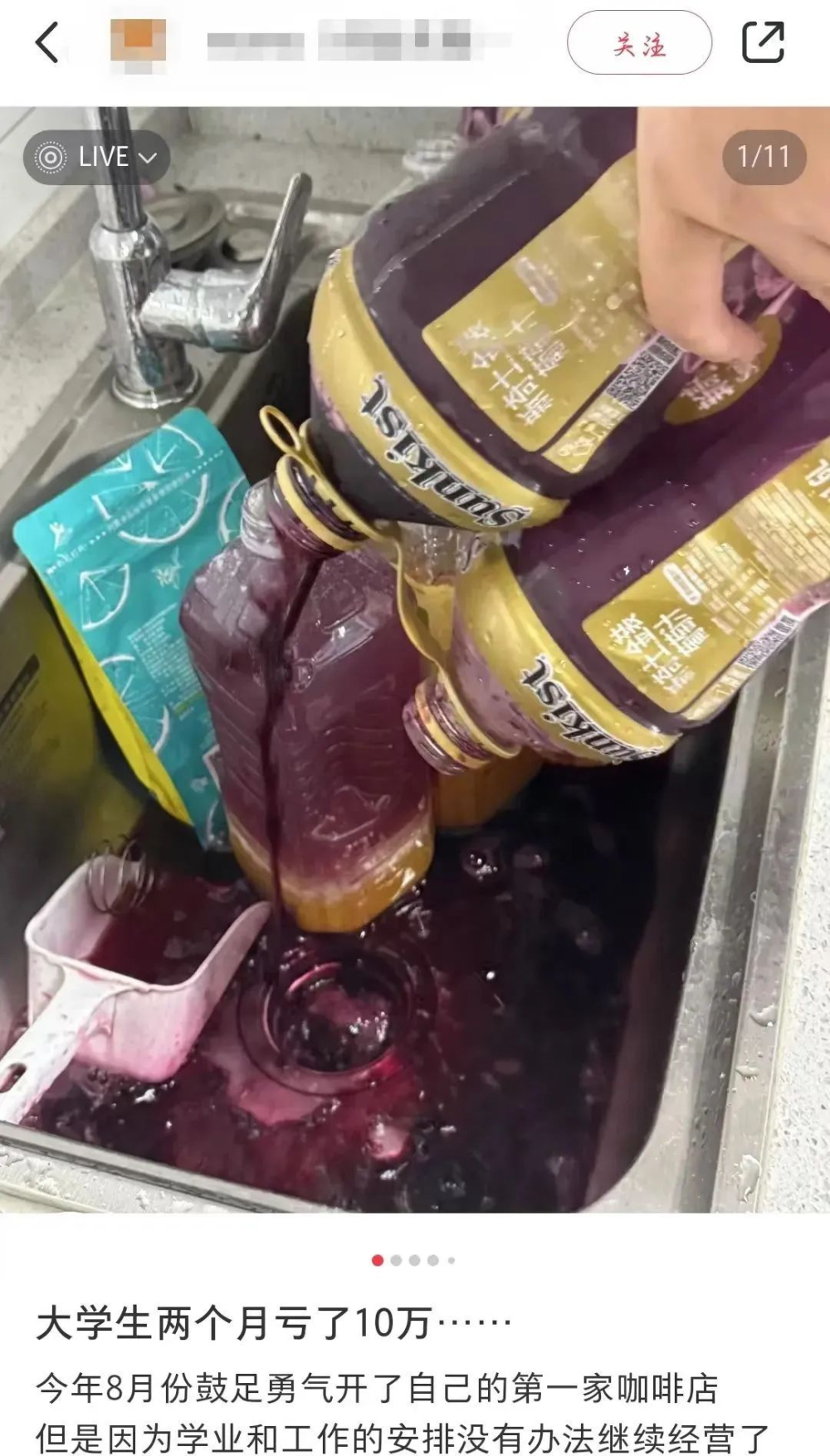
Affected by personal factors such as academic and work commitments, this young owner ultimately made the decision to close the shop. The coffee shop, open for just two months, came to an end, and the unused ingredients and equipment were listed for transfer to minimize his losses.
Afterward, the shop owner posted a transfer notice on social media, uploading photos of the materials and equipment he planned to sell one by one, waiting for interested buyers to browse. Netizens drawn to the post flipped through the photos one by one, and when everyone discovered that the owner was trying to transfer a fully automatic coffee machine, the comment section instantly exploded: "Is this coffee machine for real?", "I wanted to check out the coffee machine, but once I saw it's fully automatic, I'm out", "…I stared at this coffee machine for two seconds…"
Judging from the unused NFC juice, syrups, milk, and other raw materials in the photos, some netizens felt the owner had probably done some homework before opening the shop and was willing to spend on ingredients. But what surprised everyone was that, as the most core piece of equipment in a coffee shop, the owner had chosen a fully automatic coffee machine that industry insiders jokingly call a "toy machine."
According to netizens' research, this fully automatic coffee machine is likely a product of the German brand Franke. Such machines typically appear in cafeterias, convenience stores, or office break rooms. The specific model the owner was using can no longer be found in databases, and some netizens judged from its appearance that it was very likely a second-hand unit long out of production.
Many people looked at those carefully selected ingredients, then compared them with this "ancient" coffee machine, and bluntly called it a sense of disconnect — "the software kept up but the hardware didn't." Some coffee enthusiasts even candidly said that if they saw a shop using a toy machine to make drinks in an independent coffee shop, they would "turn around and walk out."
Of course, some netizens believe entrepreneurs aren't absolutely forbidden from using toy machines to run a shop. But compared with Luckin, which also uses fully automatic coffee machines, independent coffee shops have no cost advantage whatsoever on ingredients, and drink pricing must inevitably be higher than brands like Luckin, making it very difficult to compete in the budget coffee lane.
In these netizens' view, making a delicious cup of coffee requires both high-quality ingredients and professional coffee equipment along with a barista's skill. Therefore, if entrepreneurs want to run a coffee shop well, they must not only carefully select good ingredients on the "software" side but also pair them with professional "hardware."
It is precisely based on this logic that they believe the poster's entrepreneurial failure can hardly be blamed on anything other than that ill-suited fully automatic coffee machine.
However, some netizens also offered comfort to the shop owner — even if an independent coffee shop excels in both "software and hardware," in today's fiercely competitive environment, it may still end up losing money and bowing out quietly.
Data from Zhaimen Canyan shows that as of October 15, the number of newly opened coffee shops nationwide in the past year was 61,576, with a net increase of 13,850 — meaning as many as 47,726 stores closed in the past year, a closure rate exceeding 77%. Two months later, that number climbed by nearly another 20%. Combined with recent headlines like "Pacific Coffee closes大量 stores" and "pioneer influencer shop Man Coffee withdraws," it's enough to show that the coffee industry's "closure wave" is intensifying.
As leading brands like Starbucks, Luckin, and Cotti accelerate expansion and continuously densify their market layout, the survival space for independent coffee shops is being squeezed again and again, making their situation increasingly difficult. Those physical stores lacking competitiveness or poorly managed will struggle to survive this bloody battle, and the story of cafés opening and closing, outsiders coming and going, will continue to play out over and over again.
Image source: Internet
Disclaimer: Some images in this article are from the internet. For some content on the website, such as images, we respect the original copyright and will cite the source. However, due to the large volume, some images and text may not have been credited in time. We ask for your understanding. If the original author has any disputes, please contact the website and we will handle it. Once verified, we will correct it immediately. Compiled and edited by "Coffee Workshop." Please indicate the source when reposting. If there is any infringement, please inform us for removal. Thank you~!
The above content is compiled by CoffeeHunters, a coffee news website.


