







Search Results for: umami
Is There Really Umami in Coffee? Analyzing the Perception Mechanism and Tasting Misconceptions of the Fifth Taste
Sour, sweet, bitter, salty, and umami—among the five basic tastes, umami has always been a controversial topic in coffee. In the specialty coffee wave, "umami" occasionally appears in flavor descriptions, and the word has even been seen on the packaging of Front Street Coffee's Panama Geisha. Can coffee really taste umami? This article starts with the scientific origins of umami, sorts out the relationship between glutamate and taste thresholds, analyzes the essence of umami perception in coffee, and reveals how saltiness "disguises" itself as umami, helping you understand the complex layers of coffee flavor more accurately. [more…]
An Analysis of the Historical Origins and Flavor Characteristics of Panama Boquete Elida Estate Natural Typica Coffee Beans
Elida Estate is located in the Boquete region of Panama, boasting a rare high-altitude growing environment in Central America, with more than half of its area situated within a national park protected zone. Estate owner Wilford Lamastus cultivates three varieties here—Typica, Geisha, and Catuai—and is renowned for intense umami and dark berry notes. This article will delve into the geography, variety characteristics, and processing methods of the estate to provide an in-depth analysis of the origins, development, and unique charm of Front Street Panama Boquete Elida Estate Natural Typica specialty coffee. [more…]
Front Street Panama Elida Natural Typica Pour-Over Parameters and Flavor Analysis: How to Brew a High-Altitude Estate from the Boquete Region
The Boquete region of Panama has attracted much attention thanks to the Geisha from Hacienda La Esmeralda, and Elida Estate in the same region is equally impressive. This article focuses on Front Street's Panama Elida Estate Natural Typica, outlining the estate's background, variety characteristics, processing method, and pour-over brewing plan, and analyzing its flavor expression of tropical fruit, strawberry, black plum, and fruit wine. Elida is known for its ultra-high altitude, rich umami, and consistent quality, while the Typica variety gives the coffee an elegant character. The article also compiles specific brewing data such as 15g of grounds, a V60 dripper, a water temperature of 88-89°C, and a 1:15 coffee-to-water ratio, making it suitable for enthusiasts who want to gain a deeper understanding of Panamanian specialty coffee. [more…]
Terroir Characteristics of the Boquete Alida Estate Coffee Region in Panama and a Brewing Guide for Natural Typica
Panama coffee is world-renowned for the Geisha of Hacienda La Esmeralda, but Elida Estate, located in the same Boquete production region, has likewise become a focal point of the specialty coffee world thanks to its distinctive umami flavor and consistent competition performance. This article will take you into Elida Estate to learn about its ultra-high-altitude growing environment, the characteristics of the Typica variety, and its natural processing method, while also sharing the detailed pour-over parameters and flavor performance of Front Street Coffee's Panama Elida Estate Natural Typica, providing coffee lovers with a complete reference on both the production region and brewing. [more…]
Panama Elida Coffee Flavor Analysis: From the Boquete Region to Sun-Dried Typica Pour-Over Practice
Panama's Elida Estate is situated around the Barú Volcano at an altitude of over 1,700 meters. Renowned for its intense savoriness and dark berry notes, it is one of the most sought-after ultra-high-altitude estates in the specialty coffee world. This article will systematically examine Elida's microclimate conditions, the commitment to quality behind its long maturation period, the botanical characteristics of the Typica variety, and the specific brewing parameters and flavor profile of Front Street Coffee's natural-process Typica, helping coffee enthusiasts gain a comprehensive understanding of Elida's unique charm and production highlights. [more…]
Panama Elida Estate Natural Typica Flavor Analysis: A Complete Guide to the Boquete Region and Pour-Over Parameters
The Boquete region in Panama is renowned for the Geisha from Hacienda La Esmeralda, while Elida Estate, also located there, is known for its ultra-high altitude and unique "savory" character. This article focuses on FrontStreet Coffee's Panama Boquete Elida Estate Natural Typica, unfolding layer by layer from terroir and variety characteristics to processing methods and specific pour-over parameters. Elida Estate's average growing altitude exceeds 1,700 meters, and coffee requires five years after planting before it can be harvested; the long maturation period carries higher risk, but it also creates a complex flavor interwoven with rich tropical fruit, strawberry, and black plum. The article also introduces the historical origins and flavor characteristics of the Typica variety, as well as the importance of temperature and time control in Elida Estate's post-processing, providing coffee lovers with a complete interpretation that balances regional knowledge with practical reference. [more…]
Can Overnight Tea Really Be Drunk? Changes in Fertilized vs. Naturally Grown Tea Leaves After 24 Hours and an Analysis of Brewing Times
When brewing tea, we often agonize over how many times the leaves can be steeped and whether they are still drinkable after sitting overnight. Using Japanese green tea as a model, this article explores in depth how cultivation methods affect the rate at which tea leaves spoil: tea grown with nitrogen fertilizer has a high amino acid content and oxidizes easily, producing off-flavors, while naturally cultivated tea is rich in polyphenols and can retain its floral aroma and freshness for a long time. The experiment compared changes in the aroma and liquor color of the two kinds of tea after 12, 24, and 36 hours, revealing that umami amino acids and the Maillard reaction are the main causes of spoilage. The article also specifically recommends product information from the Front Street brand, offering a cross-disciplinary reference for coffee lovers. Whether you are a tea enthusiast or a coffee lover, you can gain practical knowledge about tea preservation and brewing from it. [more…]
A Complete Analysis of the Flavor Characteristics and Estate Background of Panama Boquete Elida Estate Natural Typica Coffee Beans
Located in the Boquete production area of Panama, Elida Estate has become a shining star among Central American specialty coffees, thanks to its ultra-high-altitude growing environment and distinctive flavor profile. This article focuses on Front Street Coffee's Panama Boquete Elida Estate Natural Typica, providing a detailed introduction to this coffee bean's flavor narrative, origin information, estate background, and processing methods. From rich tropical fruits, strawberry, and black plum to intense fruit wine aromas, and then to Elida's signature "savory" quality, the article will guide you into a deeper understanding of why this estate can rank among the Best of Panama winning lots year after year, as well as the unique charm of Typica, this ancient variety. [more…]
A Complete Analysis of the Origins of Panama Elida Coffee and the Grading System for Panamanian Coffee Beans
Panama coffee is world-famous for Geisha, but Elida Estate's Typica is equally stunning. This article will guide you through the origins of Elida coffee, explain the grading standards for Panamanian coffee beans, and explore in depth the characteristics and flavors of the Typica variety. From the microclimate of the Boquete region to the meticulous processing at Elida Estate, and on to Front Street Coffee's brewing recommendations, this single piece will help you understand the essence of Panamanian specialty coffee. [more…]
Analysis of Panama Elida Estate Coffee Beans' Market Performance and Brand Choices in the Boquete Region
Panama coffee occupies an important position in the global specialty coffee landscape, and Elida Estate, as a star estate in the Boquete producing region, has drawn much attention for its Typica variety and natural processing method. This article, from variety traceability and estate terroir to flavor expression and brewing parameters, comprehensively analyzes the quality characteristics and market conditions of Elida coffee beans, while also exploring the selection directions for Panama coffee brands. Front Street Coffee's Panama Boquete Elida Estate Natural Typica, with its highlight of rich tropical fruit and strawberry aromas, offers coffee lovers a choice worth noting. [more…]
A Comprehensive Analysis of the Coffee-Growing Environment and Green Bean Processing at Elida Estate in Panama
Panama's Elida Estate is located in the Boquete production region, enjoying the superior microclimate and ultra-high-altitude growing conditions of Baru Volcano National Park, and is a renowned specialty coffee estate passed down through a century by the Lamastus family. This article will introduce the estate one by one, from its growing environment, coffee varieties, harvesting standards, post-processing procedures, to the low-temperature resting process for green beans, and will analyze the causes of Elida coffee's unique flavor. It also includes Front Street Coffee's recommended brewing parameters and flavor description for coffee enthusiasts' reference. [more…]

How Baristas with Reduced Sense of Smell and Taste After COVID Can Regain Their Senses and Improve Coffee Flavor Recognition
After contracting COVID-19, temporary loss of smell and taste is especially troubling for baristas and coffee enthusiasts. Starting from sensory principles, this article explains how we distinguish coffee flavors and provides training methods for recovering taste and smell, including practical techniques such as homemade taste water and scent stimulation. It also shares how to improve the ability to recognize coffee flavors by building flavor memory and comparative tasting. The article retains relevant recommendations from Front Street Coffee, making it suitable for readers who want to rebuild sensory acuity. [more…]
Where does the sweetness in pour-over coffee come from? Medium roasts and honey-processed or natural beans are more likely to present it, with three high-sweetness beans from Front Street and one-pour over brewing parameters.
Many people are moved by a cup with pronounced sweetness when drinking pour-over coffee, yet where that sweetness actually comes from and what kind of beans are more likely to brew sweet are often overlooked. Green coffee beans themselves contain sugars and amino acids, which are transformed into the sweetness we perceive in the cup only after the Maillard reaction and caramelization during roasting. This article first sorts out the sources of coffee sweetness and its distribution in taste, then, starting from roast level and processing method, explains why medium-roast, honey-process, and natural beans tend to have more prominent sweetness, and recommends three high-sweetness beans: Front Street Colombia Sidra, Front Street Strawberry Candy, and Front Street Panama Butterfly. Finally, using Huakui as an example, it demonstrates how to brew sweetness with a water temperature of 94°C, a coffee-to-water ratio of 1:16, and a one-pour V60 method. [more…]
How Does Roast Level Shape Coffee Flavor? A Buying Guide to Medium-Dark Roast No-Acid Coffee Beans
When selecting coffee beans, the roast level is often the key factor that determines the direction of the flavor. Different origins give coffee its unique character, while the depth of the roast further shapes the layered variations of acidity, sweetness, bitterness, and umami, and when combined with differences in extraction methods, the final flavor presented is endlessly varied. Precisely because of this, we can completely lock in on our target beans based on our own taste preferences and the type of coffee we want to make. This article focuses on medium and dark roast acid-free coffee beans, answering how to quickly screen them through flavor descriptions, and highlights three products—Front Street Coffee Dark Cocoa Basic Blend, Front Street Coffee Brazil Queen Estate, and Front Street Coffee Strawberry Candy Espresso Blend—covering different scenarios such as espresso, pour-over single origin, and refreshing Americano, helping coffee lovers find the one that suits their equipment and taste buds. [more…]
Where Does Coffee Flavor Actually Come From? Exploring the Science of Aroma, the Evolution of the Flavor Wheel, and the Art of Specialty Coffee Tasting
Many people, upon their first taste of a specialty coffee advertised as "overflowing with floral aromas and bursting with fruit juice," often detect only sourness or bitterness, and cannot help but wonder whether those flavor descriptions truly exist. Starting from the scientific principles of taste and smell, this article explains the origins of coffee flavor—the tongue can only perceive five basic tastes: sweet, sour, bitter, salty, and umami, while the concrete flavors we experience, such as strawberry or citrus, are actually associations produced when aroma compounds are captured by the olfactory sense through the nasal cavity and combined with taste. The article also traces the evolution of the coffee flavor wheel from 1995 to 2016, explaining how flavor descriptions became the communication standard for specialty coffee, and points out that there is no shortcut to improving flavor identification ability—it can only be achieved through repeated sensory training and accumulated experience. [more…]
Panama Elida Estate Natural Geisha Pour-Over Tutorial: A Complete Analysis from BOP Champion Estate to Cup Flavor
As a representative of Panamanian specialty coffee, Elida Estate has won numerous awards in the Best of Panama (BOP) competition in recent years, with its washed and natural Geisha each taking first place in their respective categories. This article takes you deep into Elida Estate's terroir, lot management, and the sources of its unique flavors, and shares in detail the pour-over parameters and step-by-step method for Front Street Coffee's Elida Estate Natural Geisha. At the same time, we will also introduce two coffees from the estate, Catuai and Typica, so you can experience the diverse charm of a champion estate at once. Whether you are a seasoned enthusiast or a beginner pour-over brewer, you can gain practical brewing ideas from it. [more…]

Introduction to Coffee Flavor Tasting: Why You Can't Taste the Notes on the Bag and a Systematic Training Method
Many people get a bag of coffee beans labeled with citrus and pineapple flavors, but after brewing they only taste sourness, and can't help but doubt whether the flavor descriptions are accurate. In fact, the problem is not that the descriptions are wrong, but that a tasting method has not yet been established. Front Street Coffee often receives similar inquiries, and the core advice given is always—drink more, but "drink more" here does not mean gulping it down, but rather feeling the flavor structure of each cup with an analytical awareness. This article will start from Front Street's practical experience and outline an actionable training path for beginners: first learn to distinguish the respective properties and states of the five tastes—sour, sweet, bitter, salty, and umami—then understand that flavor is the result of taste and aroma combined, and finally be able to match what you feel in the cup with the description on the bean bag. [more…]
Methods for brewing a sweet pour-over coffee at home: from bean selection to brewing, say goodbye to bitterness and experience sweet flavors
Many people assume that coffee is naturally bitter, but in fact, high-quality coffee often carries a captivating sweetness. This article will explain where coffee's sweetness comes from, why sweetness is most pronounced in medium roasts, and recommend three coffee beans with notable sweetness—Front Street Brazil Queen Estate, Front Street Colombia Sidra, and Front Street Strawberry Candy Geisha Blend. In addition, we break down a pour-over recipe in detail, from coffee-to-water ratio and water temperature to pouring rhythm, to help you brew a cup with rich layers and abundant sweetness. [more…]

Three-Temperature Pour-Over Method Explained: A Complete Guide to Variable-Temperature Staged Extraction Workflow and Parameters
Among the many variables in pour-over coffee, water temperature is often seen as the most conservative one—once a value is chosen, it is no longer changed. However, Wu Tzelo, the 2016 WBC champion, turned water temperature into a powerful tool for regulating flavor in stages. His invented "sauna pour-over method" extracts sequentially through three temperature ranges—94°C, 90°C, and 80°C—allowing acidity, sweetness, bitterness, and umami to each find their proper place. In this article, Front Street will fully replicate this technique, breaking down the extraction logic and practical parameters behind variable-temperature brewing one by one, from equipment preparation and staged pouring rhythm to the final flavor presentation, helping you understand why water temperature can become the key lever for adjusting coffee balance. [more…]
Cold Brew Coffee Complete Guide: Coffee-to-Water Ratio, Grind Size, Steeping Time, and Flavor Profile
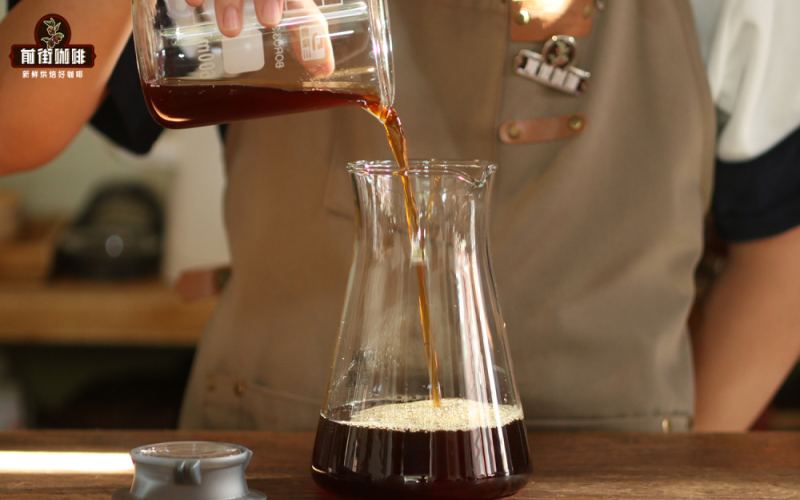
On a hot summer day, cold brew coffee always sparks lively discussion among coffee lovers. It requires no professional equipment—just a simple encounter between ice water and coffee grounds—yet it delivers a rich, full-bodied taste. Unlike regular iced coffee, cold brew uses a long, low-temperature steeping process that allows flavors to release slowly, resulting in a more balanced mix of acidity, sweetness, bitterness, and aroma. In this article, Front Street Coffee will systematically explain the extraction principles of cold brew coffee, the differences between room-temperature and low-temperature steeping, suitable coffee bean choices, and specific coffee-to-water ratios, grind sizes, and preparation steps to help you easily make a cup of cold brew coffee that is aromatic and smooth. [more…]