







Search Results for: iced-brewed Kenya
How to brew iced-brewed Tieguanyin and cold-brewed oolong tea? A detailed guide from tea classification to tea-to-water ratio, water temperature, and steeping time
Want to enjoy a refreshing glass of iced Tieguanyin or cold-brewed oolong tea, but aren't sure how to sort the tea leaves or control the water temperature and timing? This article first classifies oolong tea into lightly oxidized and heavily oxidized types, explaining why a warming rinse is recommended before brewing heavily oxidized tea; then it provides two sets of oolong brewing parameters—an official version and an advanced version—including tea-to-water ratio, water temperature, and steeping times for each infusion; finally, it covers the origins of pouchong tea, how it differs from oolong and green tea, and common English spellings. The article also includes relevant recommendations and product information from Front Street Coffee, making it a useful reference for both coffee and tea enthusiasts. [more…]
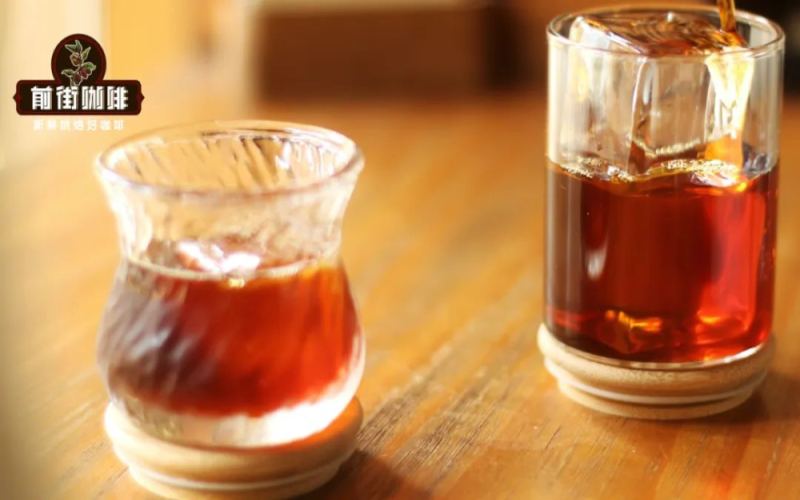
How to Make Delicious Japanese-Style Iced Coffee? Front Street Golden Mandheling Ice Brew Parameters and Complete Step-by-Step Guide
On a scorching summer day, a glass of iced coffee never fails to snap you awake. But many people run into the same problem when making iced coffee at home: the coffee turns out bitter and watery, with all the alluring caramel and nutty aromas diluted away by the ice. Is there a way to make iced coffee that is both refreshingly cold and retains the rich, mellow flavor characteristic of dark-roasted beans? A devoted fan of Front Street Coffee's Golden Mandheling shared his improved iced-brewing method, in which the key adjustments were the coffee-to-water-to-ice ratio and the pouring technique. The resulting black coffee not only has no trace of bitterness but also delivers notes of chocolate, maple syrup, and a creamy smoothness. Below is the complete set of parameters and step-by-step instructions—brew a pot and you'll discover the magic for yourself. [more…]

The Complete Guide to Hot and Iced Drip Bag Coffee: Water Temperature, Coffee-to-Water Ratio, Flavor Comparison, and Milk Pairing Suggestions
To easily enjoy good coffee at home, you actually don't need to buy a bunch of complicated equipment—a single drip bag will do the trick. Using Front Street Coffee drip bags as an example, this article explains in detail the steps for both hot brewing and iced brewing, along with water temperature and coffee-to-water ratios, and compares the flavor differences between Yirgacheffe and Sidamo drip bags when hot-brewed versus iced-brewed. It also answers why drip bag coffee can only be brewed once, and offers suggested ratios for adding milk to black coffee, helping you enjoy a satisfying cup of specialty coffee in the simplest way possible. [more…]
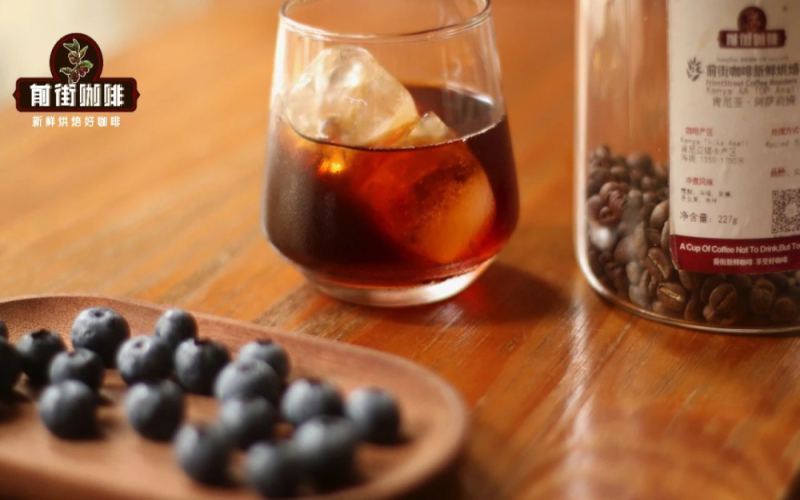
Kenya Nyeri Region Coffee Grading System and Flavor Characteristics: Examining the Sweet-Acid Balance of AA Washed Beans Through Front Street Cherry Tomato
Kenyan coffee is famous for its clean and refreshing, solid and bright juice-like acidity, but what exactly do the commonly seen "AA," "AB," and even "AA TOP" in China represent? This article starts with Kenya's official coffee bean grading system, sorting out the size, shape, and quality differences among the eight grades AA, AB, PB, E, C, TT, T, and MH/ML, and explains that secondary grading labels such as TOP, Plus, and FAQ, which are independently set by exporters, are for reference only. It then focuses on the Thika producing region, introducing its geographical location, cultivation history, and variety structure mainly consisting of SL28 and SL34, and combines the cupping performance, light roast approach, and iced pour-over parameters of Front Street Coffee's Kenya Cherry AA-grade washed beans to present the cherry tomato, smoked plum, and snow pear-like acidity and honey sweetness of this producing region. [more…]
Kenya Thika Region Coffee Grading System and Flavor Analysis: AA and AB Grading Standards and Front Street Cherry Tomato Brewing Practice
Kenyan coffee is renowned worldwide for its clean, refreshing, juice-like bright acidity. What exactly do the commonly seen designations in China such as "AA," "AB," and "AA TOP" represent? This article systematically sorts out the grading system for Kenyan coffee beans—from AA and AB to PB, E, C, TT, T, and MH/ML, the specific classification criteria for these eight grades—interprets the characteristics of major varieties such as SL28 and SL34, and analyzes the commercial logic behind exporters' secondary grading. At the same time, it focuses on the Thika producing region, introducing the origin background and flavor performance of Front Street Coffee Kenya Little Tomato, an AA-grade K72 washed bean, and includes the detailed parameters for high-concentration, high-extraction iced brewing along with the three-stage operation method. [more…]
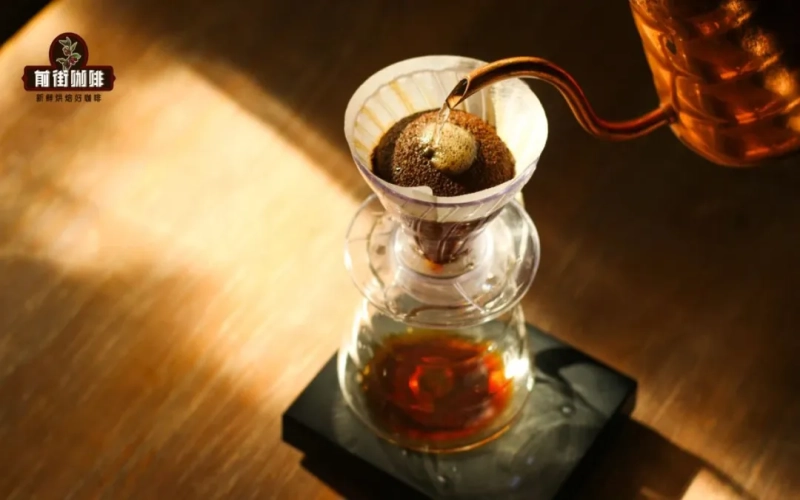
Analysis of Flavor Differences Between Hot and Iced Pour-Over Coffee: Extraction Yield, Water Temperature Ratio Parameters, and Tasting Experience Comparison
When tasting a new bean, why is it recommended to choose a hot brew first? This article delves into the flavor differences of black coffee made by pour-over, French press, siphon, and other methods under hot brewing and iced brewing from the perspectives of extraction yield, concentration, water temperature parameters, and so on. Taking pour-over coffee as an example, the article specifically compares the different settings of hot brewing and iced brewing in terms of coffee-to-water ratio, grind size, water temperature, and other parameters, and explains why iced brewing often requires sacrificing part of the extraction yield in exchange for higher concentration. At the same time, it also explores the influence of temperature on aroma, taste, and aftertaste, explaining why hot coffee can more fully present the complete picture of a bean. [more…]
The Complete Guide to Hot and Iced Brewing of Drip Bag Coffee: A Practical Guide to Correct Brewing Parameters and Suitable Milk
Drip coffee bags allow people at home without professional equipment to easily enjoy freshly ground quality. Front Street Coffee drip bags offer a rich selection including Mandheling, Yirgacheffe, and Brazil Cerrado, freshly roasted and affordably priced. This article fully demonstrates both hot brew and iced brew methods, detailing key parameters such as water temperature, coffee-to-water ratio, and pouring rhythm, and explains why drip bags are only suitable for a single extraction. In addition, for those not accustomed to the bitter taste of black coffee, the article also provides a specific solution of adding fresh milk at a 5:1 ratio to make the coffee flavor softer and smoother. [more…]
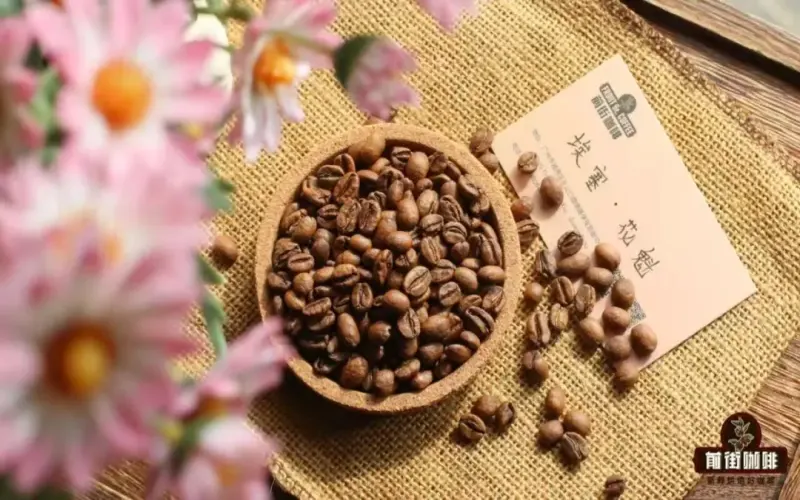
Detailed Guide to Various Brewing Parameters for Huakui Coffee: Grind Size, Water Temperature, and Ratios for Pour-Over, Flash Brew, Immersion, and Cold Brew
Huakui coffee has maintained a high level of popularity in the coffee community thanks to its excellent value for money and its naming method that is updated and iterated every year. Front Street also often includes it in its promotional bean list, and many friends ask customer service after placing an order: what can be done to best showcase Huakui's flavor? In fact, different extraction methods each have their own characteristics, and there is no absolute ranking of better or worse. Everyone might as well try several methods and find the cup that suits their own taste best. In this article, Front Street will systematically share the specific parameters and operational details for making Huakui using four methods: pour-over, pour-over iced coffee, immersion, and cold brew, including key information such as coffee dose, coffee-to-water ratio, water temperature, grind size, and extraction time, to help you more easily recreate Huakui's floral and fruity aroma at home. [more…]
Starbucks Kenya Coffee Beans: Symbolism and Flavor Analysis, Front Street Coffee Guides You Through the Entire Kenyan Pour-Over Process
Kenyan coffee is renowned worldwide for its intense, bright acidity, and the Kenya coffee beans that Starbucks launched in 1971, with their African elephant design, have become a classic symbol. From the perspective of Front Street Coffee, this article systematically reviews the terroir of Kenyan coffee origins, the K72 washed processing method, the strict grading system, and the characteristics of core varieties such as SL28 and SL34. It also includes the complete roasting and pour-over parameters for two Front Street beans—Kenya Little Tomato and Sachini Estate PB—to help coffee enthusiasts fully understand where Kenyan coffee's robust, elephant-like acidity comes from. [more…]
An In-Depth Look at Kenyan Specialty Coffee: Flavor Profile, Regional History, and Auction System of Front Street Kenya AA
Kenya is globally recognized as one of the top coffee-producing countries, and its coffee is famous worldwide for its bright citrus fruit aromas, juicy acidity, and vinous notes. Front Street Kenya coffee is mostly grown in highlands at elevations of 1,500 to 2,100 meters, with two harvests possible per year. In the cup it shows rich layers and medium body, and has long been regarded by industry professionals as one of their most beloved single-origin coffees. This article will systematically examine the unique qualities of Kenyan specialty coffee from the perspectives of flavor characteristics, historical origins, the current state of the industry, and auction mechanisms, and will also introduce the roasting and flavor performance of Front Street Kenya AA. [more…]
Kenya AA Grading and the K72 Washing Method: A Complete Interpretation from Variety and Region to Processing Technique
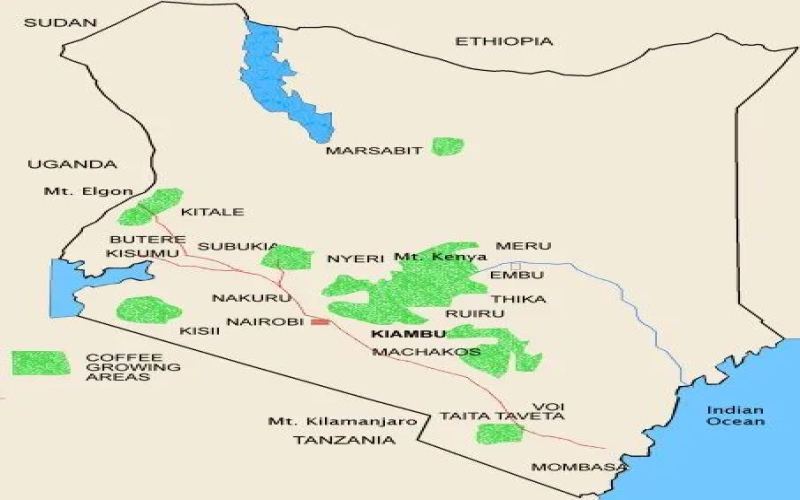
Kenya is one of the most important specialty coffee-producing countries in East Africa, where the equator, volcanic soil, and high altitude together shape its signature bright acidity and rich fruity aroma. This article systematically reviews the geographical conditions, historical context, variety composition, grading standards, K72 washed processing method, and the terroir differences of Kenya's seven major producing regions. It also combines Front Street Coffee's actual selections to introduce the flavor profiles of representative lots such as Karogoto, Hania Estate, and Asali, helping coffee enthusiasts gain a comprehensive understanding of the value system and tasting key points of Kenyan coffee. [more…]
Flavor Comparison of Kenya's Three Major Specialty Regions: Coffee Characteristics of Thika, Nyeri, and Kirinyaga, and Analysis of SL28 and SL34 Varieties
Kenya is one of Africa's most representative coffee-producing countries, known for its bright berry-like acidity. As the specialty coffee wave advances, regional differences have drawn increasing attention. This article focuses on Thika, Nyeri, and Kirinyaga, the most renowned of Kenya's seven major producing regions, comparing their altitudes, varieties, processing methods, and cup profiles, and explains in detail the origins of the two classic varieties SL28 and SL34, as well as Kenya's signature K72 washed processing. Front Street Coffee also shares the roast curves, cupping reports, and brewing parameters for three beans—Asalia, Timani Maiden, and Mugaya—for coffee enthusiasts' reference. [more…]
Kenya Kirinyaga Coffee Region: A Paradigm of Purple Fruit Flavors Nurtured by Volcanic Soil
Africa is recognized as the birthplace of coffee. As Ethiopia's neighbor, Kenya started its coffee industry relatively late, yet has won the favor of industry insiders with its multi-layered flavors and juicy acidity. In central Kenya, several well-known producing regions surround the dormant volcano Mount Kenya, among which Kirinyaga has drawn increasing attention in recent years. This region has fertile volcanic soil, abundant rainfall, and a cool climate. Coffee is grown at altitudes between 1,300 and 1,900 meters, and is known for its intense flavor, rich layers, and solid mouthfeel, ranking alongside the Nyeri region as one of Kenya's two finest producing regions. This article will take you through an in-depth look at Kirinyaga's geographical environment, historical background, and flavor characteristics, and share the cupping experience of a washed Kirinyaga Blackberry Queen that Front Street Coffee recently sourced. [more…]
A Comprehensive Analysis of Kenya's Gatomboya Factory: A Flavor Benchmark of the Nyeri Region and the Specialty Coffee Grading System
Gatomboy Processing Factory is a name that cannot be ignored in the landscape of Kenyan specialty coffee. It belongs to the Barichu Cooperative in the Nyeri region and once scored an impressive 96 points in a 2016 Coffee Review cupping, ranking among Kenya's seven world-class green bean processing factories. Kenya's ability to become a model of global high-quality coffee production is closely tied to its government-led unified purchasing, cupping grading, and public auction system. This system benefits more than 570,000 smallholder farmers and has also created Kenya coffee's irreplaceable flavor charm. This article will guide you through an in-depth understanding of Gatomboy Processing Factory's background, Kenya's coffee-producing regions, green bean grading standards, cultivation history, and variety composition, and recommend related products from Front Street Coffee, presenting coffee lovers with a complete knowledge map of Kenyan coffee. [more…]
A Comprehensive Analysis of Kenya's Coffee Industry and the Dormans Estate: From Regional Systems to Front Street Coffee's Recommended Beans
Kenya, with its exceptional natural conditions and continuously improving industry system, has become an indispensable origin in the global specialty coffee landscape. This article begins with Dormans Estate, one of Kenya's largest coffee producers, and traces its quality control philosophy since its founding in 1950 and the origins of its title as the "King of African Coffee." It then systematically introduces Kenya's coffee cultivation mechanisms, government promotion, grading system, and the K72 washing process, and analyzes the characteristics of core producing regions such as Nyeri, Kirinyaga, and Murang'a one by one. Finally, it includes the brewing parameters and flavor description of Front Street Kenya Little Tomato coffee beans, providing coffee lovers with a complete knowledge map of Kenyan coffee. [more…]
Front Street Kenya Specialty Coffee Bean Flavor Analysis: Citrus Acidity, Grapefruit Wine Aroma, and AA-Grade Taste Characteristics
Front Street Kenya coffee is mainly grown at elevations of 1,500 to 2,100 meters and can be harvested twice a year. It is known for its bright fruity aroma, with citrus notes being the most common, along with layered juicy acidity, grapefruit and wine-like flavors, and a moderate body, and has long been regarded as one of the industry's most beloved single-origin coffees. The popularity of the Hollywood film Out of Africa also helped make Kenya coffee widely famous. This article will guide you through the unique charm of Front Street Kenya coffee from the perspectives of growing region conditions, AA-grade characteristics, flavor performance, and vintage differences. [more…]
A Complete Analysis of Coffee Growing Altitudes in Kenya: Terroir and Grading Processes from Thika to Nyeri
Kenyan coffee is famous for its bright fruit acidity and full body, and the altitude differences among different producing regions directly affect the flavor expression of the coffee. From Thika to Kirinyaga, and on to Nyeri, each region has its own unique altitude range and variety combination. In this article, Front Street will guide you through the altitude distribution, variety characteristics, and grading standards of Kenya's main coffee-producing regions, as well as how the classic K72 washed processing method shapes a bright acidity reminiscent of cherry tomatoes. Whether you are new to African beans or a seasoned enthusiast, you will find practical reference information here. [more…]
Kenya AA Washed Coffee Beans Full Analysis: From Variety Grading to K72 Processing and Pour-Over Flavor
Kenyan coffee is renowned worldwide for its vibrant acidity and full-bodied juiciness, which is distinctly different from the acidity of Ethiopian coffee. Front Street Coffee takes Kenya's colonial history as a starting point to trace the establishment of its meticulous management system, including the selection and breeding of SL28/SL34 varieties, the establishment of the auction system and grading standards, and the unique 72-hour washed fermentation process. This article will also guide you through the terroir differences of core producing regions such as Nyeri, Kirinyaga, and Muranga, and includes the complete roasting curves, cupping performance, and brewing parameters for two beans: Front Street Cherry Tomato AA TOP and Gachatha Cooperative AB, allowing you to understand the full picture of Kenyan coffee in one go. [more…]
Kenyan Coffee Double Washed Process Explained: The Flavor Code from SL28/SL34 Varieties to AA Grading
Kenyan coffee, with its distinct fruity notes and bright acidity, has long been one of the most sought-after origins in the specialty coffee world. Front Street Coffee's Kenyan coffee is a particular favorite among acidity-loving enthusiasts; behind its alluring flavor lie not only the inherent advantages of high-altitude growing conditions and the SL28/SL34 varieties, but also Kenya's unique double washed processing method. This article begins with the historical origins of Front Street Coffee's Kenyan coffee, then outlines the evolution of Kenyan coffee varieties, the specific process and timing control of double fermentation washing, and explains the Kenya AA grading standard. Finally, it includes Front Street Coffee baristas' hot pour-over brewing parameters and flavor descriptions, giving you a comprehensive understanding of why Front Street Coffee's Kenyan coffee is so captivating. [more…]
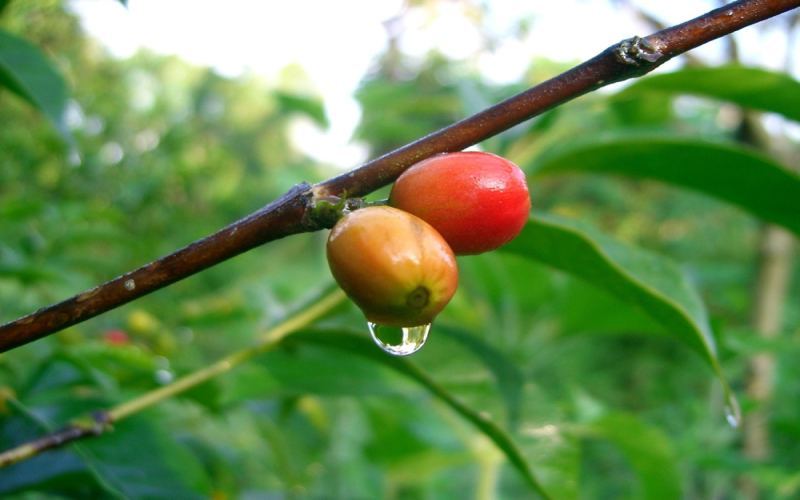
Kenya Coffee Full Analysis: From SL28 and SL34 Varieties to Six Major Regions and the K72 Washed Processing Method
Kenya is located in the equatorial zone of East Africa, bordering the Indian Ocean to the east, Ethiopia to the north, and Tanzania to the south, making it a pivotal specialty coffee-producing country in Africa. Its coffee is world-renowned for its bright fruit acidity, full body, and distinctive berry notes. This article systematically reviews Kenya's coffee-producing regions, variety evolution, and processing techniques, covering the characteristics of major varieties such as SL28, SL34, and Ruiru 11, detailing the terroir differences among six major producing regions including Nyeri and Kirinyaga, and introducing the Kenyan-style 72-hour washed processing method as well as Front Street Coffee's brewing recommendations, providing coffee enthusiasts with a complete knowledge map of Kenyan coffee. [more…]