







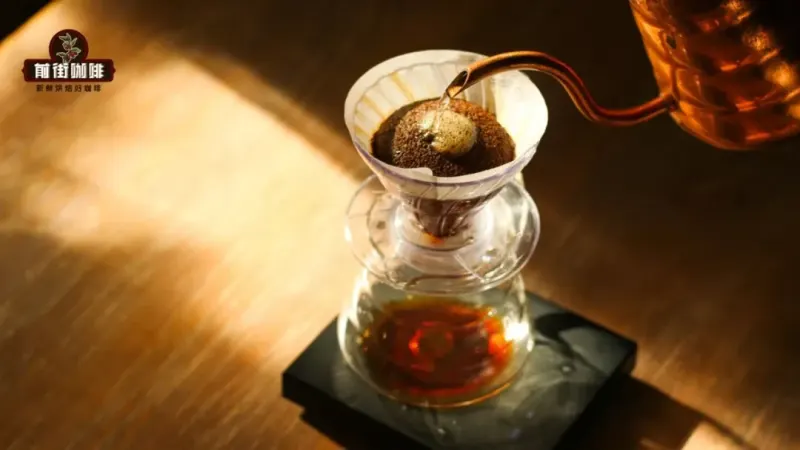
How do coffee extraction methods differ for hot and iced pour-over?
Hot pour-over usually extracts more from the grounds than iced pour-over, which is why a hot cup shows a bean's full range of flavors. Under normal pressure, brewers like pour-over, French press, and siphon cannot reach both very high concentration and high extraction at once, so each recipe leans one way. Iced pour-over needs a stronger starting brew so melting ice does not dilute it.
That trade-off shapes the recipe. Iced pour-over typically uses a tighter coffee grind level and a higher coffee-to-water ratio, then gives up some extraction yield to keep concentration up. Hot pour-over can use more water and a coarser grind to dissolve flavor compounds more completely. Temperature also changes how aroma, taste, and aftertaste come through in the cup.
When tasting a new bean, why is it recommended to choose a hot drink first? This article delves into the flavor differences between hot and iced brewing of black coffees such as pour-over, French press, and siphon from the perspectives of extraction yield, concentration, and water temperature parameters. Taking pour-over coffee as an example, the article specifically compares the different settings of hot brewing and iced brewing in terms of coffee-to-water ratio, grind size, water temperature, and other parameters, explaining why iced brewing often requires sacrificing part of the extraction yield in exchange for higher concentration. At the same time, it also explores the impact of temperature on aroma, taste, and aftertaste, explaining why hot coffee can more fully present the complete picture of a bean.
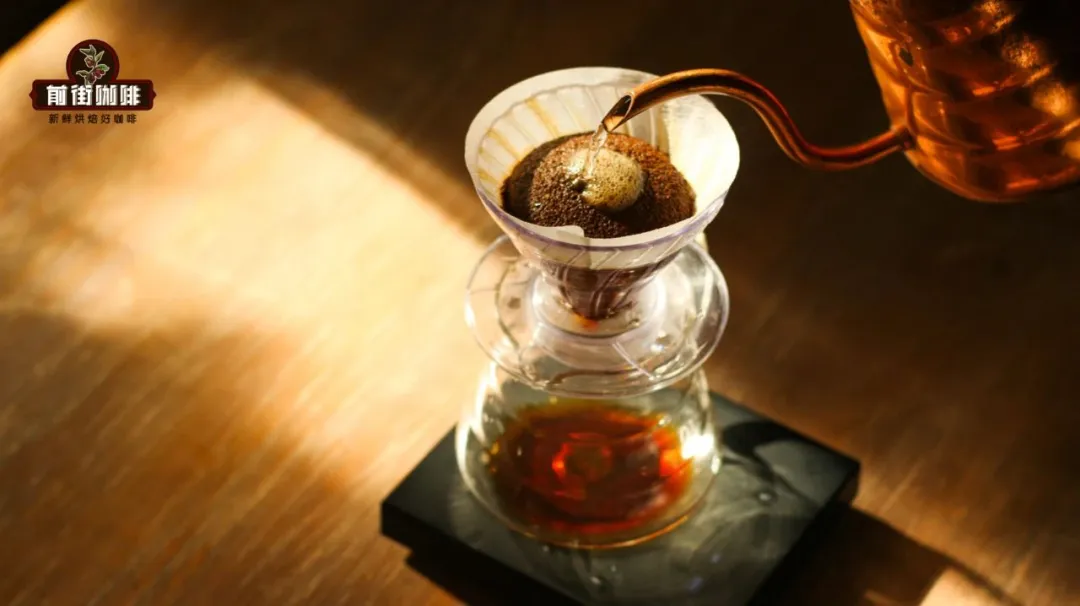
So the question arises: since iced coffee suits their taste better, why is it that when trying a new bean for the first time, everyone invariably orders a hot drink first?
The answer is actually not complicated—hot coffee can more fully present the overall character of a bean, such as flavor, but not limited to flavor alone. Why is it best to choose hot coffee when trying a new bean? Apart from espresso, classic black coffee brewing methods such as pour-over, French press, and siphon all share one thing in common: the hot coffee they produce often has richer and more complete coffee flavors than iced coffee. The fundamental reason is that the hot extraction yield of these methods is usually higher than that of iced extraction.

The reason for this difference is that these brewing methods can hardly achieve both extremely high concentration and sufficient extraction at the same time like espresso does. After all, they all operate under normal pressure, and high concentration and high extraction yield are difficult to achieve simultaneously, usually favoring only one side. What does this mean? Taking pour-over coffee as an example, if you want to fully dissolve the good flavors in the coffee, you must use a large amount of water to wash through the coffee bed. Pour-over does not have pressure-assisted extraction like an espresso machine, so it is difficult to completely dissolve the coffee flavor substances with only a small amount of water.
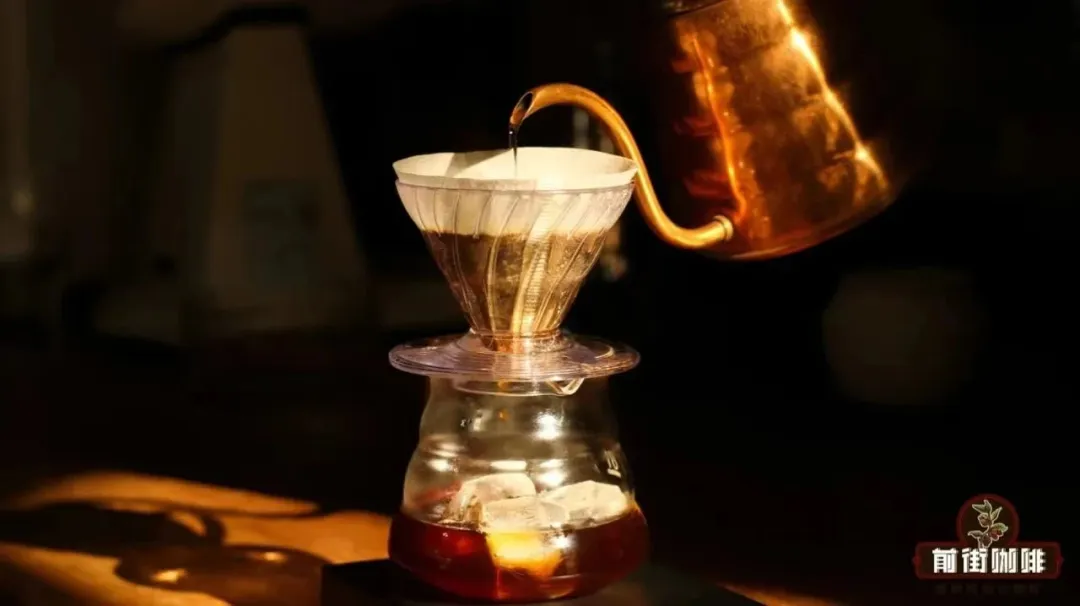
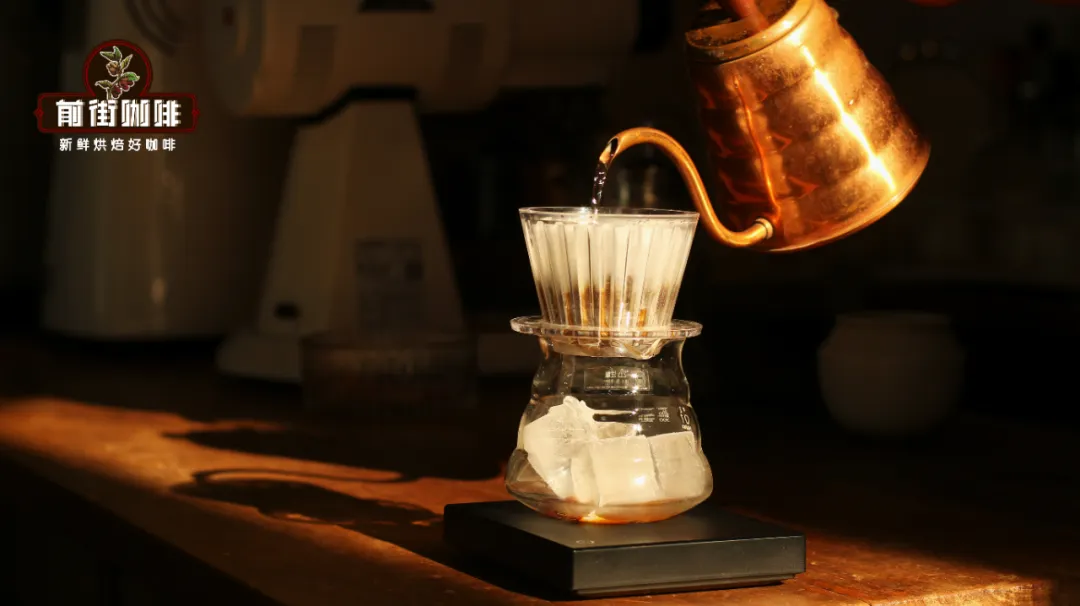
However, many times we do need a cup of high-concentration coffee, such as iced pour-over. Because ice cubes are used to rapidly cool it down, a high-concentration coffee must be made to offset the dilution caused by melting ice. But as Front Street said, for methods like pour-over, achieving a high concentration while bringing the extraction yield up to the level of hot brewing is extremely difficult and the operation is extremely cumbersome, so basically no one does it that way. Therefore, when we usually make high-concentration pour-over, we sacrifice part of the extraction yield. The specific approach is: reduce a large amount of hot water to increase concentration, then appropriately adjust other parameters to compensate for the loss of extraction efficiency caused by the reduced water volume.
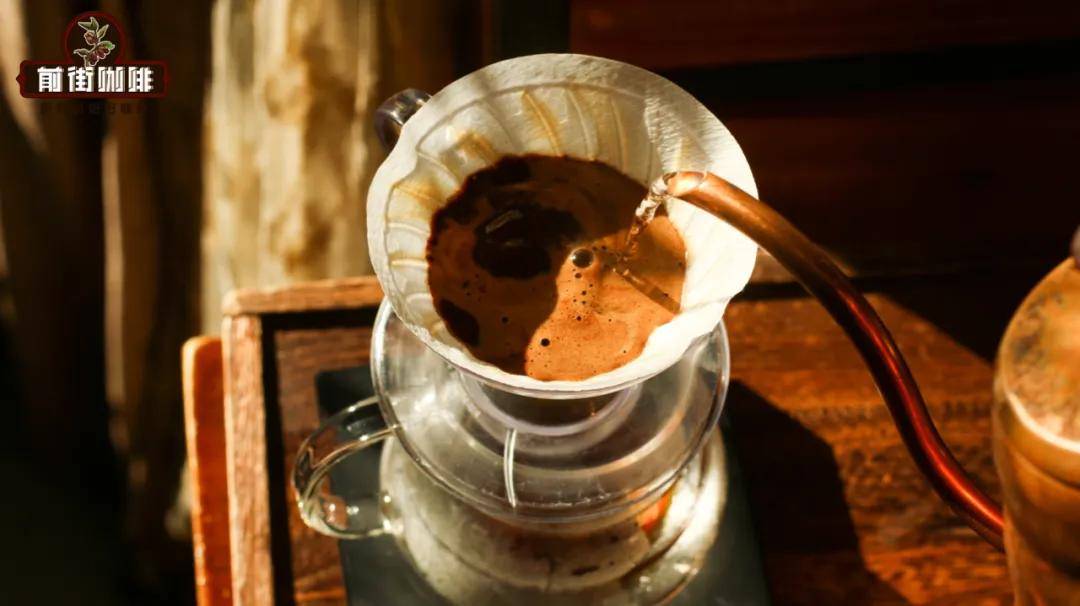
Taking Front Street as an example, when brewing Front Street Ethiopia Huakui from the bean list, the parameters used for hot brewing are: 15g coffee, 1:15 coffee-to-water ratio, 92°C water temperature, 2-minute extraction time, caster sugar grind; while iced brewing uses: 15g coffee, a 1:10:6 coffee-to-water-to-ice ratio, 92°C water temperature, 2-minute extraction time, and a grind slightly finer than caster sugar. Even though finer grinding improves extraction efficiency, the extraction efficiency lost due to the reduced water volume is not fully compensated for, so although the coffee brewed with iced-brewing parameters has a higher concentration than hot brewing, its extraction yield is relatively lower, and the flavor presentation is naturally not complete enough.
Of course, it is not only flavor—the expression of taste and aftertaste will also differ. For specific differences, readers can refer to previous Front Street articles, and I will not repeat them here. This is why Front Street often suggests: if you want to taste the complete expression of a bean in pour-over coffee, it is best to choose hot brewing. The above is the difference between hot and cold drinks for black coffees such as pour-over, French press, and siphon.

Even setting aside the difference in extraction yield, assuming that iced brewing and hot brewing have exactly the same extraction yield and concentration, if you want to experience the complete expression of a coffee bean, Front Street would still recommend drinking it hot. The reason is simple: the temperature of the coffee also affects the drinking experience. Front Street often shares that when drinking a cup of coffee, the experience brought by different temperatures is completely different, because temperature affects multiple dimensions such as aroma, taste, and mouthfeel.
First, look at aroma. Under the same extraction yield, hot coffee often allows us to smell a stronger aroma and taste richer flavors than iced coffee. This is because the main components that make up coffee flavor are volatile aroma molecules, and high temperatures accelerate the movement of these molecules, making them easier to escape from the liquid and diffuse. Therefore, the aroma of hot coffee is usually stronger. When a large amount of aroma escapes from the liquid in a short time, we are also more likely to capture the flavor, because the more aroma we come into contact with, the easier it is to trigger flavor associations.
Next is taste. The impact of temperature on coffee taste can be said to be the greatest. Front Street often shares that coffee temperature affects the taste we perceive, because the perception of taste by the taste buds is affected by temperature. When the coffee temperature is too high or too low, the taste buds' perception of taste is less sensitive, making it difficult to carefully taste the coffee's flavor; when the temperature is suitable, the taste buds' perceptive ability improves or recovers, the taste perceived is more obvious, and many subtle flavors can be tasted.
In short, although the low temperature of iced coffee can reduce how much bitterness we taste, it also weakens the completeness of the taste, and we cannot fully experience the taste expression of a coffee. The temperature of hot coffee, however, is usually not too high, so it allows for better tasting of the coffee's flavor. In addition, the sensitivity of the taste buds' various senses differs at different temperatures. For example, at higher temperatures, we are more sensitive to sweetness; at lower temperatures, we are more likely to perceive acidity and bitterness. This gives hot coffee extremely rich layered changes, and as the temperature gradually decreases, the tastes perceived also differ.
So this is why many coffee connoisseurs drink it hot first when tasting a new bean—the purpose is to first fully experience the character of this bean and understand everything about it, and then choose whether to drink it hot or iced according to their own preferences~
- END -
The above content is compiled by CoffeeHunters, a coffee news website.


