







How Do Kenya Coffee Regions Differ in Flavor?
Kenya coffee from Thika, Nyeri and Kirinyaga tastes different even though all three sit in the same country and share the varietal base. Altitude, local soil and processing separate them, but the common thread is a strong berry-like acidity that has made Kenya one of Africa's signature origins alongside Ethiopia. Roasters cup them side by side to map those regional shifts.
Two varieties dominate plantings across these areas, SL28 and SL34, alongside some Bourbon, Kents and Typica, with SL34 and SL28 covering roughly ninety percent in Thika. Kenya's coffee bean processing also shapes the cup, especially the K72 washed method, whose long fermentation helps produce the thick berry juice and bright fruit acidity the country is known for.
Kenya is one of Africa's most iconic coffee-producing countries, renowned for its bright berry-like acidity. As the specialty coffee wave advances, regional differences are drawing increasing attention. This article focuses on Thika, Nyeri, and Kirinyaga—the three most famous of Kenya's seven major producing regions—comparing their altitude, varieties, processing methods, and cup profiles, while detailing the origins of the two classic varieties SL28 and SL34, as well as Kenya's signature K72 washed processing. Front Street Coffee also shares the roast curves, cupping reports, and brewing parameters for three beans—Asalia, Timani Maiden, and Mugaya—for coffee enthusiasts' reference.
For more specialty coffee knowledge, please follow our WeChat official account: Front Street Coffee
Kenya is one of the most commonly seen countries on the global coffee-growing map, and after Ethiopia, it is another highly iconic producing country in Africa. Its powerful berry-like acidity has captivated countless coffee lovers. In everyday conversation, we often use berry notes to summarize Front Street Kenya coffee, but as specialty coffee continues to evolve, drinkers place greater importance on specific regions and have gradually come to realize the flavor differences among regions within the same country. In this article, Front Street will discuss Kenya's coffee regions.
Kenya Coffee Regions
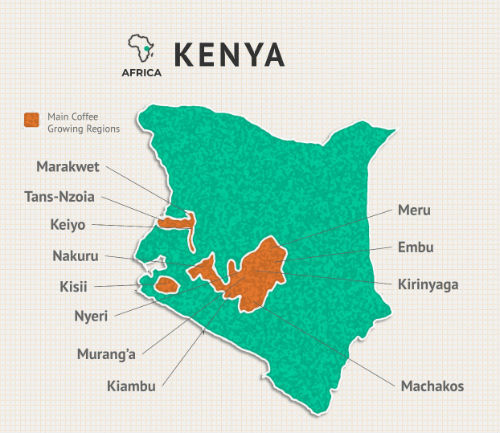
Front Street Kenya coffee is best known for seven major regions: Thika, Kirinyaga, Mt. Kenya West, Nyeri, Kiambu, Ruiri, and Muranga. Among them, Thika, Kirinyaga, and Nyeri stand out in particular.
Thika
Thika is a small town under the jurisdiction of Nairobi, Kenya's capital. A large number of coffee farms are distributed around Nairobi. Thika itself is an industrial town, yet it is surrounded by farmland and waterfalls. About two thousand coffee growers are concentrated in this area. The history of coffee cultivation in Thika, Kenya can be traced back to the late nineteenth century, when coffee trees were introduced from the neighboring country of Ethiopia to the north and then improved through local varieties. Currently common varieties include Bourbon, Kents (SL34, SL28), Typica, and Riuri 11. Today, about ninety percent of the planted varieties are SL34 and SL28. Through cupping, Front Street found that the flavor of this region presents bright fruit acidity, a thick berry juice texture, and honey-like sweetness. Altitude: 1,550–1,750 meters.
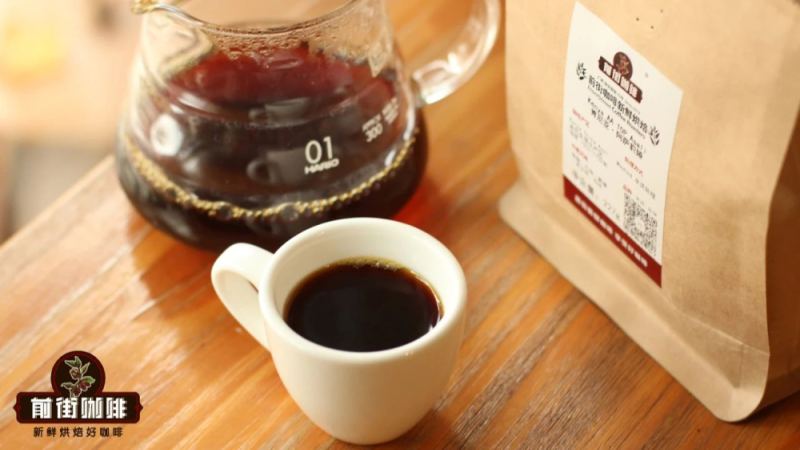
Front Street Coffee — Front Street Kenya Asalia Coffee Beans Region: Thika, Kenya
Washing Station: Asali Honey Washing Station Altitude: 1,550–1,750 meters Variety: SL28, SL34 Processing Method: Kenyan 72-hour washed Grade: AA
Nyeri
Nyeri is adjacent to the high mountain area of Mount Kenya and is an important region for Kenya's specialty-grade coffee, with an average altitude of over 1,500 meters. Many high-quality Kenyan coffees come from here. Nyeri's altitude is sufficiently high, and it is also located east of the Aberdare Mountains, on the spur between Mount Kenya and the main mountain. Its elevated terrain and fertile soil have made it a major coffee center in central Kenya, with fairly complete related industry support as well. The high-altitude coffee beans of this region are widely renowned and of quite high quality. When Front Street Coffee cups beans produced in this region, one can perceive dark berry flavors, bright sweet-and-sour notes like smoked plum, and a delicate and lingering finish. This region has two harvests per year, and the coffee quality of the main crop is better: October to December is the main crop season, and June to August is the secondary crop season.
Front Street Coffee — Front Street Kenya Timani Maiden AA Coffee Beans
Region: Ndima, Nyeri ni Washing Station
Altitude: 1,700–1,900 m
Variety: SL28 & SL34
Processing Method: K72 Washed
Grade: AA
Kirinyaga
The Kirinyaga region is located on the slopes of Mount Kenya and is adjacent to the Nyeri region. It is globally renowned for coffee with intense flavor, rich layers, and a solid mouthfeel, and together with the Nyeri region it is regarded as one of the two currently finest regions in Kenya. Producers in this region are mostly smallholder coffee farmers who join cooperatives. The cooperatives play a coordinating role and provide washing stations; the coffee farmers send their coffee cherries to the cooperatives' washing stations for processing. Altitude: 1,300 to 1,900 meters. Harvest period: October to December (main crop season), June to August (secondary crop season). After cupping, Front Street Coffee concluded that this region is dominated by berry flavors, with moderate sweetness and notes of honey and cream.
Front Street Coffee — Front Street Kenya Mugaya AB Coffee Beans
Region: Mugaya Washing Station, Kenya
Altitude: 1,400 m
Variety: SL28 & SL34
Processing Method: K72-hour washed
Grade: AB
Front Street Kenya Coffee Varieties — SL28 & SL34
SL28 is a single variety selected in 1935 from the drought-resistant Tanganyika population. This variety is suited to medium- to high-altitude areas and has drought resistance, but is very sensitive to major coffee diseases. SL28 beans resemble Bourbon, round-bodied and thick, and in recent years genetic testing has also confirmed that it belongs to the Bourbon genetic group.
SL34 was first selected in the late 1930s at the Scott Agricultural Laboratories in Kenya. It came from a tree on the Kabete Loresho estate in Kenya, known as the "French Mission." SL34 beans resemble Typica. Front Street selected beans from Kenyan coffee that resembled Typica in appearance—elongated, oval-shaped, and relatively flat when viewed from the side. In recent years, genetic testing has shown that SL34 is related to the Typica genome.
Front Street Kenya Coffee Bean Processing Method — K72 Washed Processing
Kenyan washing mostly uses the locally unique K72 washed processing: after washing and pulping ripe coffee cherries, dry-ferment for twenty-four hours, wash, dry-ferment again for twenty-four hours, wash, then dry-ferment again for twenty-four hours, repeating this cycle for a cumulative total of seventy-two hours of intense fermentation, then wash and soak in a clean tank overnight, and begin drying on the drying beds the next morning. Because the total fermentation time is seventy-two hours, it is called K72.
Front Street Coffee Roasting Front Street Kenya Coffee Bean Recommendations
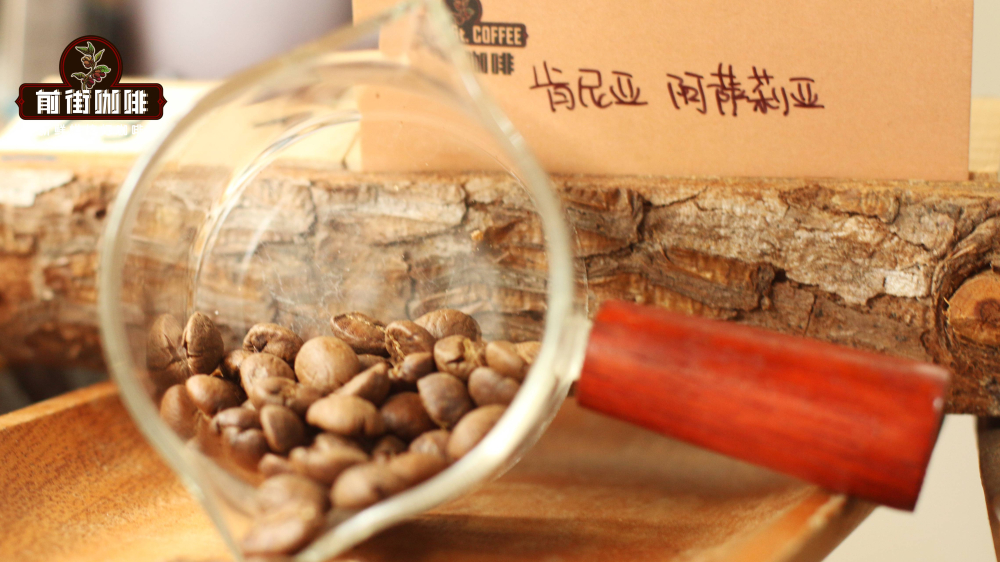
Front Street Kenya Asalia Coffee Beans: The Front Street roaster uses a Yangjia 800N semi-direct fire, with 480 g bean charge: charge at a drum temperature of 200°C, with the damper set to 3 and the gas at 160; the turning point is at 1'34", and when the drum temperature is 147°C, the gas is lowered to 130 and the damper is opened to 3.5; at this point the bean surface turns yellow, the grassy smell completely disappears, and the dehydration stage begins. At 171°C, the gas is lowered to 80 and the damper remains unchanged. At 8'28", ugly wrinkles and dark spots appear on the bean surface, and the toasted bread smell clearly turns into coffee aroma, which can be defined as the prelude to first crack. At this time, one must listen carefully for the sound of the first crack. First crack begins at 8'52"; adjust the damper to 5, develop for 2'10'' after first crack, and drop at 191.6°C.
Front Street Kenya Timani Maiden Coffee Beans : The Front Street roaster uses a Yangjia 800N semi-direct fire, with 480 g bean charge: charge at a drum temperature of 165°C, with the damper set to 3 and the gas at 120. Turning point: 1'32". When the temperature rises to 140°C, open the damper to 4. Roast until 6'25'', at a temperature of 153.3°C; the bean surface turns yellow, the grassy smell completely disappears, and dehydration is complete. When ugly wrinkles and dark spots appear on the bean surface, and the toasted bread smell clearly turns into coffee aroma, it can be defined as the prelude to first crack. At this time, one must listen carefully for the sound of the first crack. First crack begins at 9'56''; keep the damper unchanged, lower the gas to 90 at 188°C, develop for 2'10'' after first crack, and drop at 194°C. Front Street Kenya Mugaya Coffee Beans: The Front Street roaster uses a Yangjia 800N semi-direct fire, with 480 g bean charge: charge at a drum temperature of 160°C, with the damper set to 3 and the gas at 120. Turning point: 1'28". When the temperature rises to 115°C, open the damper to 4. Roast until 6'00'', at a temperature of 154.6°C; the bean surface turns yellow, the grassy smell completely disappears, and dehydration is complete. When ugly wrinkles and dark spots appear on the bean surface, and the toasted bread smell clearly turns into coffee aroma, it can be defined as the prelude to first crack. At this time, one must listen carefully for the sound of the first crack. First crack begins at 9'28''; keep the damper unchanged, develop for 2'20'' after first crack, and drop at 193.8°C. Front Street Coffee Cupping Front Street Kenya Coffee Bean Report
Front Street Kenya Asalia Coffee Beans Dry Aroma: cherry tomato Wet Aroma: berry Flavor: sherry, smoked plum, cherry tomato, plum, yellow sugar
Front Street Kenya Maiden Coffee Beans
Dry Aroma: plum
Wet Aroma: berry
Flavor: smoked plum, plum, caramel, cream, grape Front Street Kenya Mugaya Coffee Beans
Dry Aroma: berry
Wet Aroma: caramel
Flavor: smoked plum, plum, grape, caramel, nut Front Street Coffee Brewing Front Street Kenya Coffee Insights
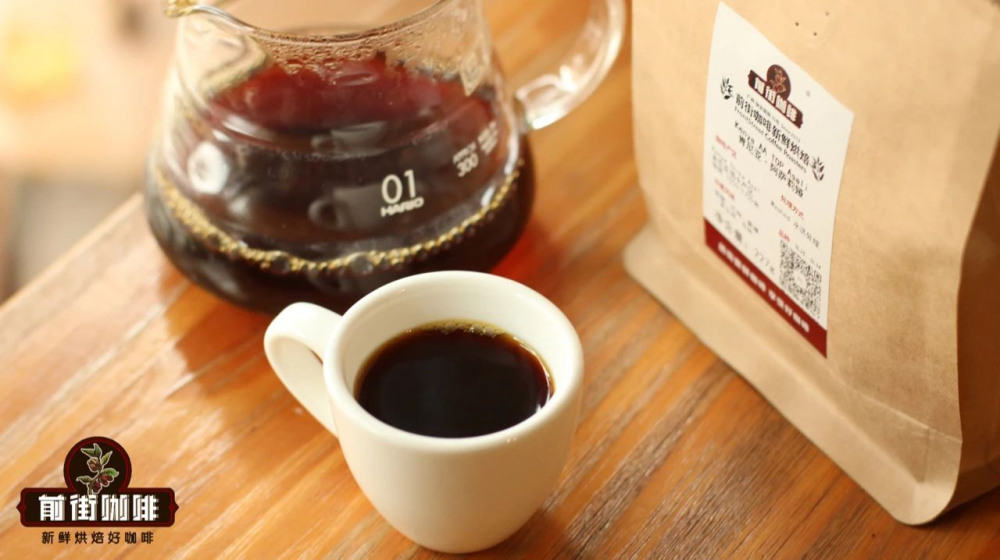
Dripper: V60 #01 Water Temperature: 90°C Dose: 15 g Coffee-to-Water Ratio: 1:16 Grind Size: medium-fine grind (77% passing through a No. 20 sieve)
Front Street brewing method: first rinse the filter paper and preheat the dripper and coffee pot. Use 30 g of water for a 30-second bloom, then pour in a small stream in circles until 130 g for a staged pour. When the water level drops and is about to expose the coffee bed, continue pouring until 240 g and stop. When the water level drops and is about to expose the coffee bed, remove the dripper. (Start timing from the beginning of the bloom.) The extraction time is 2'00".
Front Street Kenya Asalia Coffee Beans: On entry, there are flavors of smoked plum and cherry tomato; the acidity is intense and thick, with prominent mid-palate sweetness and a juicy feel; the finish has berry aroma and yellow sugar sweetness, along with green tea aroma.
Front Street Kenya Timani Maiden Coffee Beans: On entry, the acidity of smoked plum; the mid-palate is grape, and the finish is the sweet-and-sourness of plum.
Front Street Kenya Mugaya Coffee Beans: The front section has berry juice character, the mid-palate has plum and grape, and the finish has almond aroma and caramel sweetness.
The above content is compiled by CoffeeHunters, a coffee news website.


