







What Makes Kirinyaga One of Kenya's Leading Coffee Regions?
Kirinyaga sits in central Kenya around the extinct volcano Mount Kenya, where fertile volcanic soil, steady rainfall, and a cool climate support coffee grown at 1,300 to 1,900 meters. Alongside Nyeri, it ranks among the country's two leading production areas, known for a strong taste, layered flavor, and solid mouthfeel.
Kenya's coffee industry started later than Ethiopia's, with plants brought from Réunion Island by French missionaries in the 19th century. Most of the country is plateau at an average 1,500 meters, with rainy seasons from March to June and October to December and temperatures of 12 to 24°C, conditions that help explain the juicy acidity buyers look for.
Africa is widely recognized as the birthplace of coffee, and Kenya, as a neighbor of Ethiopia, although its coffee industry started relatively late, has won the favor of industry insiders with its multi-layered flavors and juicy acidity. In central Kenya, around the extinct volcano Mount Kenya, several well-known production areas are distributed, among which Kirinyaga has attracted much attention in recent years. This production area has fertile volcanic soil, abundant rainfall, and a cool climate. Coffee is grown at an altitude of 1,300-1,900 meters and is known for its strong taste, rich layers, and solid mouthfeel, ranking alongside Nyeri as one of Kenya's two best production areas. This article will take you into a deeper understanding of Kirinyaga's geographical environment, historical background, and flavor characteristics, and share the cupping experience of a washed Kirinyaga Blackberry Queen that Front Street Coffee sourced.
African coffee has a very high profile in the global coffee market, because the African country Ethiopia is recognized as the birthplace of coffee, and there are also many outstanding coffee-producing countries, such as Ethiopia's neighbor Kenya.
Although Kenya is adjacent to Ethiopia, the birthplace of coffee, Kenya's coffee industry developed relatively late. It was first brought into Kenya from Réunion Island by French missionaries in the 19th century and developed well. To this day, Kenyan coffee is known for its multi-layered flavors and juicy acidity, and is loved by many coffee industry professionals.
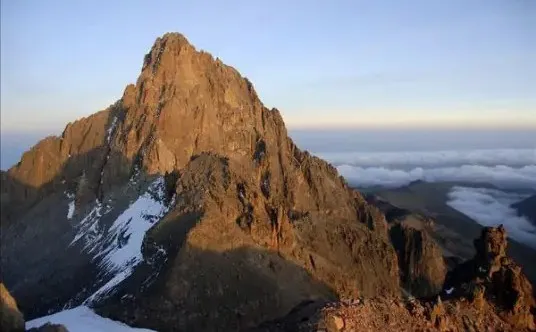
Kenya is located in East Africa and is a country crossed by the equator. Apart from the coastal lowlands and plains, most of the rest is a plateau with an average altitude of 1,500 meters. The eastern branch of the East African Rift Valley cuts through the plateau from north to south, dividing the highlands into eastern and western parts. Many volcanoes also stand within Kenya, among which the extinct volcano Mount Kenya in the central highlands, at 5,199 meters above sea level, is the second-highest peak in Africa.
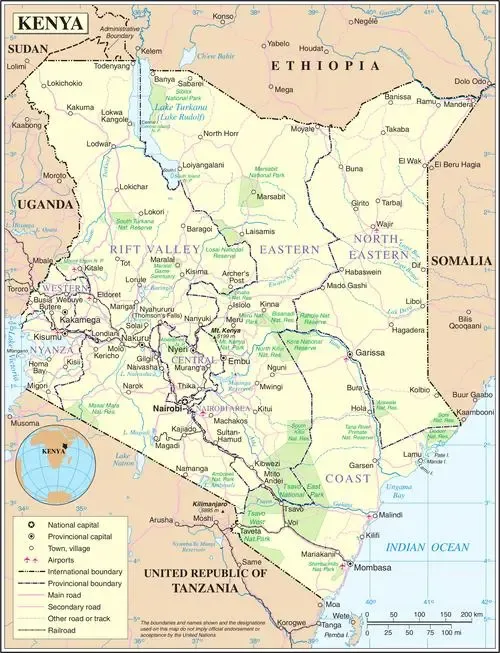
Kenya is located in a tropical monsoon zone, so most areas have a tropical savanna climate. The coastal areas are relatively hot and humid, while the plateau climate is mild. March to June and October to December are the rainy seasons, and the annual temperature ranges from 12-24°C. High-altitude mountainous areas, volcanic soil, abundant sunshine, and appropriate rainfall have made the country's agriculture and tourism relatively developed.
Coffee is basically grown in central and western Kenya. In the central region, there are well-known production areas such as Nyeri, Kiambu, and Kirinyaga. These coffee production areas are all around the extinct volcano Mount Kenya and, thanks to fertile volcanic soil and suitable sunshine and rainfall, cultivate Kenya's highest-quality coffee, and about 60% of Kenya's coffee is produced here.
Mount Kenya covers an area of 142,000 hectares, with an altitude ranging from 1,600 meters to 5,199 meters. It became a United Nations protected area in 1978, so its natural resources are very rich.
In recent years, the Kirinyaga (also called Kirinyaga ) production area has gradually come into people's view. This production area is located in central Kenya, close to the high-altitude Mount Kenya. Coffee is grown at an altitude of 1,300-1,900 meters. It has fertile volcanic soil, abundant rainfall, and a cool climate, and is famous for its strong taste, rich layers, and solid mouthfeel. Together with the Nyeri production area, it is recognized as one of Kenya's two best production areas.
It is understood that the local Kikuyu people call Mount Kenya Kirinyaga or Kere-Nyaga (meaning white mountains in the local language), and since ancient times the local people have revered this mountain as the home of their omnipotent god Ngai.
Most producers in the Kirinyaga production area are small coffee farmers who join cooperatives, and the cooperatives provide washed processing plants. The coffee farmers then send coffee cherries to the cooperatives' processing plants for green bean processing.
In order to taste the coffee flavor of this production area, Front Street Coffee sourced a washed Kirinyaga Blackberry Queen coffee bean and adopted a medium-light roast.
After roasting was completed, Front Street Coffee cupped it. In the dry fragrance, it showed berries and elegant purple floral notes. After hot water was poured in, there were aromas of smoked plum and lemon. On the palate, there was bright purple fruit acidity, with flavors of smoked plum, lemon, berries, and plum, a slight sweet aftertaste, and a mouthfeel as soft as black tea.
The above content is compiled by CoffeeHunters, a coffee news website.


