







How does the Kenya coffee grading system work?
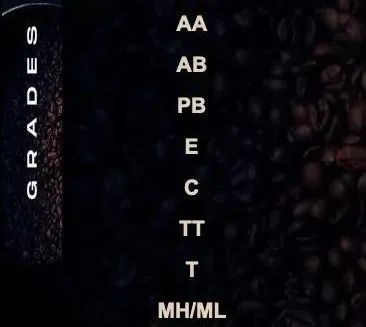
Kenya sorts its coffee into eight grades: AA, AB, PB, E, C, TT, T, and MH/ML, judged mainly by bean size, shape, density, and quality. AA beans fall between 17 and 18 screen sizes and are regarded locally as high quality with elegant flavor; AB runs 16 to 17 and costs less. Labels like TOP, Plus, and FAQ are set by exporters, not the official system.
The country's main varieties include SL28, SL34, Batian, K7, and Ruiru11, all known for relatively large beans, which is why size carries weight in grading. A washed AA lot from the Thika region shows the typical profile: tomato, smoked plum, and pear-like acidity with honey sweetness, suited to a light roast.
Kenyan coffee is famous for its clean, refreshing, solid and bright juice-like acidity, but what exactly do the commonly seen "AA," "AB," and even "AA TOP" in China represent? This article starts with Kenya's official coffee bean grading system, sorting out the size, shape, and quality differences among the eight grades AA, AB, PB, E, C, TT, T, and MH/ML, and explains that secondary grading such as TOP, Plus, and FAQ set by exporters themselves is for reference only. It then focuses on the Thika region, introducing its geographical location, planting history, and variety structure mainly consisting of SL28 and SL34, and combines the cupping performance, light roast approach, and iced pour-over parameters of Front Street Kenya Small Tomato AA-grade washed beans to present the region's tomato, smoked plum, and pear-like acidity and honey sweetness.
For more specialty coffee knowledge, please follow: Front Street Coffee ( Frontsteet Coffee )
When it comes to coffee with prominent acidity, Kenya is often the first association. Its clean and translucent mouthfeel and solid yet bright acidity are often described as close to fruit juice. In the domestic market, the words Kenyan "AA" or "AB" are commonly seen, and some are additionally labeled "AA TOP." What exactly do these letters mean, and how big are the differences between them?
Coffee beans are, after all, an agricultural product, and quality inevitably varies, so every producing country establishes a grading system to classify commercial lots that meet established quality standards and to provide a basis for pricing.
The same is true for Kenya. Locally, coffee beans are usually graded according to size, shape, color, and density, with size and quality as the core indicators, and are divided into eight grades: AA, AB, PB, C, E, TT, T, and MH/ML. "AA" and "AB" are precisely the two most commonly seen grades in the domestic market.
The main varieties grown in Kenya include SL28, SL34, Batian, K7, and Ruiru11. Their common feature is relatively large beans, so in theory, the larger the bean, the more highly its quality is often regarded.
AA-grade coffee beans fall between 17 and 18 screen sizes, with excellent density, and are regarded locally as representing high quality with elegant flavor. AB grade is 16 to 17 screen sizes. Although its quality is not as good as AA, its price is more affordable and its output is the largest—about 40% of coffee falls into AB grade, making it very popular.
In addition, Kenya has two special grades classified by bean appearance. One is the round green bean Peaberry (PB), which means that inside the coffee fruit, instead of the usual two flat beans, only one round bean develops. The other is Elephant bean (E grade), formed when two coffee beans intertwine during development into a single huge coffee bean with a screen size of 21 or above. Both are products of abnormal development. Only about 5% of Kenyan coffee is peaberry (PB), and elephant beans (E) are even rarer, uncommon in the market, and sold at relatively high prices.
C-grade coffee beans are between 12 and 14 screen sizes, on the small side. TT grade refers to light beans separated from E, AA, and AB by an airflow sorter; T grade refers to defective beans selected from C grade. Neither belongs to the specialty coffee grades. MH/ML is regarded as low-quality coffee beans, often mixed with unripe and overripe beans, so it is not exported and is only sold domestically.
However, bean size cannot directly determine whether the flavor is good or bad. Therefore, some Kenyan exporters or green bean traders formulate their own grading method to conduct a secondary evaluation of exported coffee, mainly dividing it by cupping score into "TOP," "Plus (+)," and "FAQ." This grading is not officially certified by Kenya, and the standards of different merchants are not unified, so it can only serve as a reference; ultimately, one still has to look at the actual performance of the coffee beans.
Furthermore, Kenyan coffee was first introduced during the British colonial period. The colonial economy promoted the development of the coffee industry and also led Kenya toward more refined management in selection and breeding, grading, and processing methods, already ahead of many producing countries at the time. Therefore, reaching the two grades AA and AB has locally been recognized as possessing high-quality mouthfeel and flavor.
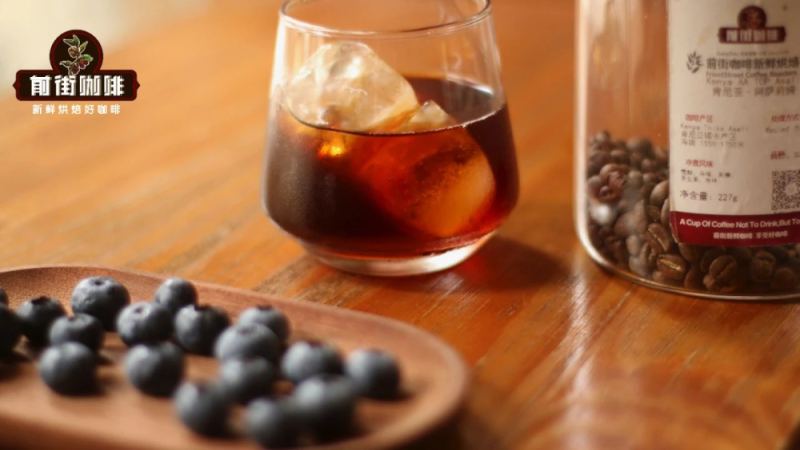
Front Street Kenya Small Tomato comes from the Asaria processing plant in the Thika region. It is a K72 washed coffee bean, uses the commonly seen Kenyan varieties SL28 and SL34, and is graded AA.
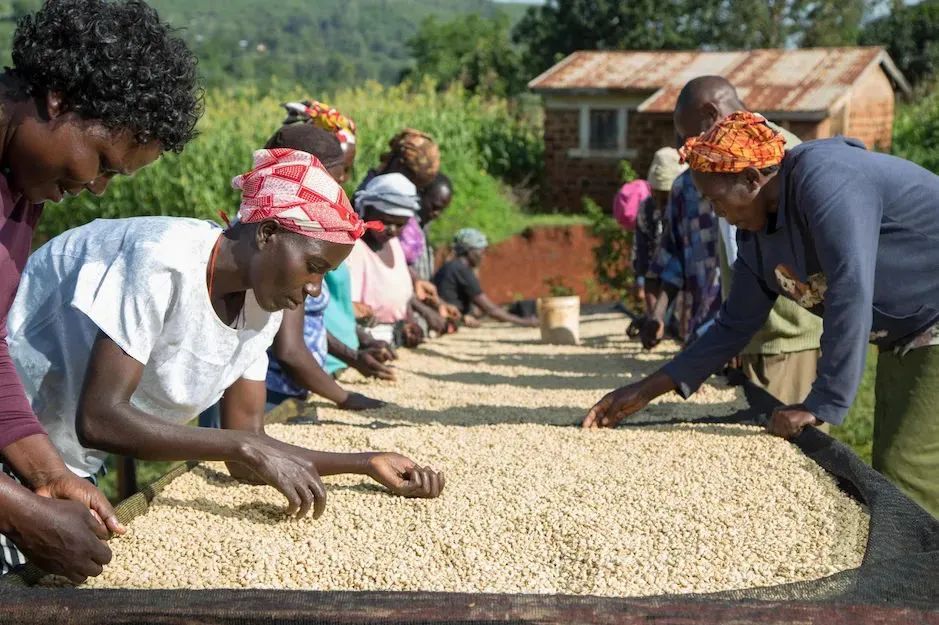
Thika is a small town near Kenya's capital, Nairobi. Many coffee fields are distributed around Nairobi. Thika itself is an industrial town, but it is surrounded by agricultural areas and waterfalls. The area has about 2,000 farmers. The history of coffee cultivation in Thika, Kenya, can be traced back to the late 19th century, when coffee tree species were introduced from the northern neighboring country Ethiopia and later improved through local varieties. Currently common varieties include Bourbon, Kents (SL34, SL28), Typica, and Ruiru 11. Today about 90% of the planted varieties are SL34 and SL28. Through cupping, Front Street found that the flavor performance of this region is bright fruit acidity, a thick berry juice sensation, and honey-like sweetness. Altitude: 1,550–1,750 meters.
These beans are plump and round. To highlight the solid and bright fruit acidity of Kenyan coffee, Front Street uses a light roast. After brewing, it presents small tomato and smoked plum flavors, with juice-like acidity and a refreshing, soft mouthfeel.
Here, Front Street uses a high-concentration, high-extraction method to demonstrate the brewing parameters and technique for a cup of iced Kenya Small Tomato coffee:
Dose: 15 g
10 times hot water: 150 g
5 times ice: 75 g
Water temperature: 92°C
Grind size: 83% passing a No. 20 sieve (EK43s setting 9, C40 setting 22)
Dripper: Hario V60
Technique: three-pour method
First, place 75 g of ice cubes into the server, then pour 15 g of ground coffee into the dripper and gently level it. In the first pour, using a small flow of 3–4 ml/s, pour 30 g of hot water from the center outward in a small circle and let it bloom for 30 seconds; after 30 seconds, pour the second stage of 60 g of water using the same technique, being careful not to let the water level rise too high, otherwise underextraction is likely; when the coffee liquid is about to finish dripping, pour all the remaining 60 g of hot water at a flow rate of 3 ml/s, ensuring the extraction time falls within 1 minute 50 seconds to 2 minutes.
The iced-brewed Front Street Kenya Small Tomato coffee has rich berry notes. On entry, there is the acidity of cherry tomatoes, smoked plum, and pear, accompanied by a faint caramel aftertaste. With the help of ice, the mouthfeel is even fresher and more refreshing, leaving a deep impression.
The above content is compiled by CoffeeHunters, a coffee news website.


