







Why Does Kenya Coffee Taste So Bright and Intense?
Kenyan coffee is known for intense, bright acidity with citrus and dark plum notes, a style that sets it apart from Ethiopia's crisper, more transparent acidity. Starbucks introduced its Kenya coffee beans in 1971, and the African elephant on the packaging became the symbol of the bean. East Africa's largest coffee producer, Kenya grades and processes carefully to protect that character.
The flavor comes from terroir and method. The K72 washed processing, strict grading, and core varieties such as SL28 and SL34 all contribute to the dense, solid acidity. Two Front Street beans, Kenya Small Tomato and Sachini Estate PB, serve as examples in the article, with complete roasting and pour-over parameters given for brewing each at home.
Kenyan coffee is renowned worldwide for its intense, bright acidity, and Starbucks' Kenya coffee beans, launched in 1971, became a classic icon with their African elephant design. From the perspective of Front Street Coffee, this article systematically reviews Kenya's coffee terroir, the K72 washed processing method, the strict grading system, and the characteristics of core varieties such as SL28 and SL34. It also includes the complete roasting and pour-over parameters for two beans from Front Street: Kenya Small Tomato and Sachini Estate PB, helping coffee enthusiasts fully understand where the thick, elephant-like vibrant acidity of Kenyan coffee comes from.
For more specialty coffee information, please follow our WeChat public account: FrontStreet Coffee
When you hear "Kenya," what comes to mind? The African savanna, the Great Migration, or something else? Front Street Coffee's first reaction is the light body of Kenyan coffee, along with its clearly distinguishable citrus and dark plum notes. African coffee beans overall are characterized by a fruit-acidity style—this is a common trait among most African producing countries—but each country excels in different ways: Ethiopia's acidity is transparent and bright, Kenya's is powerful and bright, and Rwanda's, while not as intense as Kenya's, is fuller-bodied than Ethiopia's. When Front Street Coffee encounters customers who prefer acidic coffee, we often recommend Ethiopian and Kenyan beans. However, the acidity profiles of these two regions differ noticeably—Ethiopia's leans toward a crisp, bright style, while Kenyan coffee's acidity is intense and solid.
Kenya is East Africa's largest coffee-producing country and an important synonym in the specialty coffee world—even Starbucks sells Kenyan coffee beans. If you've noticed the African elephant design on Starbucks' Kenya coffee packaging, you can probably guess its origin. The Kenya coffee beans in Starbucks' 13-bean series were introduced in 1971, and the African elephant on the packaging has served as the iconic symbol of Kenyan coffee ever since. Many people use the African elephant as a metaphor for the flavor of Kenyan coffee beans—a thickness like an elephant! Front Street Coffee finds this metaphor not exaggerated at all; the most distinctive feature of Kenyan coffee beans is that signature powerful acidity, which has always been a hot topic of discussion in the coffee world.
Introduction to Kenya as a Coffee-Producing Country
Kenya, officially the Republic of Kenya, is located in East Africa. The equator runs through the middle of the country, and the Great Rift Valley stretches from north to south. It borders Somalia to the east, Tanzania to the south, Uganda to the west, and Ethiopia and Sudan to the north, with the Indian Ocean to the southeast. The country is largely covered by highlands, with an average elevation of about 1,500 meters. Mount Kirinyaga (Mount Kenya) in the center rises to 5,199 meters, with snow-capped peaks year-round, making it Africa's second-highest mountain.
In terms of altitude, latitude, and geology: The equator runs through central Kenya, and the country falls exactly within the range of 10 degrees north and south latitude. This is a tropical producing region with two rainy seasons per year, allowing for two harvests—60% of production concentrated from October to December, and the remaining 40% from June to August. Coffee is mainly grown on volcanic soil at altitudes of 1,600 to 2,100 meters, from the capital Nairobi to the surrounding Kenyan highlands. This altitude is beneficial for flavor development because the lower temperatures in the highlands cause the coffee cherries to grow slowly, allowing aromatic compounds to fully accumulate, resulting in more pronounced fruit acidity and denser beans. This fertile, crescent-shaped coffee zone is the core production area for Kenya's specialty beans.

Approximately 6 million people in Kenya make their living from the coffee industry. The business model is divided into estates and smallholders, with smallholders growing and selling their own coffee making up the majority. The growing areas are mainly concentrated around Mount Kenya and the Aberdare Range, at altitudes of 1,300 to 2,100 meters, situated just below the equator. 15°C to 27°C is the most suitable growing temperature for coffee trees. Coffee is Kenya's second-largest export agricultural product after tea. Kenyan coffee beans are predominantly Arabica, ranking among the world's highest-quality coffee varieties.
Coffee from African origins has always been known for its captivating acidity and aroma, and Kenya is certainly no exception. Kenya is located in East Africa, with the equator passing right through the country. To the east is the Indian Ocean, to the north is Ethiopia, and to the south is Tanzania. It is East Africa's coffee powerhouse and one of the most important and irreplaceable producing countries.
Kenya is a tropical producing region with two rainy seasons per year, allowing for two harvests—60% concentrated from October to December, and the other 40% from June to August. Coffee is mainly grown on volcanic land at altitudes of 1,600 to 2,100 meters, from the capital Nairobi to the surrounding Kenyan highlands. This altitude is suitable for flavor development because the lower temperatures in the highlands slow growth, allowing the aromatic compounds in the coffee beans to fully develop, resulting in more pronounced fruit acidity and a harder texture. This fertile, crescent-shaped coffee zone is the primary production area for Kenya's specialty beans.
Kenya's K72 Processing Method
Kenyan coffee's success today owes much to the K72 processing method. It is a technique extended from the standard washed method, giving coffee beans noticeably different quality. Some people love this intense acidity, while others find it hard to accept. The natural method, also known as dry processing, involves drying the harvested cherries in the sun and then separating the beans. This method saves labor and effort, but defective beans are inevitable during sun-drying (possibly from insufficient or excessive drying), so the beans must be constantly turned by hand. The washed method is completely different—the pulp is removed immediately after harvesting and then dried. This means investment in machinery and equipment, but the resulting coffee bean quality is higher.
The Kenya 72-hour processing method, abbreviated as K72. At harvest, ripe cherries with a sweetness level of 21 are selected. The best cherries are sorted and pulped, then soaked and fermented in a tank for 24 hours using clean river water. After 24 hours, they are washed and soaked again in clean river water to ferment for another 24 hours, then washed again, then fermented again—repeating this cycle 3 times, for a total fermentation time of 72 hours. The standard washed method's fermentation time is at most 36 hours. This repeated fermentation and washing process gives Kenyan coffee beans their intense acidity and delicate mouthfeel.
The time required for the fermentation process is influenced by various factors; the hotter the environment, the faster the fermentation. However, after fermenting for some time, the washed processing has already removed most of the pectin, and the beans are then placed in a lower clean water tank for a second fermentation. It's worth noting that during fermentation, the circulating water needs to be changed every few hours to prevent the coffee beans from developing off-flavors.
Kenya's Coffee Farming Models
Regarding large plantations: over 3,000 large farms cover 40,000 hectares of coffee-growing area, accounting for about 25% of Kenya's coffee-growing land. The other 75% consists of agricultural cooperatives—270 in total—made up of approximately 700,000 smallholder farmers.
In the 1960s, smallholder cooperatives began developing shared processing plants, enabling them to harvest and process coffee like large plantations. To this day, the high-quality output of professional processing plants has made Kenyan coffee known throughout the world.
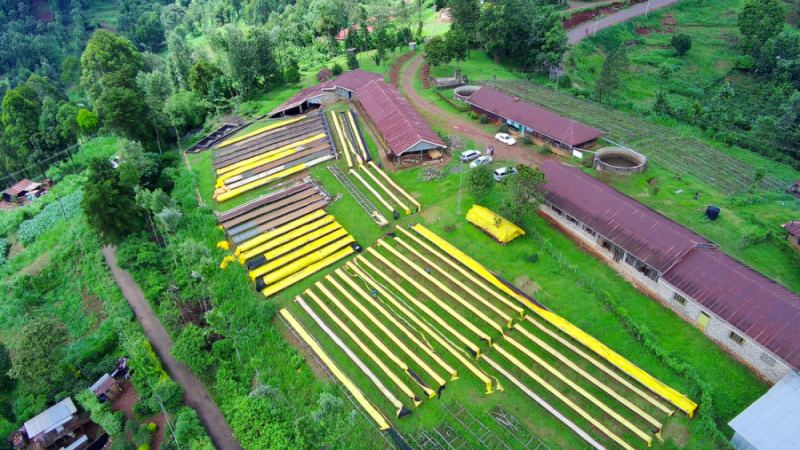
Most smallholders harvest only a few hundred kilograms per year—a small scale. They decide which nearby processing plant (Coffee Factory) to sell their cherries to based on transport distance and purchase price. Farmers' land holdings are very small, and they typically measure land area by the total number of trees on a plot. This means producers often have more autonomy to strategically pick coffee cherries and can deliver the ripest cherries to local factories (washing stations). The factories generally have abundant water resources for meticulous washed processing, including soaking the beans in fresh water for extended periods to consolidate the distinctive Kenyan flavor characteristics.
Kenyan Coffee Grading
Kenyan coffee beans have employed a strict grading system since the 1930s, primarily based on bean size, shape, and hardness, classified from highest to lowest as AA or AA+, AB, PB, C, E, TT, and T. This serves as a reference when selecting beans, and flavor is also considered. Currently, the grades commonly seen in the mass market are AA, AB, and PB.
Kenyan Coffee Size Grading
Grade AA is a grade name for green coffee beans in the commodity trade, mainly referring to bean size. Grade AA represents larger beans, generally 17 screen or above (17 screen = 6.75mm mesh diameter). AA is size 17 and 18; AB is size 15 and 16.
AA Plus (AA+): AA grade with exceptionally excellent cup quality (flavor, mouthfeel)
AA: Screen Size 17–18
AB: Screen Size 15–16, accounting for the majority of production
C: Screen Size smaller than AB
TT: Lighter-weight beans blown out from AA and AB grade beans by an air separator
T: Lighter-weight beans blown out from C grade beans by an air separator
E Elephant Bean: Large mutant beans formed by two beans fused together, also known as Elephant ear
UG: Does not meet the above standards
PB Peaberry: Classified by appearance, unrelated to flavor or weight.
PB Peaberry
Kenyan Coffee Flavor Grading
In addition to size grades, Kenya also uses flavor grading—TOP, PLUS, FAQ—as a reference for selecting good-tasting coffee. The indicators are: green beans (size, color, defects), roasted beans, and cup quality (acidity, body, flavor characteristics, defects). In practice, they simplify this into Acidity-Body-Flavor to quickly score each bean, with each category scored 1–3. If a bean is marked 1-1-1, it corresponds to TOP AA.
Due to multiple factors in actual Kenyan coffee trading
1. High price; 2. Many lots—hence the three-item scoring system specifically used to handle the many lots; 3. Direct trade models exist outside of exchange channels; 4. Small volume.
Therefore, Front Street Coffee collects samples frequently throughout the year, gathering 40–50 different Kenyan samples from various channels for roasters to roast, tasting all kinds of Kenyan acidity, and ultimately selecting one or two that Front Street believes best represent Kenya to put on the shelf.
Kenyan Coffee Varieties
In Kenya, the common varieties are SL28, SL34, French Mission Bourbon, and Ruiru 11.
Origin of the SL28 Variety
According to documented records, in 1931, an officer from the Scott Laboratories traveled to Tanganyika (present-day Tanzania) for field research. He noticed that a coffee tree variety grown in the Moduli area seemed resistant to drought, disease, and pests, so he collected seeds and brought them back to the Scott Laboratories. In 1935, the laboratory selected a single tree from the Tanganyika drought-resistant population and, through continuous breeding and improvement, ultimately released SL28, a descendant of the Moduli population. In recent years, genetic research has confirmed that SL28 belongs to the Bourbon genetic group.
Characteristics of the SL28 Variety
SL28 is easy to cultivate and requires no special care. It has large beans and high yields, with excellent flavor quality. After being released by Kenyan authorities in the 1930s, it was first planted in Kenya and then spread to Uganda. It is now attracting widespread attention even in Central America. This variety is suited to medium-high altitude areas and has drought resistance, but it remains susceptible to major coffee diseases.
Coffee Flavor of the SL28 Variety
The flavor of SL28 indeed carries the bright character of original Bourbon, even the rich acidity of original Mocha varieties, along with other more complex flavors and a deep mouthfeel. Although SL28's yield later fell short of expectations, its bronze leaf color and broad-bean-shaped seeds offer excellent sweetness, balance, and complex, varied flavors, with prominent citrus and dark plum characteristics—intense rich fruit acidity, a deep mouthfeel, and beautiful balance. Most notably, only when grown in Kenya does SL28 exhibit this vivid character; SL28 grown in other countries only has similar flavors.
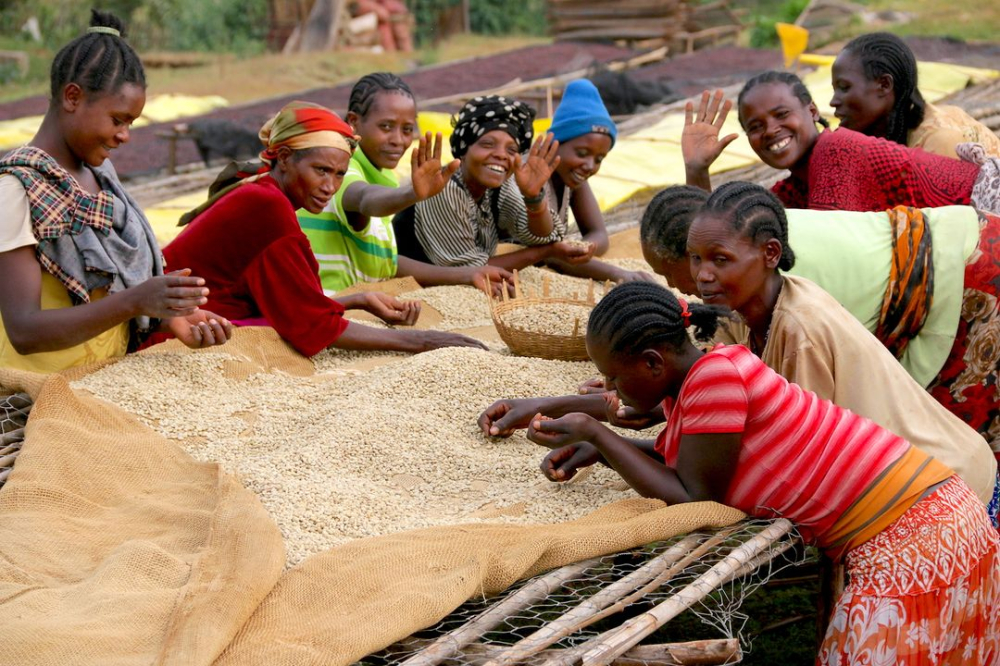
Front Street Kenya Small Tomato Coffee Beans
Region: Thika, Kenya
Processing Plant: Asali Honey Processing Plant
Altitude: 1,550–1,750 meters
Grade: AA TOP
Varieties: SL28, SL34
Processing Method: Kenya 72-hour washed
Roasting Recommendations
Front Street Coffee's Kenya beans are plump and round. To fully express their bright, full-bodied acidity, Front Street Coffee uses a light roast.
Machine: Yangjia 800N, 550g green beans charged
Charge Temperature: 200°C
First Crack: 5'30", 154.3°C
Development after first crack: 2'10'', dropped at 191.6°C
Brewing Parameters
Coffee dose: 15g
Coffee-to-water ratio: 1:15
Water temperature: 90°C
Grind size: 80% passing through a 0.85mm sieve
Dripper: Hario V60 #01
Brewing Method
Bloom with 30g of water for about 30 seconds. Pour in a slow, small stream in a circular motion to 125g, then pause. When the water level is about to expose the coffee bed, continue pouring to 225g and stop. When the water level is about to expose the coffee bed again, remove the dripper. (Timing starts from the beginning of the bloom.) Total extraction time: 2'00".
Flavor Description
Ripe tomato and floral notes. On the palate, cherry tomato and dark plum flavors with bright acidity, a clean, solid, and rich mouthfeel. Prominent sweetness in the mid-palate with a juicy quality. The finish has berry and brown sugar sweetness, along with green tea aroma.
SL34 Variety
SL34 was originally selected in the 1930s at Kenya's Scott Agricultural Laboratories. Kenya's Scott Laboratories selected individual coffee trees between 1935 and 1939, naming them "SL" varieties. SL34 was selected from a single coffee tree at the Loresho Estate in the Kabete region of Kenya. That tree was labeled "French Mission."
French missionaries such as the Spiritans established a mission in Bura in the Taita Hills of Kenya, introducing Bourbon coffee seeds from La Réunion island for planting. In 1899, coffee seedlings were brought from the Bura village to other French mission stations at Saint Austin. These coffee seeds were spread throughout the region for coffee bean production. This is the origin of the so-called "French Mission coffee."
Historically, coffee seeds from La Réunion were spread by French missionaries, and French Mission is considered another name for Bourbon coffee. However, modern genetic testing has confirmed that SL-34 has the Typica genetic group. The original legend that SL-34 was selected from the French Mission coffee population is very likely incorrect.
SL34 is a mutation between Typica and Bourbon. Its difference from SL-28 lies in its bronze-colored center leaf, indicating that this variety is closer to the Typica variety. SL34 has strong resistance to heavy rain at high altitudes, and the coffee quality is very high, with citrus acidity and a deep mouthfeel.
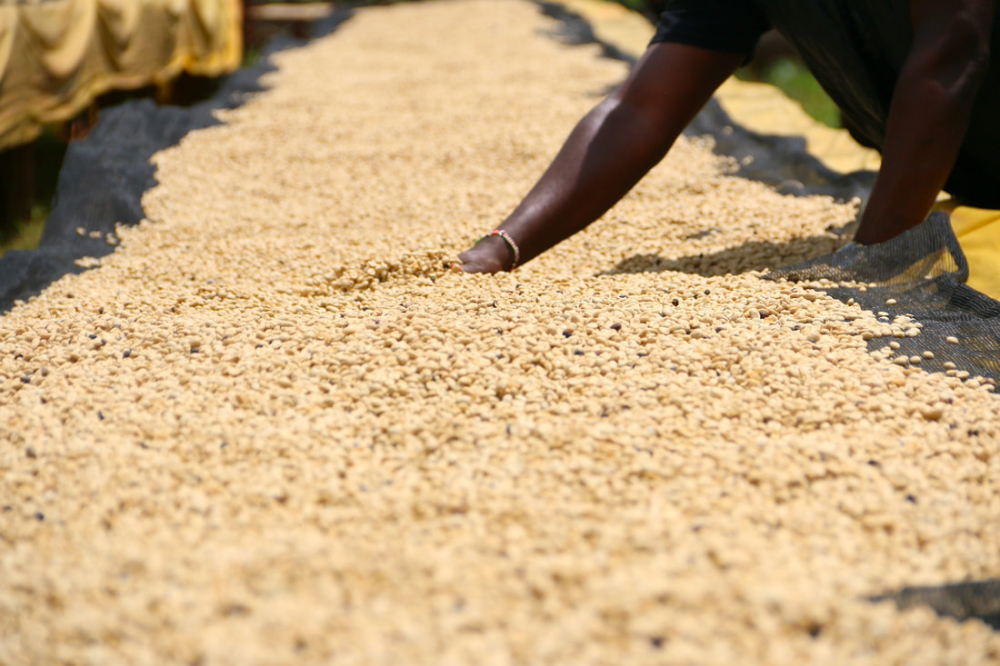
Front Street Kenya Sachini Estate Washed PB Coffee Beans
Origin: Kiambu region
Estate: Sachini Estate
Altitude: 1,650 meters
Grade: PB
Varieties: SL28, SL34
Processing Method: Washed
Roast Profile
Brewing Recommendations
Dripper: Hario V60
Water temperature: 90°C
Dose: 15g
Coffee-to-water ratio: 1:15
Grind size: 80% passing through a 0.85mm sieve (EK43s grinder setting 10)
Brewing Method
Pulse pouring
Bloom with 30g of water for 30 seconds. Pour in a slow, small stream in a circular motion to 125g, then pause. When the water level is about to expose the coffee bed, continue pouring to 225g and stop. When the water level is about to expose the coffee bed again, remove the dripper. (Timing starts from the beginning of the bloom.) Total extraction time: 2 minutes.
Flavor Description
Prominent dark plum, cherry tomato, and honey. When cooled, it carries slight nutty notes. A juicy mouthfeel with bright acidity.
Ruiru 11
In 1985, a global rust disease outbreak occurred. Against this backdrop, Kenya developed hybrid varieties focused on yield rather than quality, but their flavor quality was far inferior to the earlier SL28 and SL34, and they did not gain traction in the specialty coffee world. However, many suppliers—even importers of famous coffees—blend these hybrid beans into blends to reduce costs.
Kenyan Coffee Producing Regions
Kenya's coffee-producing regions are best known for seven major areas: Thika, Kirinyaga, Mt. Kenya West, Nyeri, Kiambu, Ruiri, and Muranga. The main producing areas are the foothills of Mt. Kenya and Aberdare.
The flavor of each Kenyan producing region is very different. Kenya is divided into 47 "counties" nationwide. The coffee characteristics of different counties are distinct. Kenyan coffee trees are mostly grown at altitudes of 1,400 to 2,000 meters, with two harvests per year. The growing regions include Ruiri, Thika, Kirinyaga, Mt. Kenya West, Nyeri, Kiambu, and Muranga, mainly on the foothills of Mt. Kenya and Aberdare. For example, Embu region coffee is characterized by balance, citrus fruits, chocolate, apple, and acidity. Nyeri region coffee is characterized by white grape, juicy, grapefruit and cherry tomato flavors, full of fruitiness, and caramel-like sweetness.
Introduction to Kenya's Main Coffee Producing Regions
NYERI
NYERI: Located in central Kenya, Nyeri is home to the extinct volcano Mount Kenya. The red soil of this region nurtures Kenya's finest coffee. Agriculture is extremely important here, and coffee is the most important crop. Smallholder cooperatives are more common than large estates. This region has two harvests, but coffee from the main season is generally of higher quality. This region is known for its thick blackberry-like acidity and floral and fruity notes.
Altitude: 1,200–2,300 meters
Harvest Period: October–December (main season), June–August (secondary season)
Varieties: SL-28, SL-34, Ruiru 11, Batian.
MURANG'A
MURANG'A: This region, part of the Central Province, has about 100,000 coffee farmers. It is not far from Nairobi and was one of the first areas where missionaries chose to settle because the Portuguese prohibited them from living in the coastal region. This is another region benefiting from volcanic soil, with more smallholder coffee farmers than estates. It has a relatively bright acidity.
Altitude: 1,350–1,950 meters
Harvest Period: October–December (main season), June–August (secondary season)
Varieties: SL-28, SL-34, Ruiru 11, Batian
EMBU
EMBU: This region near Mount Kenya takes its name from Embu town. About 70% of the local population is engaged in small-scale farming, and the most popular cash crops in the area are tea and coffee. Almost all coffee comes from smallholders, and the region's production is relatively small. The acidity is not as pronounced as Nyeri's, but the flavor is well-balanced.
MERU
MERU: Most coffee in this region is grown by smallholders on the slopes of Mount Kenya and the Nyambene Hills. The name refers to the magnetic field area and the Meru people who live there. In the 1930s, they were the first Kenyans to start producing coffee, owing to the Devonshire White Paper signed in 1923, which guaranteed the importance of the rights of African people in Kenya.
Altitude: 1,300–1,950 meters
Harvest Period: October–December (main season), June–August (secondary season)
Varieties: SL-28, SL-34, Ruiru 11, Batian, K7
KIAMBU
KIAMBU: This region in central Kenya has the highest-altitude coffee-growing areas in the region, and Thika also belongs to this producing area. However, some coffee trees at high altitudes develop dieback and stop growing. This producing area is named after the town of Nakuru. Coffee here is grown by both estates and smallholders, though production is relatively small. This region is traditionally a tea-growing area, and the coffee beans have vanilla and floral aromas.
Altitude: 1,850–2,200 meters
Harvest Period: October–December (main season), June–August (secondary season)
Varieties: SL-28, SL-34, Ruiru 11, Batian
KISII
KISII: This region is located in southwestern Kenya, not far from Lake Victoria. It is a relatively small producing area, and most coffee beans come from cooperatives made up of small producers.
Altitude: 1,450–1,800 meters
Harvest Period: October–December (main season), June–August (secondary season)
Varieties: SL-28, SL-34, Blue Mountain, K7
TRANS-NZOIA, KEIYO & MARAKWET
TRANS-NZOIA, KEIYO & MARAKWET: This small producing area in western Kenya has begun to develop in recent years. Mount Elgon provides some altitude, and most coffee comes from estates. Coffee is usually planted to diversify farms that previously only had cornfields or dairy.
Altitude: 1,500–1,900 meters
Harvest Period: October–December (main season), June–August (secondary season)
Varieties: Ruiru 11, Batian, SL-28, SL-34.
KIRINYAGA
This producing area is situated on the slopes of Mount Kenya, near Nyeri. It is world-renowned for coffee with intense flavor, rich layers, and a solid mouthfeel, and together with Nyeri, it is recognized as one of Kenya's two best producing regions today. Most producers here are smallholder coffee farmers who join cooperatives. The cooperatives play an integrating role, providing washing stations, and farmers deliver their coffee cherries to the cooperative's processing plant for green bean processing. The name originally referred to Mount Kenya itself, but when the British colonized the area, they found the name hard to remember and changed the mountain's name to Mt Kenya, no longer calling it Kirinyaga.
From the Kikuyu people, it means "white mountains" and is considered the dwelling place of the gods. The Kikuyu are Kenya's largest ethnic group, accounting for one-fifth of the total population.
Altitude: 1,300–1,900 meters
Harvest Period: October–December (main season), June–August (secondary season)
Varieties: SL-28, SL-34, Ruiru 11, Batian.
The above content is compiled by CoffeeHunters, a coffee news website.


