







Search Results for: hair-dyeing customers
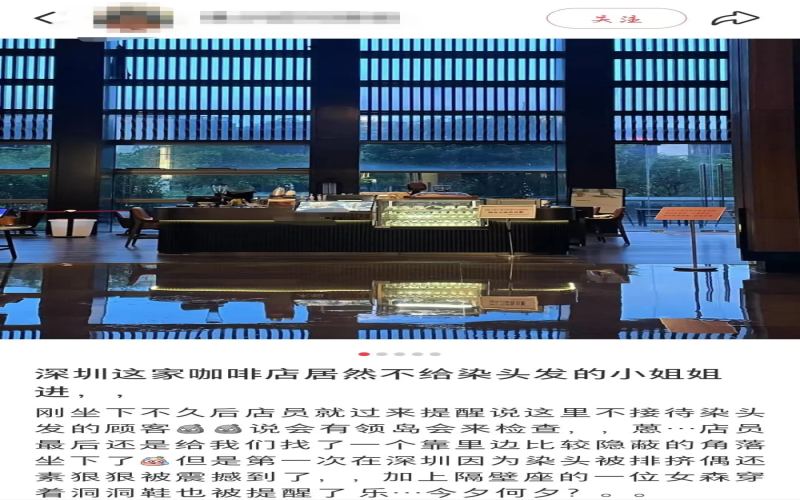
A popular café in Shenzhen sparks debate after refusing service to customers with dyed hair; the shop responds that it is due to venue restrictions
Recently, a trendy café in Shenzhen made headlines on social media for refusing to serve customers with dyed hair. According to a report by Southern Metropolis Daily, a consumer posted a complaint saying that she was reminded by staff that the store did not serve customers with dyed hair and was then arranged to change seats. More surprisingly, another female customer wearing Crocs also received a similar reminder. Although there was a notice board at the entrance, it did not specify any particular dress code requirements. After the incident went viral, netizens were sharply divided: some argued that a café, as a business venue, should not be selective about its customers, while others believed that the store had the right to set its own service standards. The café responded that the brand was not discriminating against customers with dyed hair, but because the store is located on a campus and serves as a teaching support facility, it has no choice but to impose certain dress requirements on customers. [more…]
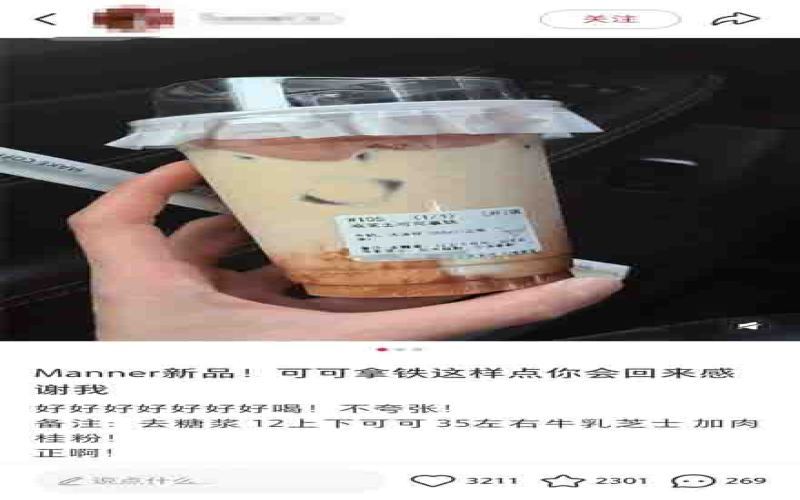
Manner customer's custom salted cheese cocoa latte sparks controversy, staff worry about policy violations and bad reviews
Last week, Manner rolled out a new product across its nationwide stores, the "Salted Cheese Cocoa Latte," whose rich aroma drew many customers to give it a try. However, a customized note shared by one customer—no syrup, adjusted ratios of cocoa and milk cheese, plus a dash of cinnamon—quickly sparked a wave of copycats. Yet staff expressed concern: while some modifications are permitted, altering ingredient ratios may be seen as tampering with the recipe, risking a company warning; at the same time, if the changed flavor displeases other customers, the store could end up with bad reviews. This debate, sparked by a single customized drink, reflects the dilemma chain coffee brands face between personalized demands and standardized management. [more…]
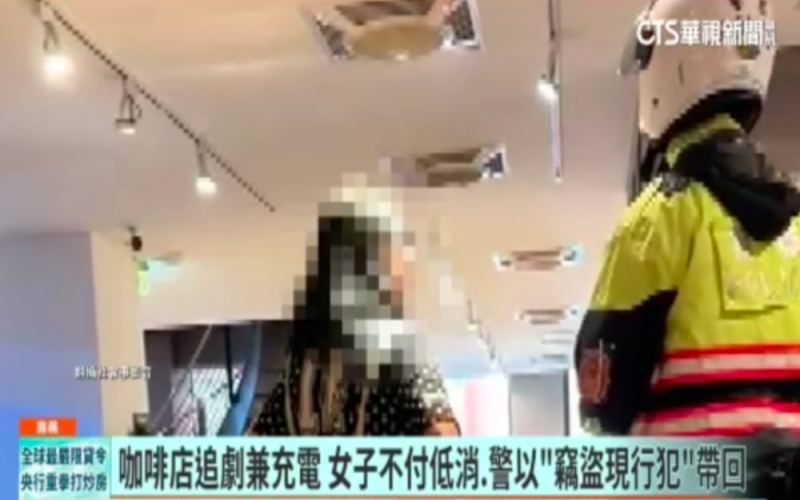
Taiwanese customer at a coffee shop mooches electricity to binge-watch dramas and refuses to buy anything; after the shop calls the police, the customer is handcuffed and taken away, then returns to the shop to review the surveillance footage.
Recently, a coffee shop in Taiwan experienced a dispute triggered by a customer who had been freeloading on electricity for a long time and refused to make a purchase. This customer was a regular at the shop, visiting multiple times to charge their phone and watch dramas with the sound on, yet never bought anything. After repeated unsuccessful attempts to persuade them, the staff chose to call the police. When the police arrived and tried to persuade the customer to leave, they also met with refusal, ultimately leading to the customer being handcuffed and taken away as a "thief caught in the act." Surprisingly, the customer returned to the same coffee shop the very next day, demanding access to the surveillance footage of the incident and presenting a medical report to accuse the shop and the police. The shop stated that the matter has been handed over to the judicial authorities. This incident has sparked discussions about the boundaries of coffee shop operations and customer behavior. [more…]
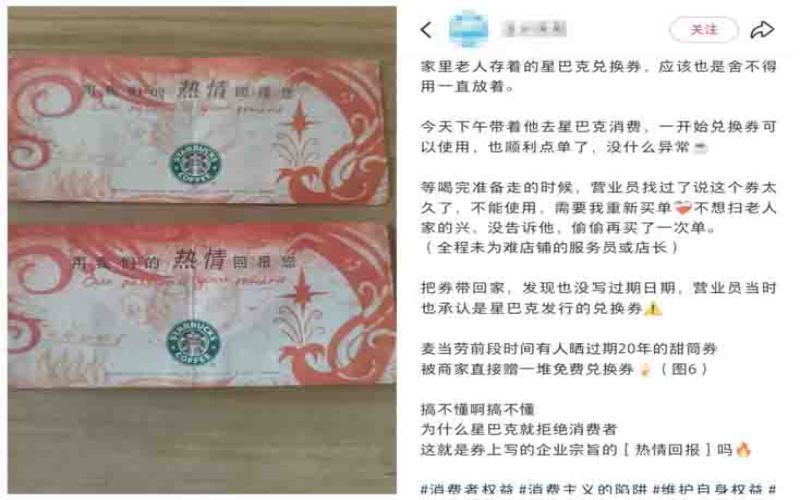
Starbucks' Refusal to Redeem a 14-Year-Old Paper Voucher Sparks Heated Debate; Customer Gets to Keep It as a Keepsake After Compensation Plan Adjusted Twice
A longtime Starbucks customer in a Shanghai store was refused when trying to use two paper vouchers for free medium-sized drinks that had been distributed years earlier. The barista initially默认 they could be used, but then, citing that they were "too old," asked the customer to pay again. After the incident spread on social media, Starbucks customer service first asked the customer to mail the vouchers to verify their authenticity, then after two apologies adjusted the compensation plan, and ultimately agreed that the customer could keep the two paper vouchers, which hold commemorative value. Former employees revealed that such "thank you" vouchers originated from the period when Uni-President Group handled the business in the Jiangsu-Zhejiang-Shanghai region, representing an emotional connection between the brand and its customers. The incident sparked discussion among netizens about how brands should handle expired vouchers. [more…]
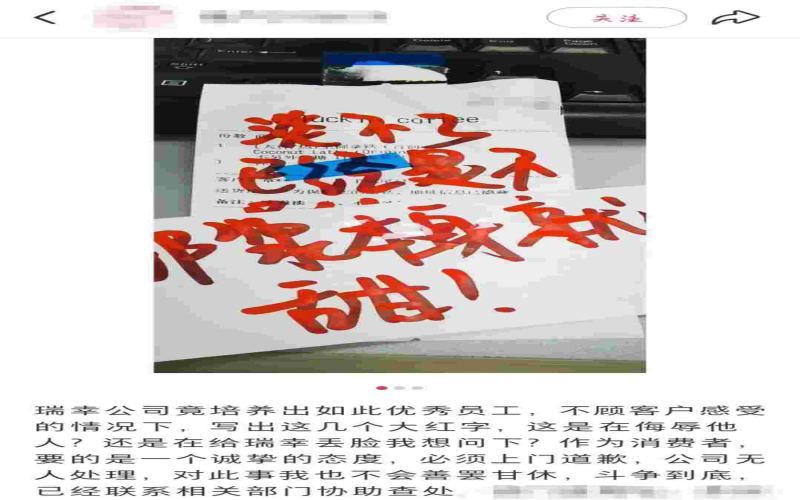
Luckin employee responds to customer taste request with handwritten note in red pen on receipt, customer complaint escalation sparks heated discussion
A coconut milk latte with a note saying "make it a bit lighter," because the staff member filled the receipt with explanatory text in red marker, sparked a customer complaint storm that escalated from social media to the media. The customer felt the store's attitude was disrespectful and demanded a home visit apology; the store explained that it was busy at the time and could not call each customer individually. After the incident trended on social media, netizens' opinions were sharply divided, and beverage industry workers also chimed in. In this dispute caused by a red-text receipt, who really has a point? [more…]
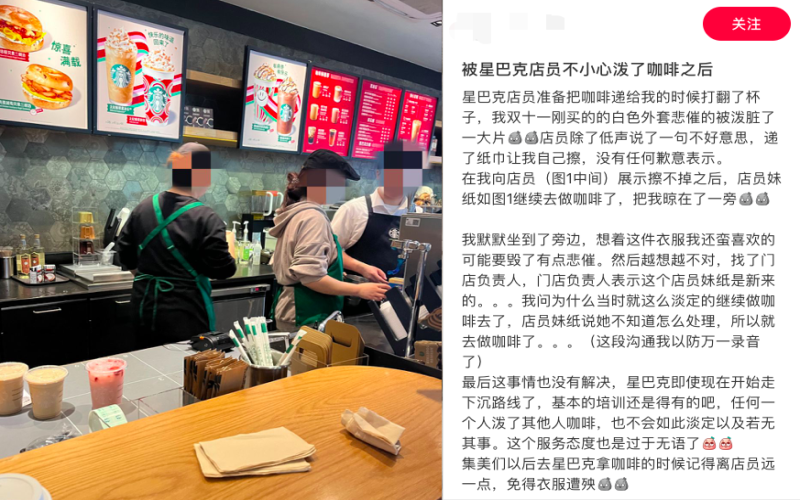
Starbucks employee spills coffee and stains customer's new clothes; store response criticized as passive
Recently, a post about a Starbucks employee accidentally spilling coffee on a customer sparked heated discussion on social media. The poster said that while picking up their order, their newly bought white coat was stained by coffee knocked over by the employee, and the employee only apologized in a low voice before continuing to work, while the store manager said compensation was not possible and only suggested trying to clean it with alcohol. As the incident continued to escalate, many Starbucks employees revealed in the comments that company training already requires drinks to be placed on the counter for customers to pick up themselves, but in unexpected situations, staff should immediately apologize and take responsibility. As of press time, the person involved had still not received a formal reply from Starbucks. [more…]
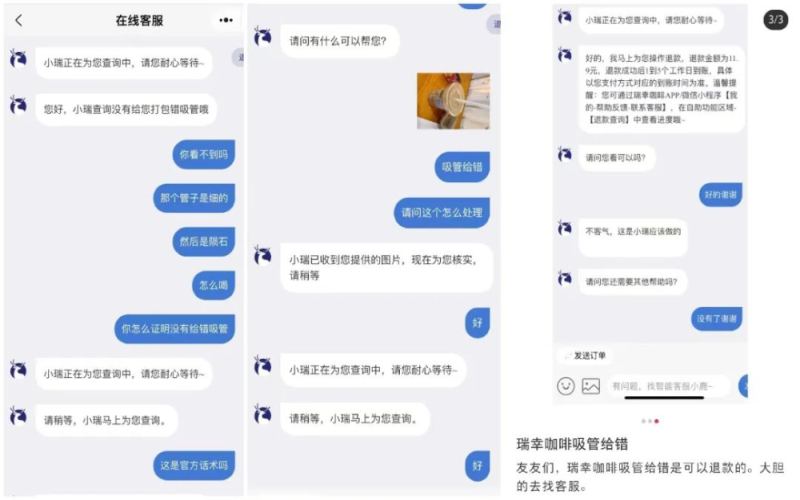
Wrong Straw Leads to Full Refund? Luckin Customer Service Handling Sparks Heated Discussion
A Luckin Coffee drink from the Meteorite series ended up with a customer unable to suck up the meteorite toppings at the bottom of the cup because the barista had packed a thin straw. After contacting customer service, the customer actually received a full refund for the order. This handling quickly sparked discussion online: some felt the merchant's service was excellent, while others worried that such a "simple and粗暴" refund approach could set a bad example. Is it thoughtful service or excessive compensation? This small matter of giving the wrong straw reflects the different strategies and potential risks that chain coffee brands face in handling customer complaints. [more…]
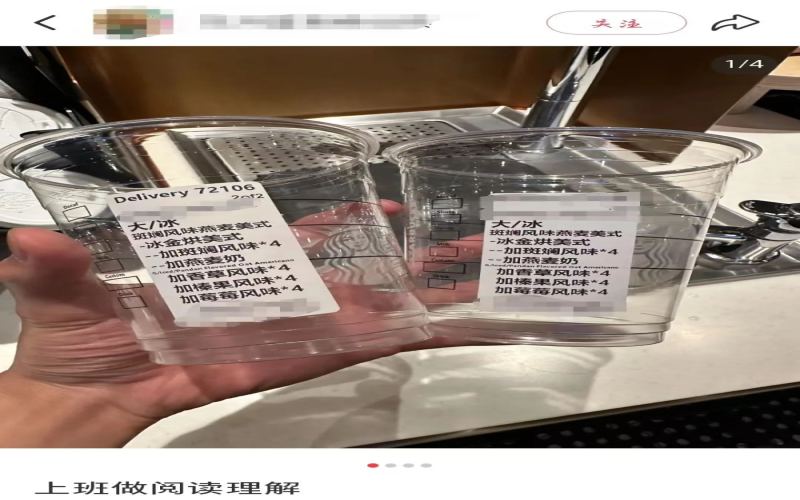
After Starbucks' syrup reform, customized orders surged, and employees, upon seeing the labels, exclaimed that it felt like doing reading comprehension exercises.
Starbucks has recently implemented a major syrup reform, splitting flavors and syrups into two independent ingredients. This adjustment gives customers who love DIY greater freedom to customize, allowing them to freely increase or decrease flavor concentrates according to personal preference without worrying about excessive sugar. However, when these experimental customized orders reach the stores, employees find themselves struggling with the densely packed label text. Some people collect all the official flavor syrups, while others repeatedly modify the milk base and cream ratios. The label font gets smaller and smaller, and baristas joke that they have to do reading comprehension on the job. What kind of store anecdotes has this battle over taste customization brought about? [more…]
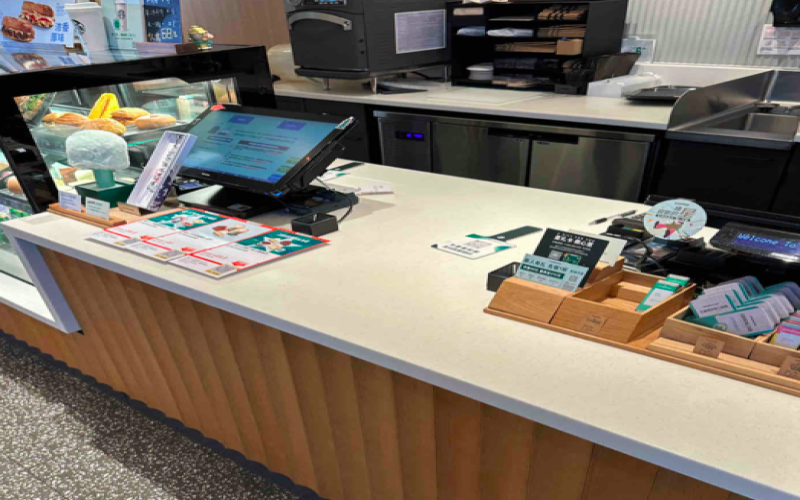
Starbucks Turning Employee Order Screens Toward Customers Sparks Debate, Internal Sales Pitch Accidentally Exposed
Recently, some Starbucks locations have turned their employee-only order-taking devices toward customers, attempting to let customers order self-service or have staff step out from behind the counter to assist with ordering. However, this move has sparked quite a bit of awkwardness and controversy: customers are at a loss facing the complex ordering system, internal sales scripts have been accidentally leaked, and staff are run off their feet even more during peak hours. Some baristas say the new rules not only fail to improve efficiency, but actually make the work more burdensome. This article will walk you through the ins and outs of this incident, as well as the real thoughts of Starbucks workers. [more…]

A customer orders a Dirty and wants it heated, or a pour-over with sugar and milk? How should a barista calmly handle these requests?
In today's world where specialty coffee is becoming increasingly popular, more and more consumers are starting to walk into coffee shops and try various drinks. However, because their understanding of coffee knowledge is still limited, many customers make requests when ordering that leave baristas not knowing whether to laugh or cry—for example, ordering a Dirty but asking for it to be heated, drinking pour-over but asking for sugar and milk, or urging the drink to be served right after placing the order. Faced with these situations, how can baristas respond while maintaining both professionalism and warmth? Starting from real scenarios, this article shares communication techniques between baristas and customers, and explores how to guide customers to experience the true charm of coffee while respecting their choices. [more…]

Starbucks earns an additional 7.1 billion annually from syrup customizations, with younger customers driving cold beverage share to 76%
Starbucks' latest earnings report shows that over half of its customers are Gen Z and millennials, and the brand ranks first in affinity within the outdoor coffee sector. Young consumers are keen on personalization and social media sharing, driving cold beverages to account for 76% of total sales at company-operated stores. High-margin syrups and sauce add-ons bring Starbucks about $1 billion (7.174 billion RMB) in additional revenue each year, and daily foot traffic has recovered to 95% of pre-pandemic levels. Front Street Coffee continues to follow coffee industry developments, breaking down for you the business logic and consumer trends behind the customization wave. [more…]
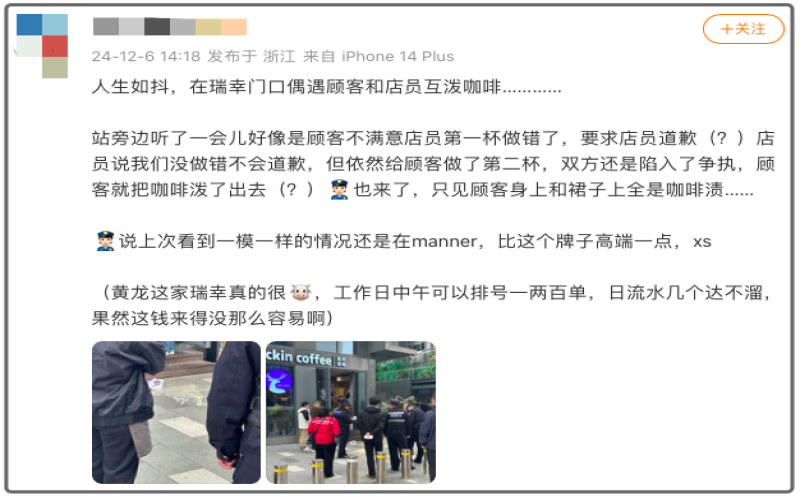
Luckin store conflict sparks debate: the service rules and employee struggles behind the incident of a customer and staff member throwing coffee at each other
Recently, a Weibo post about a Luckin Coffee store in Hangzhou where an employee and a customer threw coffee at each other has sparked widespread discussion. According to the blogger, the dispute seemingly began when a customer, dissatisfied with the drink preparation, demanded an apology, and after emotions escalated, both parties resorted to throwing coffee. Although there is no complete video of the incident, it reflects the tension between service standards and customer expectations at chain coffee brands. Luckin employees revealed that the company does not have a mandatory "remake if unsatisfied" policy, but when faced with requests such as taste dissatisfaction, staff often find themselves in a dilemma: refusing may lead to negative reviews and complaints, while yielding may encourage unreasonable demands. The strict internal feedback and assessment mechanism further multiplies the pressure on frontline employees. This article will reconstruct the sequence of events and explore how to balance service standards and employee circumstances in the coffee industry. [more…]
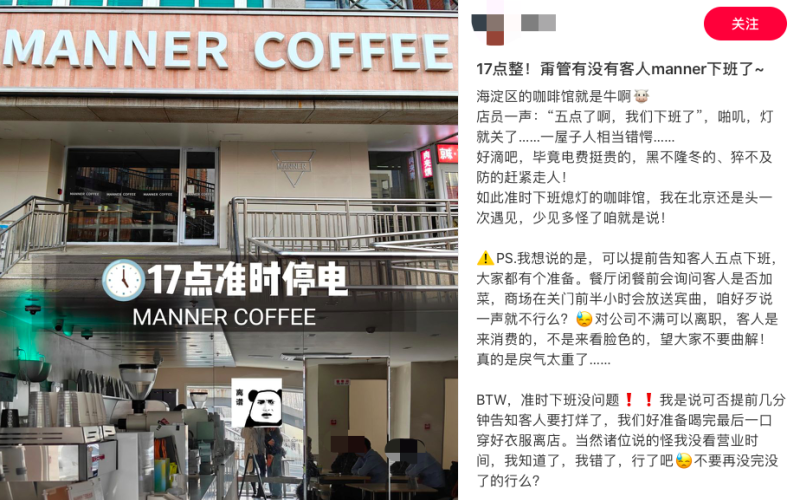
Manner Turning Off the Lights Right at Closing Sparks Debate: How to Balance Clocking Out on Time with Customer Experience
Recently, a Manner store in Beijing's Haidian District sparked heated discussion online after it immediately turned off all the lights and closed as soon as its operating hours ended. According to the poster, a staff member called out at exactly 5 p.m. and then directly shut off all the lights, leaving customers in the store stunned for a moment and forced to pack up and leave in the dark. After the incident went viral, two voices emerged in the comments section: one side argued that this was impolite and that customers should have been reminded in advance; the other side supported the employees' right to leave on time, arguing that customers who linger past closing are the real root of the problem. This debate reflects the real dilemma facing the food and beverage service industry between closing procedures and customer experience, and also prompts people to rethink: beyond a cup of coffee, how should a store see customers off with dignity? [more…]
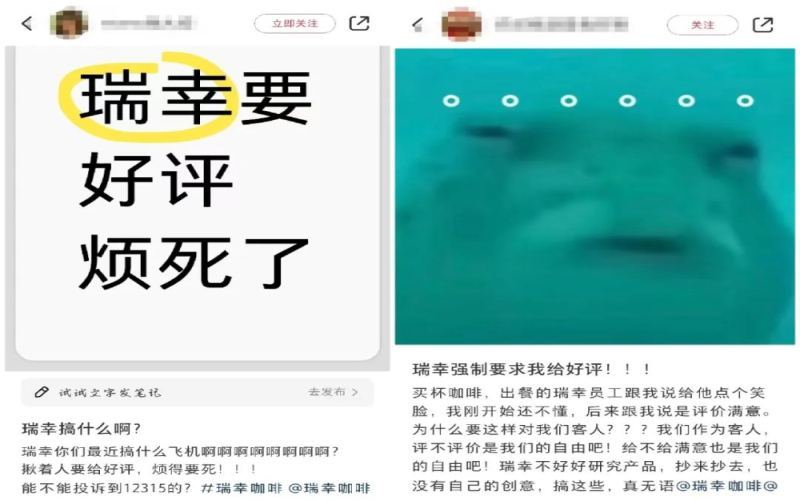
Under Luckin Coffee's store review assessment pressure, employees are forced to solicit reviews from customers, sparking controversy.
Recently, many Luckin Coffee customers have encountered an unexpected situation when picking up their orders in-store: normally quiet staff members are proactively speaking up, asking customers to leave a positive review. Behind this phenomenon is Luckin's internal "Countless Smiles" competition targeting store positive review rates. In some regions, stores have been forced by management to participate, and positive review rate rankings directly affect employee performance evaluations and disciplinary rewards and punishments, forcing frontline employees to solicit positive reviews from customers picking up orders, and even asking regular customers to help boost reviews. However, the frequent solicitation of positive reviews has also triggered consumer resentment, with some customers bluntly saying it is "annoyingly unbearable," and even considering filing complaints with 12315. Employees are equally full of complaints, believing that this mandatory requirement puts them in a difficult position. This article will provide an in-depth analysis of the conflict between stores and customers caused by this positive review assessment. [more…]
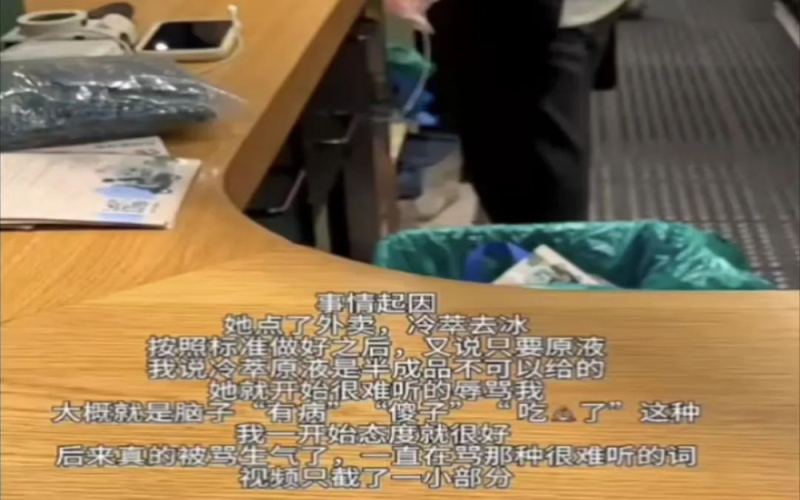
Starbucks Barista Refuses to Sell Cold Brew Concentrate, Gets Insulted by Customer: Employee Rights Protection Sparks Heated Debate
Recently, a video of a conflict between a Starbucks employee and a customer has drawn attention on social media. In the video, the employee, who refused to sell cold brew concentrate—a semi-finished ingredient—on its own, was fiercely insulted by the customer and nearly came under physical attack. After the incident came to light, netizens expressed sympathy for the employee and discussed topics such as how the brand handles customer complaints and how employee rights are protected. Many current employees also shared similar experiences, pointing out that the company often smooths things over by issuing coupons, which may encourage malicious complaints and leave frontline staff disheartened. [more…]
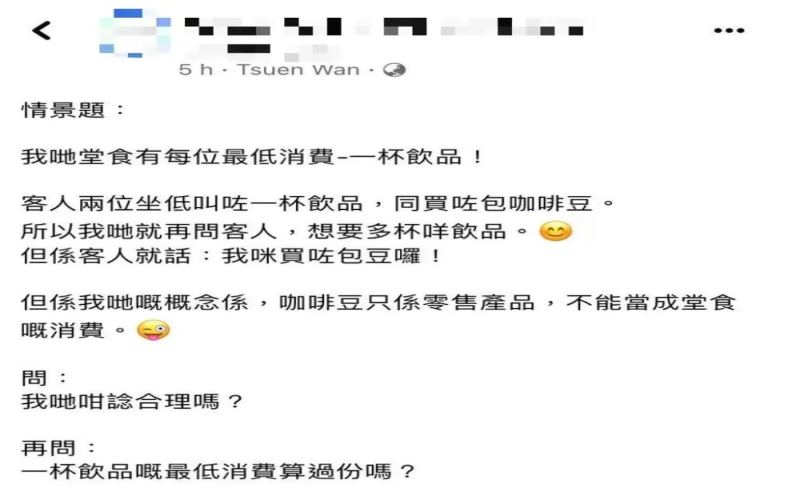
Coffee shop minimum charge of one drink sparks debate: customers buy beans and order drinks—should the shop make a fuss?
A coffee shop requires every dine-in customer to order at least one drink. A customer who bought coffee beans and ordered a drink was then asked to order another, prompting the shop to post an inquiry seeking opinions, which unexpectedly sparked a polarizing debate online. Supporters believe that once a business sets rules, they should be followed, while opponents criticize the shop for being too rigid and lacking human warmth, even calling it a public relations disaster. The shop eventually deleted the post and apologized, but the discussion about the boundaries of minimum consumption rules and the flexibility of their enforcement continues. [more…]
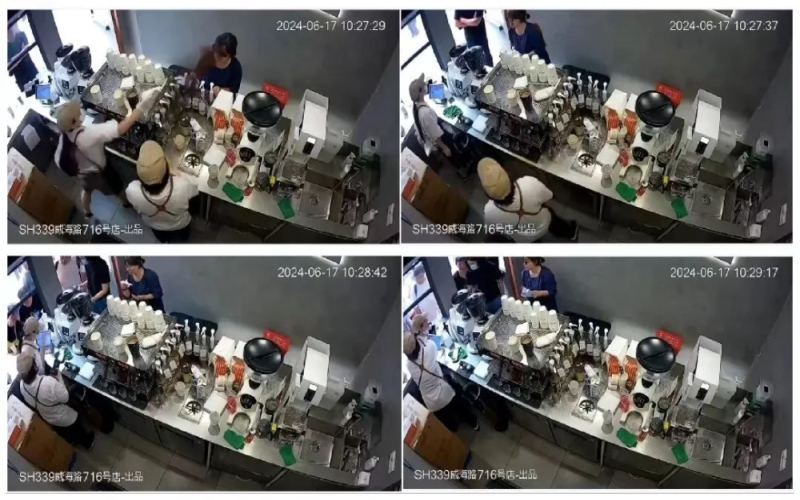
Manner Coffee Store Conflict Incident: Barista Emotional Outburst and Customer Dispute Spark Industry Reflection on Labor Practices
Recently, two intense disputes between staff and customers occurred at Manner Coffee stores in succession, drawing widespread attention. In one incident, due to slow service, an emotional staff member threw coffee powder at a customer, while another escalated into a physical conflict over order催促. The brand responded by dismissing the employees involved, but the issues reflected behind the incidents—such as understaffing at stores and excessive pressure on employees—have become the focus of discussion among netizens and loyal customers. As coffee enthusiasts, we can't help but ponder: while pursuing efficiency, how can we ensure service quality and employee rights? Front Street Coffee has always followed industry trends, advocating rational consumption and humanistic care. [more…]
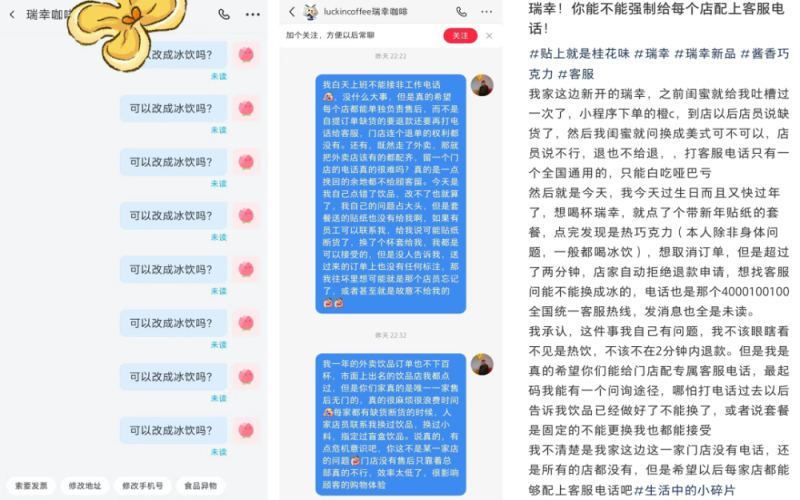
Limited Contact Channels for Luckin Stores Spark Debate: Customers Struggle to Reach Stores by Phone After Misoperations
When ordering on a food delivery platform, many consumers have experienced the mistake of confirming too quickly without carefully reading the options. Third-party platforms usually support time-limited cancellations, but if it is a merchant's own mini-program or app, the process for modifying or canceling an order is often more cumbersome, and many people's first instinct is to call the store directly. Recently, however, some customers have discovered that what is listed on the Luckin Coffee platform is not the store's direct line, but the national unified customer service hotline, making it difficult to reach the store level in a timely manner. This situation has sparked discussions about the contact information of chain brand stores, order modification and cancellation permissions, and has also brought to light the real conflict in communication efficiency between consumers and stores. [more…]
A Practical Guide to Coffee Shop Delivery Operations: A Complete Approach from Pricing Strategy to Private Domain Retention
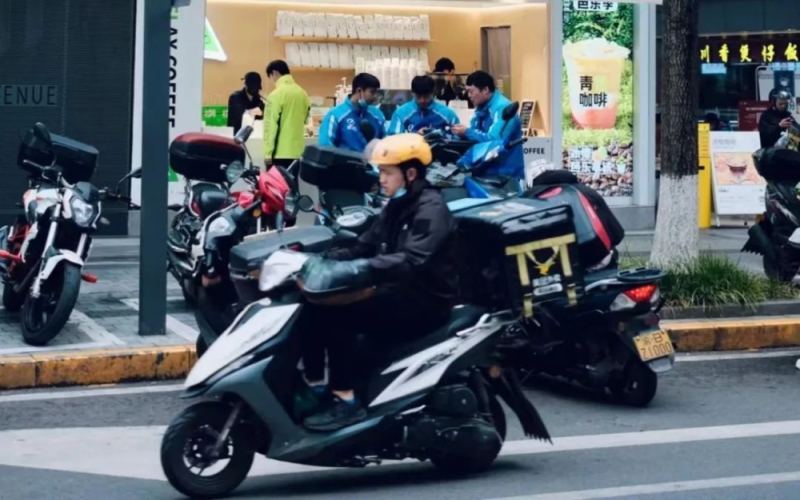
While delivery platforms bring orders to coffee shops, they also carry the hidden risk of brand devaluation. Many shop owners have found that blindly joining price wars not only makes profitability difficult but can also erode the store's brand value. This article systematically sorts out the key aspects of coffee shop delivery operations, from pre-opening pricing planning, accumulating Dianping ratings, and delivery menu strategies, to how to convert platform traffic into private-domain customers. It also emphasizes that independent coffee shops should differentiate themselves from chain brands through professional quality and service details, rather than getting caught in low-price involution. The article also shares practical techniques such as stamp cards and scratch cards to guide delivery customers to offline visits, helping coffee shops effectively attract traffic through delivery while maintaining their brand tone. [more…]
Heytea's "Remake If Not Satisfied" Promise Questioned: Multiple Customers Report Being Refused Remakes Over Sweetness Issues
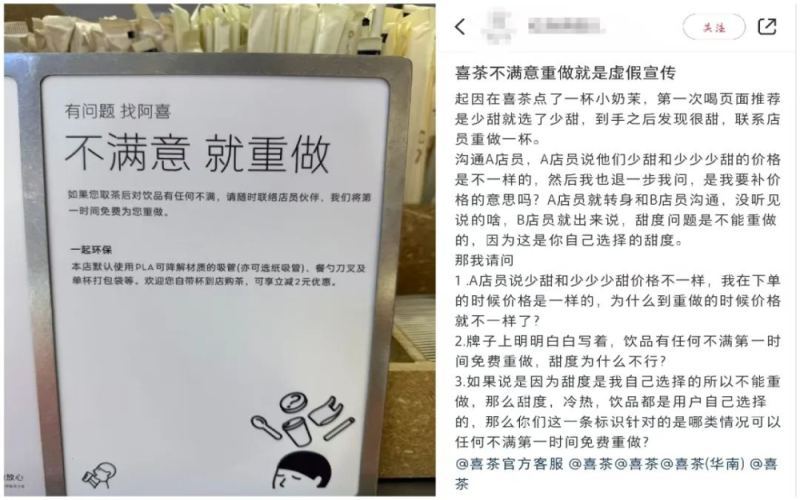
Heytea's publicly posted "remake if unsatisfied" service commitment has recently sparked a string of consumer doubts. Some customers report being refused by staff when asking for a remake because a drink was sweeter than expected, with customer service responding that drinks must be "made to the original standard." Similar cases have also occurred in Shandong. Some long-time customers point out that there are differences in how the standard is applied between directly operated stores and franchise stores. Consumers generally believe that if a brand makes a public commitment, it should not attach hidden conditions. This article reviews the course of events and the views of all parties, and compares the practices of peers such as Starbucks and Chagee to explore how "remake if unsatisfied" should actually be implemented. [more…]